Client-side Vue component that reads JSON data via a GET request
VueAdmin dashboard
vuejs-json-dashboardify — Vue Admin dashboard Template
By alphagov
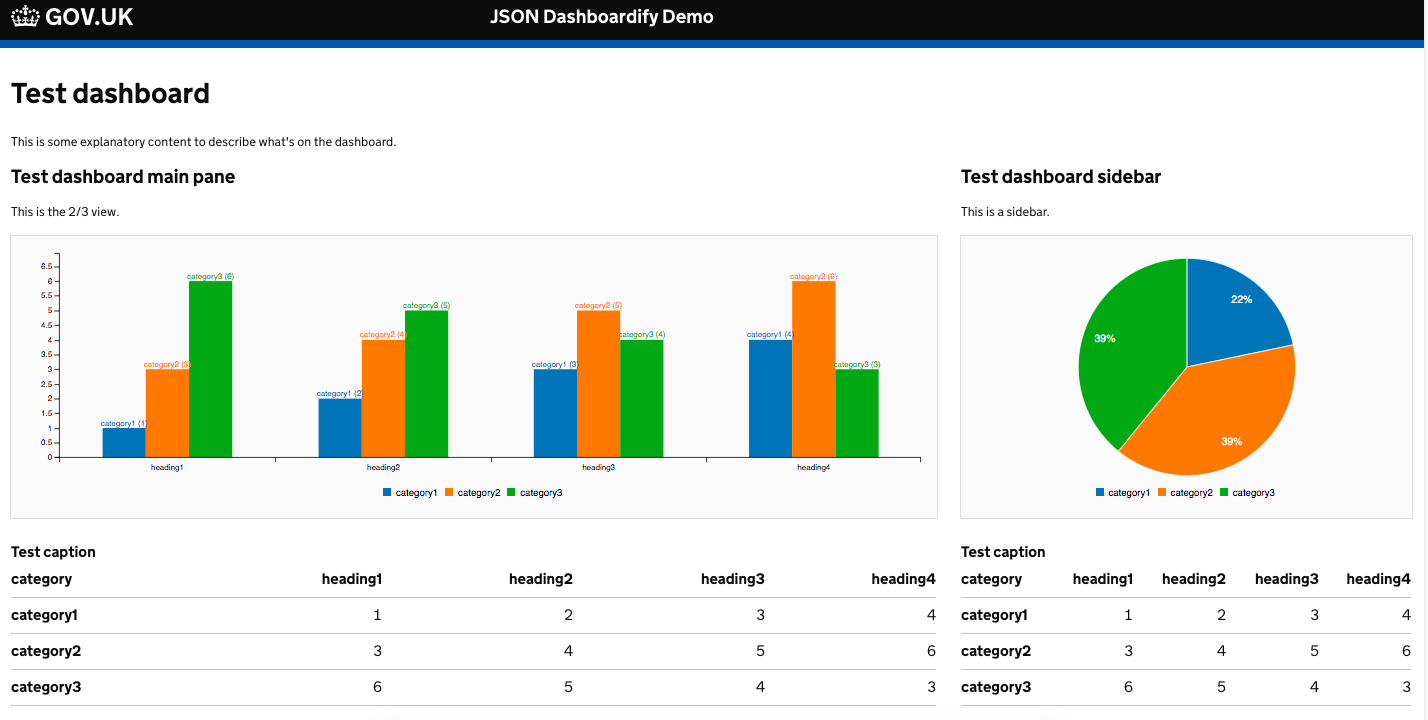
A client-side Vue component that reads JSON from a GET endpoint and dynamically renders it into the GovUK Frontend template, including containers, grid rows, headers, body content and tables, for displaying dynamic content on a static S3-hosted server.
Explore the design
Compare the page layouts and mobile experience. Open any screenshot for a closer look.
Author preview
Author-provided preview
Preview provided in the project README.
One original preview is available. Open the full image to inspect the design.
Screenshots show visual appearance; interactive behavior may differ.
Recorded 2026-10-12View source
What stands out
A quick read of the recorded project description.
Dynamically renders containers, grid rows, headers, body content and tables according to the GovUK Frontend template
Aimed at static S3-hosted servers, used to present dynamic content on static pages
The top-level component in the JSON must be a div; available elements are shown in the repository's example.json
Offers both Docker and local running methods, and includes nightwatch-based end-to-end tests
Template Details
vuejs-json-dashboardify is published by alphagov under the MIT license. It provides a client-side VueJS component that fetches JSON data via a GET request and then dynamically renders the page according to the GovUK Frontend template structure, supporting elements such as containers, grid rows, headers, body content and tables. The project is positioned to work with a static S3-hosted server, allowing otherwise static pages to present dynamic content from a JSON endpoint.
Usage involves including the component tag in the page and specifying group (unique within the page) and source (the JSON address), for example <json-dashboardify-url-element group="unique-within-page" source="/example.json">. The HTML elements available in the JSON can be found in the repository's example.json; the only restriction is that the top-level component in the JSON must be some kind of div.
For local running, you can build and start the demo service via docker-compose and visit http://localhost:8000; alternatively, without Docker, run npm install first, then use gulp to load govuk-frontend and build the CSS, and finally serve the page with http-server at 127.0.0.1:8000. The project also includes nightwatch-based end-to-end tests that can be run via docker-compose. In the README, the author notes that the current implementation is still rough and plans to turn pe-charts' table-chart into a proper VueJS component that can be used inline.
VueBackend
Is it right for your project?
Use Cases
- Displaying dynamic dashboard content from a JSON endpoint on a static S3-hosted page
- Pages that need to generate containers, grids, headers and tables following the GovUK Frontend structure
- Rendering external JSON data on the client side, avoiding server-side template rendering
Suitable For
- Projects using GovUK Frontend that need dynamic JSON rendering
- Teams with an existing static S3 hosting environment who want the frontend to read JSON
- Developers who need to quickly set up a demo dashboard page
Getting started & customization
Use these recorded setup notes alongside the repository instructions for your chosen version.
- 1
Docker method: docker-compose build, then docker-compose run --service-ports demo bash -c "npm run server", and visit http://localhost:8000
- 2
Non-Docker method: run npm install first, then use gulp to load govuk-frontend and build the CSS, and finally start with http-server . -a 127.0.0.1 -p 8000
- 3
End-to-end tests: docker-compose run demo bash -c "npm run server & npm run e2e"
- 4
Call the component in the page via <json-dashboardify-url-element group="unique-within-page" source="/example.json">; group must be unique within the page
- 5
The top-level component in the JSON must be a div; for available elements, refer to the repository's example.json
License & source material
Usage conditions & limitations
Free to use · keep license noticeThis entry covers the free version in the public repository under the MIT license; the free scope is the code of that version and does not imply that external services or third-party assets are free.
Must comply with when using
- The code of this version may be used, modified, used commercially and distributed free of charge.
- When distributing copies or substantial portions of the code, retain the original author's copyright notice and the full MIT license notice.
- The code is provided as is; warranties and limitations of liability are governed by the original license and applicable law.
Additional costs & items to verify
- Demo images, fonts, icons and other third-party assets must be checked against their respective licenses; the code's MIT license alone is not sufficient to determine this.
- External services such as domains, hosting, databases, payments or AI may incur separate charges.
- The top-level component in the JSON data must be a div element, otherwise it cannot be rendered; this is a hard restriction on the input JSON structure when using the component.
- The project is positioned to render dynamic content in conjunction with a static S3-hosted server, and usage scenarios are constrained by this.
- The author states that the current implementation is relatively rough and in an early/experimental state, and it should not be regarded as production-ready.
View Original Text Basis
Permission is hereby granted, free of charge
Original License Text
The only restriction is that the top level component in the JSON has to be a div of some sort.
Original README
This is to be used to render dynamic content from a static S3-backed server.
Original README
https://github.com/alphagov/vuejs-json-dashboardify/blob/main/LICENSEhttps://github.com/alphagov/vuejs-json-dashboardify/blob/main/README.mdThis is all a bit clumsy at the moment.
Original README
Compiled by DeepSeek based on repository license and README ·2026-10-12. Results only cover the materials read; dependencies, images, fonts, and subsequent term changes are subject to their respective original texts.
Project checks & description sources
Template Information
- Source platforms
- GitHub
- Documentation and maintenance reference score
- Partly documented · 56 / 100
- Technologies
- Vue
- Website type
- Admin dashboard
How this score is calculated
Our heuristic uses license records (up to 30), a demo link (12), a preview (10), stars (15), recorded maintenance (15), description completeness (8), feature records (5) and classification data (5). It is not a code, security or performance test, or a Google score. A link does not establish tested functionality.
What to verify for this project
- Repository update recorded
- 2021-09-16
- Screenshot last checked
- 2026-10-12
No demo link is recorded. Use the repository instructions to evaluate the project locally; the screenshot alone cannot establish interactive behavior.
The catalog identifies Vue as the primary stack. Check the actual dependency manifest and lockfile for versions and hosting requirements. These notes use recorded metadata, not a code audit or a deployment test.
Use a selection guide →How this description was prepared
AI-assisted description based on catalog records and repository material. Repository authors are not automatically the reviewers of this description.
Review declaration: [email protected] · 2026-10-13
Inspect the recorded source material
SHA-256: e37e5b111f169ed4d44e92c9a8c513e4220a7b87fc0a3cf05a780dfe24107609
2026-10-12T11:36:01.828Z
Source file / repository# vuejs-json-dashboardify
Create a client-side VueJS component which reads JSON from a GET endpoint and renders into the GovUK Frontend template dynamically including containers, grid rows headers, content and tables. This is to be used to render dynamic content from a static S3-backed server.

## Setup
You can run locally in docker as follows:
```
docker-compose build
docker-compose run --service-ports demo bash -c "npm run server"
# The demo page should be available on http://localhost:8000
```
Alternatively you can run locally without docker
`npm install` and then
`gulp` to load the govuk-frontend and build the css.
Then you can run the code with an npm http server
`http-server . -a 127.0.0.1 -p 8000`
## End-to-end tests
I've made a start on some end-to-end tests using nightwatch.
You can run the tests as follows:
```
docker-compose run demo bash -c "npm run server & npm run e2e"
```
## Invoke the component
Once you've got all the scripts loading correctly you can
use the component by just including something like this
in your page.
You can see the HTML elements supported in the example file
[example.json](example.json). The only restriction is that
the top level component in the JSON has to be a div of some
sort.
```HTML
<json-dashboardify-url-element
group="unique-within-page"
source="/example.json">
</json-dashboardify-url-element>
```
## TODO
This is all a bit clumsy at the moment.
I think the next steps are to turn the pe-charts table-chart
into a proper VueJS component so it can be included inline.
Explore similar templates
Compare previews and descriptions within the same stack and category.
vuestic-admin
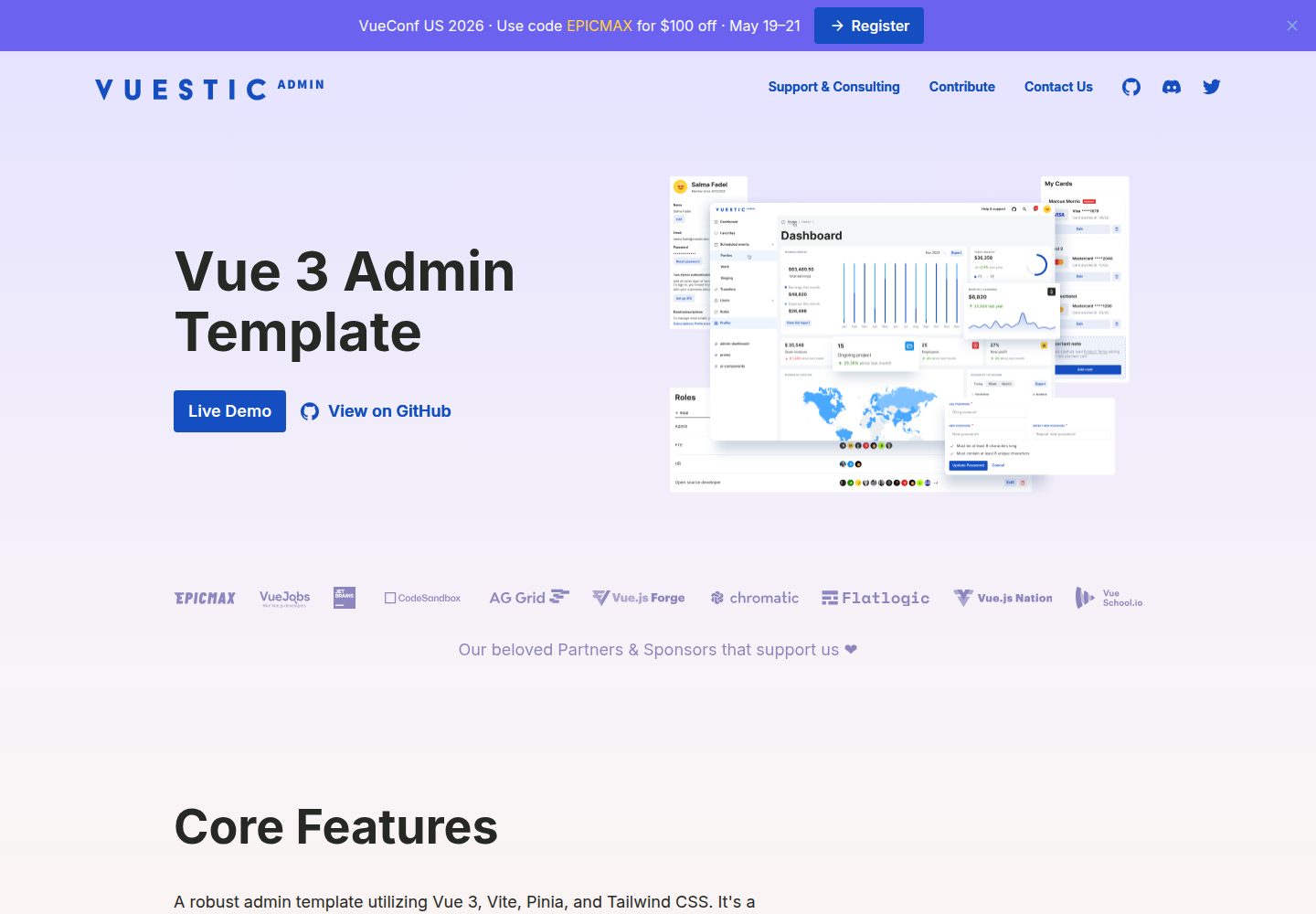
Vuestic Admin is an open-source Vue 3 admin template maintained by Epicmax, built on Vuestic UI with Vite, Pinia, and Tailwind CSS. It provides a ready-to-run dashboard with a dark theme, global configuration, i18n internationalization, and responsive layout.
Vue · Admin dashboard
v3-admin-vite
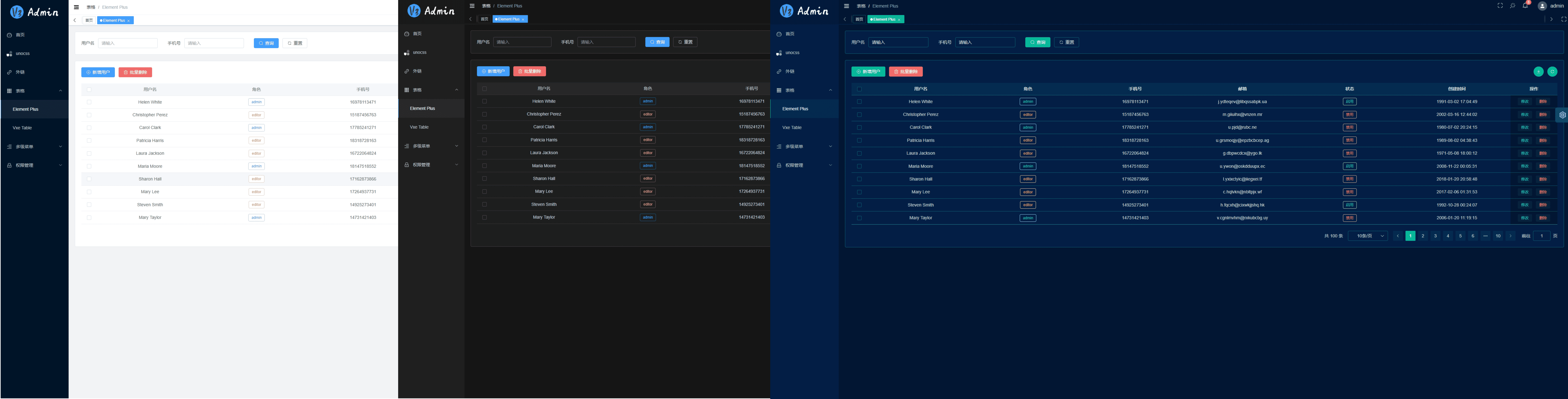
v3-admin-vite is an AI-friendly Vue3 admin template built on Vue3, Vite, TypeScript, and Element Plus. It keeps a lean structure with detailed comments, supports backend-controlled dynamic route permissions, page-level and button-level permissions, multiple themes and layouts, and mobile compatibility.
Vue · Admin dashboard
vue-typescript-admin-template
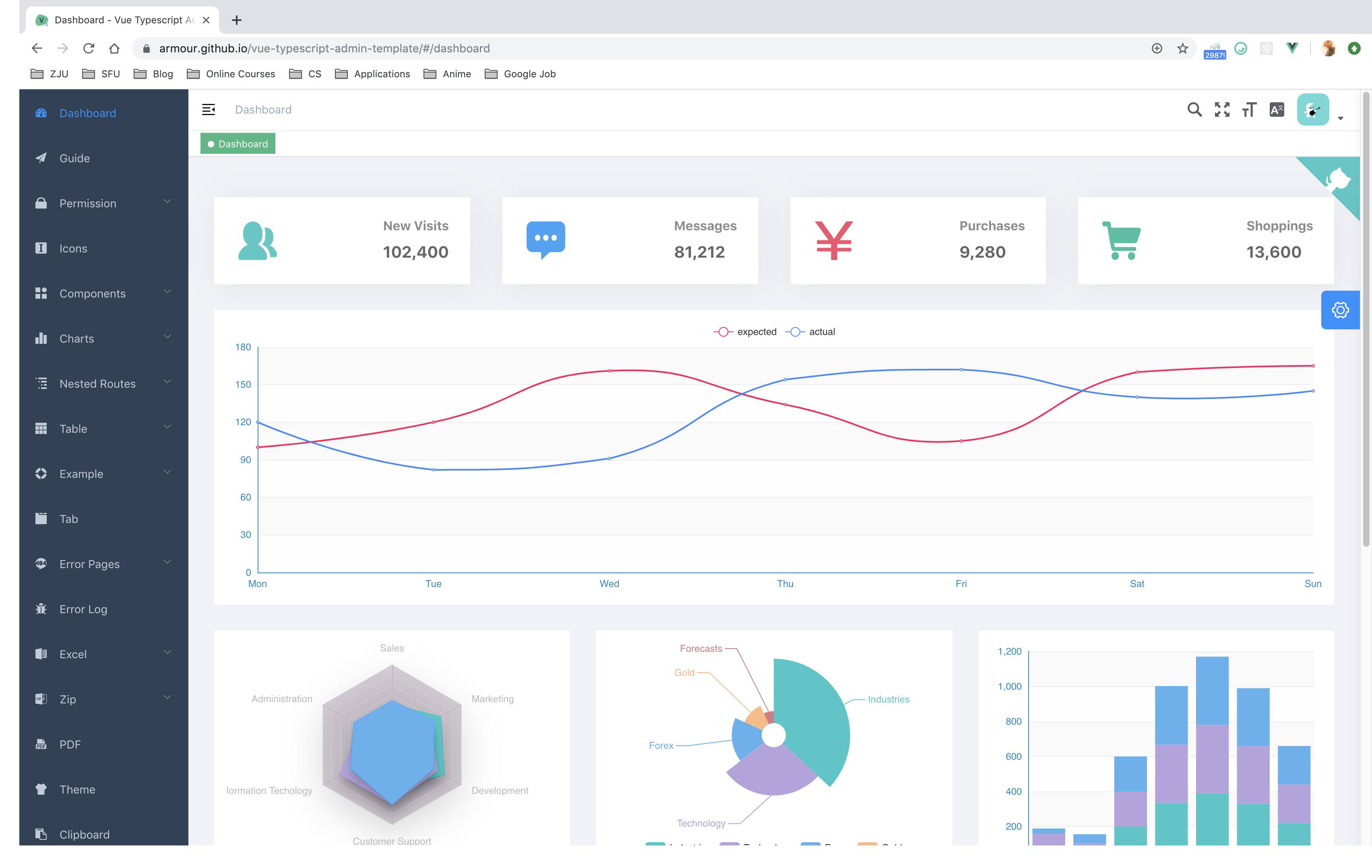
A Vue 2.6 + TypeScript + Element UI admin template ported from vue-element-admin, offering type safety and enterprise features like permission authentication, internationalization, dynamic themes, editors, charts, Excel/PDF handling, and PWA support.
Vue · Admin dashboard
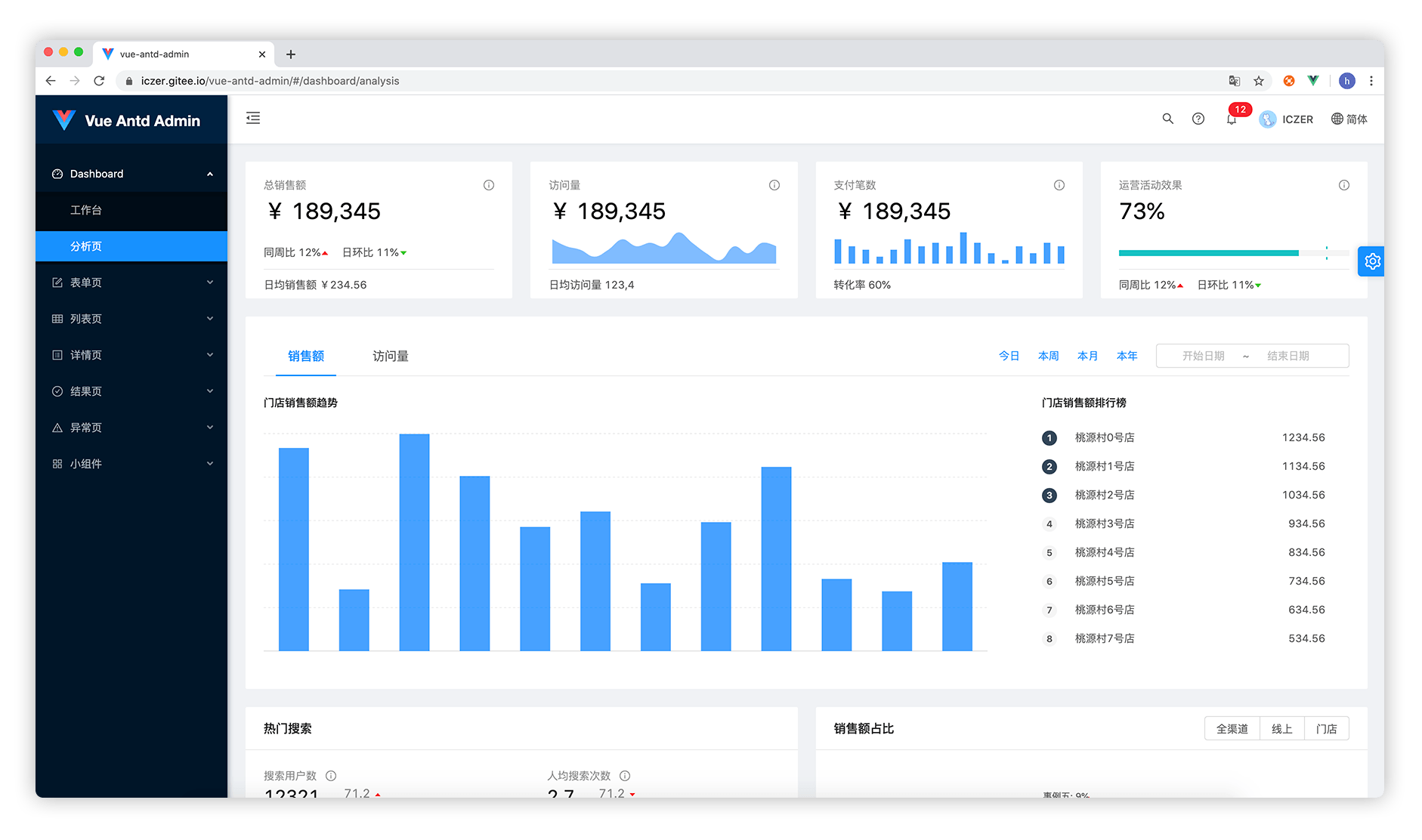
vue-antd-admin
Vue Antd Admin is the Vue implementation of Ant Design Pro, providing an out-of-the-box front-end and design solution for admin dashboards.
Vue · Admin dashboard
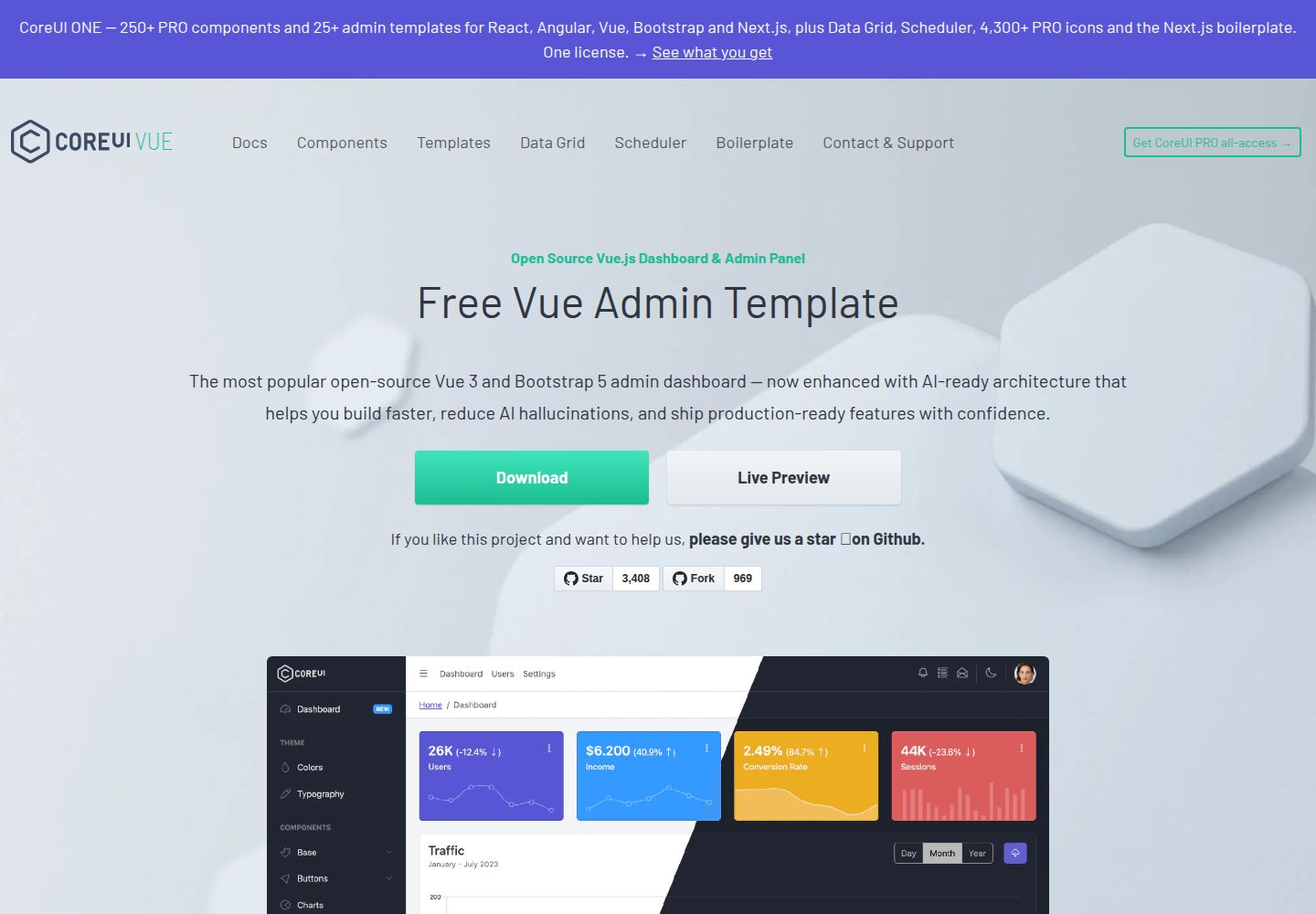
coreui-free-vue-admin-template
CoreUI's official free Vue admin template, MIT licensed, built on Vue 3 and the CoreUI component library with Vue Router, Pinia, and Vite.
Vue · Admin dashboard
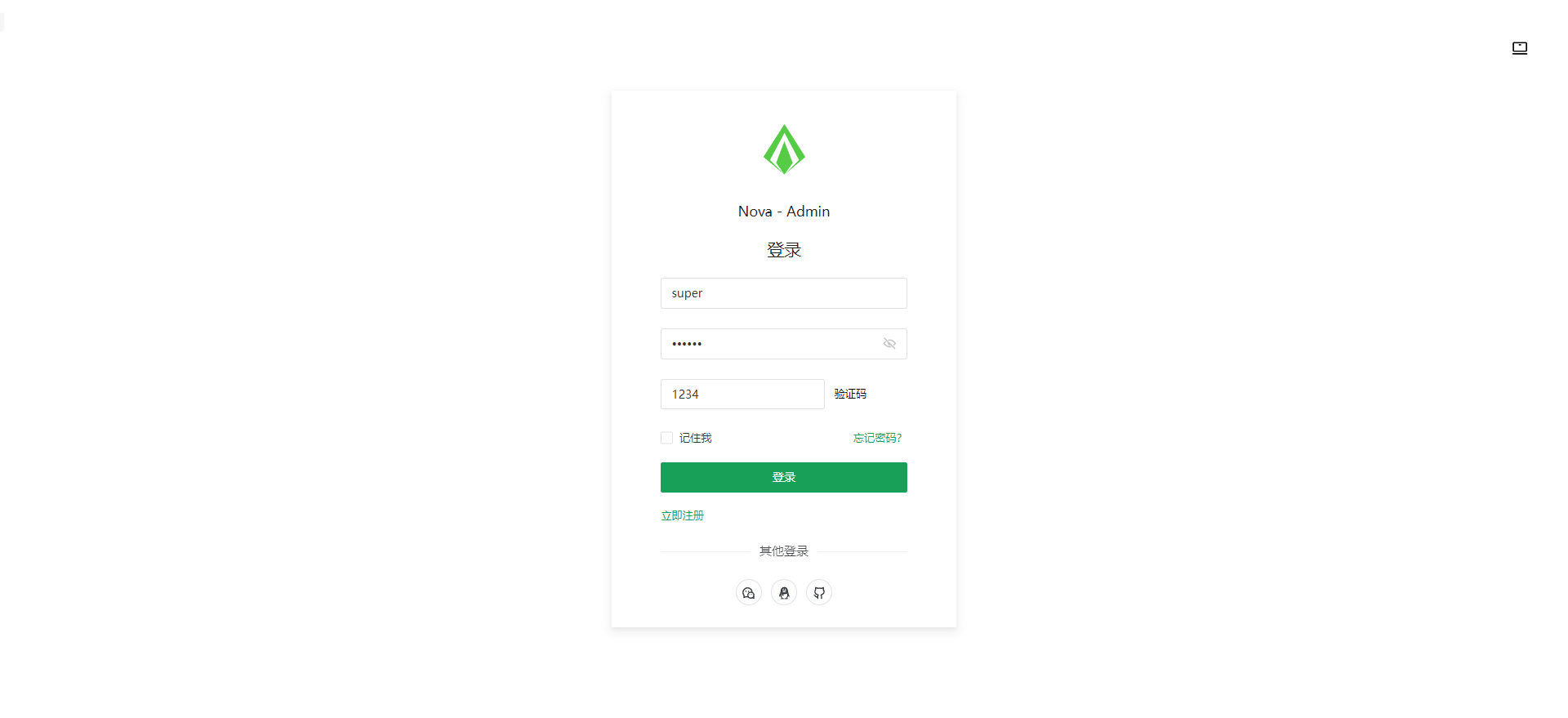
nova-admin
Nova Admin is an admin template built on Vue3, Vite, TypeScript, and Naive UI, with Unocss for styling.
Vue · Admin dashboard