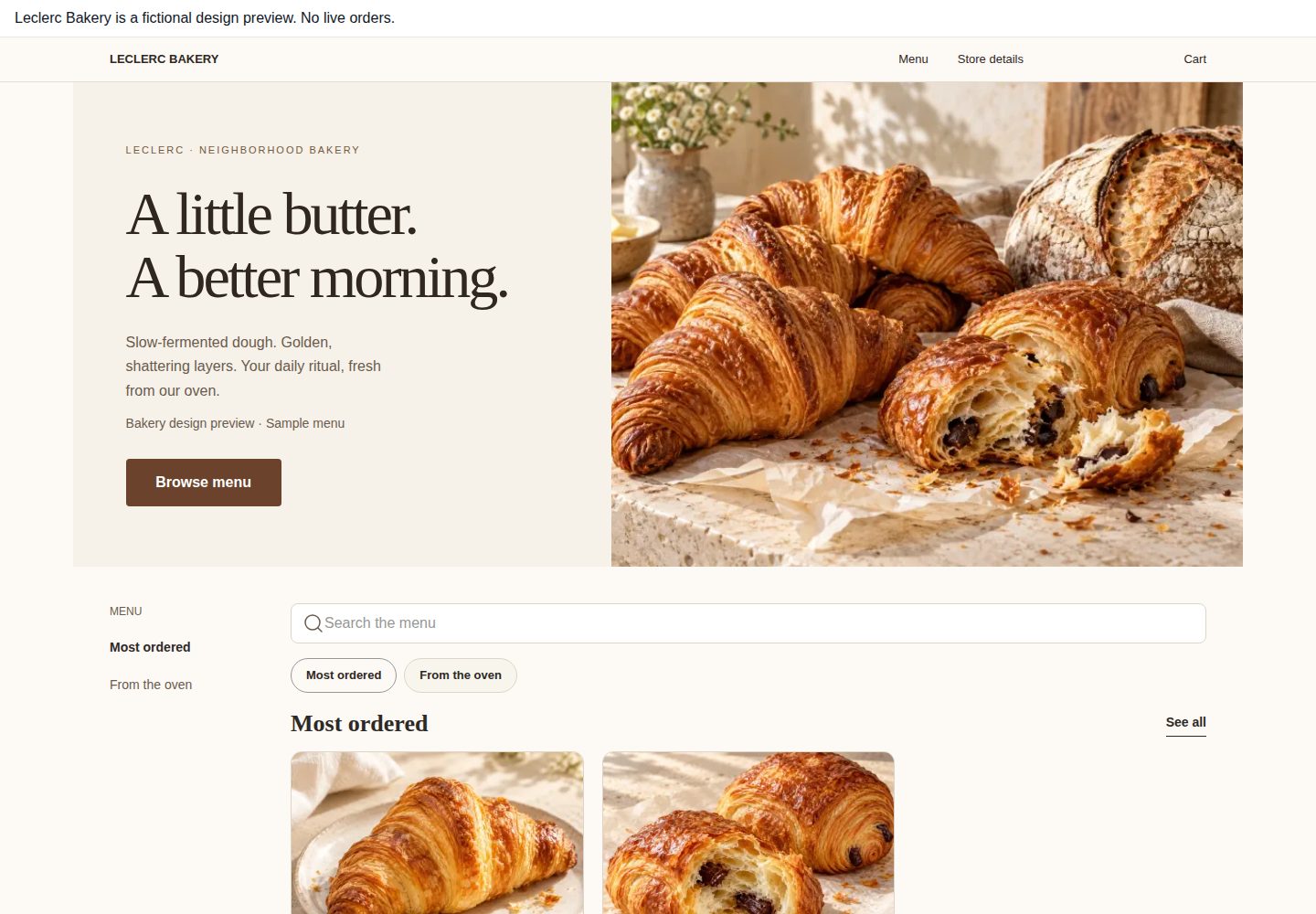
Provides a bakery visual preset with desktop and mobile screenshots, allowing local fixture-mode browsing of the responsive storefront
Next.jsReactE-commerceCorporate Website
cravejs-web-template — Next.js Ecommerce Template
By craveup-oss
A restaurant ordering storefront template built on Next.js and React, featuring menu browsing, cart, checkout handoff, and multiple theme presets, with a bakery visual example.
Explore the design
Compare the page layouts and mobile experience. Open any screenshot for a closer look.
Desktop homepage1 / 2
Desktop captureTop of page
Actual screenshot captured by the server browser.
All pages & views 2
Screenshots show visual appearance; interactive behavior may differ.
Recorded 2026-10-01View source
What stands out
A quick read of the recorded project description.
Includes example flows for menu browsing, nested modifiers, cart, pickup/delivery, and checkout handoff
Six generative themes and four visual presets share the same storefront routes and commerce logic
Amounts are calculated server-side; the UI only renders returned display fields and does not compute totals itself
Distinguishes between hosted-multitenant and standalone-cli deployment configuration approaches
MIT licensed, permitting free use, modification, commercial use, and distribution of this version of the code
Template Details
This is a responsive Next.js storefront template for restaurant ordering scenarios, with code under the MIT license. The repository provides a bakery visual preset (Leclerc Bakery, with fictional content and dishes, and food photography generated by AI), along with desktop and mobile screenshots. It can run in local fixture mode without Crave credentials to browse example flows such as menus, modifiers, cart, pickup, delivery, and checkout handoff.
The template includes menu and product contracts, nested modifier rules, server-calculated amounts, cart conflict recovery, pre-checkout checks, and redirect to Crave-hosted checkout. It also offers six generative themes (base, ember, hearth, meadow, noir, signal) and four visual presets (bakery-editorial, noodle-house, sushi-atelier, counter-service).
Important limitations: the API backend bakery described in the repository documentation is not yet deployed; the example site cravejs-web-template.vercel.app is only a visual example and cannot be taken as evidence that the API backend is live. The standalone CLI generator has not been released, and the standalone-cli configuration generation contract remains to be implemented. Dine-in and room service UIs are fixture previews only; persistence of completed order details, terminal orders, and receipt handling remain subject to external conditions. Third-party assets such as demo images, fonts, and icons require separate license verification.
Next.jsReactE-commerceCorporate Website
Is it right for your project?
Use Cases
- Building a customizable ordering storefront for a restaurant or bakery with menus, themes, and content
- Experiencing example flows for menus, cart, pickup, delivery, and checkout handoff locally without credentials
- Using existing themes and presets as a starting point, replacing photography, fonts, and merchant content to create a brand visual
- Serving as a reference implementation for evaluating the Crave.js storefront API contract and SDK integration approach
Suitable For
- Developers or agencies needing a Next.js restaurant ordering storefront starting point
- Teams wanting to reuse menu, cart, and checkout handoff logic while focusing only on visual and content customization
- Projects needing multiple themes and visual presets without duplicating commerce code for each concept
Getting started & customization
Use these recorded setup notes alongside the repository instructions for your chosen version.
- 1
Local running requires Node.js 24 and pnpm 10.33.2; run corepack enable and pnpm install --frozen-lockfile
- 2
Start fixture mode with pnpm dev:fixtures --profile standalone-cli --tenant fixture-base; no Crave credentials required
- 3
The bakery preview URL is /design-system-preview?preset=bakery-editorial&controls=0; fixture mode is marked NO LIVE ORDERS and does not make real API requests
- 4
For API backend mode, copy .env.example to .env.local and replace the four NEXT_PUBLIC_CRAVEUP_* public values; do not add Crave admin API keys, Stripe keys, database addresses, or OAuth tokens to the frontend or repository
- 5
The Crave External Sandbox tenant referenced by the example requires onboarding and catalog publishing before menus can load; the app will not substitute preview data on failure
License & source material
Usage conditions & limitations
Free to use · keep license noticeThis listing covers the free version under the MIT license in the public repository; the free scope is the code of this version and does not mean external services or third-party assets are free.
Must comply with when using
- Permits free use, modification, commercial use, and distribution of this version of the code.
- When distributing copies or substantial portions of the code, retain the original author's copyright notice and the full MIT license notice.
- The code is provided as is; warranties and limitations of liability are governed by the original license and applicable law.
Additional costs & items to verify
- API backend mode depends on the Crave External Sandbox tenant completing onboarding and catalog publishing before menus can load; on failure the app will not substitute preview data, so this mode is unavailable until the tenant is ready.
- The standalone crave CLI generator required for standalone-cli configuration generation has not been released, so this deployment configuration path cannot currently be used as documented.
- Dine-in and room service interfaces are fixture previews only; persistence of completed order details is subject to external conditions and cannot be used for real business.
- Terminal order and receipt handling are subject to external conditions; this version does not provide that capability.
- The public visual example site does not indicate that the API backend bakery is deployed, and cannot be taken as evidence that backend integration is available.
- Do not add Crave admin API keys, Stripe keys, database addresses, or OAuth tokens to the frontend or repository.
- The template's own design pipeline and internal gated test suite are not in the public snapshot; the public version can only run the commands listed in the documentation.
- Code and documentation changes must be submitted as PRs and applied by maintainers to the engineering source repository before being synced back to this repository; they cannot be merged directly here.
- Demo images, fonts, icons, and other third-party assets require license verification under their respective licenses and cannot be judged solely by the code's MIT license.
- External services such as domains, hosting, databases, payments, or AI may incur separate charges.
View Original Text Basis
Permission is hereby granted, free of charge
Original License Text
That tenant must finish onboarding and catalog publication before the API-backed menu can load; the app does not substitute preview data on failure.
Original README
The approved contract requires the separate `crave` CLI to consume an immutable release of this repository and emit validated public configuration plus exact `.crave/storefront-template.json` provenance. That generator has not shipped yet.
Original README
Tableside and room-service UI is a fixture-backed preview; completed-order detail persistence remains externally gated.
Original README
Terminal order/receipt handling remains externally gated.
Original README
The earlier visual sample at `cravejs-web-template.vercel.app` is not evidence that the API-backed bakery has been deployed.
Original README
Never add a Crave administrative API key, Stripe secret, database URL or OAuth token to the frontend or repository.
Original README
The template's own design pipeline and internal gate suites are not part of the public snapshot, so the commands above are the complete set it can run.
Original README
https://github.com/craveup-oss/cravejs-web-template/blob/main/LICENSEhttps://github.com/craveup-oss/cravejs-web-template/blob/main/README.mdSend code and documentation changes here as pull requests; maintainers apply accepted changes to the engineering source, and the next sync brings them back into this repository.
Original README
Compiled by DeepSeek based on repository license and README ·2026-10-01. Results only cover the materials read; dependencies, images, fonts, and subsequent term changes are subject to their respective original texts.
Project checks & description sources
Template Information
- Source platforms
- GitHub
- Documentation and maintenance reference score
- More documented · 88 / 100
- Technologies
- Next.js · React
- Website type
- E-commerce · Corporate Website
How this score is calculated
Our heuristic uses license records (up to 30), a demo link (12), a preview (10), stars (15), recorded maintenance (15), description completeness (8), feature records (5) and classification data (5). It is not a code, security or performance test, or a Google score. A link does not establish tested functionality.
What to verify for this project
- Repository update recorded
- 2026-10-01
- Screenshot last checked
- 2026-10-01
A demo link is listed. Check it with your own content and viewport sizes; its presence does not confirm that forms, authentication or payments work.
The catalog identifies Next.js as the primary stack. Check the actual dependency manifest and lockfile for versions and hosting requirements. These notes use recorded metadata, not a code audit or a deployment test.
Use a selection guide →How this description was prepared
AI-assisted description based on catalog records and repository material. Repository authors are not automatically the reviewers of this description.
Automatically checked against source and license rules; no manual editorial review.
Inspect the recorded source material
SHA-256: 2aeb03b9205ca4aa2481afc342511e067218bd0e275c97be80966ef82ce4b5a9
2026-10-01T15:20:54.388Z
Source file / repository# Crave.js Web Storefront
A responsive Next.js storefront for restaurant ordering. Make the menu, photography,
and guest experience your own, with a shared commerce core for carts, fulfillment,
and hosted checkout.
**Bakery storefront implementation — external sandbox deployment pending acceptance**
· [Run it locally](#run-the-bakery-preview)
· [Documentation](https://docs.craveup.com)
· [Storefront API contract](docs/contracts/STOREFRONT-API.md)
Next.js 16 · React 19 · Tailwind CSS v4 · TypeScript · MIT
## See the storefront
Meet **Leclerc Bakery**, the included Bakery Editorial visual preview. These are
captures of the running template at desktop and mobile web sizes.
<table>
<tr>
<th>Desktop</th>
<th>Mobile web</th>
</tr>
<tr>
<td valign="top"><a href="docs/images/storefront-desktop.webp"><img src="docs/images/storefront-desktop.webp" alt="Leclerc Bakery desktop storefront with a split editorial hero, golden pastries, and sample menu" width="660" /></a></td>
<td valign="top"><a href="docs/images/storefront-mobile.webp"><img src="docs/images/storefront-mobile.webp" alt="The same bakery storefront on mobile web, with stacked photography and content" width="190" /></a></td>
</tr>
</table>
Open the [live bakery storefront](https://cravejs-web-template.vercel.app) and resize
your browser to explore its responsive layout, or select either screenshot to view it at full size.
Leclerc Bakery and its menu are fictional; the food photography is AI-generated.
This preset demonstrates the responsive design. The separate ordering fixtures let
you explore menus, modifiers, carts, pickup, delivery, and checkout handoff without
credentials or live orders.
## Run the bakery preview
Use **Node.js 24** and **pnpm 10.33.2**. No Crave credentials are needed.
```bash
git clone https://github.com/craveup-oss/cravejs-web-template.git
cd cravejs-web-template
corepack enable
pnpm install --frozen-lockfile
pnpm dev:fixtures --profile standalone-cli --tenant fixture-base
```
Open **[the bakery preview](http://localhost:3000/design-system-preview?preset=bakery-editorial&controls=0)**
to see the pictured storefront. Resize your browser to explore its mobile layout.
Open **[the ordering fixtures](http://localhost:3000)** to try the separate sample
ordering flow. Fixture mode is labeled **NO LIVE ORDERS**, makes no live API
requests, and disables Google Maps lookups even if a local environment contains a
browser key.
### Run the API-backed bakery
The bakery preset now applies to the real ordering route. `/` and `/menu` resolve the
configured location after verifying it belongs to the merchant. Products, prices and
menu photography come from Crave; the design preview remains a separate visual sample.
```bash
cp .env.example .env.local
pnpm dev
```
The example points to the dedicated **Crave External Sandbox** tenant. It contains
public IDs and origins only. That tenant must finish onboarding and catalog publication
before the API-backed menu can load; the app does not substitute preview data on failure.
The sandbox notice makes clear that no real pickup or delivery takes place.
For another business, replace the four `NEXT_PUBLIC_CRAVEUP_*` settings and edit
`src/config/standalone-settings.ts`. Never add a Crave administrative API key, Stripe
secret, database URL or OAuth token to the frontend or repository.
### Deploy the bakery demo
The intended hostname is `https://leclerc-bakery.order.page`, serving **this OSS
repository**, connected to `https://sandbox-api.craveup.com`. Its checkout allowlist
is `https://checkout.sandbox.order.page`. Neither internal development nor production
is the demo's backend. The existing hostname has not yet been promoted to this branch.
See [the implementation and release checklist](docs/LECLERC-SANDBOX.md). Run
`pnpm verify`, `pnpm build`, then `pnpm verify:sandbox-demo` with the deployment
environment loaded. The final command performs credential-free public SDK reads and
fails unless the correct tenant's published menu includes both pastry photographs.
The earlier visual sample at `cravejs-web-template.vercel.app` is not evidence that
the API-backed bakery has been deployed. Keep `DESIGN_SYSTEM_PREVIEW` and fixture
runtime settings unset on the bakery deployment.
## Why teams start here
| You should get to design | You should not have to rebuild |
|---|---|
| Your restaurant's voice, photography, content, layout and theme | Menu and product contracts, nested modifier rules and server-calculated money |
| The moments that make the brand memorable | Cart authority, conflict recovery, session isolation and checkout handoff safety |
| The right experience for each location and service model | Pickup and delivery flows, plus preview-only tableside and room-service states |
| The extensions that make the storefront yours | Accessibility, localization, SEO, consent and credential boundaries |
The result is room for a distinctive restaurant experience without forking the commerce logic every
time the visual direction changes.
## Choose a visual direction
The template ships six generated theme systems—`base`, `ember`, `hearth`, `meadow`, `noir` and
`signal`—over one shared set of storefront routes and commerce behavior. Themes are selected from
validated merchant configuration, rendered on the server and tested without an unthemed first paint.
Use a theme as the starting point, then change documented theme inputs, public fonts, photography,
merchant content and exported composition slots. A visual concept does not need its own copy of the
SDK integration, cart or checkout code.
### Bakery preview and imagery
The Bakery Editorial preset includes AI-generated bakery photography and fictional
Leclerc Bakery sample content. Run the fixture server, then open
`/design-system-preview?preset=bakery-editorial&controls=0` to explore the responsive
visual preview. Ordering tests continue to use the canonical fixture menu. Other
presets ship repository-authored SVG placeholders. Every shipped asset is recorded with its SHA-256 digest in
[`distribution/asset-ownership.json`](distribution/asset-ownership.json), and the release gate rejects
any image whose rights are not confirmed. Replace the placeholders with your own photography.
## What is included
- **Browse and decide:** restaurant/location bootstrap, timed menus, categories, local search,
product detail, availability, nutrition and nested modifiers.
- **Build and recover a cart:** server-authoritative totals, quantity changes, item notes,
recommendations, discounts, tips and explicit retry after conflicts or stale state.
- **Choose how to order:** pickup now/later and delivery are wired. Tableside and room-service UI is
a fixture-backed preview; completed-order detail persistence remains externally gated.
- **Complete the handoff:** checkout preflight and exact-origin navigation to Crave-hosted checkout;
no Stripe or provider secrets in the storefront.
- **Come back recognized:** OTP account entry, account details, addresses, order history and
capability-gated loyalty. Terminal order/receipt handling remains externally gated.
- **Ship with confidence:** responsive and 200% zoom coverage, keyboard/accessibility checks,
localization and timezone rules, SEO, consent-aware telemetry and tested failure states.
## Pick a deployment profile
| Profile | Best for | Configuration authority |
|---|---|---|
| `hosted-multitenant` | Crave-managed storefronts and custom domains | A trusted server-only exact-host registry |
| `standalone-cli` | A restaurant or agency-owned Next.js project | One validated generated storefront config |
Both profiles use the same SDK adapters, commerce behavior, components, themes and fixtures. Only
bootstrap and distribution differ.
Copy [`.env.example`](.env.example) to `.env.local`, choose exactly one profile and replace every
example public value. The browser API origin must exactly match the selected `apiBaseUrl`. Never add
`CRAVE_API_KEY`, `NEXT_PUBLIC_CRAVEUP_API_KEY`, customer sessions, cart/receipt capabilities or
payment-provider values.
### Hosted multitenant
The runtime resolves a trusted host or custom domain to validated tenant configuration. Unknown hosts
fail closed before API reads. Tenant identity participates in cache, theme, metadata, canonical URL,
robots/sitemap, structured data and asset decisions so one merchant cannot leak into another.
### Standalone CLI
The approved contract requires the separate `crave` CLI to consume an immutable release of this
repository and emit validated public configuration plus exact `.crave/storefront-template.json`
provenance. That generator has not shipped yet. When it does, it will not import the hosted registry,
generate from a mutable branch, or read a private repository or API key. Upgrades dry-run and diff,
and never silently overwrite user-owned extensions.
See [`docs/contracts/GENERATED-STARTER.md`](docs/contracts/GENERATED-STARTER.md) for the exact
generated-project contract.
## Concept presets
One storefront product and one commerce core. Four visual presets preserve useful design ideas from
earlier public storefront experiments without carrying forward their SDK 1.x, API-key, Stripe, cart
or checkout implementations.
| Preset | Default theme | Home composition |
|---|---|---|
| `bakery-editorial` | Hearth | Editorial product story |
| `noodle-house` | Ember | Immersive food hero |
| `sushi-atelier` | Noir | Split editorial grid |
| `counter-service` | Signal | Service-first ordering |
Start either fixture profile, then open `/design-system-preview?preset=bakery-editorial` and switch
presets from the preview toolbar.
## Shared architecture
- **Direct public API:** no Crave BFF and no browser API key.
- **Two SDK clients:** Server Components perform anonymous reads; client islands perform stateful
calls through the exact SDK 2.x browser client.
- **Typed bootstrap:** hosted trusted registry and standalone generated config implement one
`TenantResolver`/resolved-config boundary.
- **Capability lifecycle:** cart revisions/capabilities and customer/receipt sessions stay tab-scoped
in versioned adapters.
- **Capability-gated loyalty:** a disabled or unavailable provider never blocks ordering or checkout.
- **Conflict-safe mutations:** conflicts refresh authoritative state and require explicit customer
retry; safe lost-response transport retries reuse the identical body and key.
- **Server-calculated money:** the UI renders returned display fields and never calculates totals.
- **Server-rendered theming:** six generated theme blocks with no unthemed first paint. `?theme=` is
labeled preview-only and ignored in production.
- **Recovery as a contract:** refresh/back, duplicate tabs, expiry, offline, price/inventory/time
drift, OTP limits and hosted-handoff states are finite tested behavior.
Read the [Storefront API contract](docs/contracts/STOREFRONT-API.md) and the
[generated-starter contract](docs/contracts/GENERATED-STARTER.md) before writing application code.
The pinned OpenAPI document is [`docs/contracts/storefront-api.openapi.json`](docs/contracts/storefront-api.openapi.json).
## Verification
| Command | Purpose |
|---|---|
| `pnpm verify` | lint and typecheck gate for this repository |
| `pnpm lint` | ESLint across the template |
| `pnpm typecheck` | Next.js typegen plus `tsc --noEmit` |
| `pnpm build` | production build |
| `pnpm profile:smoke` | production server smoke for the selected profile after `pnpm build` |
| `pnpm distribution:payload` | build the deterministic CLI payload archive |
| `pnpm release:assemble -- --release <semver> --released-at <UTC> --output <absolute-path>` | assemble a deterministic release artifact and manifest from a clean exact commit |
This repository carries the application and its release tooling. The template's own design pipeline
and internal gate suites are not part of the public snapshot, so the commands above are the complete
set it can run.
## Provenance
This repository is generated. Each commit is a validated snapshot of a reviewed private engineering
commit, and [`.crave/source.json`](.crave/source.json) records the exact source repository and
commit. Release tags are created only from a commit on `main` after an approval-gated workflow
reverifies the tree, so a published release names the precise bytes it was built from.
Send code and documentation changes here as pull requests; maintainers apply accepted changes to the
engineering source, and the next sync brings them back into this repository.
## Community, support and sponsorship
- Read [CONTRIBUTING.md](CONTRIBUTING.md) before proposing code or documentation changes.
- Report vulnerabilities privately using [SECURITY.md](SECURITY.md), never through a public issue.
- Use [SUPPORT.md](SUPPORT.md) to distinguish reproducible project bugs from Crave implementation
services and legacy-storefront questions.
- Read [GOVERNANCE.md](GOVERNANCE.md) for maintainer, release and sponsor decision boundaries.
- Participation is governed by [CODE_OF_CONDUCT.md](CODE_OF_CONDUCT.md).
## License
[MIT](LICENSE) © Crave Up, Inc.
Explore similar templates
Compare previews and descriptions within the same stack and category.

Next.js Commerce
Vercel's officially maintained Next.js App Router ecommerce starter with deep Shopify integration, offering a complete product catalog, cart, and checkout flow. Core logic is modular for swapping backends, and community provider versions exist for BigCommerce, Medusa, and Saleor.
Next.js · E-commerce

SaaS-Boilerplate
SaaS-Boilerplate is an open-source SaaS starter template built with Next.js App Router, React 19, TypeScript, Tailwind CSS, and Shadcn UI.
Next.js · SaaS
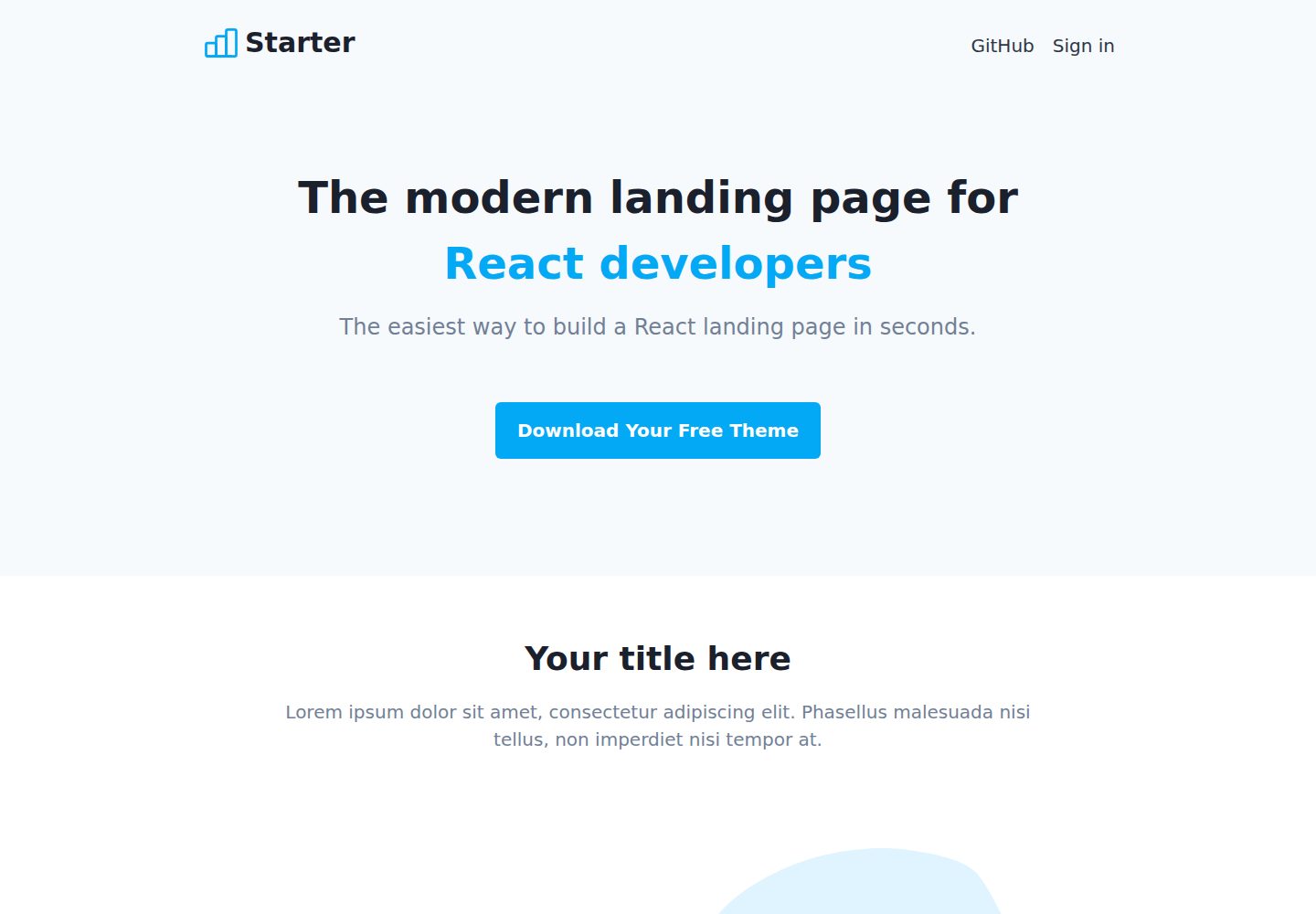
Next-JS-Landing-Page-Starter-Template
A free Next.js landing page starter template written in Tailwind CSS and TypeScript, featuring built-in navbar, hero, features, CTA banner, and footer sections.
Next.js · Corporate Website
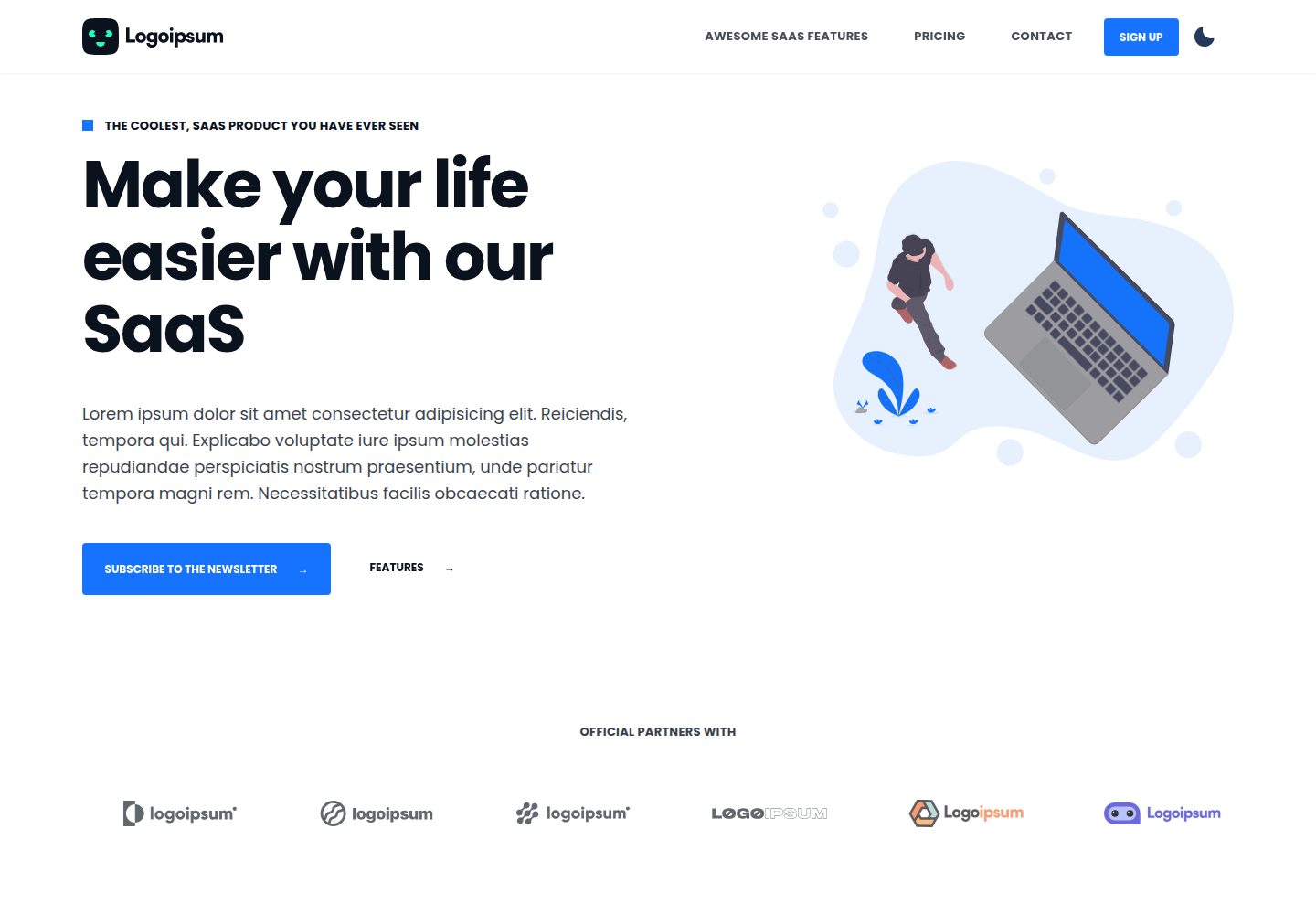
next-saas-starter
A free Next.js SaaS marketing landing page template from Blazity, using static generation and styled-components with no extra UI library.
Next.js · SaaS
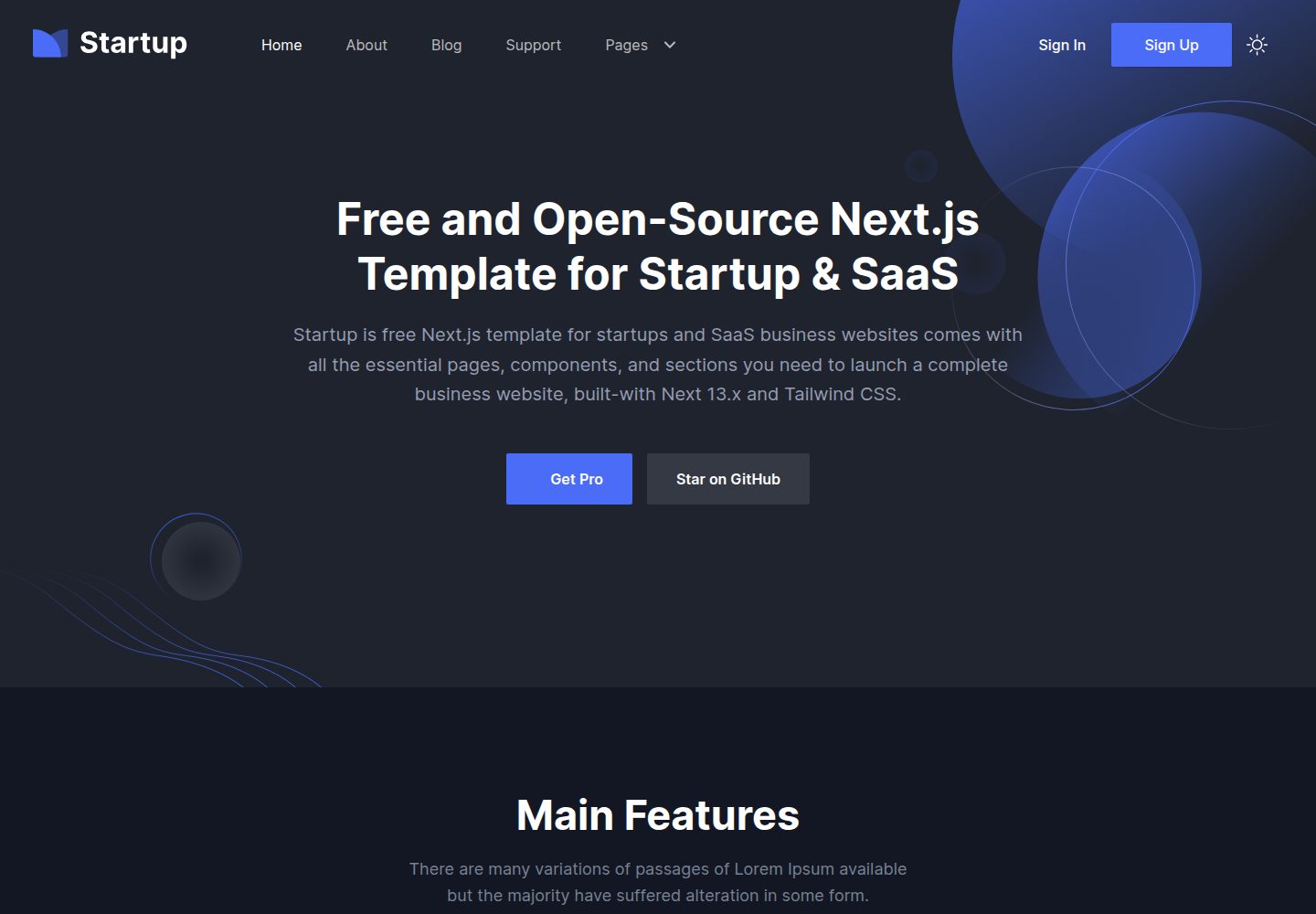
startup-nextjs
Startup is a free, MIT-licensed Next.js template from NextJSTemplates for SaaS startups and corporate landing pages.
Next.js · SaaS
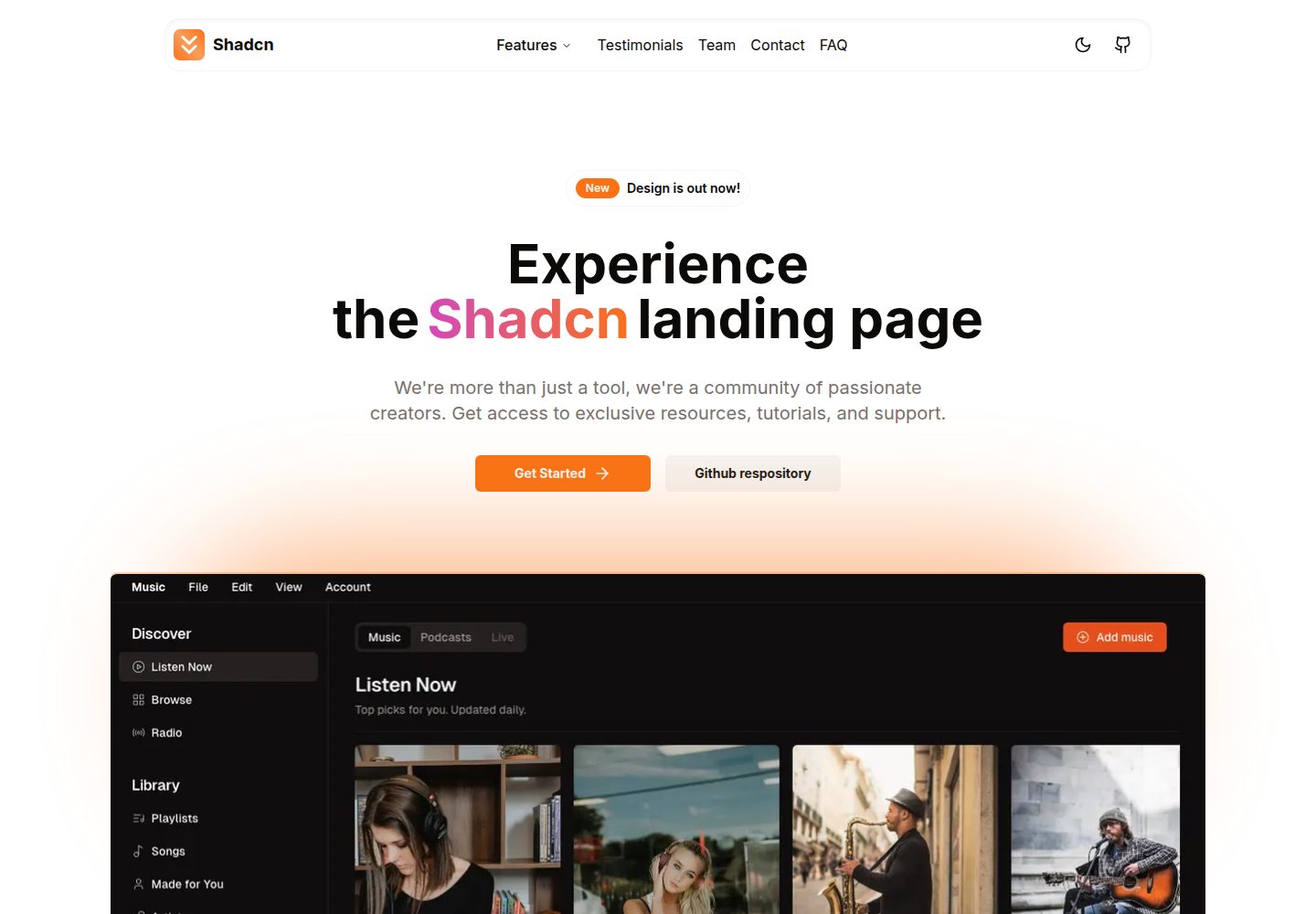
shadcn-landing-page
A Next.js landing page template built with Shadcn, TypeScript, and Tailwind, converted from a Shadcn-Vue version. It includes sections such as Navbar, mobile Sidebar, Hero, Pricing, FAQ, and Footer, and highlights responsive design, navigation, and dark mode.
Next.js · Corporate Website