
Hugo static site; the theme is included as a git submodule and is not modified directly, with all customizations placed in project-level layouts/ override directories
HTMLE-commercePortfolioCorporate Website
Portfolio (Creatify-site) — HTML Ecommerce Template
By Creatify-site
Creatify's agency portfolio website, built with Hugo and the hugo-agency-web theme, showcasing Shopify theme development and e-commerce service case studies.
Explore the design
Compare the page layouts and mobile experience. Open any screenshot for a closer look.
Desktop homepage1 / 3
Desktop captureTop of page
Actual screenshot captured by the server browser.
All pages & views 3
Screenshots show visual appearance; interactive behavior may differ.
Recorded 2026-10-02View source
What stands out
A quick read of the recorded project description.
The homepage includes a hero section with a rotating 3D services cube, a services grid, an about introduction, latest blog posts, a platforms bar, testimonials, FAQ, and a call-to-action block
The services page covers 8 individual service pages, each with a process description and FAQ
The projects page showcases 26 Shopify store projects, with category filtering and hover-scroll screenshot previews
Built-in custom robots.txt and sitemap.xml templates and structured data such as ProfessionalService, BlogPosting, Service, FAQPage, and BreadcrumbList
The contact page uses a Formspree form and provides a Cal.com booking link and a public review submission page (published after approval)
Template Details
This is a static agency portfolio website built with Hugo, based on the hugo-agency-web theme (Tailwind CSS), used to showcase the services and client projects of Creatify, a Shopify development agency. The site content covers pages including Home, About, Services, Projects, Blog, Contact, Submit a Review, and Privacy Policy and Terms of Service.
The homepage includes a hero section with a rotating 3D services cube, a services grid, an about introduction, latest blog posts, a platforms bar, client testimonials, FAQ, and a call-to-action block. The services page first presents an overview grid, then links to 8 individual service pages (Web Development, Shopify Development, WordPress Development, SEO, Social Media Marketing, Graphic Design, Video Editing, Digital Strategy), each with a process description and FAQ. The projects page lists 26 Shopify store projects, with category filtering and hover-scroll screenshot previews. The blog is categorized by Shopify, HTML-5, and SEO, with category filtering and a helpful/not helpful feedback component on each article. The contact page uses a Formspree form and provides a Cal.com booking link and direct contact details; there is also a public review submission page for clients, which requires approval before publishing.
In terms of project structure, the theme is included as a git submodule and is not modified directly; all customizations are placed in project-level layouts/ override directories, mirroring the theme's original file paths so that Hugo's template lookup prioritizes the project versions. Partial templates for the homepage sections are located in layouts/_partials/blocks/home/, and page-level templates are located in layouts/{about,services,projects,blog,contact}/. Content and structured data are placed in content/ and data/ respectively, and the store screenshots for the projects page are placed directly under static/projects/, bypassing Hugo's image pipeline.
For SEO, custom robots.txt and sitemap.xml templates are provided, and the sitemap excludes the automatically generated /tags/* archive pages; structured data includes site-wide ProfessionalService and WebSite, BlogPosting for articles, Service for service pages, FAQPage for the homepage, and BreadcrumbList for all non-homepage pages. markup.goldmark.renderer.unsafe is enabled in hugo.yaml to allow tutorial articles to embed raw HTML or Liquid code blocks.
Usage limitations: real form submissions require configuring your own Formspree service endpoint, and its quotas and fees must be verified separately; third-party assets such as demo images, fonts, and icons must be checked against their respective licenses and cannot be judged solely by the code's MIT license; external services such as domains and hosting may incur additional charges.
HTMLE-commercePortfolioCorporate website
Is it right for your project?
Use Cases
- As an external site for a Shopify development agency to showcase its service scope and client project case studies
- To build an agency website with service pages, a portfolio, and a blog for freelancers or small studios
- For portfolio pages that need category-filtered project screenshots with hover previews
- For sites that want to use Hugo static generation and deploy to static hosting platforms such as Vercel or Netlify
Suitable For
- Developers familiar with basic Hugo and Node.js commands who can configure builds and deployments themselves
- Design or development teams that need an agency portfolio and multiple service introduction pages
- Users who accept using external form services such as Formspree and handle their configuration and quotas themselves
Getting started & customization
Use these recorded setup notes alongside the repository instructions for your chosen version.
- 1
Requires Hugo extended and Node.js + npm; when cloning, use --recurse-submodules to fetch the theme submodule, otherwise run git submodule update --init --recursive
- 2
After running npm install locally, run hugo server; the preview address is http://localhost:1313
- 3
When deploying to Vercel, enable Git Submodules in the project settings and add the HUGO_VERSION environment variable (must be the extended version)
- 4
The build command is hugo --gc --minify, output to the public/ directory, and it can be deployed to any static hosting
- 5
The baseURL in config/_default/hugo.yaml must match the canonical hostname actually used by DNS; otherwise the sitemap, structured data, and OG links will have an extra redirect
License & source material
Usage conditions & limitations
Free to use · keep license noticeThis listing covers the free version under the MIT license in the public repository; the free scope is the code of this version and does not mean that external services or third-party assets are free.
Must comply with when using
- The code of this version may be used, modified, used commercially, and distributed for free.
- When distributing copies or substantial portions of the code, retain the original author's copyright notice and the full MIT license notice.
- The code is provided as is; warranties and limitations of liability are governed by the original license and applicable law.
Additional costs & items to verify
- The contact page form relies on the third-party Formspree service; you must register and configure the form endpoint yourself, and its free quota and fees must be verified separately; the booking feature relies on the external Cal.com service.
- The review submission page relies on an external service to receive and store submissions, and it requires manual approval before publishing, so it is not a complete out-of-the-box feature.
- Demo assets such as the store screenshots on the projects page are third-party content, and their licenses must be checked separately; they cannot be considered freely usable solely based on the code's MIT license.
- Deploying to Vercel requires enabling Git Submodules in the project settings and configuring the HUGO_VERSION environment variable, which is an external platform configuration requirement.
- You must configure the domain and hosting service yourself, and domains and hosting may incur additional costs.
- The README mentions the Formspree form service; real submissions require configuring the service endpoint, and its usage quotas and fees must be verified separately.
- Demo images, fonts, icons, and other third-party assets must be checked against their respective licenses and cannot be judged solely by the code's MIT license.
- External services such as domains, hosting, databases, payments, or AI may incur additional charges.
View Original Text Basis
Permission is hereby granted, free of charge
Original License Text
Formspree-based contact form plus a Cal.com booking link
Original README
public review submission form for clients, moderated before publishing
Original README
Shopify store screenshots for the Our Work page (served directly, not through Hugo's image pipeline)
Original README
add `HUGO_VERSION` = `0.163.2` so Vercel builds with the same Hugo version used locally
Original README
https://github.com/Creatify-site/Portfolio/blob/main/LICENSEhttps://github.com/Creatify-site/Portfolio/blob/main/README.md`baseURL` in `config/_default/hugo.yaml` must match whichever host (apex or `www`) your DNS/host enforces as canonical
Original README
Compiled by DeepSeek based on repository license and README ·2026-10-02. Results only cover the materials read; dependencies, images, fonts, and subsequent term changes are subject to their respective original texts.
Project checks & description sources
Template Information
- Source platforms
- GitHub
- Documentation and maintenance reference score
- More documented · 88 / 100
- Technologies
- HTML
- Website type
- E-commerce · Portfolio · Corporate Website
How this score is calculated
Our heuristic uses license records (up to 30), a demo link (12), a preview (10), stars (15), recorded maintenance (15), description completeness (8), feature records (5) and classification data (5). It is not a code, security or performance test, or a Google score. A link does not establish tested functionality.
What to verify for this project
- Repository update recorded
- 2026-09-27
- Screenshot last checked
- 2026-10-02
A demo link is listed. Check it with your own content and viewport sizes; its presence does not confirm that forms, authentication or payments work.
The catalog identifies HTML as the primary stack. Check the actual dependency manifest and lockfile for versions and hosting requirements. These notes use recorded metadata, not a code audit or a deployment test.
Use a selection guide →How this description was prepared
AI-assisted description based on catalog records and repository material. Repository authors are not automatically the reviewers of this description.
Automatically checked against source and license rules; no manual editorial review.
Inspect the recorded source material
SHA-256: 9be8a3aac721af535c68600b8ea7b6cc30142c75bf8277ae4c9697eb59185bed
2026-10-02T07:59:52.312Z
Source file / repository# Creatify: Agency Portfolio
Creatify's agency portfolio site, built with [Hugo](https://gohugo.io/) and the [hugo-agency-web](https://github.com/writeonlycode/hugo-agency-web) theme (Tailwind CSS v4).
**Live site:** [https://www.creatify.site/](https://www.creatify.site/)
## Prerequisites
- [Hugo (extended)](https://gohugo.io/installation/) v0.147.8+ (developed against v0.163.2)
- [Node.js](https://nodejs.org/) + npm
## Getting Started (Local Development)
```bash
git clone --recurse-submodules https://github.com/Creatify-site/Portfolio.git
cd Portfolio
npm install
hugo server
```
This starts a local preview at `http://localhost:1313` for development only. It's a copy of the site running on your machine, separate from the live production site at [www.creatify.site](https://www.creatify.site/). Changes here aren't visible to the public until committed and pushed to `main`, which triggers a Vercel deploy (see **Deployment** below).
If you already cloned without `--recurse-submodules`, fetch the theme with:
```bash
git submodule update --init --recursive
```
## Pages
- **Home** (`/`): hero with a rotating 3D service cube, services grid, about teaser, latest blog posts, platforms strip, testimonials (shows an invite state until real reviews are approved), FAQ, CTA pair
- **About** (`/about`): mission, vision, values, team bios
- **Services** (`/services`): overview grid linking to 8 individual service pages (Web Development, Shopify Development, WordPress Development, SEO, Social Media Marketing, Graphic Designing, Video Editing, Digital Strategy), each with a process section and FAQ
- **Our Work** (`/projects`): 26 Shopify store projects with category filtering and a hover-to-scroll screenshot preview
- **Blog** (`/blog`): posts across Shopify/HTML-5/SEO categories, with category filter pills, thumbnails, and a helpful/not-helpful feedback widget on each post
- **Contact** (`/contact`): Formspree-based contact form plus a Cal.com booking link and direct contact info
- **Leave a Review** (`/leave-a-review`): public review submission form for clients, moderated before publishing
- **Privacy Policy** / **Terms of Service**: legal pages
- **404**: custom not-found page
## Project Structure
- `content/`: pages and blog posts
- `data/`: structured content for homepage sections and the projects page (hero, services, about, projects, etc.)
- `config/_default/`: site config, menus, and params
- `layouts/`: **project-level template overrides**. The theme is never edited directly; any customization (new sections, bug fixes, new page types) lives here and mirrors the theme's own file paths so Hugo's template lookup resolves the project version first. See `layouts/_partials/blocks/home/` for the homepage section partials and `layouts/{about,services,projects,blog,contact}/` for page-specific templates.
- `themes/hugo-agency-web/`: the Hugo theme (git submodule, unmodified)
- `static/projects/`: Shopify store screenshots for the Our Work page (served directly, not through Hugo's image pipeline)
## Updating the Theme
```bash
git submodule update --remote --merge themes/hugo-agency-web
```
Because customizations live in project-level `layouts/` overrides rather than edits to the submodule, pulling a theme update should not clobber any site-specific changes.
## SEO
- `robots.txt` and `sitemap.xml` are custom templates (`layouts/robots.txt`, `layouts/sitemap.xml`). The sitemap excludes the auto-generated `/tags/*` archive pages to avoid indexing thin, single-post taxonomy pages
- Structured data (`layouts/_partials/schema.html`): `ProfessionalService` + `WebSite` sitewide, `BlogPosting` on posts, `Service` on service pages, `FAQPage` on the homepage, and `BreadcrumbList` on every non-home page
- `markup.goldmark.renderer.unsafe: true` is enabled in `hugo.yaml` so tutorial posts can include raw HTML/Liquid code blocks
## Deployment
```bash
hugo --gc --minify
```
This generates a static site in `public/`, ready to deploy to Netlify, Vercel, or any static host.
### Deploying to Vercel
This repo includes a `vercel.json` with the build settings Vercel needs (`hugo --gc --minify`, output `public/`, `npm install` for the Tailwind CLI) plus baseline security headers. To connect it:
1. [Import the repo](https://vercel.com/new) into Vercel.
2. In **Project Settings → Git**, enable **Git Submodules**. The theme is a submodule (`themes/hugo-agency-web`) and won't be cloned otherwise.
3. In **Project Settings → Environment Variables**, add `HUGO_VERSION` = `0.163.2` so Vercel builds with the same Hugo version used locally (must be extended edition, which Vercel provides automatically for recent versions).
4. Deploy. Every push to `main` will auto-deploy after this.
The site is served at `www.creatify.site`. `baseURL` in `config/_default/hugo.yaml` must match whichever host (apex or `www`) your DNS/host enforces as canonical, or sitemap/schema/OG URLs will all carry an unnecessary redirect.
## License
Licensed under the [MIT License](LICENSE).
Explore similar templates
Compare previews and descriptions within the same stack and category.
simplefolio
Simplefolio is a minimal single-page portfolio template for developers, built with HTML, Bootstrap, SCSS, and Parcel under the MIT license. It includes Hero, About, Projects, Contact, and Footer sections, with content edited in /src/index.html and theme colors controlled by two SCSS variables.
HTML · Portfolio
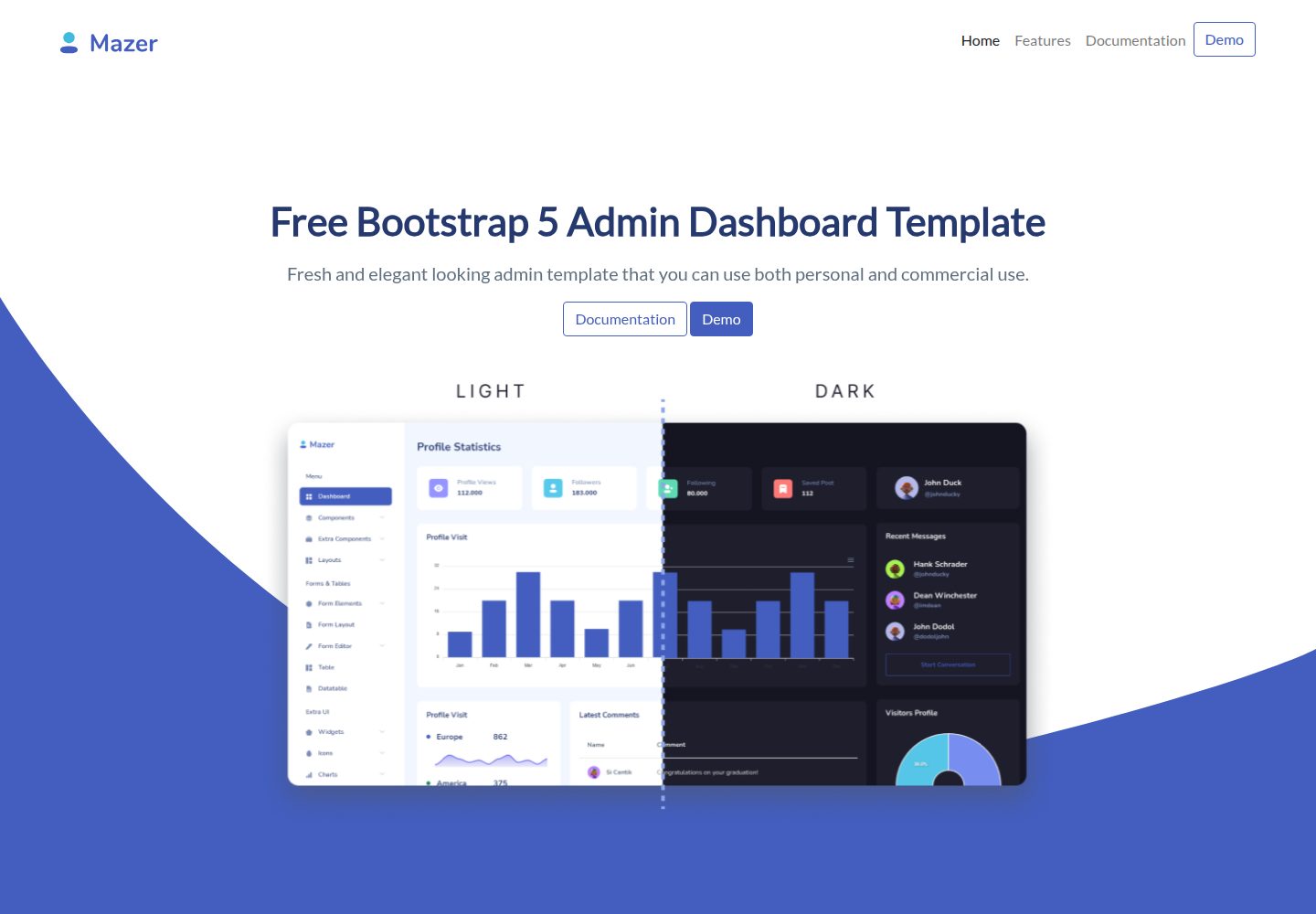
mazer
Mazer is a free and open-source Bootstrap 5 admin dashboard and landing page template that does not depend on jQuery. It provides prebuilt releases, source builds, and CDN inclusion, and includes dark mode, perfect-scrollbar, and ApexCharts examples.
HTML · Admin dashboard

Freelancer
A bright, single-page Bootstrap portfolio template for freelancers, designers, and small studios. It includes a responsive portfolio grid with modal detail windows and an SB Forms contact form that requires an API token.
HTML · Portfolio
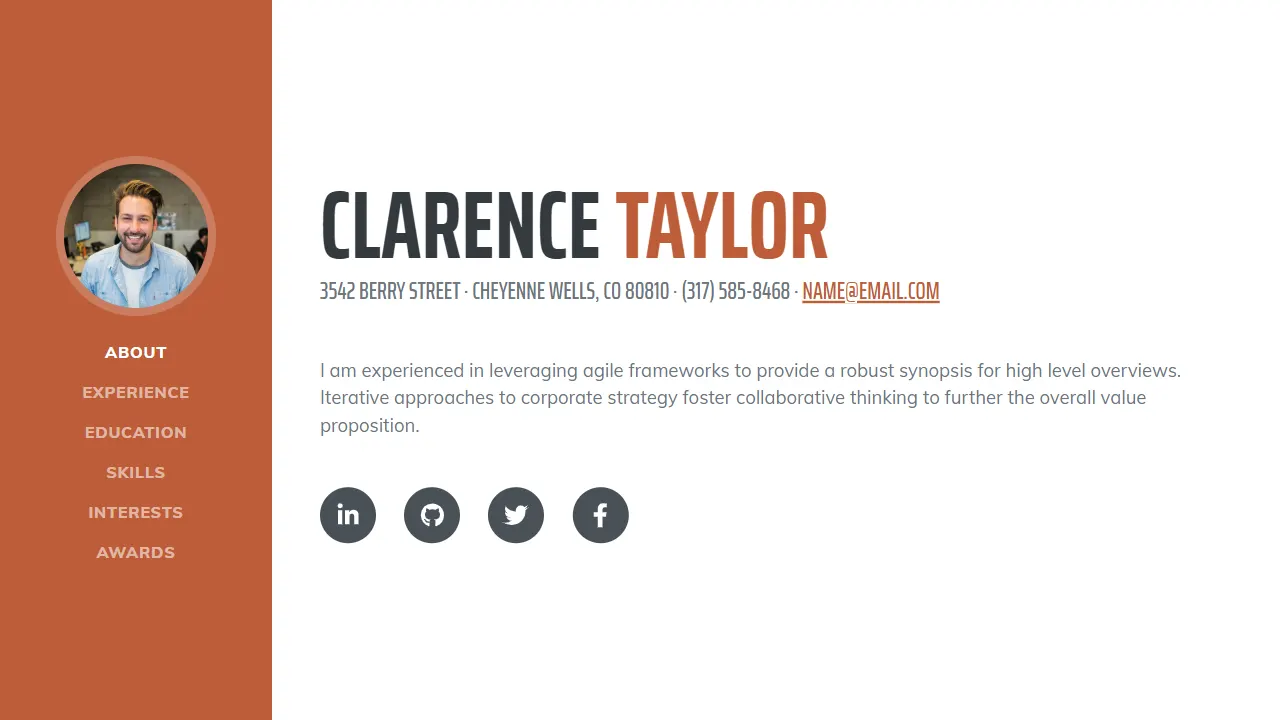
Resume
A single-page resume and CV template from Start Bootstrap, built on Bootstrap with a fixed sidebar and content sections.
HTML · Portfolio
Creative
A single-page marketing template by Start Bootstrap for creative agencies and product services, built on Bootstrap with SCSS, featuring a portfolio grid and call-to-action sections. It includes pre-set SB Forms markers for form integration and npm build scripts for source customization.
HTML · Corporate Website
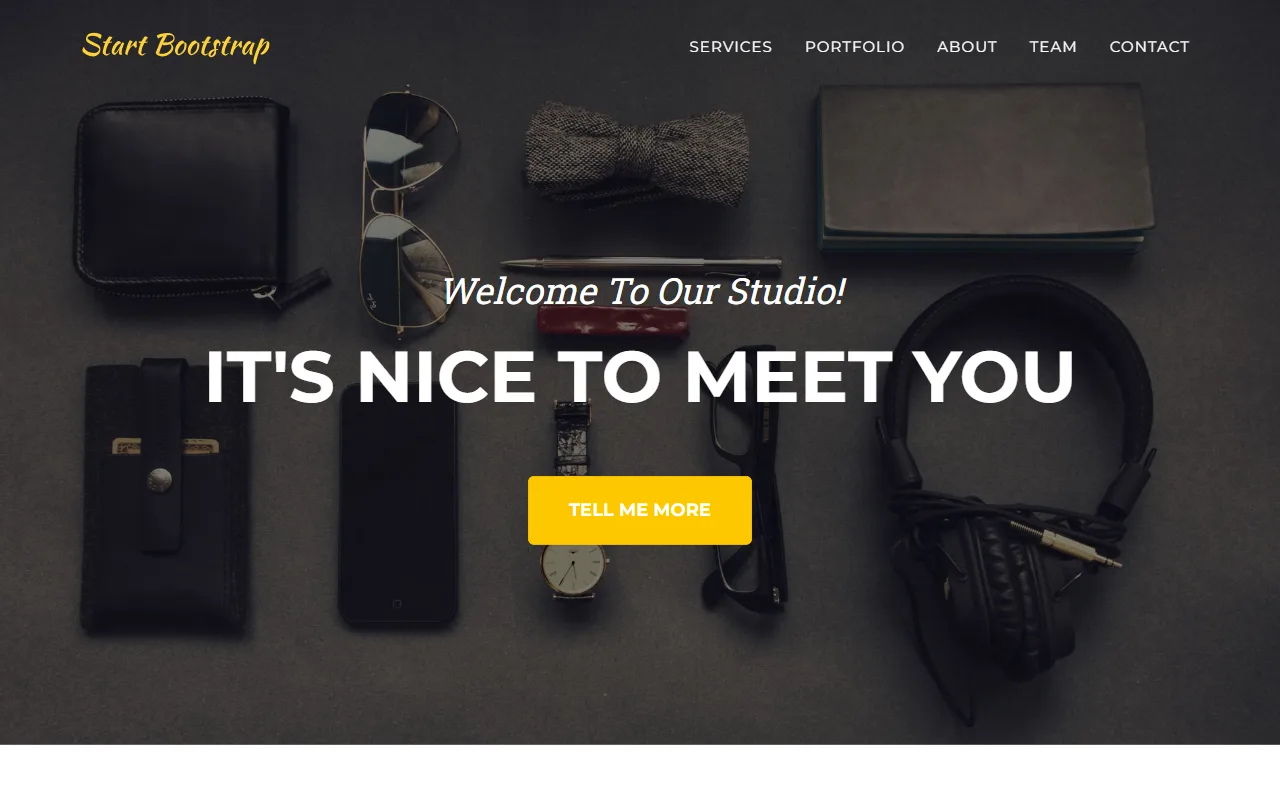
startbootstrap-agency
Agency is a one-page Bootstrap portfolio theme from Start Bootstrap, MIT licensed. It includes a responsive portfolio grid with modal details and a preconfigured SB Forms contact form that requires an API token.
HTML · Corporate Website