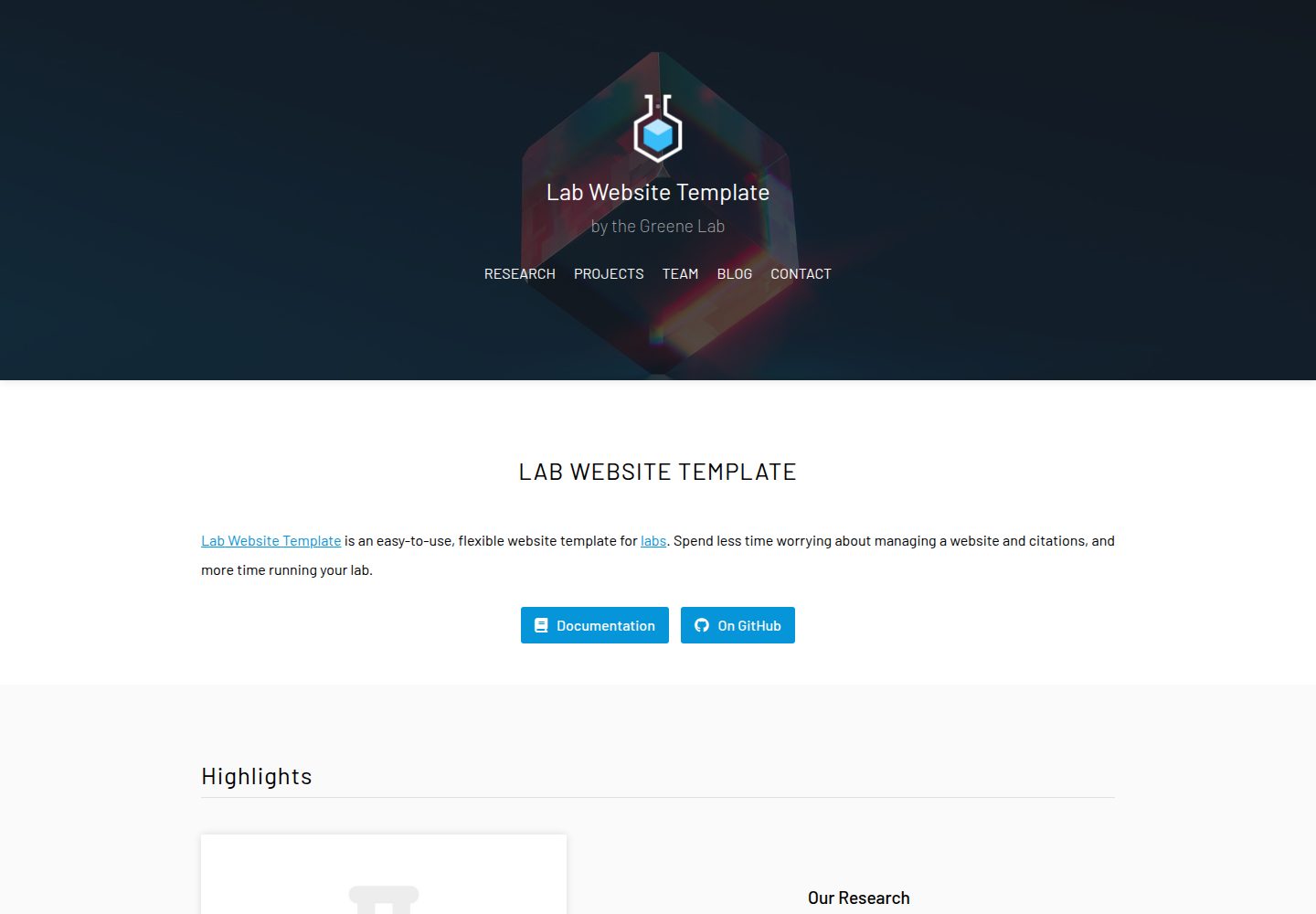
A static site template based on Git, GitHub, and Jekyll, with content maintained as repository files
HTMLStarter
lab-website-template — HTML Starter Template
By greenelab
A static website template for labs, built on Git, GitHub, and Jekyll. It automatically generates paper citations from simple identifiers and provides preset components, member pages, and a blog.
Explore the design
Compare the page layouts and mobile experience. Open any screenshot for a closer look.
Desktop homepage1 / 3
Desktop captureTop of page
Actual screenshot captured by the server browser.
All pages & views 3
Screenshots show visual appearance; interactive behavior may differ.
Recorded 2026-10-02View source
What stands out
A quick read of the recorded project description.
Automatically generates paper citation information via identifiers such as DOI, PubMed, and ORCID using Manubot
Provides preset components for tables, code blocks, images, citation entries with thumbnails, and filterable data lists
Includes built-in team member pages with support for bios, roles, and social media links
Includes built-in tagged blog posts and supports automatically generated pull request previews
Template Details
Lab Website Template (LWT) is a lab website template maintained by Greenelab, positioned to let labs focus on research rather than website and citation management. It is built on Git, GitHub, and Jekyll and is a static site solution, so content is stored as files in the repository and updated through commits and pull requests.
One of the template's core capabilities is citation generation: by writing simple identifiers such as DOI, PubMed, and ORCID into content, Manubot can automatically fill in the title, authors, publisher, date, and other information, reducing the manual work of maintaining a bibliography.
For page structure, the template provides a set of preset components for laying out basic elements such as tables, code blocks, and images, displaying people or output entries with thumbnails and detailed information, and filtering and listing larger datasets. For content types, it includes built-in team member pages (with bios, roles, and social links) and tagged blog posts.
On the engineering and collaboration side, the template supports automatically generated pull request previews, aims to automate configuration as much as possible, and states that it is adapted for both desktop and mobile. The repository provides a separate documentation site, and the license is BSD-3-Clause.
Note that the template itself is a static website and does not include a backend, database, or online editing admin panel; automatic citation completion depends on Manubot and external identifier services, and external services such as domains and hosting may incur additional costs. Third-party assets such as images, fonts, and icons appearing in the demo must be checked separately under their respective licenses.
HTMLStarter
Is it right for your project?
Use Cases
- A lab building a public homepage to present research directions, members, and output in one place
- Maintaining a lab publication list and automatically completing titles, authors, publishers, and dates using identifiers
- Publishing lab news or outreach articles and organizing content with tags
- Collaborating on website content updates on GitHub through commits and pull requests
Suitable For
- Research teams that want to publish a lab website as a static site
- Labs whose content is mainly papers, members, and blog posts and that are willing to maintain it through a Git workflow
- Projects that need automatic completion of bibliographic metadata and want to reduce manual entry of citation information
- Small teams already using GitHub that want to review website changes through pull request previews
Getting started & customization
Use these recorded setup notes alongside the repository instructions for your chosen version.
- 1
The template is based on Jekyll and requires repository configuration and site building according to the official documentation
- 2
Automatic citation completion depends on Manubot and external identifier services such as DOI, PubMed, and ORCID
- 3
Third-party assets such as images, fonts, and icons in the demo must be checked separately under their respective licenses
- 4
External services such as domains and hosting may incur separate charges and must be confirmed independently
- 5
The license is BSD-3-Clause; distribution must retain the copyright notice, the three conditions, and the disclaimer
License & source material
Usage conditions & limitations
Free to use · keep license noticeThis entry covers the free version in the public repository under the BSD-3-Clause license; the free scope is the code of that version and does not mean that external services or third-party assets are free.
Must comply with when using
- Free use, modification, commercial use, and distribution in source or binary form are permitted.
- Source distribution must retain the copyright notice, the three conditions, and the disclaimer; binary distribution must reproduce these in the documentation or accompanying materials.
- The names of the rights holder or contributors may not be used to endorse or promote derivative products without prior written permission.
- The code is provided as is; warranties and limitations of liability are governed by the original license and applicable law.
Additional costs & items to verify
- Automatic citation completion depends on Manubot and external identifier services such as DOI, PubMed, and ORCID, requiring online access to these third-party services; offline environments cannot generate citation metadata.
- The template is built on Git, GitHub, and Jekyll, so using it requires a Git workflow and depends on GitHub hosting and a Jekyll build environment.
- Demo images, fonts, icons, and other third-party assets must be checked under their respective licenses and cannot be judged solely by the code's BSD-3-Clause license.
- External services such as domains, hosting, databases, payments, or AI may incur separate charges.
View Original Text Basis
Redistribution and use in source and binary forms, with or without modification, are permitted
Original License Text
Automatically generated citations from simple identifiers (DOI, PubMed, ORCID, and many more) using Manubot.
Original README
https://github.com/greenelab/lab-website-template/blob/main/LICENSE.mdhttps://github.com/greenelab/lab-website-template/blob/main/README.mdBased on Git, GitHub, and Jekyll.
Original README
Compiled by DeepSeek based on repository license and README ·2026-10-02. Results only cover the materials read; dependencies, images, fonts, and subsequent term changes are subject to their respective original texts.
Project checks & description sources
Template Information
- Source platforms
- GitHub
- Documentation and maintenance reference score
- More documented · 91 / 100
- Technologies
- HTML
- Website type
- Starter
How this score is calculated
Our heuristic uses license records (up to 30), a demo link (12), a preview (10), stars (15), recorded maintenance (15), description completeness (8), feature records (5) and classification data (5). It is not a code, security or performance test, or a Google score. A link does not establish tested functionality.
What to verify for this project
- Repository update recorded
- 2026-08-03
- Screenshot last checked
- 2026-10-02
A demo link is listed. Check it with your own content and viewport sizes; its presence does not confirm that forms, authentication or payments work.
The catalog identifies HTML as the primary stack. Check the actual dependency manifest and lockfile for versions and hosting requirements. These notes use recorded metadata, not a code audit or a deployment test.
Use a selection guide →How this description was prepared
AI-assisted description based on catalog records and repository material. Repository authors are not automatically the reviewers of this description.
Automatically checked against source and license rules; no manual editorial review.
Inspect the recorded source material
SHA-256: 64662f30a007b03e00b78d9c111632d2981ae165ab1c40181eae0f523f528724
2026-10-02T08:44:30.975Z
Source file / repository[](https://doi.org/10.5281/zenodo.17228741) <h1 align="center">Lab Website Template</h1> <p align="center"> <img height="200" src="https://raw.githubusercontent.com/greenelab/lab-website-template/main/images/share.jpg?raw=true" alt="Lab Website Template"> </p> Lab Website Template (LWT) is an easy-to-use, flexible website template for labs. Spend less time worrying about managing a website and citations, and more time running your lab. 👇👇 **Get Started** 👇👇 [**Documentation**](https://greene-lab.gitbook.io/lab-website-template-docs) ## Key Features - 🤖 Based on Git, GitHub, and Jekyll. - 📜 Automatically generated citations from simple identifiers (DOI, PubMed, ORCID, and many more) using Manubot. E.g. `doi:1234/5678` -> `title`, `authors`, `publisher`, `date`, etc. - 🧱 A comprehensive and flexible suite of pre-made components (building blocks) for structuring and styling your website: - Formatted tables, code blocks, figures, and other basic elements. - Citations with thumbnails and other rich details. - List large sets of data with flexible filters and components. - ...many more - 👁️ Automatic pull request previews. - ⚙️ Easy and automated configuration. - 👥 Team member pages with bios, roles, and social media links. - 🖋️ Blog posts with tags and rich content. - 📱 Works and looks good on desktop and mobile. - 🤝 Great documentation and support (if we do say so ourselves). - ... and much more! 
Explore similar templates
Compare previews and descriptions within the same stack and category.
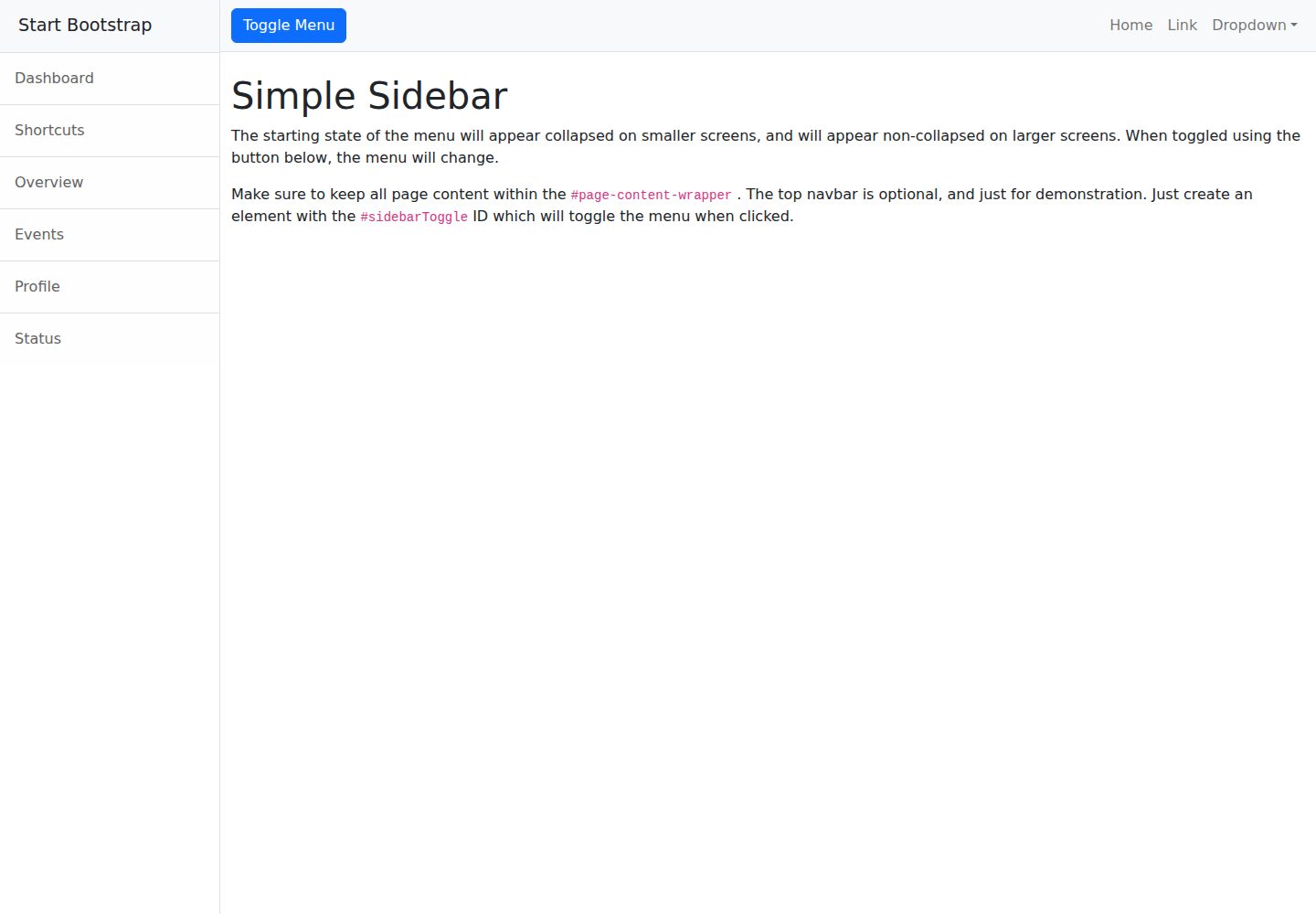
startbootstrap-simple-sidebar
A Bootstrap off-canvas sidebar navigation HTML starter template from Start Bootstrap. It provides directly editable HTML and CSS in the dist directory, while the source uses Pug, SCSS, and JavaScript with npm build scripts for live preview and compilation.
HTML · Starter
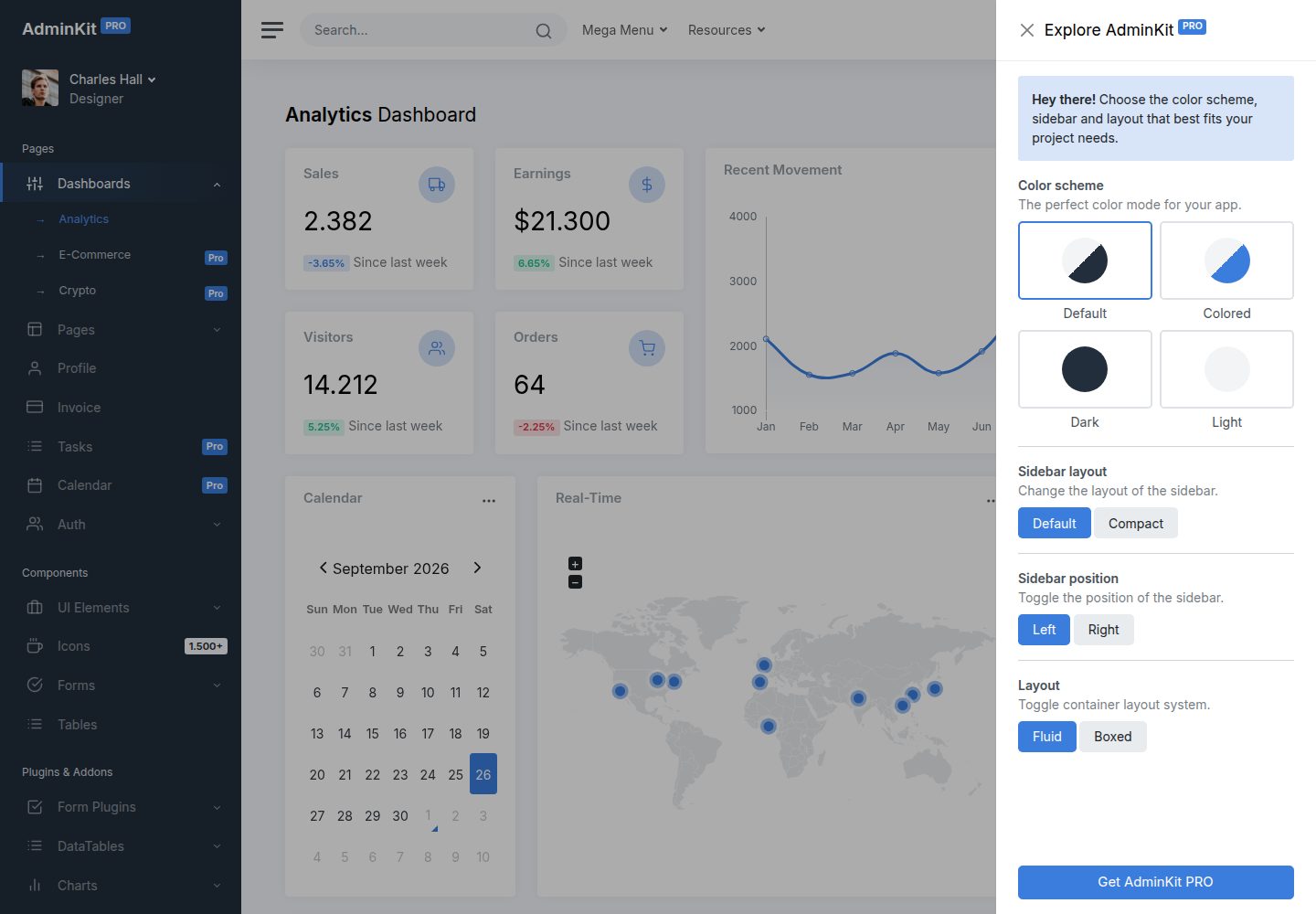
adminkit
AdminKit is a free, MIT-licensed HTML admin and dashboard template built on Bootstrap 5. The free version includes 15 demo pages, 1 plugin, and 1 color scheme, with hundreds of UI components, forms, tables, charts, and icons.
HTML · Admin dashboard
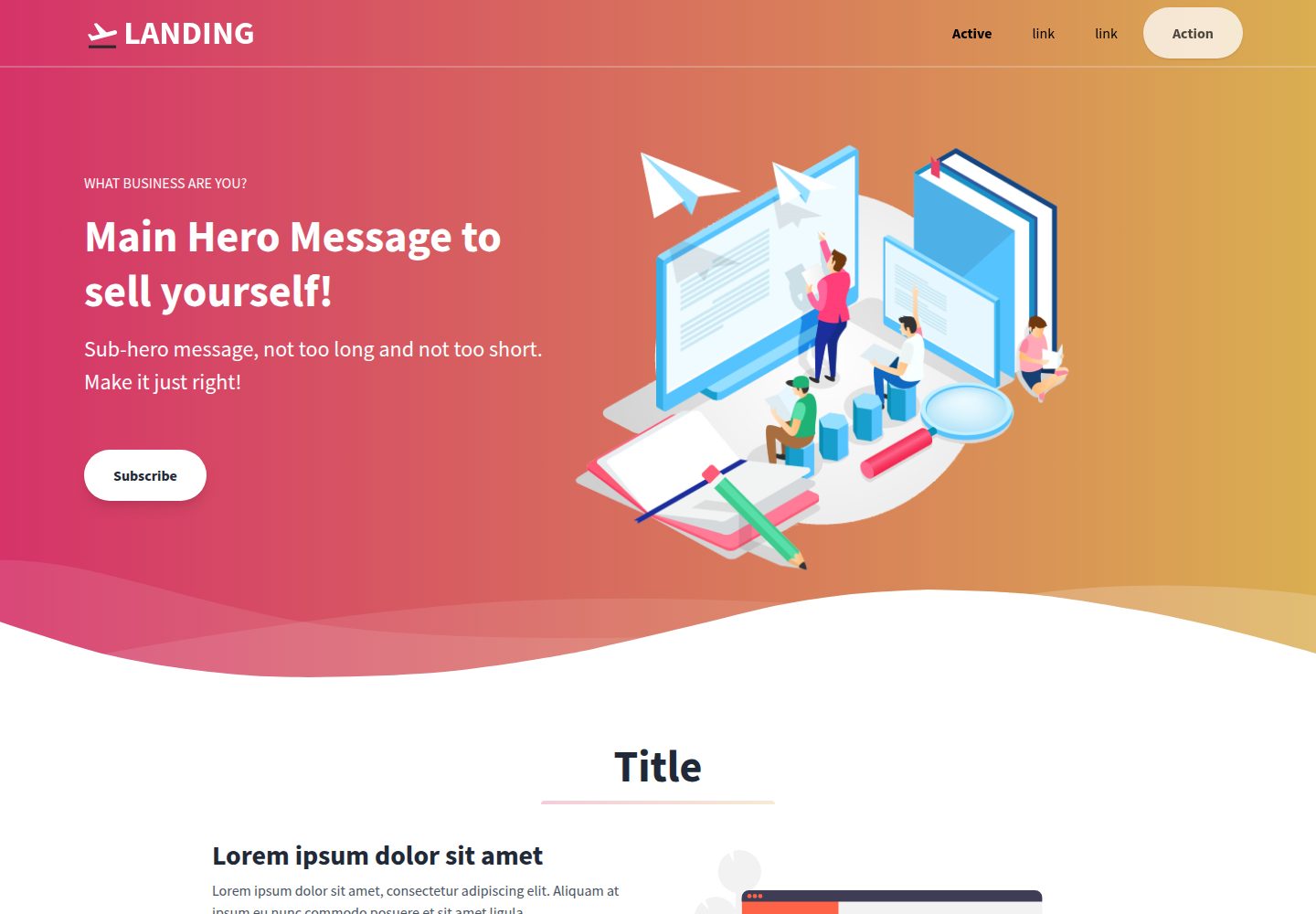
Landing-Page
A general-purpose landing page HTML template maintained by Tailwind Toolbox, written in pure HTML and loading the complete Tailwind CSS via CDN.
HTML · Corporate Website
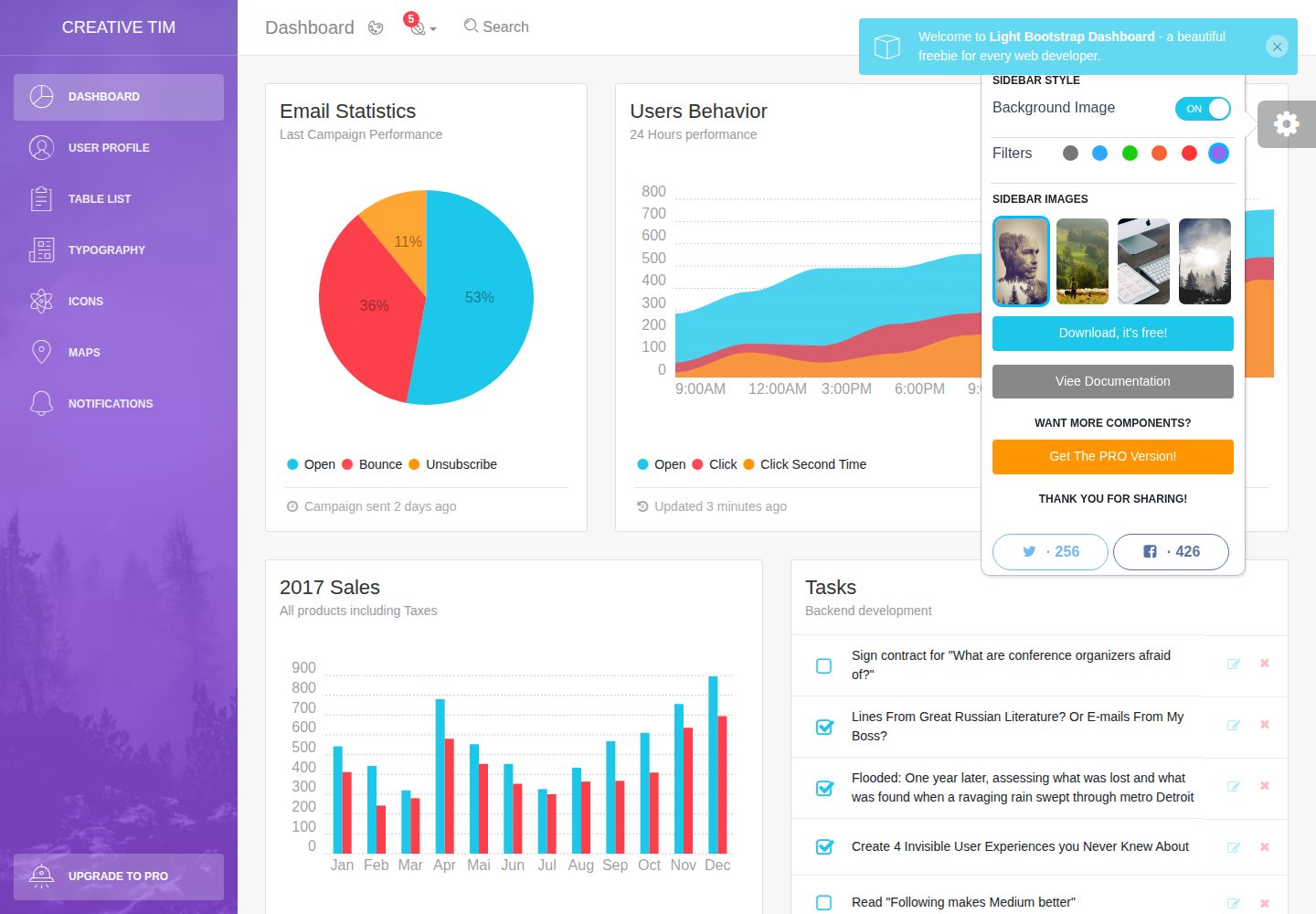
light-bootstrap-dashboard
Light Bootstrap Dashboard is a free, MIT-licensed admin dashboard template from Creative Tim, built on Bootstrap with a responsive static HTML structure.
HTML · Admin dashboard
sing-app
Sing App Lite is a free, open-source admin dashboard template from Flatlogic, built with Bootstrap 4.5 and SCSS. It provides a responsive layout, dashboard examples, typography, tables, notifications, basic charts, icons, maps, and a hover sidebar, along with styled Bootstrap components.
HTML · Admin dashboard
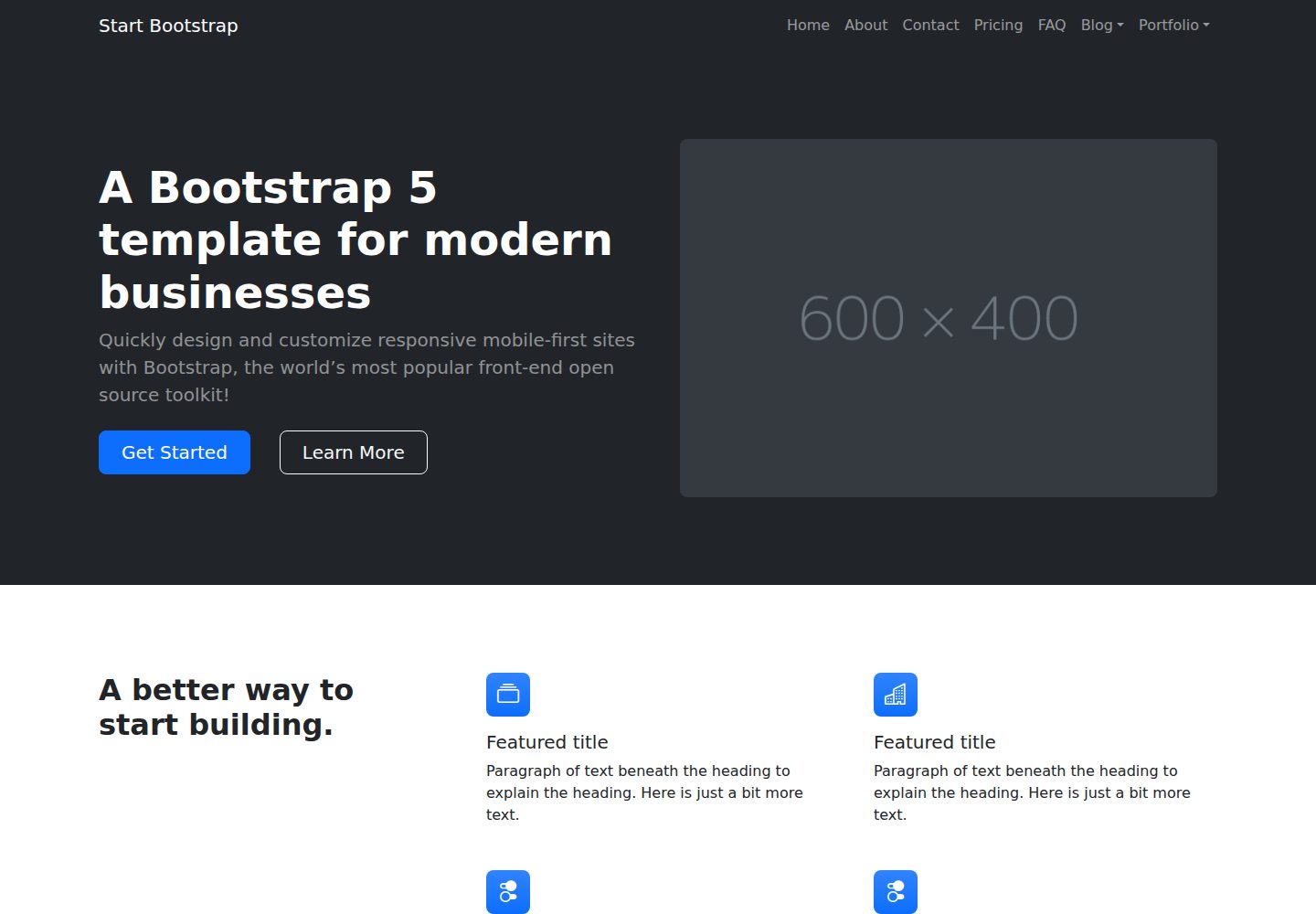
startbootstrap-modern-business
Modern Business is a multipurpose Bootstrap full-site HTML template from Start Bootstrap with 17 standalone pages covering home, about, services, portfolio, pricing, blog, FAQ, and contact.
HTML · Starter