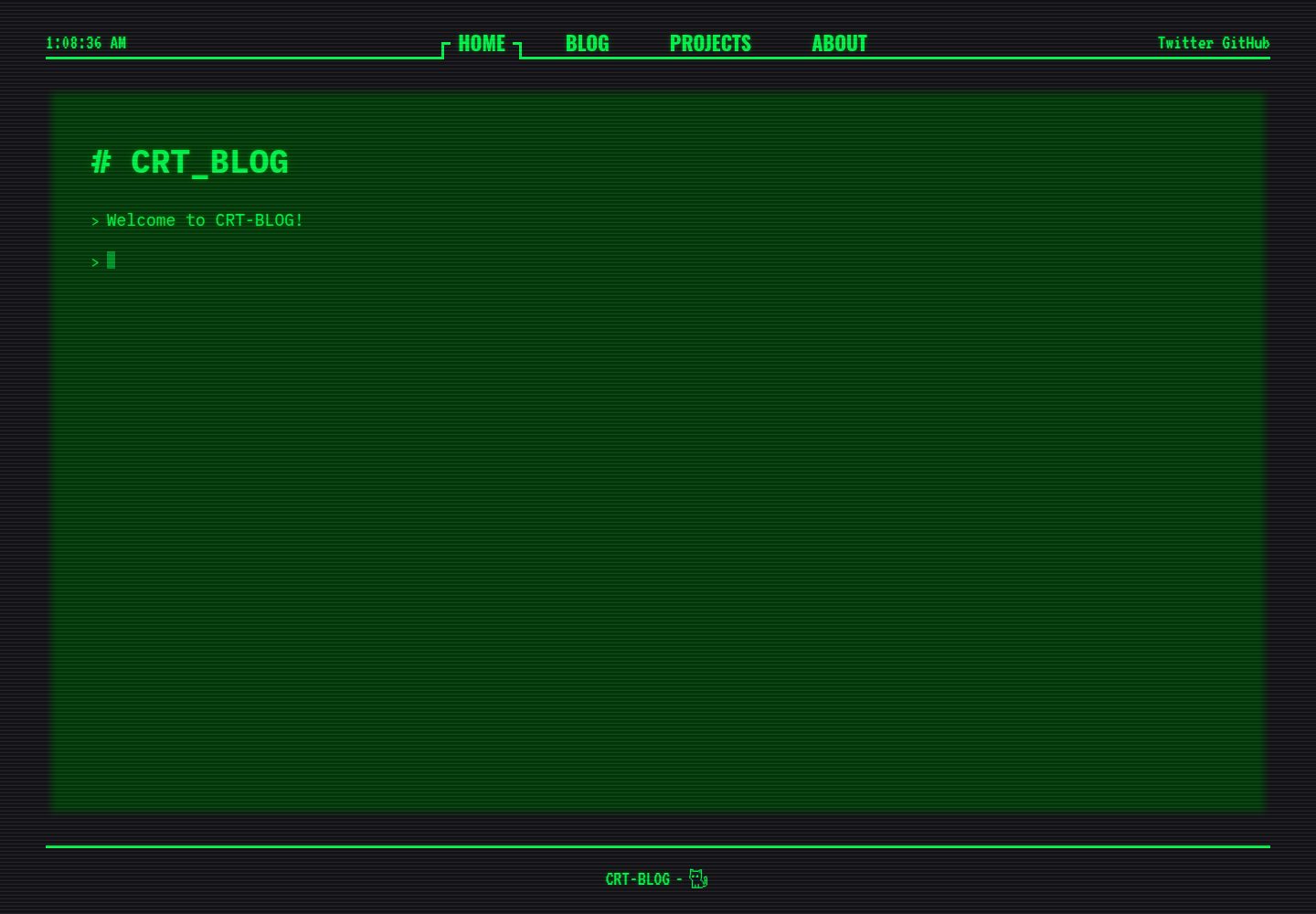
Green phosphor text on a black background, recreating the look of old monitors
HTMLBlog
crt-blog — HTML Blog Template
By Heroor
crt-blog is an HTML personal blog template with a visual theme inspired by 1980s CRT terminals, using green text on a black background, scanlines, and pixel fonts.
Explore the design
Compare the page layouts and mobile experience. Open any screenshot for a closer look.
Desktop homepage1 / 2
Desktop captureTop of page
Actual screenshot captured by the server browser.
All pages & views 2
Screenshots show visual appearance; interactive behavior may differ.
Recorded 2026-10-13View source
What stands out
A quick read of the recorded project description.
Scanline effects simulate a CRT screen, making the page look as if viewed through an old monitor
Uses pixelated fonts to reinforce the 1980s computer interface style
Minimal interaction, retaining only essential information and highlighting blog content
Pure HTML implementation, no build step required to open in a browser
Provides actual page screenshots for desktop and mobile, so you can see the effect before deciding
Template Details
crt-blog is a pure HTML blog website template published by Heroor on GitHub under the MIT license. Its core characteristic is styling pages to look like a retro CRT terminal: green phosphor text on a black background, scanline effects, and pixelated fonts, evoking the atmosphere of 1980s computer interfaces and hacker culture. The template is positioned as a personal website, emphasizing minimal interaction and retaining only essential information so that the content itself becomes the visual focus.
According to the materials, it provides actual page screenshots for both desktop and mobile, indicating that the pages have usable layouts at both screen sizes. The repository README describes the interface features but does not provide build tools, dependencies, or deployment instructions; the template itself is HTML, so it can be opened directly in a browser for viewing.
Regarding usage restrictions, the code is under the MIT license, allowing free use, modification, commercial use, and distribution, but the copyright notice and license notice must be retained when distributing. Third-party assets such as images, fonts, and icons appearing in the demo need to be checked separately for their licenses and cannot be judged solely by the code's MIT license.
HTMLBlog
Is it right for your project?
Use Cases
- Building a personal blog homepage with a retro terminal style
- Creating a personal homepage that showcases hacker culture or geek aesthetics
- Serving as an HTML page reference for learning CRT visual effects
- Providing a lightweight static display page for personal projects or a collection of articles
Suitable For
- Individual developers who like 1980s computer interfaces and terminal aesthetics
- People who need a pure HTML static blog template and do not want to introduce build tools
- People who want to quickly see how a CRT-style page looks on desktop and mobile
- Users who accept the MIT license and are willing to retain the copyright notice
Getting started & customization
Use these recorded setup notes alongside the repository instructions for your chosen version.
- 1
The repository is an HTML template; you can open the page files directly in a browser to view the effect
- 2
The online demo address is https://heroor.github.io/crt-blog/
- 3
The code is under the MIT license; when distributing or distributing after modification, you must retain the original author's copyright notice and the full MIT license notice
- 4
Third-party assets such as images, fonts, and icons in the demo need to be checked separately according to their respective licenses
- 5
The README does not specify build tools or dependencies; if deployment is needed, handle it as static HTML
License & source material
Usage conditions & limitations
Free to use · keep license noticeThis entry covers the free version under the MIT license in the public repository; the free scope is the code of this version and does not mean that external services or third-party assets are free.
Must comply with when using
- Free use, modification, commercial use, and distribution of this version's code are allowed.
- When distributing copies or substantial portions of the code, retain the original author's copyright notice and the full MIT license notice.
- The code is provided as is; warranties and limitations of liability are governed by the original license and applicable law.
Additional costs & items to verify
- Demo images, fonts, icons, and other third-party assets need to be checked according to their respective licenses and cannot be judged solely by the code's MIT license.
- External services such as domains, hosting, databases, payments, or AI may incur additional charges.
View Original Text Basis
https://github.com/Heroor/crt-blog/blob/main/LICENSEhttps://github.com/Heroor/crt-blog/blob/main/README.mdPermission is hereby granted, free of charge
Original License Text
Compiled by DeepSeek based on repository license and README ·2026-10-13. Results only cover the materials read; dependencies, images, fonts, and subsequent term changes are subject to their respective original texts.
Project checks & description sources
Template Information
- Source platforms
- GitHub
- Documentation and maintenance reference score
- More documented · 77 / 100
- Technologies
- HTML
- Website type
- Blog
How this score is calculated
Our heuristic uses license records (up to 30), a demo link (12), a preview (10), stars (15), recorded maintenance (15), description completeness (8), feature records (5) and classification data (5). It is not a code, security or performance test, or a Google score. A link does not establish tested functionality.
What to verify for this project
- Repository update recorded
- 2025-03-31
- Screenshot last checked
- 2026-10-13
A demo link is listed. Check it with your own content and viewport sizes; its presence does not confirm that forms, authentication or payments work.
The catalog identifies HTML as the primary stack. Check the actual dependency manifest and lockfile for versions and hosting requirements. These notes use recorded metadata, not a code audit or a deployment test.
Use a selection guide →How this description was prepared
AI-assisted description based on catalog records and repository material. Repository authors are not automatically the reviewers of this description.
Review declaration: [email protected] · 2026-10-13
Inspect the recorded source material
SHA-256: 5e4d2b7d1ac5fb6728c3946d2591e32f3837828a437055c95acafc06a57bf85d
2026-10-13T01:08:54.019Z
Source file / repository# CRT_BLOG <picture> <source media="(prefers-color-scheme: light)" srcset="https://github.com/user-attachments/assets/1bc64a6b-6b53-4d18-ae86-b3c57e8da4df"> <source media="(prefers-color-scheme: dark)" srcset="https://github.com/user-attachments/assets/d580d993-f14b-4fc2-b095-98708c33b8de"> <img align="right" width="100" src="https://github.com/user-attachments/assets/1bc64a6b-6b53-4d18-ae86-b3c57e8da4df"> </picture> Welcome to CRT BLOG! https://heroor.github.io/crt-blog This is a retro CRT terminal-style personal website template that recreates the visual aesthetics of 1980s computer interfaces. The entire page features green phosphor text, scanline effects, and pixelated fonts, creating an atmosphere that blends hacker culture with geek spirit.  Interface Features: - Retro Terminal Style – Green phosphor text on a black background, reviving the unique charm of old computer displays. - CRT Screen Simulation – Implements scanline effects, making the screen appear as if viewed through a vintage monitor. - Minimalist Interaction – Retains only essential information, emphasizing content while embracing the simplicity of geek culture. © 2025-present Bener. MIT License.
Explore similar templates
Compare previews and descriptions within the same stack and category.

Casper
Casper is Ghost's official classic blog theme, long used as the default and still maintained.
HTML · Magazine
startbootstrap-clean-blog
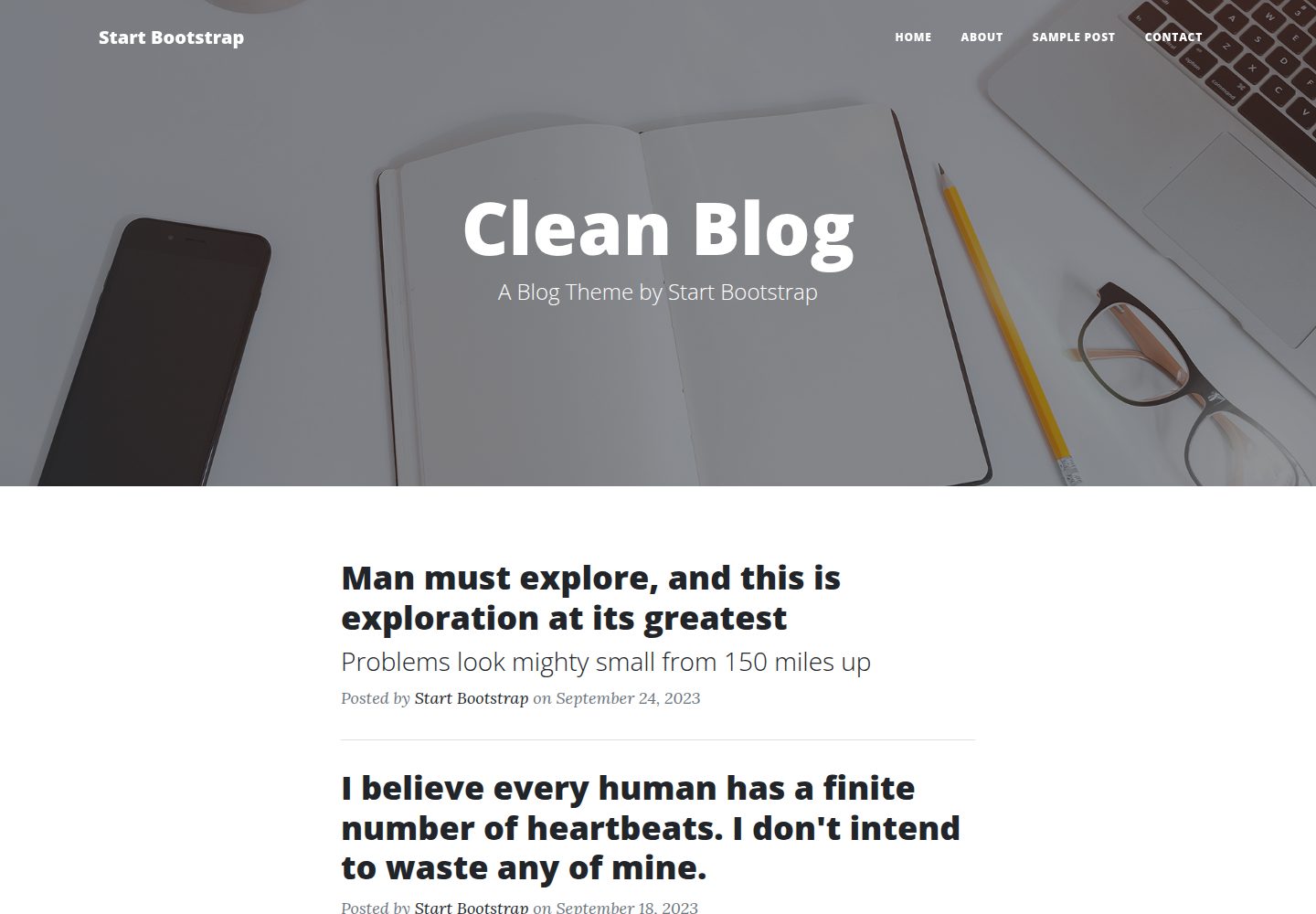
Clean Blog by Start Bootstrap is a responsive Bootstrap blog theme with a home page, about page, contact page, and sample post page, plus a working PHP contact form preconfigured for SB Forms.
HTML · Blog
halo-theme-sakura
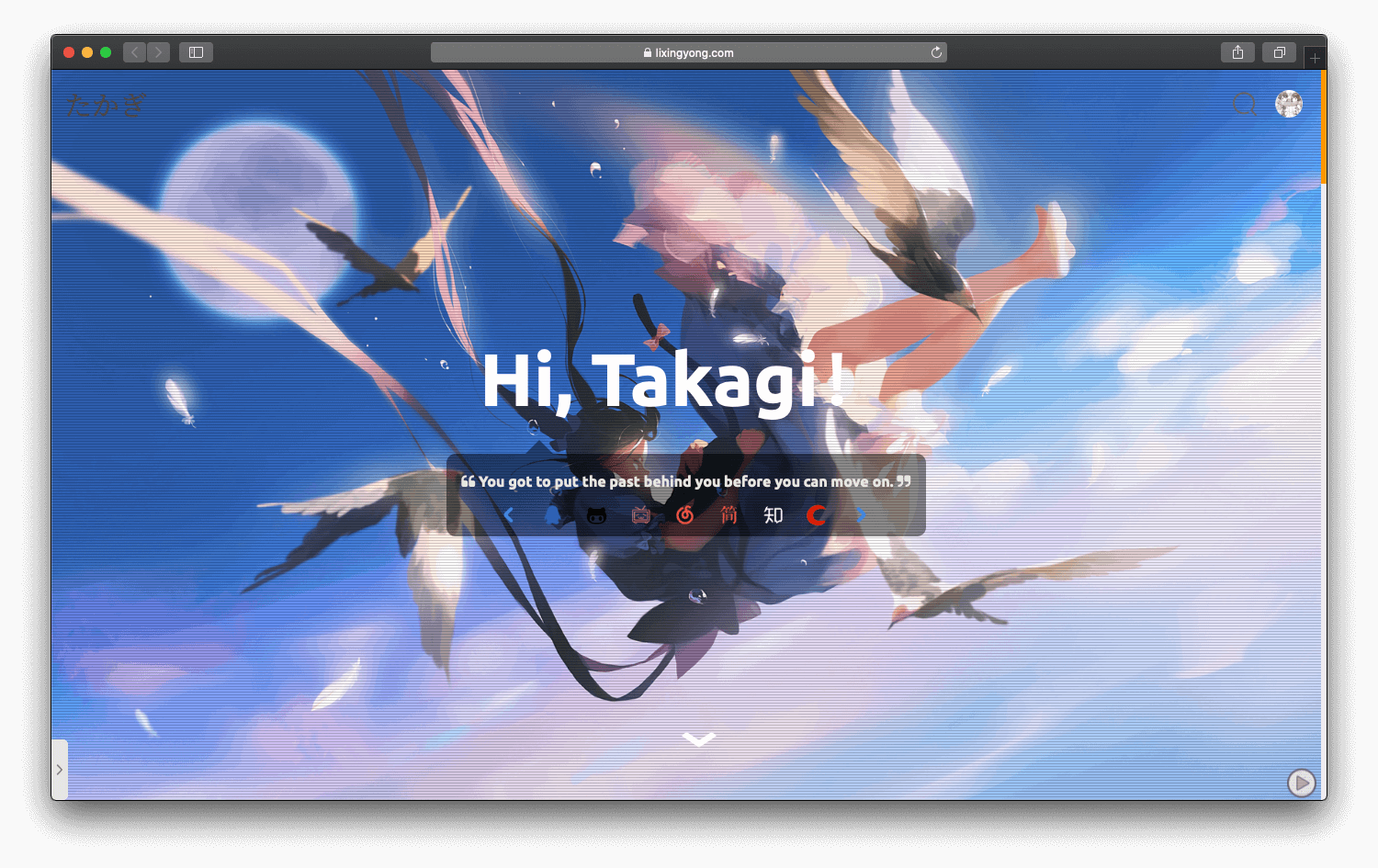
A Sakura-style blog theme for Halo 2.x, rebuilt after 2.0.0 for improved performance with asynchronous and deferred resource loading.
HTML · Blog
bleak
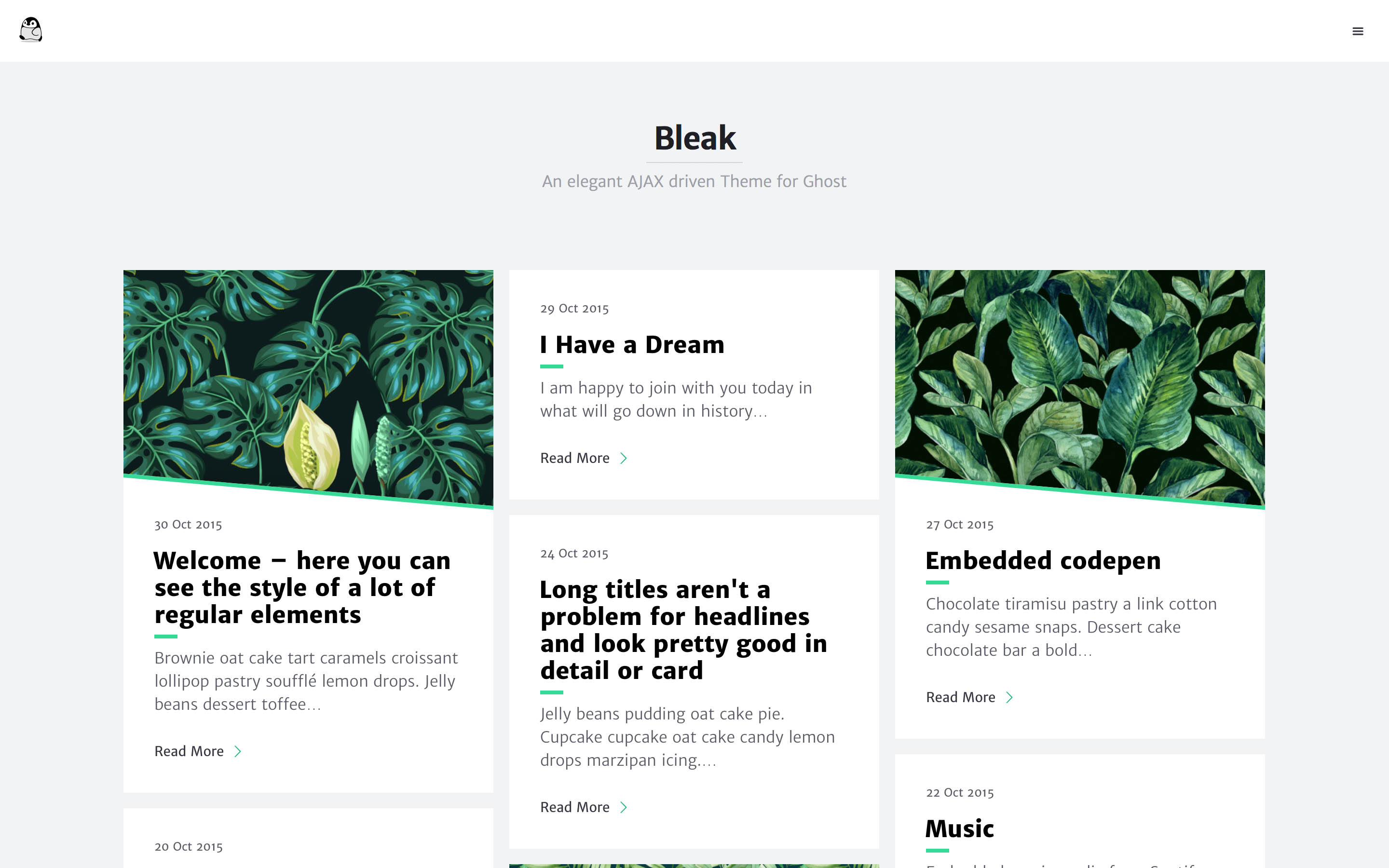
Bleak is an AJAX-driven Ghost blog theme with a clean, reading-focused layout. It offers responsive design, built-in code syntax highlighting with line numbers, customizable primary color via Code injection, Disqus comments, and an optional fixed navigation bar.
HTML · Blog
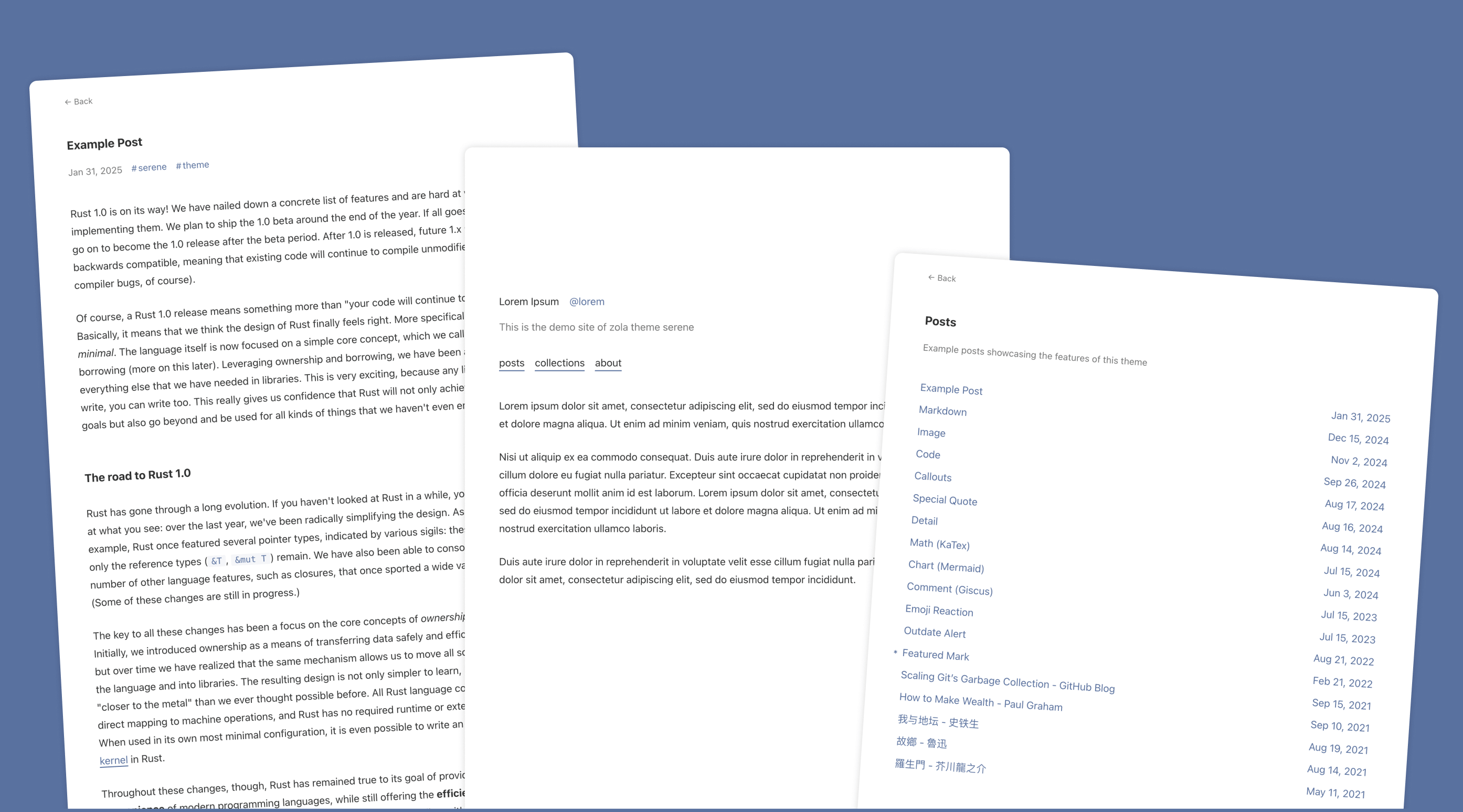
serene
Serene is a minimal blog theme for Zola, focused on typography and reading experience. Built on Zola's template system with HTML and CSS, it has no front-end framework dependencies and loads lightly.
HTML · Blog
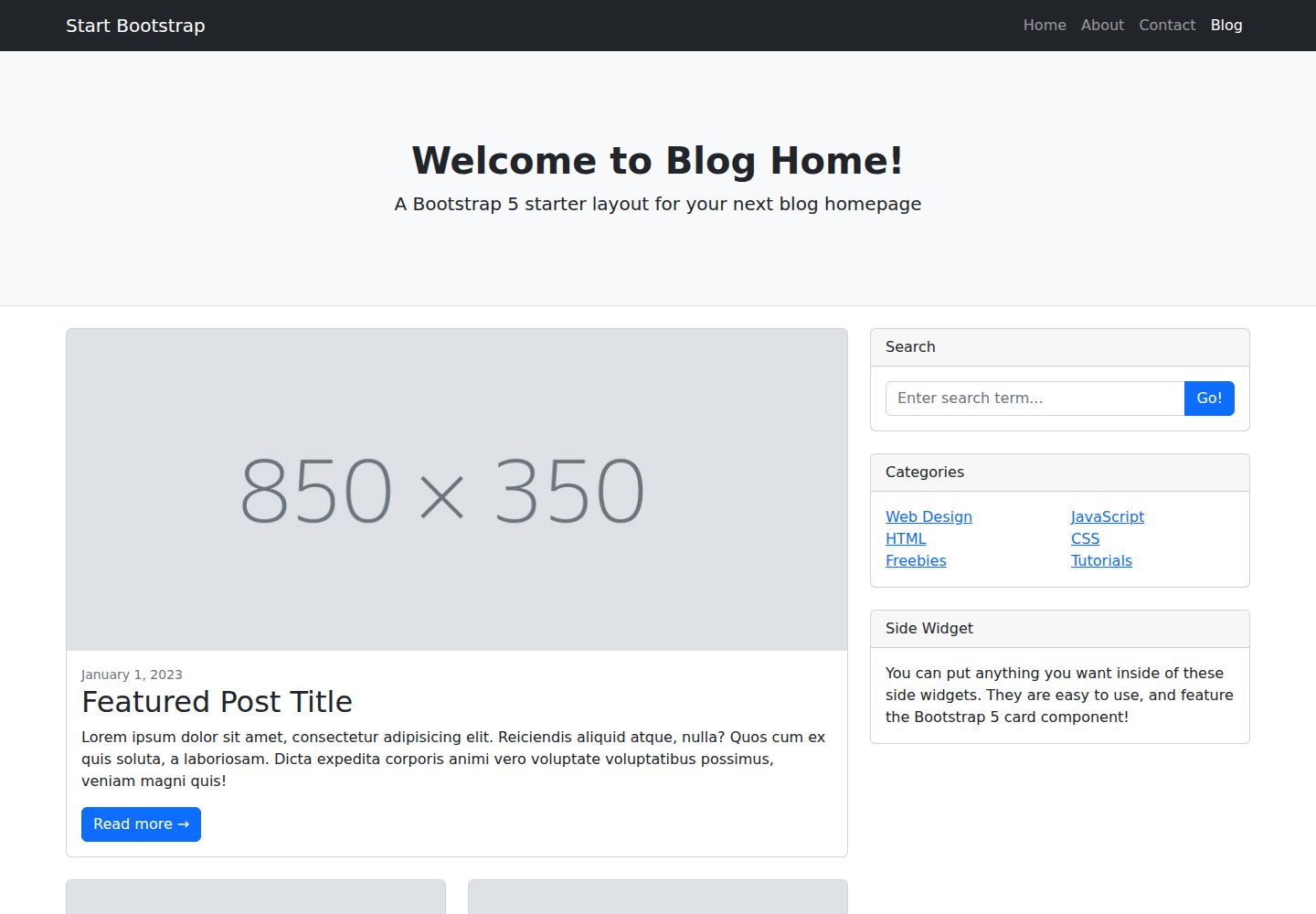
startbootstrap-blog-home
A Bootstrap blog homepage HTML starter template by Start Bootstrap, with post lists, sidebars, and pagination. Edit HTML/CSS in dist directly, or build from Pug, SCSS, and JS via npm scripts with local preview and live refresh.
HTML · Blog