Built on the Jekyll static site generator, using the Chirpy theme
JekyllBlog
blog (LFClaro) — Jekyll Blog Template
By LFClaro
A personal blog site built with Jekyll and the Chirpy theme. The repository is generated from the Chirpy Starter template and is used by the author to publish blog posts.
Explore the design
Compare the page layouts and mobile experience. Open any screenshot for a closer look.
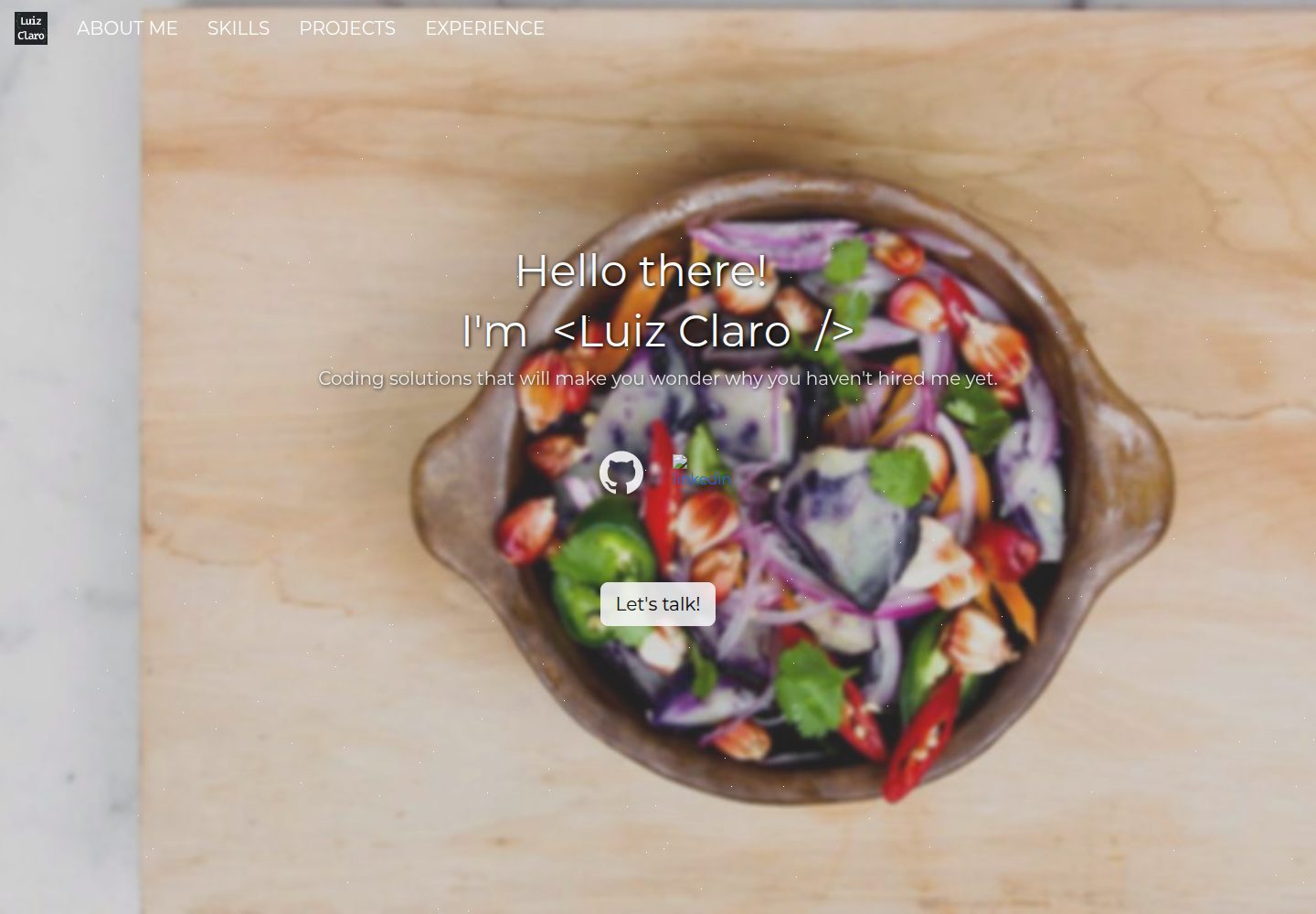
Desktop homepage1 / 2
Desktop captureTop of page
Actual screenshot captured by the server browser.
All pages & views 2
Screenshots show visual appearance; interactive behavior may differ.
Recorded 2026-10-03View source
What stands out
A quick read of the recorded project description.
The repository is generated from the Chirpy Starter template and already includes key files such as _config.yml, _plugins, _tabs, and index.html
Includes continuous deployment workflow configuration to facilitate site publishing
The README provides installation steps: after generating a USERNAME.github.io repository using the template, run bundle
Uses the MIT license, allowing free use, modification, commercial use, and distribution
Template Details
This is a Jekyll blog project. In the description, the author states that the site is built with the Chirpy theme, and the repository contents come from the Chirpy Starter template. The README explains the template's purpose: when installing the Chirpy theme via RubyGems, Jekyll can only read the /_data, /_layouts, /_includes, /_sass, and /assets directories from the theme gem, along with some options in /_config.yml. Therefore, the template extracts key files such as _config.yml, _plugins, _tabs, and index.html, as well as the continuous deployment workflow, so you can start writing directly.
The repository itself is the author's personal blog instance, with a demo address at luizclaro.com. The repository does not provide additional customization instructions or configuration documentation. Usage follows the Chirpy theme documentation. Before installation, you need to prepare the base environment according to the official Jekyll documentation and install Git.
Regarding licensing, the repository uses the MIT license, which allows free use, modification, commercial use, and distribution of this version of the code. When distributing, you must retain the copyright notice and the full MIT license notice. Third-party assets such as demo images, fonts, and icons require separate license verification. External services such as domains and hosting may incur separate charges.
JekyllBlog
Is it right for your project?
Use Cases
- Building a personal technical blog and publishing posts
- Using Chirpy Starter as a starting point to customize your own Jekyll blog
- Referencing another person's actually running Chirpy blog instance for configuration
Suitable For
- Blog authors who are familiar with or willing to learn Jekyll and Git
- Developers who want to get started quickly with the Chirpy theme
- Users who need blog code that can be freely modified under the MIT license
Getting started & customization
Use these recorded setup notes alongside the repository instructions for your chosen version.
- 1
Complete the base environment installation according to the official Jekyll documentation, and install Git
- 2
Use the template on GitHub to generate a new repository named USERNAME.github.io
- 3
Clone the repository locally and run bundle to install dependencies
- 4
For theme features and configuration, refer to the official Chirpy theme documentation
- 5
Third-party assets and external services require separate license and cost verification
License & source material
Usage conditions & limitations
Free to use · keep license noticeThis entry covers the free version under the MIT license in the public repository; the free scope is the code of this version and does not mean that external services or third-party assets are free.
Must comply with when using
- Allows free use, modification, commercial use, and distribution of this version of the code.
- When distributing copies or substantial portions of the code, retain the original author's copyright notice and the full MIT license notice.
- The code is provided as is; warranties and limitations of liability are governed by the original license and applicable law.
Additional costs & items to verify
- Using this template requires logging into a GitHub account and generating a new repository through GitHub's "use this template" feature, so a GitHub account is required.
- Before use, you need to install the base environment according to the official Jekyll documentation and additionally install Git, creating external tool dependencies.
- Theme features and configuration require consulting the official Chirpy theme documentation, and the scope of use is constrained by that external documentation.
- Demo images, fonts, icons, and other third-party assets must be checked against their respective licenses and cannot be judged solely by the code's MIT license.
- External services such as domains, hosting, databases, payments, or AI may incur separate charges.
View Original Text Basis
Permission is hereby granted, free of charge
Original License Text
Sign in to GitHub and [**use this template**][use-template] to generate a brand new repository
Original README
Follow the instructions in the [Jekyll Docs](https://jekyllrb.com/docs/installation/) to complete the installation of the basic environment. [Git](https://git-scm.com/) also needs to be installed.
Original README
https://github.com/LFClaro/blog/blob/main/LICENSEhttps://github.com/LFClaro/blog/blob/main/README.mdPlease see the [theme's docs](https://github.com/cotes2020/jekyll-theme-chirpy#documentation).
Original README
Compiled by DeepSeek based on repository license and README ·2026-10-03. Results only cover the materials read; dependencies, images, fonts, and subsequent term changes are subject to their respective original texts.
Project checks & description sources
Template Information
- Source platforms
- GitHub
- Documentation and maintenance reference score
- Partly documented · 65 / 100
- Technologies
- Jekyll
- Website type
- Blog
How this score is calculated
Our heuristic uses license records (up to 30), a demo link (12), a preview (10), stars (15), recorded maintenance (15), description completeness (8), feature records (5) and classification data (5). It is not a code, security or performance test, or a Google score. A link does not establish tested functionality.
What to verify for this project
- Repository update recorded
- 2024-05-27
- Screenshot last checked
- 2026-10-03
A demo link is listed. Check it with your own content and viewport sizes; its presence does not confirm that forms, authentication or payments work.
The catalog identifies Jekyll as the primary stack. Check the actual dependency manifest and lockfile for versions and hosting requirements. These notes use recorded metadata, not a code audit or a deployment test.
Use a selection guide →How this description was prepared
AI-assisted description based on catalog records and repository material. Repository authors are not automatically the reviewers of this description.
Review declaration: [email protected] · 2026-10-04
Inspect the recorded source material
SHA-256: 762eb7d43083c03763a5a1705743c1c5bef968c496a689d45c680a954779bf9a
2026-10-03T18:01:51.413Z
Source file / repository# Chirpy Starter [](https://rubygems.org/gems/jekyll-theme-chirpy) [][mit] When installing the [**Chirpy**][chirpy] theme through [RubyGems.org][gem], Jekyll can only read files in the folders `/_data`, `/_layouts`, `/_includes`, `/_sass` and `/assets`, as well as a small part of options of the `/_config.yml` file from the theme's gem. If you have ever installed this theme gem, you can use the command `bundle info --path jekyll-theme-chirpy` to locate these files. The Jekyll team claims that this is to leave the ball in the user’s court, but this also results in users not being able to enjoy the out-of-the-box experience when using feature-rich themes. To fully use all the features of **Chirpy**, you need to copy the other critical files from the theme's gem to your Jekyll site. The following is a list of targets: ```shell . ├── _config.yml ├── _plugins ├── _tabs └── index.html ``` To save you time, and also in case you lose some files while copying, we extract those files/configurations of the latest version of the **Chirpy** theme and the [CD][CD] workflow to here, so that you can start writing in minutes. ## Prerequisites Follow the instructions in the [Jekyll Docs](https://jekyllrb.com/docs/installation/) to complete the installation of the basic environment. [Git](https://git-scm.com/) also needs to be installed. ## Installation Sign in to GitHub and [**use this template**][use-template] to generate a brand new repository and name it `USERNAME.github.io`, where `USERNAME` represents your GitHub username. Then clone it to your local machine and run: ``` $ bundle ``` ## Usage Please see the [theme's docs](https://github.com/cotes2020/jekyll-theme-chirpy#documentation). ## License This work is published under [MIT][mit] License. [gem]: https://rubygems.org/gems/jekyll-theme-chirpy [chirpy]: https://github.com/cotes2020/jekyll-theme-chirpy/ [use-template]: https://github.com/cotes2020/chirpy-starter/generate [CD]: https://en.wikipedia.org/wiki/Continuous_deployment [mit]: https://github.com/cotes2020/chirpy-starter/blob/master/LICENSE
Explore similar templates
Compare previews and descriptions within the same stack and category.

al-folio
A Jekyll academic homepage theme for scholars and researchers, with a clean responsive design and out-of-the-box support for publication lists, project showcases, CVs, and blogs.
Jekyll · Portfolio

minimal-mistakes
Minimal Mistakes is a two-column Jekyll theme for personal sites, blogs, project documentation, or portfolios.
Jekyll · Portfolio

Beautiful Jekyll
Beautiful Jekyll is a mature, easy-to-use Jekyll blog theme maintained by Dean Attali since 2015, with over 50,000 users.
Jekyll · Blog

jekyll-TeXt-theme
A customizable Jekyll theme for personal sites, team sites, blogs, projects, and documentation.
Jekyll · Blog

startbootstrap-clean-blog-jekyll
The official Jekyll version of Start Bootstrap's Clean Blog theme, offering a blog home page, about page, contact page, and sample post pages, with a Formspree-powered contact form.
Jekyll · Blog

So Simple
A minimal reading-oriented Jekyll theme by Michael Rose for personal blogs, portfolios, and long-form reading. It offers multiple layouts, microformat markup, Disqus comments, Google Analytics, Jekyll SEO Tag, three skins, and aggregation by year, category, and tag with a grid view.
Jekyll · Blog