
Uses Velite to process MDX content, supporting custom components, syntax highlighting, and automatic table of contents
Next.jsReactBlog
next-blog — Next.js Blog Template
By liuyuelintop
A developer blog template based on Next.js App Router, TypeScript, and Velite/MDX, with built-in Fuse.js fuzzy search, tag categorization, dynamic OG images, and a public API.
Explore the design
Compare the page layouts and mobile experience. Open any screenshot for a closer look.
Desktop homepage1 / 3
Desktop captureTop of page
Actual screenshot captured by the server browser.
All pages & views 3
Screenshots show visual appearance; interactive behavior may differ.
Recorded 2026-10-14View source
What stands out
A quick read of the recorded project description.
Fuse.js real-time fuzzy search, supporting ⌘K/Ctrl+K shortcuts and mobile
Tag system displays by category, with color-coded tag pages
Provides public endpoints /api/v1/feed, /api/v1/posts, /api/v1/health
Content-hash-based ETags and a conservative caching strategy; README states a 30-minute edge cache
Component, hooks, and lib directory structure organized by business domain
Template Details
This is a developer blog template that uses Next.js App Router, TypeScript, Tailwind CSS, and Velite to process MDX content. Articles are stored as MDX files in the content/blog/ directory, with frontmatter defining the title, description, date, tags, and publish status. It supports custom MDX components, syntax highlighting, and automatic table of contents generation. Search is powered by Fuse.js, supporting real-time fuzzy matching, ⌘K/Ctrl+K keyboard shortcuts, and mobile adaptation, with an error boundary. The tag system provides categorized display, site configuration is centralized in config/site.ts, and image optimization parameters are set in next.config.mjs. The template also provides three public endpoints: /api/v1/feed, /api/v1/posts, and /api/v1/health. The README states that it uses content-hash-based ETags and a 30-minute edge cache strategy. The README does not provide information on theme customization, comments, subscriptions, or databases, nor does it describe deployment methods other than Vercel.
Next.jsBlog
Is it right for your project?
Use Cases
- Building a personal developer blog and publishing MDX technical articles
- Content sites that need in-site fuzzy search and tag filtering
- Blogs that provide a JSON article list API for external applications
- Static content sites deployed to Vercel
Suitable For
- Developers familiar with Next.js App Router and TypeScript
- Bloggers who use MDX files as their content source
- Site maintainers who need a public article API for third-party reading
Getting started & customization
Use these recorded setup notes alongside the repository instructions for your chosen version.
- 1
Requires Node.js 18+; install dependencies with npm install, start locally with npm run dev
- 2
Create a new MDX file under content/blog/ and fill in fields such as title, date, tags, and published according to the frontmatter
- 3
Modify the site name, URL, author, and social links in config/site.ts
- 4
Configure image formats and cache parameters in the images field of next.config.mjs
- 5
The README provides a one-click deploy button for Vercel; no other deployment methods are described
License & source material
Usage conditions & limitations
Free to use · keep license noticeThis entry covers the free version under the MIT license in the public repository; the free scope is the code of this version and does not imply that external services or third-party assets are free.
Must comply with when using
- Free use, modification, commercial use, and distribution of this version's code are permitted.
- When distributing copies or substantial portions of the code, retain the original author's copyright notice and the full MIT license notice.
- The code is provided as is; warranties and limitations of liability are governed by the original license and applicable law.
Additional costs & items to verify
- Demo images, fonts, icons, and other third-party assets must be checked against their respective licenses; they cannot be judged solely by the code's MIT license.
- External services such as domains, hosting, databases, payments, or AI may incur additional charges.
- Production/CI environments must use npm; the npm lockfile is the authoritative dependency source.
- Local development may use pnpm or bun, but their lockfiles must not be committed.
- .gitignore ignores pnpm-lock.yaml and bun.lock to prevent accidental commits.
- The README only provides one-click deployment for Vercel; no other deployment methods are described.
- The runtime requires Node.js 18 or higher.
View Original Text Basis
Permission is hereby granted, free of charge
Original License Text
- Production/CI: npm (default on Vercel). The npm lockfile is authoritative.
Original README
- Local development: you may use pnpm or bun for speed, but do not commit their lockfiles.
Original README
- `.gitignore` ignores `pnpm-lock.yaml` and `bun.lock` to prevent accidental commits.
Original README
- **One-click deployment** to Vercel
Original README
https://github.com/liuyuelintop/next-blog/blob/main/LICENSEhttps://github.com/liuyuelintop/next-blog/blob/main/README.md- Node.js 18+
Original README
Compiled by DeepSeek based on repository license and README ·2026-10-14. Results only cover the materials read; dependencies, images, fonts, and subsequent term changes are subject to their respective original texts.
Project checks & description sources
Template Information
- Source platforms
- GitHub
- Documentation and maintenance reference score
- More documented · 77 / 100
- Technologies
- Next.js · React
- Website type
- Blog
How this score is calculated
Our heuristic uses license records (up to 30), a demo link (12), a preview (10), stars (15), recorded maintenance (15), description completeness (8), feature records (5) and classification data (5). It is not a code, security or performance test, or a Google score. A link does not establish tested functionality.
What to verify for this project
- Repository update recorded
- 2025-09-28
- Screenshot last checked
- 2026-10-14
A demo link is listed. Check it with your own content and viewport sizes; its presence does not confirm that forms, authentication or payments work.
The catalog identifies Next.js as the primary stack. Check the actual dependency manifest and lockfile for versions and hosting requirements. These notes use recorded metadata, not a code audit or a deployment test.
Use a selection guide →How this description was prepared
AI-assisted description based on catalog records and repository material. Repository authors are not automatically the reviewers of this description.
Review declaration: codex-user-requested-batch-review-20261015 · 2026-10-15
Inspect the recorded source material
SHA-256: 012095c8bed94ec10465c663baf525993359979e20117e85d30506ab8f102a1f
2026-10-14T00:03:51.925Z
Source file / repository# YuelinBlog - Modern Developer Blog Platform
<div align="center">






**A modern, fast, and feature-rich blog platform built with Next.js 14+, TypeScript, and MDX**
[🚀 **Live Demo**](https://blog.liuyuelin.dev/) • [📚 **Documentation**](#documentation) • [🎯 **Features**](#features) • [🛠️ **Quick Start**](#quick-start) • [🔌 **API**](#public-api)
</div>
---
## ✨ Features
### 🔍 **Advanced Search**
- **Real-time fuzzy search** across all content with Fuse.js
- **Keyboard shortcuts** (⌘K / Ctrl+K) for quick access
- **Smart suggestions** with highlighted matches
- **Mobile-optimized** search experience
- **Error boundary protection** for graceful search failure recovery
### 📝 **Content Management**
- **MDX support** with custom components
- **Syntax highlighting** with multiple themes
- **Auto-generated** table of contents
- **Enhanced tag system** with categorized display (29 curated categories)
- **Comprehensive tags page** with color-coded sections and improved navigation
- **Dynamic content metrics** with auto-updating statistics
- **Dynamic Open Graph** images
### ⚡ **Performance & Reliability**
- **Content-aware distributed caching architecture** - eliminates global edge cache inconsistency
- **Smart ETag system** with content-based hashing for precise cache invalidation
- **Conservative caching strategy** - 30min edge cache vs 24h stale-while-revalidate elimination
- **Optimized ISR frequency** - 24h revalidation matching weekly content updates (96% resource reduction)
- **Bundle analysis** with Next.js Bundle Analyzer (102kB baseline)
- **Image optimization** with WebP/AVIF format support and responsive sizing
- **Error boundaries** for graceful component failure recovery
- **Production-tested** MDX rendering with comprehensive error handling
- **TypeScript strict mode** for enhanced type safety
- **ESLint strict rules** for code quality enforcement
- **30-day image caching** for optimal performance
- **Static site generation** for lightning-fast loading
- **Critical bug protection** - robust error handling prevents production crashes
### 🎨 **Modern Design**
- **Responsive design** with mobile-first approach
- **Dark/Light theme** toggle with system preference detection
- **Shadcn/ui components** for consistent design system
- **Tailwind CSS** for rapid styling
- **Professional typography** with @tailwindcss/typography
- **Improved UI/UX** with fixed sidebar positioning and better scroll behavior
- **Enhanced navigation** with tags integration in main and mobile menus
- **Error-resilient UI** with comprehensive error boundary implementation
### 🛡️ **Reliability & Quality**
- **Error boundary system** for graceful failure handling
- **TypeScript strict mode** with comprehensive type checking
- **Zero ESLint warnings** across the entire codebase
- **Automated code quality checks** with strict linting rules
- **Performance monitoring** foundation for continuous optimization
### 🛠️ **Developer Experience**
- **TypeScript** for type safety with strict mode enabled
- **Feature-based architecture** following 2025 best practices for scalable codebases
- **Domain-driven organization** - components grouped by business purpose, not technical type
- **Clean import patterns** with barrel exports and backward compatibility
- **Bundle analysis tools** with `npm run analyze` command
- **Performance monitoring** setup for optimization tracking
- **ESLint & Prettier** for code quality
- **Git hooks** for automated checks
- **Hot reload** in development
- **One-click deployment** to Vercel
---
## 🚀 Quick Start
### Prerequisites
- Node.js 18+
- npm, yarn, or pnpm
### 1. Clone & Install
```bash
git clone https://github.com/liuyuelintop/next-blog.git
cd next-blog
npm install
```
### 2. Development
```bash
npm run dev
```
Open [http://localhost:3000](http://localhost:3000) to see your blog running locally.
### 3. Create Your First Post
Create a new MDX file in `content/blog/`:
```markdown
---
title: "My First Post"
description: "This is my first blog post"
date: 2024-01-20
tags: ["tutorial", "getting-started"]
published: true
---
# Welcome to My Blog
This is my first post using **YuelinBlog**!
```
### 4. Deploy to Vercel
[](https://vercel.com/new/clone?repository-url=https://github.com/liuyuelintop/next-blog)
---
## 📖 Documentation
- Docs index: [docs/README.md](docs/README.md)
- Public API: [docs/api/API_DOCS.md](docs/api/API_DOCS.md)
- Archive: [docs/archive/](docs/archive)
### Tech Stack
| Technology | Purpose | Version | Optimization |
| ---------------- | ------------------------------------- | ---------- | ------------ |
| **Next.js** | React framework with App Router | 15.5+ | Bundle analysis, Image optimization |
| **TypeScript** | Type safety and developer experience | 5.0+ | Strict mode enabled |
| **Velite** | Content management and MDX processing | 0.1.0-rc.3 | Build optimization |
| **Tailwind CSS** | Utility-first CSS framework | 3.4+ | Purged CSS |
| **Shadcn/ui** | React component library | Latest | Tree-shaking |
| **Fuse.js** | Fuzzy search functionality | 7.1+ | Error boundaries |
### Project Structure
**Feature-Based Architecture (2025 Best Practices)**
```
├── app/ # Next.js App Router pages
│ ├── blog/ # Blog post pages
│ ├── tags/ # Enhanced tag-based filtering with categories
│ ├── about/ # Dynamic about page with auto-updating metrics
│ └── search/ # Search functionality with error boundaries
├── components/ # Organized by business domain
│ ├── features/ # Domain-specific components
│ │ ├── blog/ # Blog functionality (post-item, tag, pagination)
│ │ ├── search/ # Search functionality (input, results, error boundary)
│ │ ├── navigation/# Site navigation (header, footer, nav components)
│ │ └── mdx/ # Content authoring (MDX components, callouts)
│ ├── layout/ # Layout-specific components (providers, theme, errors)
│ ├── ui/ # Pure reusable UI components (shadcn/ui)
│ └── icons.tsx # Global icon components
├── hooks/ # Organized by domain
│ ├── features/ # Feature-specific hooks
│ │ └── search/ # Search domain hooks (search, cache, shortcuts)
│ ├── ui/ # UI-specific hooks (copy buttons, etc.)
│ └── [general] # General-purpose hooks (blog stats, etc.)
├── lib/ # Domain-specific utilities
│ ├── utils/ # Organized utility functions
│ │ ├── ui.ts # UI utilities (className merging)
│ │ ├── formatting.ts # Date/text formatting
│ │ └── blog.ts # Blog-specific utilities (sorting, tags, stats)
│ ├── content/ # Content standards and tag validation system
│ └── [other libs] # Metadata, structured data, etc.
├── content/ # MDX blog posts
│ └── blog/ # Individual post files
├── styles/ # CSS and styling
└── public/ # Static assets
```
**Import Patterns:**
```typescript
// Feature-based imports (recommended for new code)
import { PostItem, Tag } from '@/components/features/blog';
import { useSearch } from '@/hooks/features/search';
import { cn } from '@/lib/utils/ui';
// Backward compatible imports (existing code continues working)
import { PostItem } from '@/components/features/blog/post-item';
import { cn, formatDate, getBlogStats } from '@/lib/utils';
```
### Configuration
#### Site Configuration
Edit `config/site.ts` to customize your blog:
```typescript
export const siteConfig = {
name: "Your Blog Name",
url: "https://yourblog.com",
description: "Your blog description",
author: "Your Name",
links: {
github: "https://github.com/yourusername",
linkedin: "https://linkedin.com/in/yourprofile",
},
};
```
#### Performance Configuration
Image optimization is configured in `next.config.mjs`:
```javascript
export default {
images: {
formats: ['image/webp', 'image/avif'],
deviceSizes: [640, 750, 828, 1080, 1200, 1920, 2048, 3840],
imageSizes: [16, 32, 48, 64, 96, 128, 256, 384],
minimumCacheTTL: 60 * 60 * 24 * 30, // 30 days
},
};
```
#### Content Schema
Blog posts use the following frontmatter:
```yaml
---
title: string (max 99 chars)
description: string (max 999 chars, optional)
date: ISO date string
tags: array of strings (optional, max 4 tags recommended)
published: boolean (default: true)
---
```
## Public API
Lightweight, cache-friendly API with **content-aware distributed caching** for external consumption.
### **🚀 New Content-Aware Caching Architecture**
- **Smart Content Detection**: ETags based on actual content changes, not URL parameters
- **Global Consistency**: New articles visible worldwide within 30 minutes
- **Zero Stale Content**: Eliminated 24-hour stale-while-revalidate risk
- **Optimized Resource Usage**: 96% reduction in unnecessary ISR checks
### **📍 Endpoints**
- `GET /api/v1/feed?limit=6&tag=nextjs` — latest posts (no body), sorted by date desc
- `GET /api/v1/posts?page=1&per_page=10&tag=nextjs` — paginated listing (no body)
- `GET /api/v1/health` — service status, version, post count, **content hash for cache validation**
### **⚡ Caching & Performance**
- **ISR**: 86400s (24h) - matches actual content update frequency
- **HTTP Cache**: `s-maxage=1800, max-age=300, must-revalidate` - conservative 30min edge cache
- **ETag**: Content-based MD5 hash for precise cache validation
- **CORS**: `Access-Control-Allow-Origin: *` for GET requests
### **💡 Examples**
```bash
# Get latest posts with content hash validation
curl -s "https://<your-domain>/api/v1/feed?limit=6" | jq
# Check content version and service health
curl -s "https://<your-domain>/api/v1/health" | jq
# Paginated posts with smart caching
curl -s "https://<your-domain>/api/v1/posts?page=1&per_page=10" | jq
```
---
## 🤝 Contributing
We welcome contributions! Please see our [Contributing Guidelines](CONTRIBUTING.md) for details.
### Development Workflow
1. Fork the repository
2. Create a feature branch: `git checkout -b feature/amazing-feature`
3. Make your changes and add tests
4. Run performance analysis: `npm run analyze`
5. Ensure code quality: `npm run lint`
6. Test the build: `npm run build`
7. Commit your changes: `git commit -m 'Add amazing feature'`
8. Push to the branch: `git push origin feature/amazing-feature`
9. Open a Pull Request
### Code Quality Standards
- **TypeScript strict mode** compliance required
- **Zero ESLint warnings** before submitting
- **Error boundary protection** for new components
- **Performance impact** consideration for new features
### Package Manager Policy
- Production/CI: npm (default on Vercel). The npm lockfile is authoritative.
- Local development: you may use pnpm or bun for speed, but do not commit their lockfiles.
- `.gitignore` ignores `pnpm-lock.yaml` and `bun.lock` to prevent accidental commits.
### Reporting Issues
Found a bug or have a feature request? Please [open an issue](https://github.com/liuyuelintop/next-blog/issues) with:
- Clear description of the problem/feature
- Steps to reproduce (for bugs)
- Expected vs actual behavior
- Environment details
- Performance impact (if applicable)
---
## 📝 License
This project is licensed under the MIT License - see the [LICENSE](LICENSE) file for details.
---
## 🙏 Acknowledgments
### Design Inspiration
- [Shadcn](https://ui.shadcn.com/) - For the beautiful component design system
- [Taxonomy](https://tx.shadcn.com/) - For layout and structure inspiration
### Performance & Optimization
- [Next.js Bundle Analyzer](https://www.npmjs.com/package/@next/bundle-analyzer) - Bundle optimization tools
- [Web Vitals](https://web.dev/vitals/) - Performance metrics guidance
- [React Error Boundaries](https://react.dev/reference/react/Component#catching-rendering-errors-with-an-error-boundary) - Error handling patterns
### Community
- [Velite.js](https://velite.js.org/) - Excellent content management solution
- [Next.js](https://nextjs.org/) - The React framework that powers this blog
- [Vercel](https://vercel.com/) - For seamless deployment and hosting
### Special Thanks
- [Jolly Coding](https://www.youtube.com/@JollyCoding) - For the initial tutorial foundation
- All contributors who have helped improve this project's performance and quality
---
## 🔗 Links
- **Live Demo**: [blog.liuyuelin.dev](https://blog.liuyuelin.dev/)
- **Author Portfolio**: [liuyuelin.dev](https://liuyuelin.dev/)
- **Author GitHub**: [@liuyuelintop](https://github.com/liuyuelintop)
- **Author LinkedIn**: [liuyuelintop](https://www.linkedin.com/in/liuyuelintop/)
---
<div align="center">
**Built with ❤️ and optimized for performance by [Yuelin Liu](https://liuyuelin.dev)**
If this project helped you, please consider giving it a ⭐️!
</div>
Explore similar templates
Compare previews and descriptions within the same stack and category.

tailwind-nextjs-starter-blog
A Next.js and Tailwind CSS blog starter template using Contentlayer for Markdown/MDX, with built-in SEO, code highlighting, and tags. It targets personal technical blogs and migration from Jekyll/Hugo to React, and supports one-click Vercel deployment.
Next.js · Blog
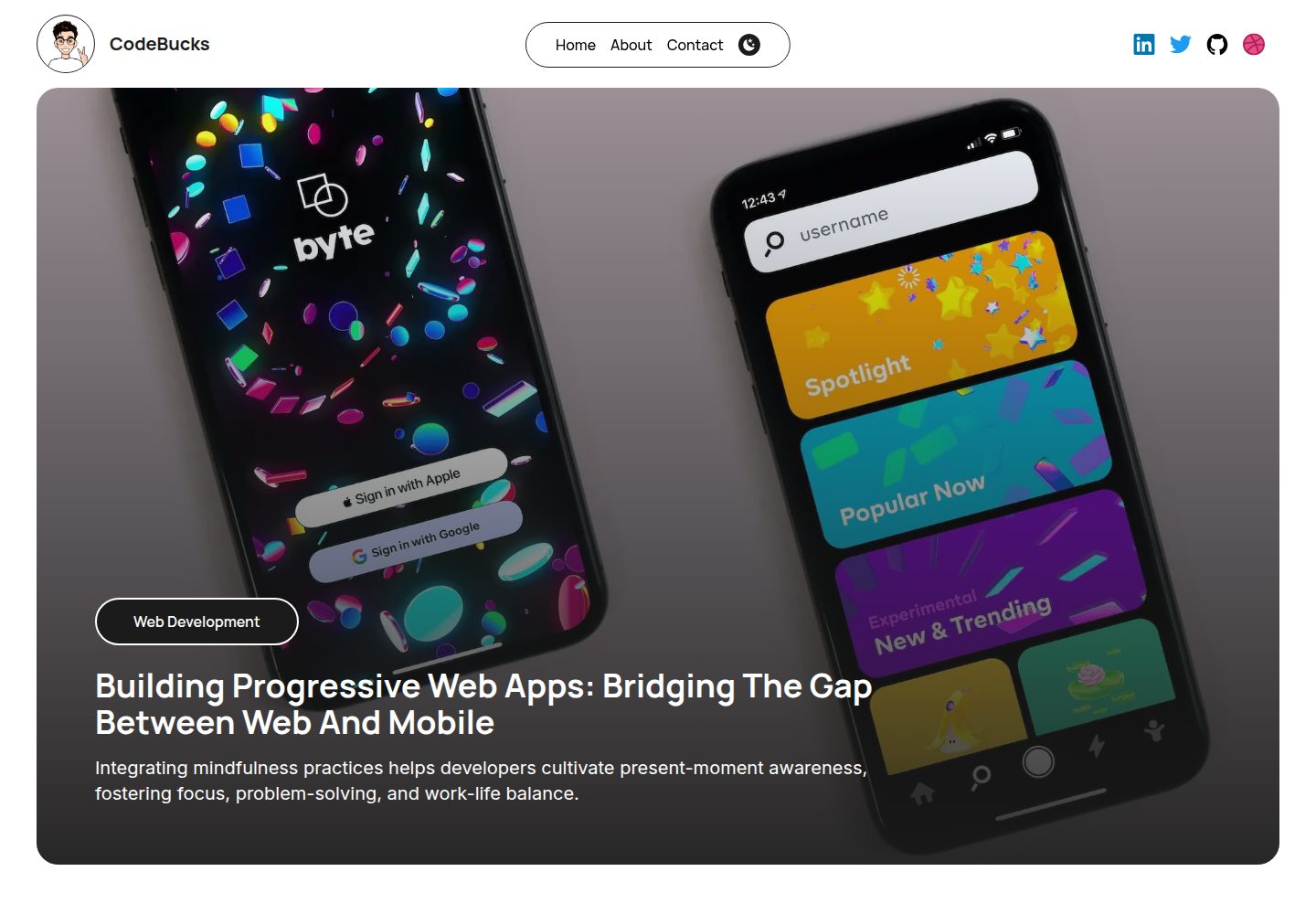
Nextjs-tailwindcss-blog-template
A Next.js blog styled with Tailwind CSS. The current branch processes Markdown with Velite; the earlier Contentlayer setup is retained in a separate historical branch.
Next.js · Blog

Next-js-Blog-Boilerplate
A blog starter built on Next.js 12 and Tailwind CSS 3, integrating TypeScript, ESLint, Prettier, and PostCSS.
Next.js · Blog
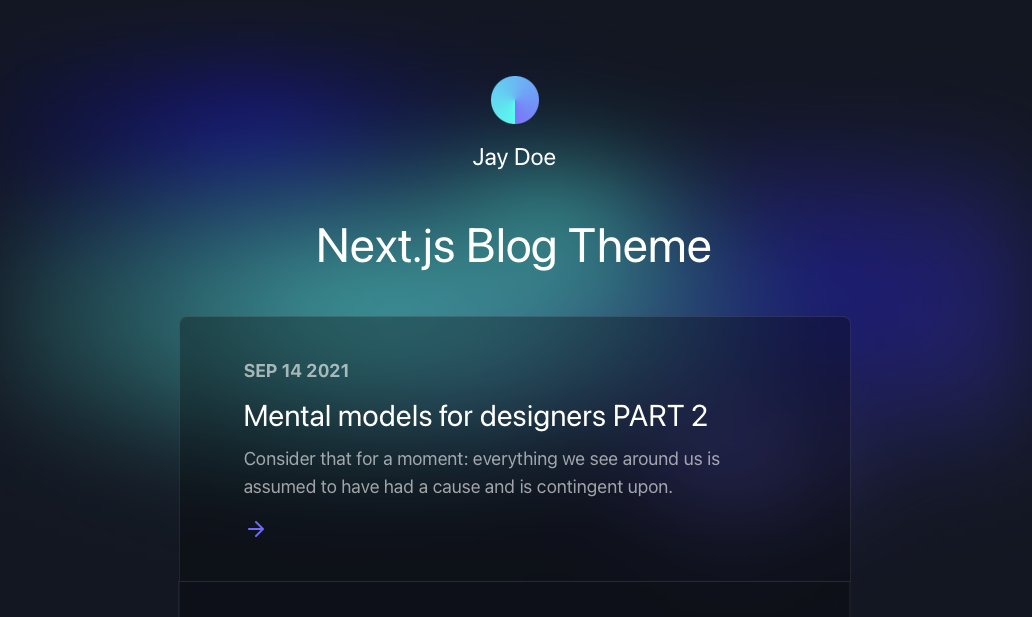
nextjs-blog-theme
A Next.js 15 and Tailwind CSS 4.x blog starter by Netlify, designed by Bejamas, with MDX support, dark/light theme switching, and environment-variable configuration. It includes a visual setup wizard for deploying to Netlify and manages content via local .mdx files.
Next.js · Blog
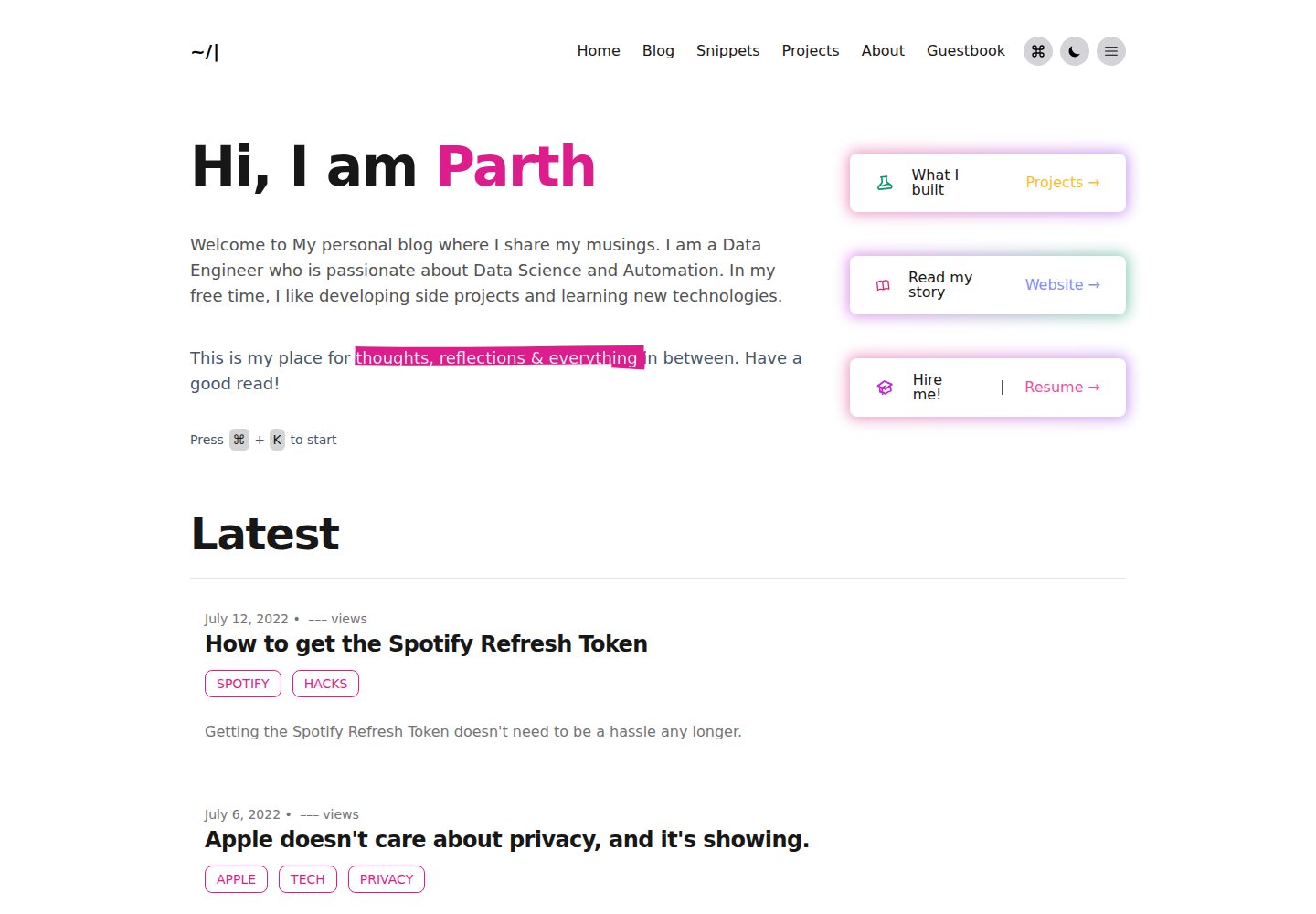
blog
A personal blog forked from Timlrx's tailwind-nextjs-starter-blog, built with Next.js, React, and Tailwind CSS. Content is stored as Markdown/MDX under data/, with site, author, navigation, and project data in separate files.
Next.js · Blog
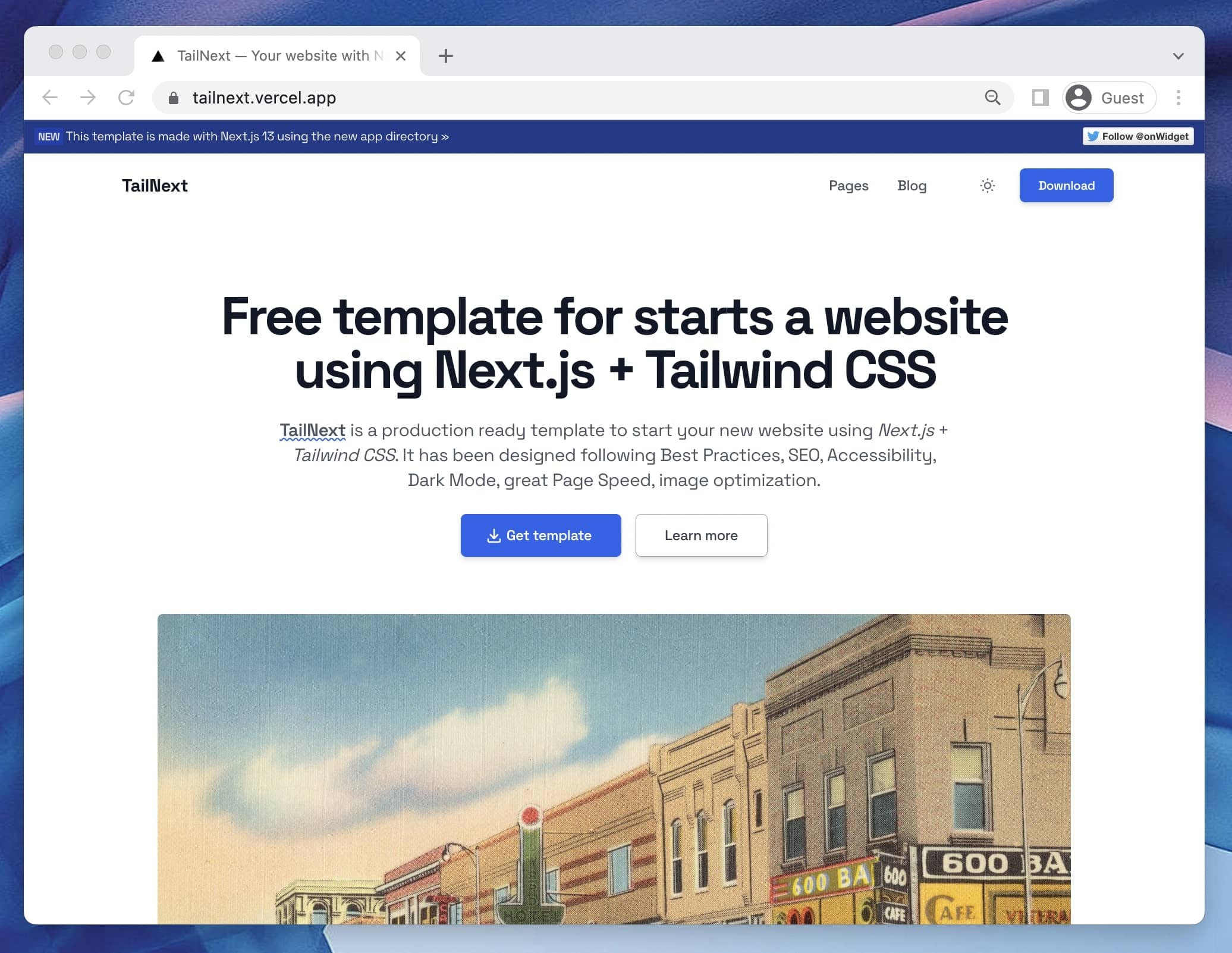
tailnext
Tailnext is a free, open-source template built on the Next.js 14 App Router and Tailwind CSS, created by the onWidget team.
Next.js · Blog