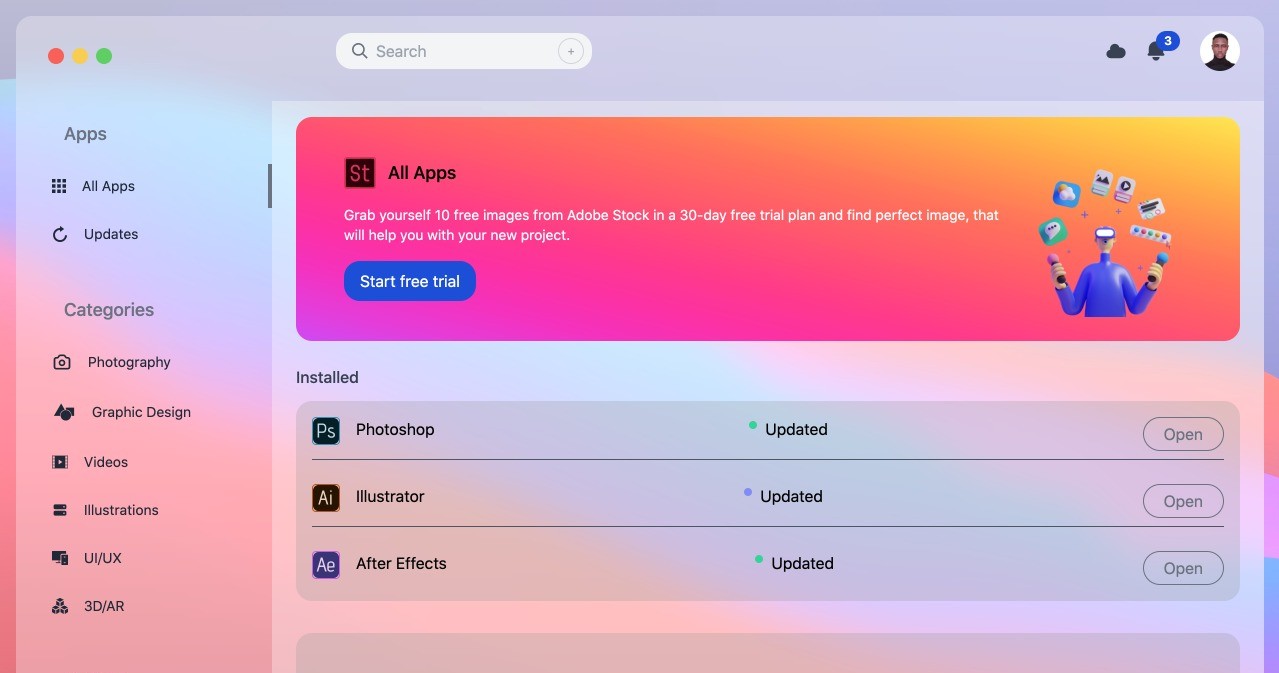
The Next.js version of the Salvia-kit dashboard template v2, positioned as an admin interface
Next.jsReactAdmin dashboard
dashboard-v2-nextjs — Next.js Admin dashboard Template
By Mothball2499
The Next.js version of the Salvia-kit admin dashboard template v2, featuring a data interface style, with code released under the MIT license.
Explore the design
Compare the page layouts and mobile experience. Open any screenshot for a closer look.
Author preview
Author-provided preview
Preview provided in the project README.
One original preview is available. Open the full image to inspect the design.
Screenshots show visual appearance; interactive behavior may differ.
Recorded 2026-10-13View source
What stands out
A quick read of the recorded project description.
Project structure bootstrapped with create-next-app, with the page entry at pages/layout.js
Built-in /admin/documentation page, viewable on the local development server
Provides an example API route at pages/api/hello.js, mapped to /api/*
The repository root contains standard MIT license text; the code can be freely used, modified, and distributed
Template Details
This is the Next.js implementation of the Salvia-kit dashboard template v2, an admin panel interface template with an overall data interface style. The repository is based on a Next.js project structure bootstrapped with create-next-app, with the page entry at pages/layout.js, an API example at pages/api/hello.js mapped to the /api/* route. The project includes a documentation page at /admin/documentation, viewable on the local development server. The repository also lists browser support for Chrome, Firefox, Edge, Safari, and Opera, and provides a link to contribution guidelines.
Based on the available information, this template is positioned as an interface skeleton for admin panels, suitable for replacing data and business logic on top of it. The repository does not provide dependency list details, so specific framework versions cannot be confirmed; it also does not specify data sources, authentication, or state management implementations. The demo site is a public preview on Vercel, the repository has 0 stars, and the last update was in 2021.
Regarding licensing, the repository root contains standard MIT license text, allowing free use, modification, commercial use, and distribution of this version's code, provided the copyright notice and license notice are retained when distributing. Note that the MIT license covers only the code itself; third-party assets such as demo images, fonts, and icons, as well as external services like domains, hosting, and databases, require separate verification of their respective licenses and fees.
Next.jsAdmin panel
Is it right for your project?
Use Cases
- Building an interface skeleton for an admin panel, then integrating your own data and APIs
- Using as a starting structure for Next.js admin projects, replacing pages and component content
- Referencing its page layout and API route organization for internal management tool prototypes
Suitable For
- Developers who need a ready-made admin panel interface foundation and plan to integrate their own business logic
- Projects using Next.js that want to start with MIT-licensed code
- Teams that need to reference how the Salvia-kit admin template is implemented under Next.js
Getting started & customization
Use these recorded setup notes alongside the repository instructions for your chosen version.
- 1
Start the development server with npm run dev or yarn dev, then access http://localhost:3000 in the browser
- 2
Page editing starts from pages/layout.js, with automatic updates on save
- 3
The API route example is at pages/api/hello.js, accessible via http://localhost:3000/api/hello
- 4
The repository does not provide dependency list details; before installation, verify the dependencies and versions in package.json yourself
- 5
Third-party assets such as demo images, fonts, and icons require separate license verification; the MIT license covers only the code
License & source material
Usage conditions & limitations
Free to use · keep license noticeThis entry covers the free version under the MIT license in the public repository; the free scope is the code of this version and does not imply that external services or third-party assets are free.
Must comply with when using
- Free use, modification, commercial use, and distribution of this version's code are permitted.
- When distributing copies or substantial portions of the code, retain the original author's copyright notice and the full MIT license notice.
- The code is provided as is; warranties and limitations of liability are governed by the original license and applicable law.
Additional costs & items to verify
- Demo images, fonts, icons, and other third-party assets require separate license verification and cannot be judged solely by the code's MIT license.
- External services such as domains, hosting, databases, payments, or AI may incur additional fees.
View Original Text Basis
https://github.com/Mothball2499/dashboard-v2-nextjs/blob/main/LICENCE.mdhttps://github.com/Mothball2499/dashboard-v2-nextjs/blob/main/README.mdPermission is hereby granted, free of charge
Original License Text
Compiled by DeepSeek based on repository license and README ·2026-10-13. Results only cover the materials read; dependencies, images, fonts, and subsequent term changes are subject to their respective original texts.
Project checks & description sources
Template Information
- Source platforms
- GitHub
- Documentation and maintenance reference score
- Partly documented · 65 / 100
- Technologies
- Next.js · React
- Website type
- Admin dashboard
How this score is calculated
Our heuristic uses license records (up to 30), a demo link (12), a preview (10), stars (15), recorded maintenance (15), description completeness (8), feature records (5) and classification data (5). It is not a code, security or performance test, or a Google score. A link does not establish tested functionality.
What to verify for this project
- Repository update recorded
- 2021-07-20
- Screenshot last checked
- 2026-10-13
A demo link is listed. Check it with your own content and viewport sizes; its presence does not confirm that forms, authentication or payments work.
The catalog identifies Next.js as the primary stack. Check the actual dependency manifest and lockfile for versions and hosting requirements. These notes use recorded metadata, not a code audit or a deployment test.
Use a selection guide →How this description was prepared
AI-assisted description based on catalog records and repository material. Repository authors are not automatically the reviewers of this description.
Review declaration: [email protected] · 2026-10-13
Inspect the recorded source material
SHA-256: 68b90f43d9b54f6fd434c70dad2925924232fc4824a9e2160d2bc84616a65183
2026-10-13T04:42:51.006Z
Source file / repository# Salvia-kit Dashboard v2 Next.js 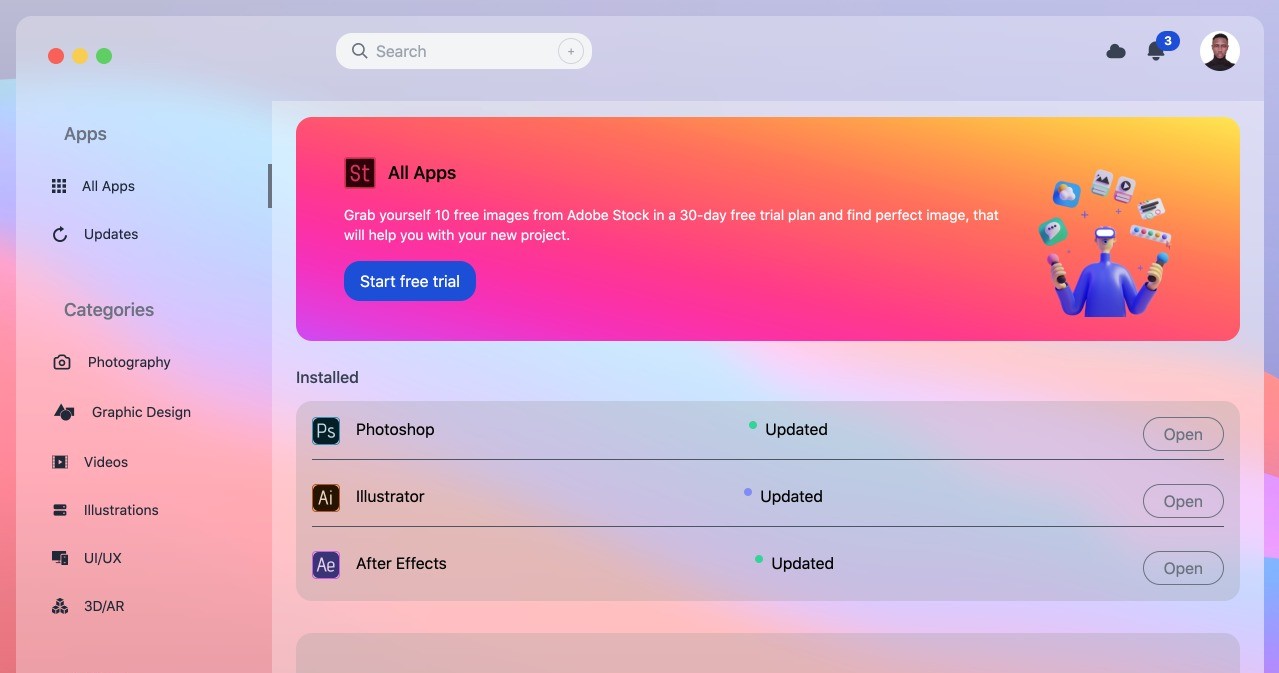 ## 📋 Documentation You can see the documentation on [http://localhost:3000/admin/documentation](http://localhost:3000/admin/documentation) ## Browser Support | Chrome | Firefox | Edge | Safari | Opera | |:---:|:---:|:---:|:---:|:---:| | <img src="https://github.com/creativetimofficial/public-assets/blob/master/logos/chrome-logo.png?raw=true" width="64" height="64"> | <img src="https://raw.githubusercontent.com/creativetimofficial/public-assets/master/logos/firefox-logo.png" width="64" height="64"> | <img src="https://raw.githubusercontent.com/creativetimofficial/public-assets/master/logos/edge-logo.png" width="64" height="64"> | <img src="https://raw.githubusercontent.com/creativetimofficial/public-assets/master/logos/safari-logo.png" width="64" height="64"> | <img src="https://raw.githubusercontent.com/creativetimofficial/public-assets/master/logos/opera-logo.png" width="64" height="64"> | ## Contribution If you would like to contribute on the project, fixing bugs, please follow our [Contribution guide](https://github.com/salvia-kit/dashboard-v2-nextjs/blob/main/contributing.md) ## Getting Started This is a [Next.js](https://nextjs.org/) project bootstrapped with [`create-next-app`](https://github.com/vercel/next.js/tree/canary/packages/create-next-app). First, run the development server: ```bash npm run dev # or yarn dev ``` Open [http://localhost:3000](http://localhost:3000) with your browser to see the result. You can start editing the page by modifying `pages/layout.js`. The page auto-updates as you edit the file. [API routes](https://nextjs.org/docs/api-routes/introduction) can be accessed on [http://localhost:3000/api/hello](http://localhost:3000/api/hello). This endpoint can be edited in `pages/api/hello.js`. The `pages/api` directory is mapped to `/api/*`. Files in this directory are treated as [API routes](https://nextjs.org/docs/api-routes/introduction) instead of React pages. ## Learn More To learn more about Next.js, take a look at the following resources: - [Next.js Documentation](https://nextjs.org/docs) - learn about Next.js features and API. - [Learn Next.js](https://nextjs.org/learn) - an interactive Next.js tutorial. You can check out [the Next.js GitHub repository](https://github.com/vercel/next.js/) - your feedback and contributions are welcome! ## Deploy on Vercel The easiest way to deploy your Next.js app is to use the [Vercel Platform](https://vercel.com/new?utm_medium=default-template&filter=next.js&utm_source=create-next-app&utm_campaign=create-next-app-readme) from the creators of Next.js. Check out our [Next.js deployment documentation](https://nextjs.org/docs/deployment) for more details.
Explore similar templates
Compare previews and descriptions within the same stack and category.
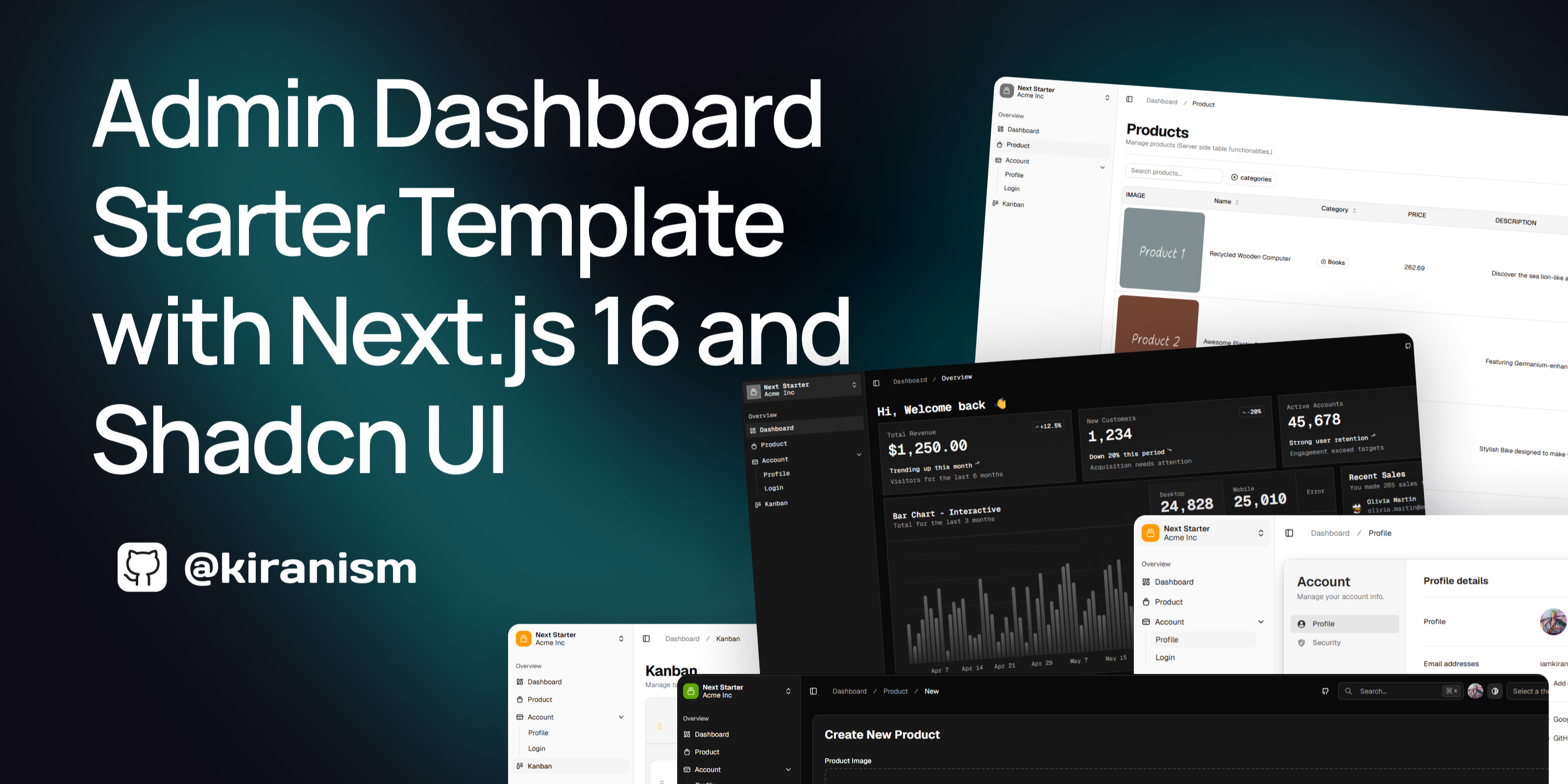
next-shadcn-dashboard-starter
An MIT-licensed admin dashboard starter built with Next.js 16, shadcn/ui, Tailwind CSS v4, and TypeScript.
Next.js · Admin dashboard
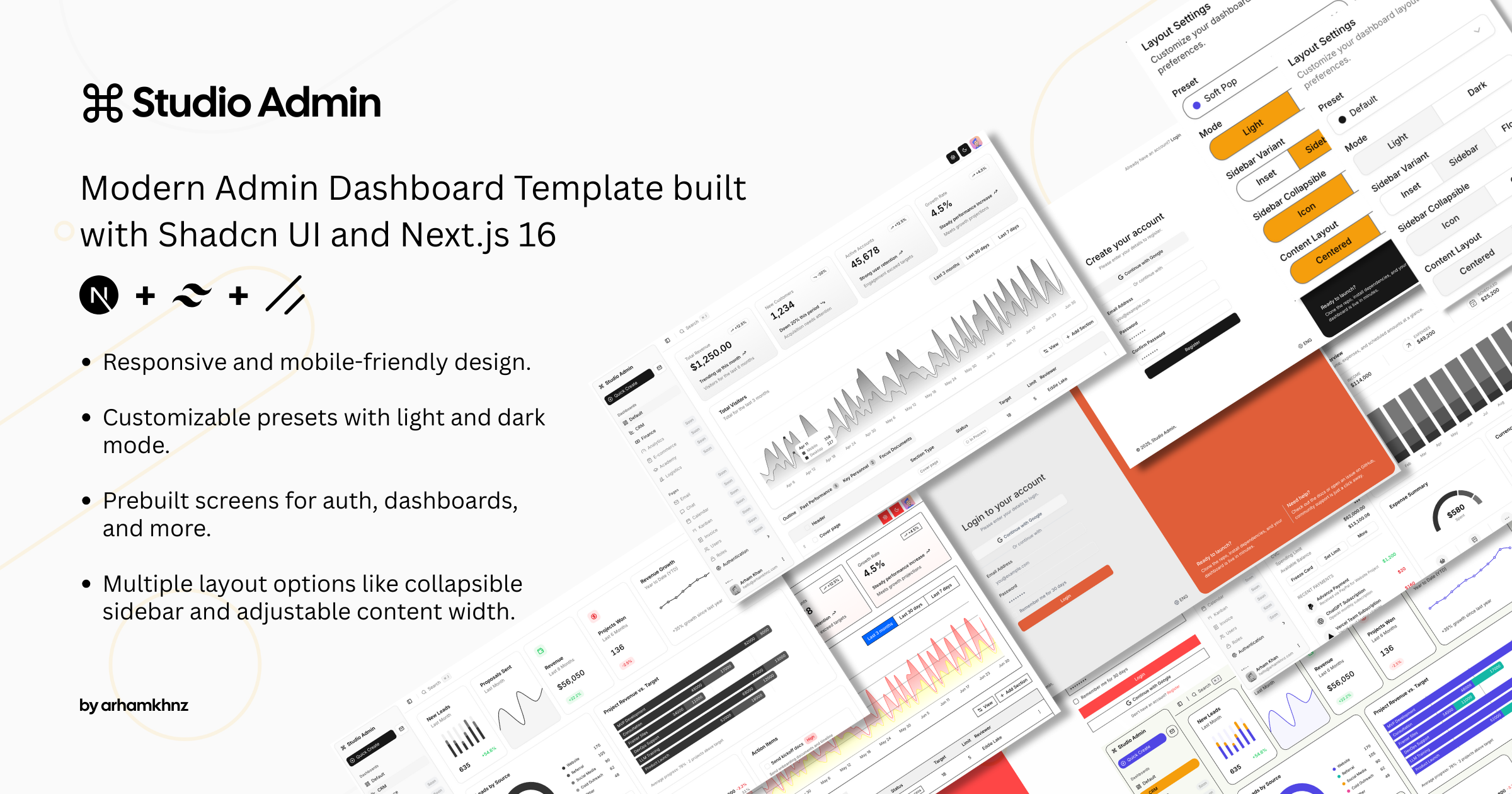
Studio Admin · Radix UI
Studio Admin is an admin dashboard template built with Next.js 16, TypeScript, Tailwind CSS v4, and Shadcn UI.
Next.js · Admin dashboard
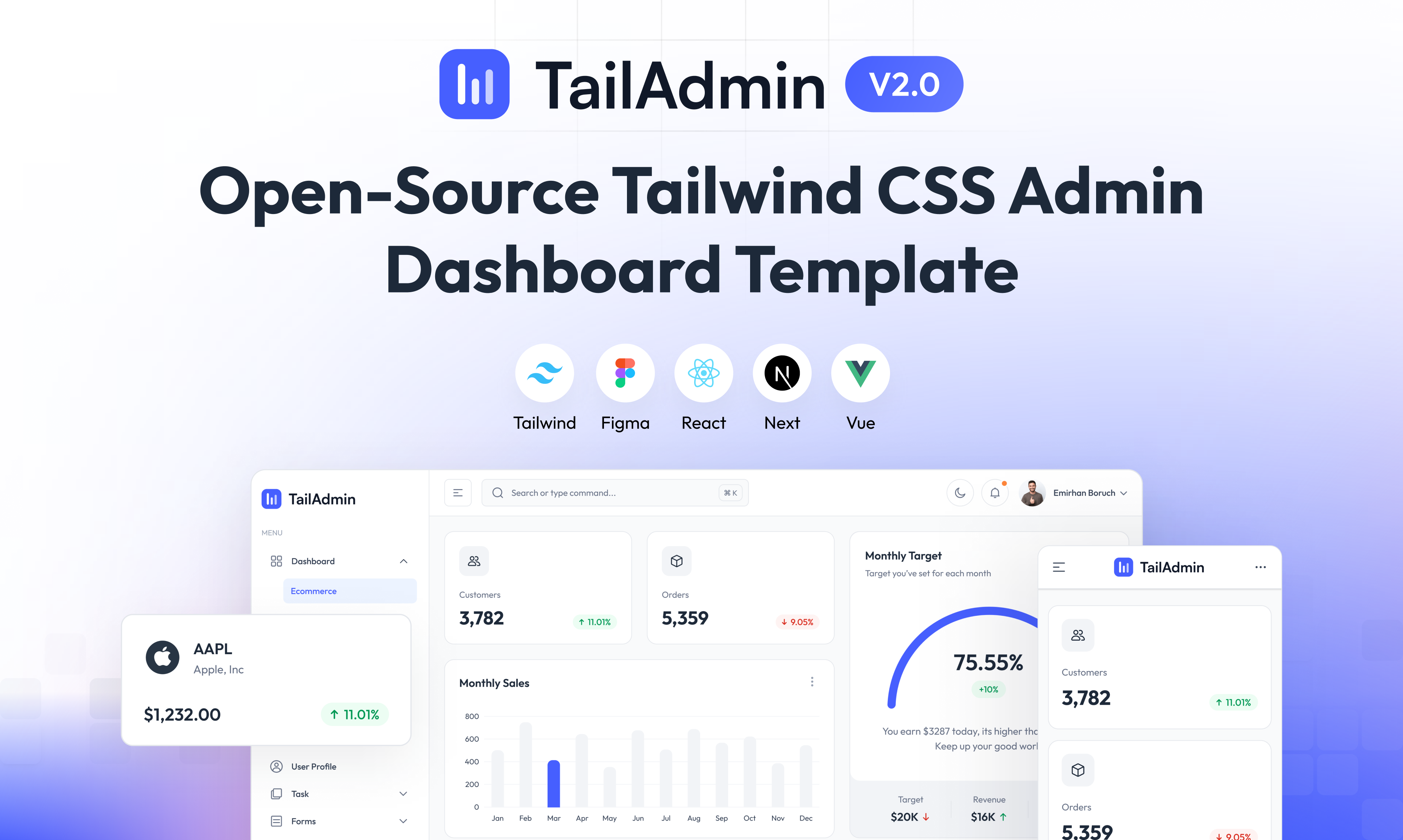
free-nextjs-admin-dashboard
A free, open-source admin dashboard template built on Next.js 16, React 19, TypeScript, and Tailwind CSS v4. It provides a collapsible sidebar, charts, tables, authentication forms, modals, dropdowns, and dark mode, with internationalization and RTL support since version 2.4.0.
Next.js · Admin dashboard
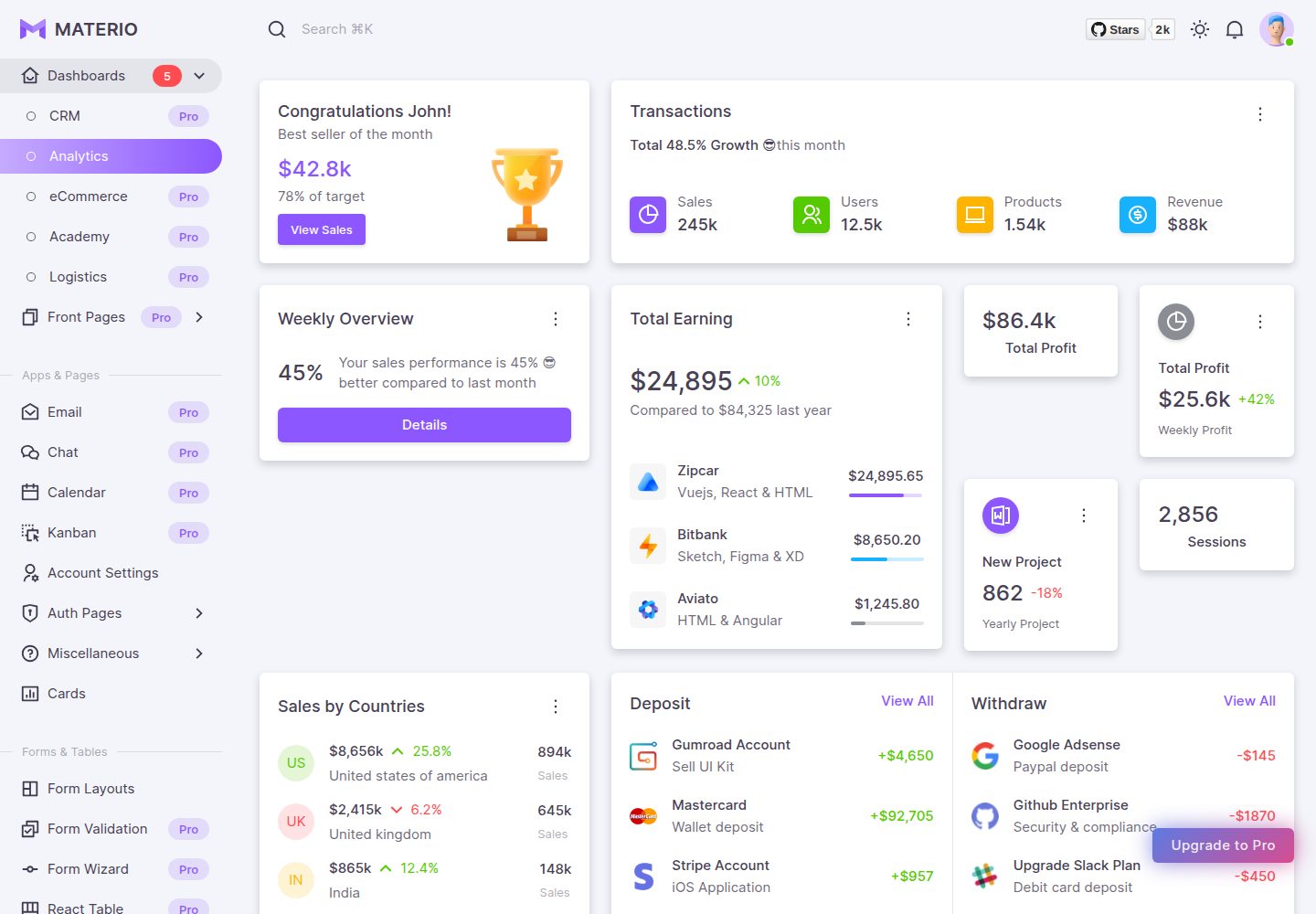
materio-mui-nextjs-admin-template-free
Materio Free is a Next.js admin dashboard template based on App Router and MUI, integrating Tailwind CSS and available in TypeScript and JavaScript versions.
Next.js · Admin dashboard
nextjs-postgres-nextauth-tailwindcss-template
A Vercel-maintained Next.js App Router admin dashboard starter with Auth.js GitHub OAuth, Postgres, Tailwind CSS, and Shadcn UI, plus a sample products table, seed endpoint, and CRUD interface.
Next.js · Admin dashboard
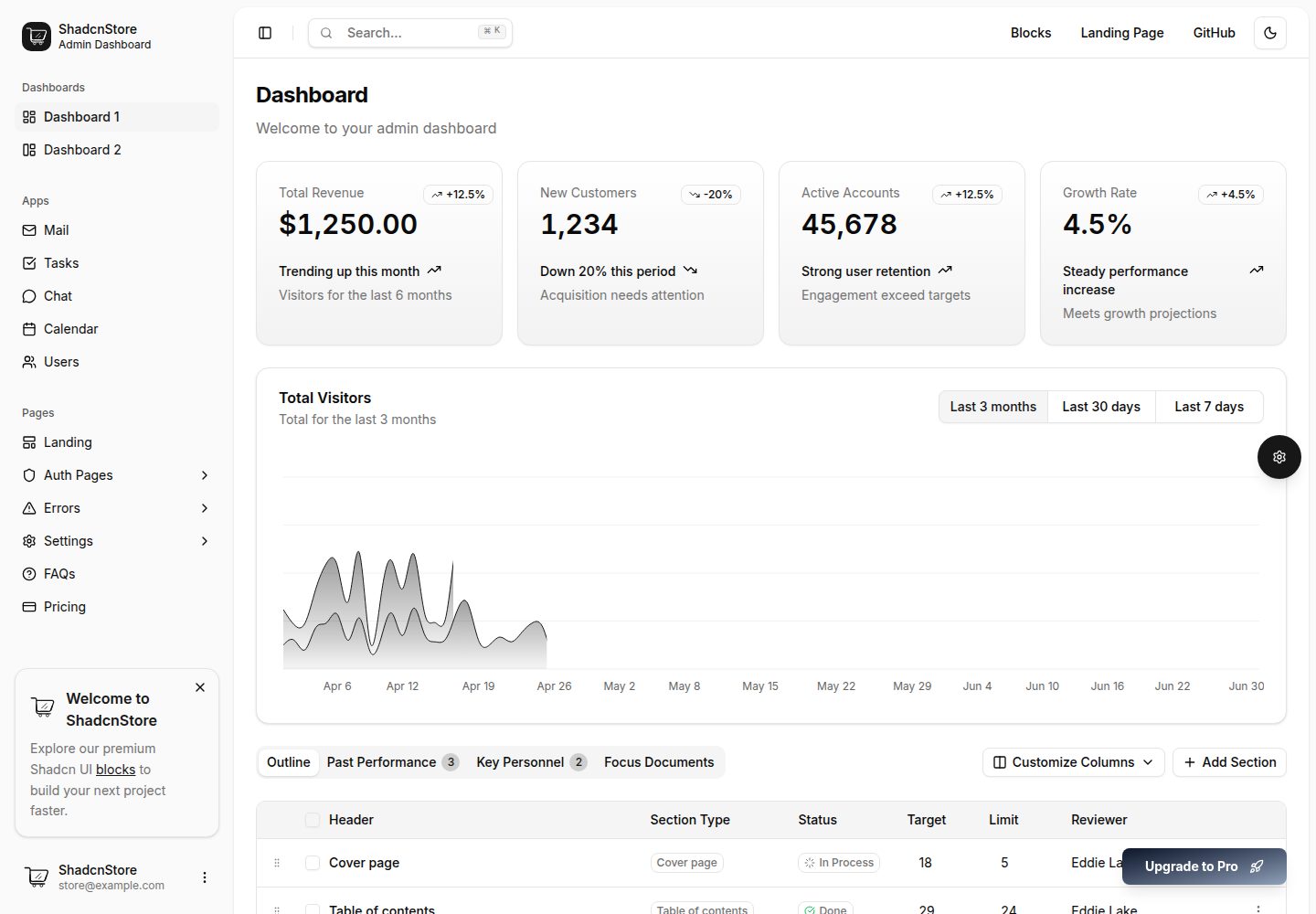
shadcn-dashboard-landing-template
An open-source admin dashboard and marketing landing page template built on shadcn/ui and Tailwind CSS, with both Vite + React and Next.js versions in one repository.
Next.js · Admin dashboard