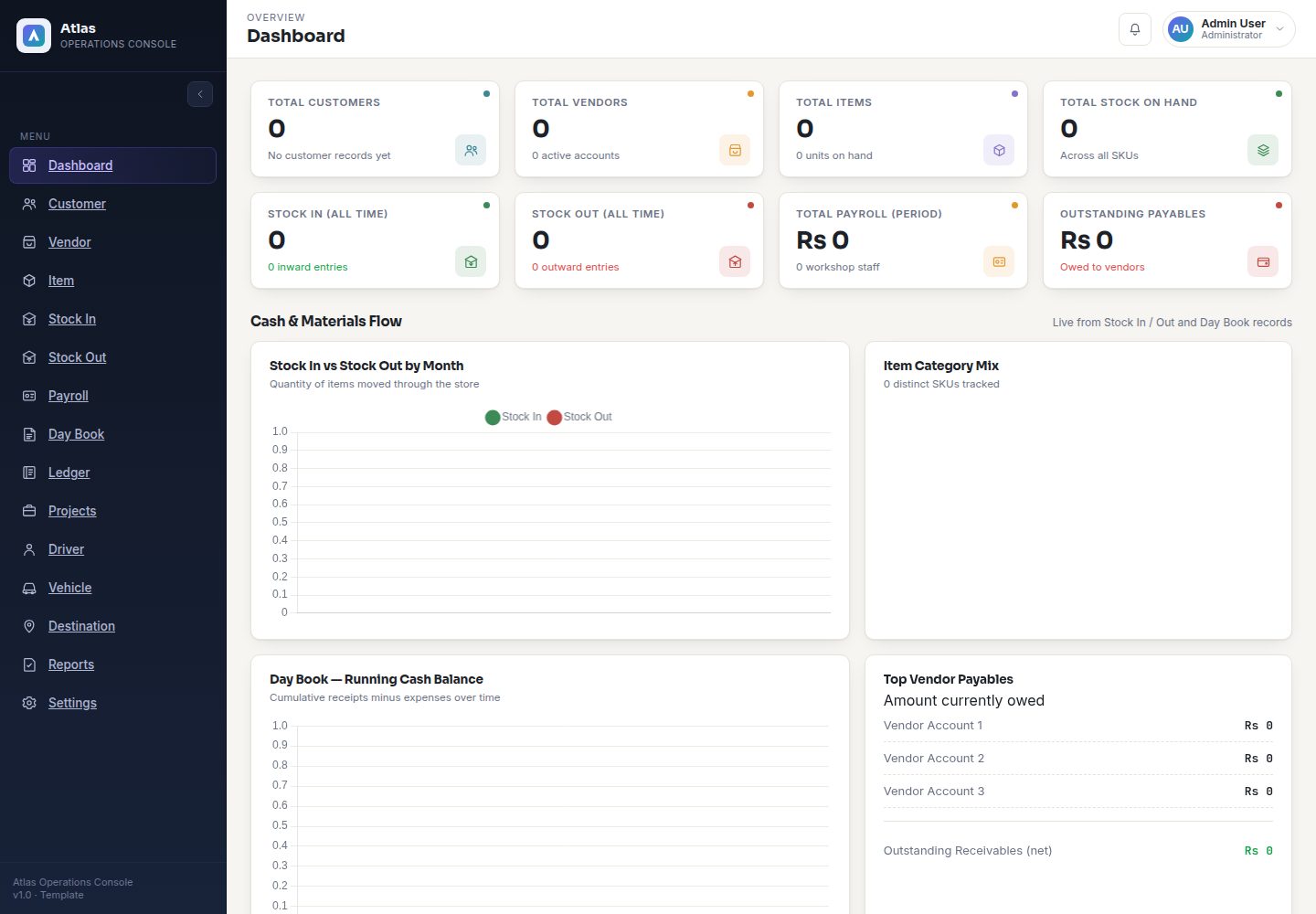
Includes 15 modules: dashboard, customers, suppliers, materials, inbound, outbound, payroll, journal, ledgers, projects, drivers, vehicles, destinations, reports, and settings
ViteReactAdmin dashboard
atlas-operations-console — Vite Admin dashboard Template
By nabehagillani
Atlas is an ERP-style operations console template built with React + Vite, including dashboards, CRUD tables, inventory management, accounts receivable/payable ledgers, and reports. It ships with no seed data by default and requires you to connect your own backend.
Explore the design
Compare the page layouts and mobile experience. Open any screenshot for a closer look.
Desktop homepage1 / 2
Desktop captureTop of page
Actual screenshot captured by the server browser.
All pages & views 2
Screenshots show visual appearance; interactive behavior may differ.
Recorded 2026-10-15View source
What stands out
A quick read of the recorded project description.
Each module supports create, read, update, delete, search, filter, sort, pagination, and CSV export
Material inventory is derived in real time from inbound/outbound records, with no manual reconciliation required
Accounts receivable/payable ledgers are generated from inbound/outbound amounts and support recording payments and running balances
Inbound/outbound provide statement views by supplier or destination, with CSV export, print/PDF, and convert to invoice
The dashboard uses Chart.js to display inventory changes, cash flow, category share, and payables ranking
Template Details
Atlas is an ERP-style admin operations console template built with React + Vite. The README states it includes sidebar navigation, a dashboard with real-time charts, full CRUD tables, invoices, accounts receivable/payable ledgers, and a reports module. The modules are interconnected and can be connected to a real backend.
The template does not provide seed data by default; all modules start empty and require you to connect an API, database, or JSON data source. Functionally, each module supports create, read, update, delete, search, filter, sort, pagination, and CSV export; material inventory is derived in real time from inbound/outbound records; dropdown fields pull values from existing data and provide a "+ Add new" entry point; accounts receivable/payable ledgers are generated from inbound and outbound amounts, support recording payments (bill number, description, amount, date, reference number) and running balances; within inbound/outbound, you can view statements by supplier or destination, with CSV export, print/PDF, and a "convert to invoice" flow with editable line items. Dashboard charts use Chart.js and cover inventory changes, cash flow, category share, and payables ranking. There is also a notification bell (low stock, vehicle maintenance, driver leave, project on hold) and a profile menu, plus light/dark theme switching, a collapsible sidebar, and mobile drawer navigation.
To run locally, use npm install and npm run dev; the default address is http://localhost:5173. For a production build, use npm run build; the output is a static site in dist/ that can be deployed to any static hosting (Netlify, Vercel, GitHub Pages, S3, or Apache/Nginx/cPanel). Routing uses HashRouter, so it works at the domain root or in a subdirectory without server rewrite rules.
When connecting a backend, the README recommends replacing the useCollection calls in useAppData.js with real API requests (fetch/axios); pages do not need changes. Inventory derivation logic should be kept on the backend to stay consistent with inbound/outbound history. The three "workbook" ledger accounts in useAppData.js (vendorA/vendorB/vendorC) are a legacy pattern from the original spreadsheet import and can be removed, relying entirely on the accounts receivable/payable ledgers driven by the supplier and destination lists. Theme customization is done via CSS custom properties (colors, radii, shadows) at the top of src/styles/global.css, and fonts are loaded in index.html via Google Fonts (Sora, Inter, JetBrains Mono). The README does not provide specific dependency version numbers, performance data, or production environment validation notes.
ViteReactAdmin
Is it right for your project?
Use Cases
- Frontend projects that need to quickly build an ERP-style admin interface
- Operations management systems that want to use the template as a base and connect their own API or database
- Business scenarios that need inventory management, accounts receivable/payable ledgers, and reporting
- Admin applications that need to be deployable to static hosting and support subdirectory paths
Suitable For
- Frontend developers who need a starting template for an ERP-style operations console
- Teams planning to migrate existing spreadsheet processes to a web interface
- Admin projects that need customizable themes and a modular component library
- Developers using the React + Vite stack who want to connect their own backend
Getting started & customization
Use these recorded setup notes alongside the repository instructions for your chosen version.
- 1
Local run: after npm install, run npm run dev; it opens http://localhost:5173 by default
- 2
Production build: npm run build; output is in dist/ and can be previewed locally with npm run preview
- 3
The build output is a static site and can be deployed to Netlify, Vercel, GitHub Pages, S3, or Apache/Nginx/cPanel
- 4
Routing uses HashRouter, supporting deployment at the domain root or in a subdirectory without server rewrite rules
- 5
To connect a backend, replace the useCollection calls in useAppData.js with real API requests and keep the inventory derivation logic
License & source material
Usage conditions & limitations
Free to use · keep license noticeThis entry covers the free version under the MIT license in the public repository; the free scope is the code of that version and does not mean external services or third-party assets are free.
Must comply with when using
- You may use, modify, commercialize, and distribute the code of this version for free.
- When distributing copies or substantial portions of the code, retain the original author's copyright notice and the full MIT license notice.
- The code is provided as is; warranties and limitations of liability are governed by the original license and applicable law.
Additional costs & items to verify
- Demo images, fonts, icons, and other third-party assets must be checked against their respective licenses; the code's MIT license alone is not sufficient to determine this.
- External services such as domains, hosting, databases, payments, or AI may incur separate charges.
View Original Text Basis
https://github.com/nabehagillani/atlas-operations-console/blob/main/LICENSEhttps://github.com/nabehagillani/atlas-operations-console/blob/main/README.mdPermission is hereby granted, free of charge
Original License Text
Compiled by DeepSeek based on repository license and README ·2026-10-15. Results only cover the materials read; dependencies, images, fonts, and subsequent term changes are subject to their respective original texts.
Project checks & description sources
Template Information
- Source platforms
- GitHub
- Documentation and maintenance reference score
- More documented · 85 / 100
- Technologies
- Vite · React
- Website type
- Admin dashboard
How this score is calculated
Our heuristic uses license records (up to 30), a demo link (12), a preview (10), stars (15), recorded maintenance (15), description completeness (8), feature records (5) and classification data (5). It is not a code, security or performance test, or a Google score. A link does not establish tested functionality.
What to verify for this project
- Repository update recorded
- 2026-08-22
- Screenshot last checked
- 2026-10-15
A demo link is listed. Check it with your own content and viewport sizes; its presence does not confirm that forms, authentication or payments work.
The catalog identifies Vite as the primary stack. Check the actual dependency manifest and lockfile for versions and hosting requirements. These notes use recorded metadata, not a code audit or a deployment test.
Use a selection guide →How this description was prepared
AI-assisted description based on catalog records and repository material. Repository authors are not automatically the reviewers of this description.
Review declaration: codex-user-requested-batch-review-20261017 · 2026-10-16
Inspect the recorded source material
SHA-256: 7ae0c8583159b0d8d3a477764774824a3f2431e55cd755578554d840d645eb10
2026-10-15T13:18:40.648Z
Source file / repository# Atlas — Operations Console
A complete ERP-style operations dashboard template built with React + Vite.
Sidebar navigation, dashboards with live charts, full CRUD tables, invoicing,
payable/receivable ledgers, and reporting — all wired together and ready to
connect to a real backend.
This is a **template with no seed data** — every module starts empty so you
can plug in your own data source (an API, a database, or your own JSON) and
make it yours.
## Modules included
Dashboard · Customer · Vendor · Item · Stock In · Stock Out · Payroll ·
Day Book · Ledger (payable/receivable + workbook-style accounts) · Projects ·
Driver · Vehicle · Destination · Reports · Settings
## Features
- Full CRUD (add / edit / delete) on every module, with search, filters,
sorting, pagination and CSV export
- Item stock levels are **derived live** from Stock In / Stock Out records —
no manual stock reconciliation needed
- Dropdown ("combo") fields pull from your existing data instead of forcing
free-text entry, with a "+ Add new" fallback when you need something new
- A **Payable / Receivable ledger** built from Stock In and Stock Out amounts,
with a "record payment" flow (bill number, description, amount, date,
reference) and running balances
- A per-vendor / per-destination **statement view** inside Stock In / Stock
Out, with CSV export, print/PDF, and a **Convert to Invoice** flow with an
editable line-item builder
- Live dashboard charts (Chart.js): stock movement, cash flow, category mix,
top payables
- Functional notification bell (low stock, vehicles in maintenance, drivers
on leave, projects on hold) and profile menu
- Light/dark theme toggle, collapsible sidebar, mobile drawer navigation
## Run it locally
```bash
npm install
npm run dev
```
Then open the URL it prints — usually **http://localhost:5173**
## Build for production
```bash
npm run build
npm run preview # serve the production build locally to check it
```
The build output in `dist/` is a fully static site — deployable to any static
host (Netlify, Vercel, GitHub Pages, S3, or plain Apache/Nginx/cPanel
hosting). Routing uses `HashRouter`, so it works correctly at any deployment
path (domain root or a subfolder) without any server-side rewrite rules.
## Project structure
```
src/
main.jsx # app bootstrap (Router + StrictMode)
App.jsx # shell: sidebar + topbar + route table
styles/global.css # design system (tokens, layout, components)
data/data.json # empty data structure — replace with your own
hooks/
useAppData.js # central in-memory data store for every module
useToast.jsx # toast notification system
components/ # reusable building blocks
Icon.jsx, DataTable.jsx, Modal.jsx, FormFields.jsx, StatCard.jsx,
Toggle.jsx, ChartCanvas.jsx, Sidebar.jsx, Topbar.jsx, InvoiceBuilder.jsx
pages/ # one file per sidebar module
Dashboard.jsx, Customers.jsx, Vendors.jsx, Items.jsx,
StockIn.jsx, StockOut.jsx, Payroll.jsx, DayBook.jsx, Ledger.jsx,
Projects.jsx, Drivers.jsx, Vehicles.jsx, Destinations.jsx,
Reports.jsx, Settings.jsx
utils/
format.js, csv.js, options.js, partyLedger.js
```
## Connecting a real backend
Everything lives in React state, seeded from `src/data/data.json` via
`useAppData.js`. To connect a backend:
1. Replace the `useCollection` calls in `useAppData.js` with real API calls
(fetch/axios) — every page consuming that hook keeps working unchanged.
2. Keep the **Item** stock-derivation logic (or its equivalent) on your
backend so stock totals stay consistent with Stock In/Out history.
3. The three "workbook" ledger accounts (`vendorA` / `vendorB` / `vendorC` in
`useAppData.js`) are a legacy pattern from an original spreadsheet import —
feel free to remove them and rely purely on the Payable/Receivable ledger,
which is fully data-driven from your Vendor and Destination lists.
## Customizing the theme
Colors, radii, and shadows are defined as CSS custom properties at the top of
`src/styles/global.css` (`:root { ... }`) — change them there to re-skin the
whole app. Fonts are loaded via Google Fonts in `index.html` (Sora for
headings, Inter for body text, JetBrains Mono for tabular/code data).
## License
Use this template freely for personal or commercial projects.
Explore similar templates
Compare previews and descriptions within the same stack and category.
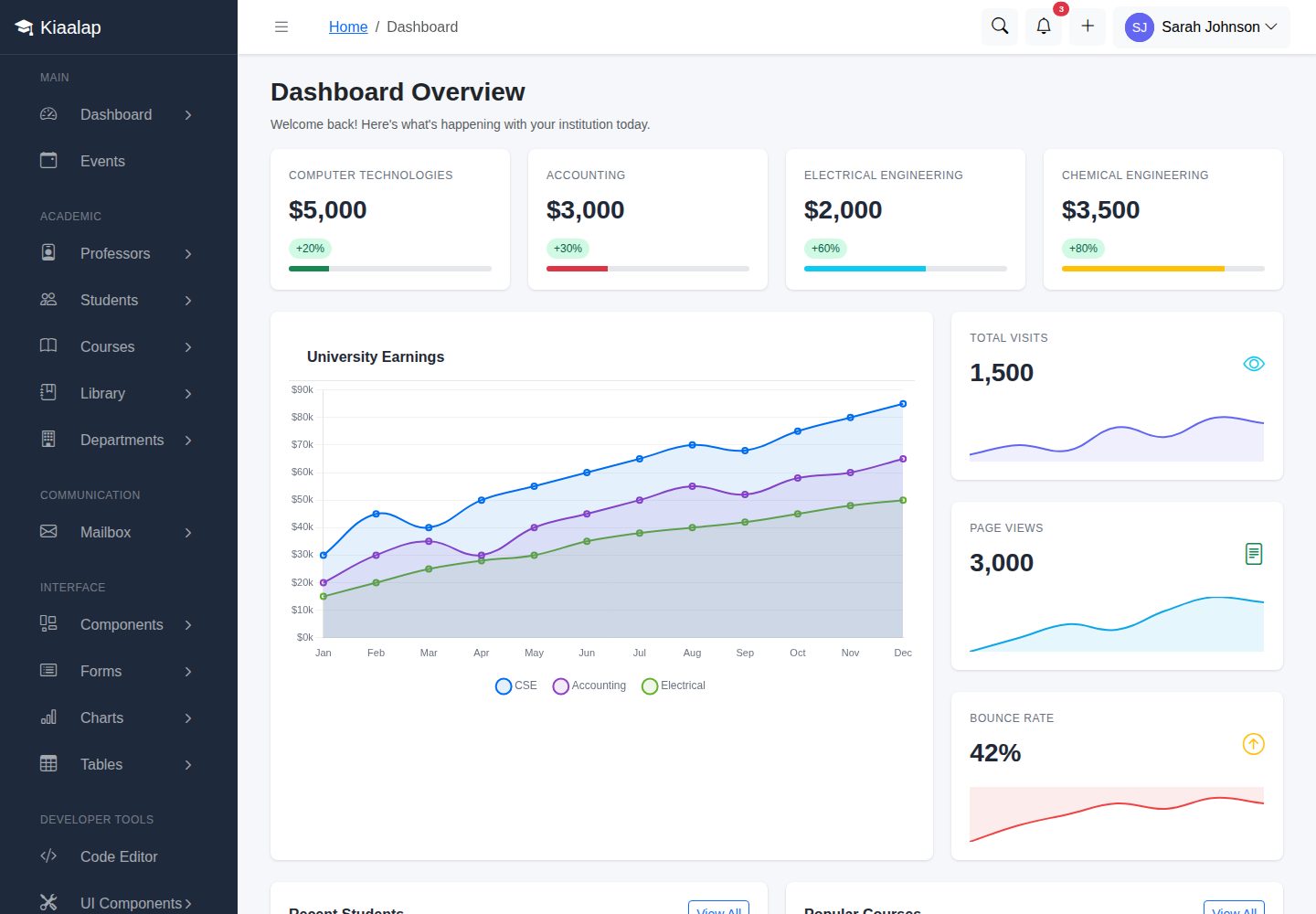
kiaalap
Kiaalap is a free, open-source admin template from Colorlib for education, online courses, and school management.
Vite · Admin dashboard
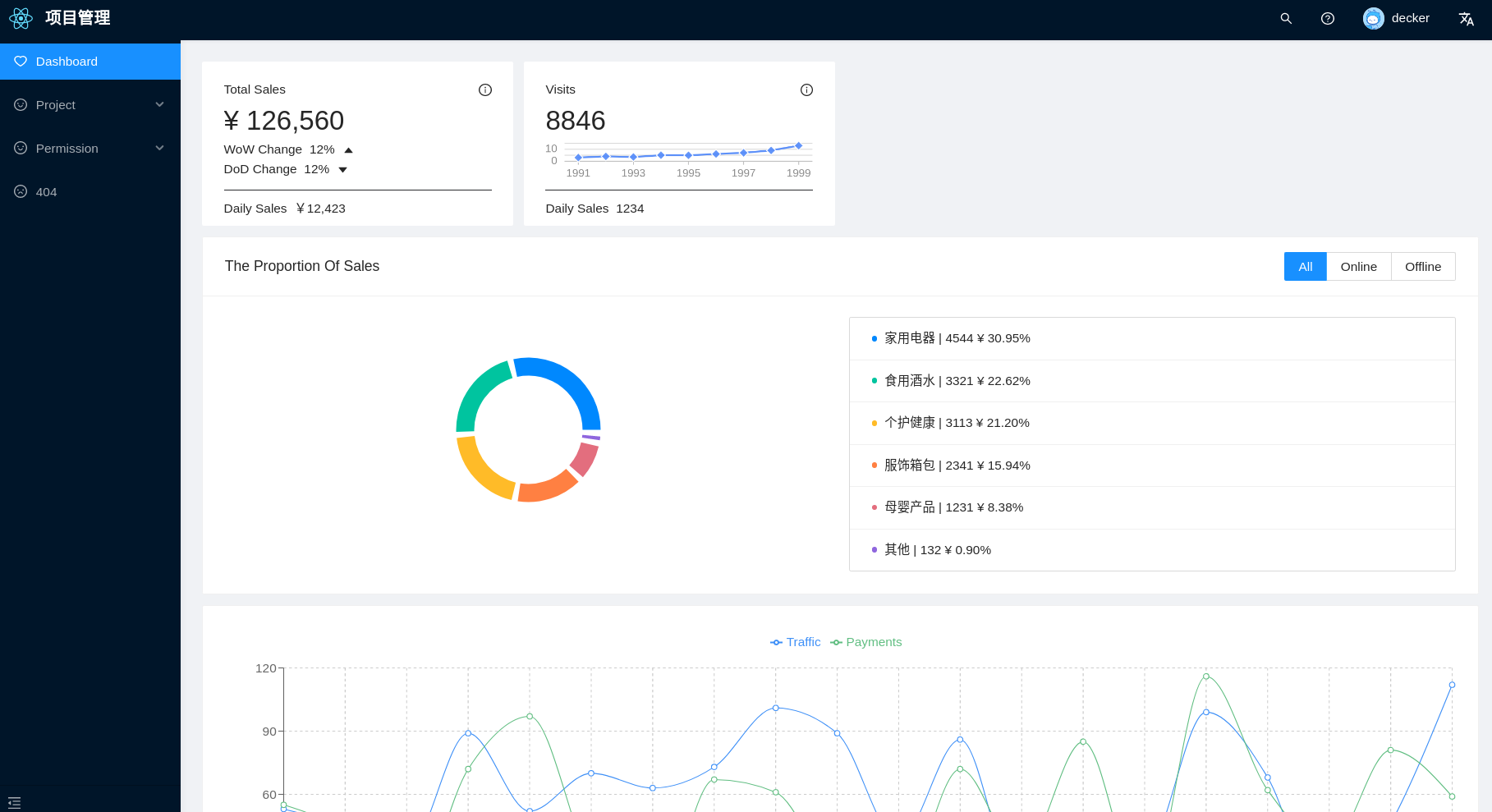
react-vite-admin
A backend management starter built on Vite and React, integrating Recoil, React Query, TypeScript, and Axios, with Ant Design-style interface screenshots. Suitable as a starting point for management-side projects, licensed under MIT, with Chinese documentation and common scripts.
Vite · Admin dashboard
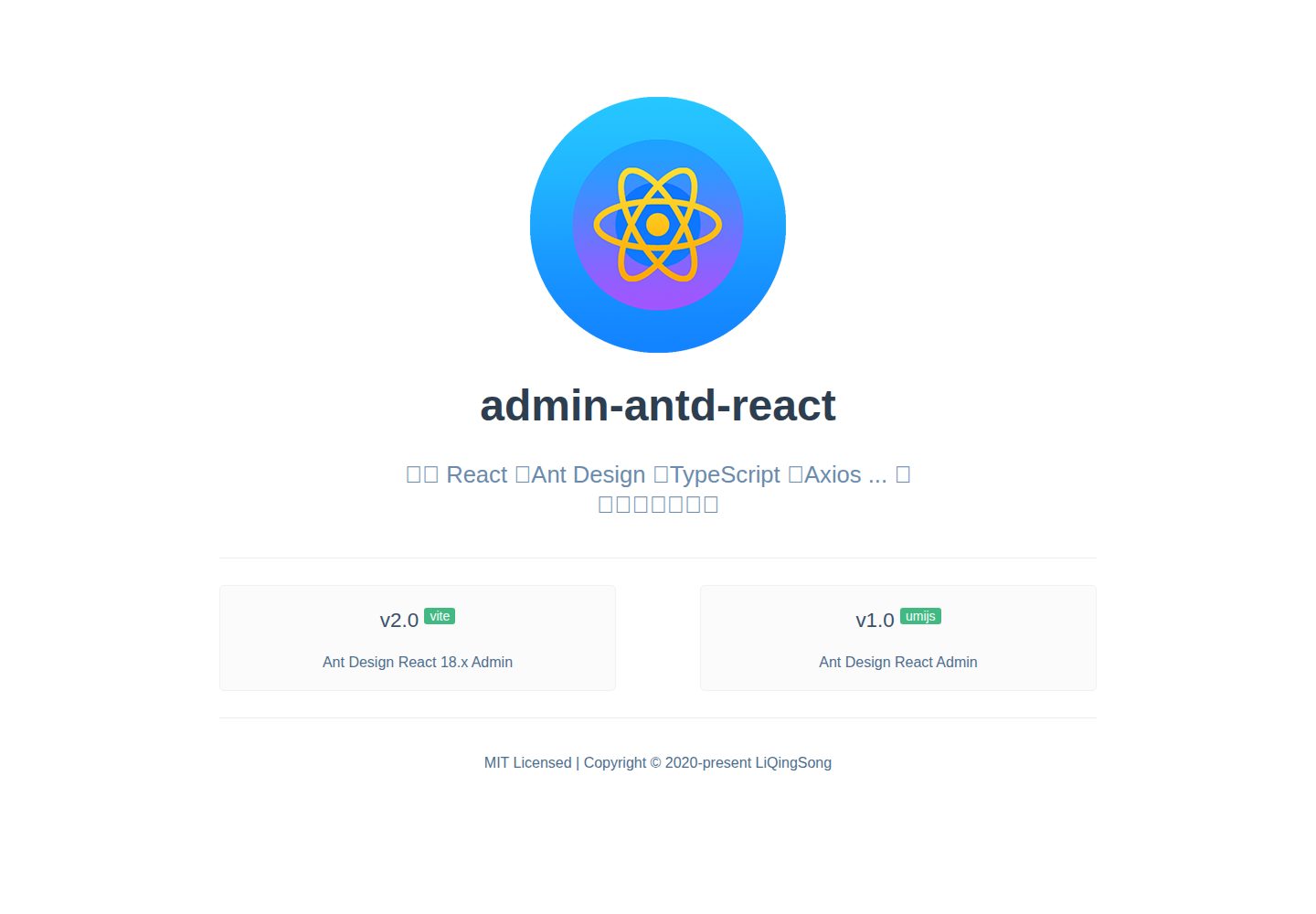
admin-antd-react
A Vite + React 18 admin template using Ant Design and Recoil, with login, logout, and registration flows; page, button, and permission configuration verification; internationalization; dynamic sidebar and breadcrumbs; Svg Sprite icons; Mock data; and list, form, and detail page examples.
Vite · Admin dashboard
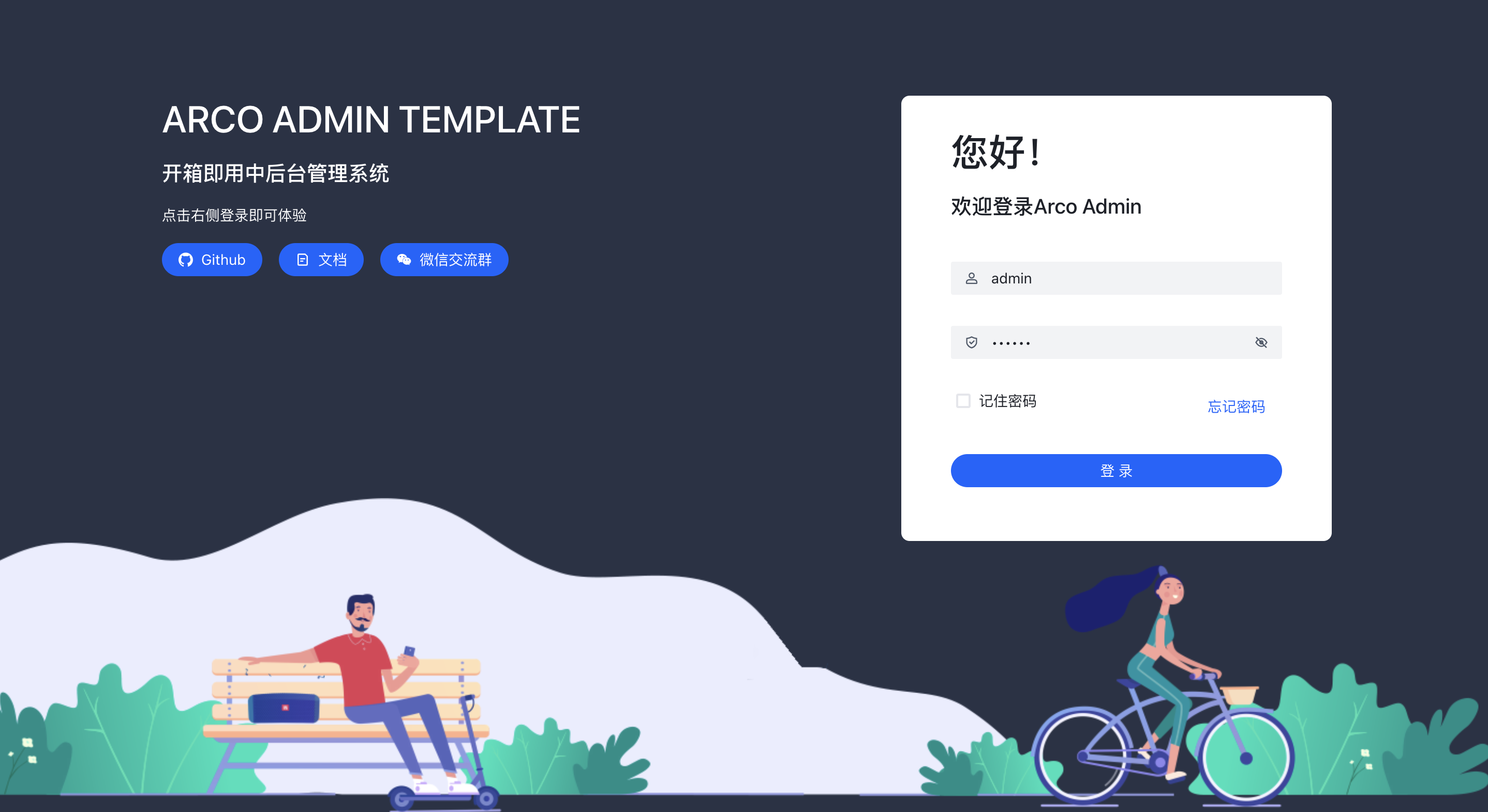
arco-admin-template
A Vite + React mid-to-back-office template using Arco Design, react-router-dom v6, mockjs, and less, with internationalization, theme customization, and light/dark switching. Includes login, dashboard, resource, component examples, settings, and 404 pages.
Vite · Admin dashboard
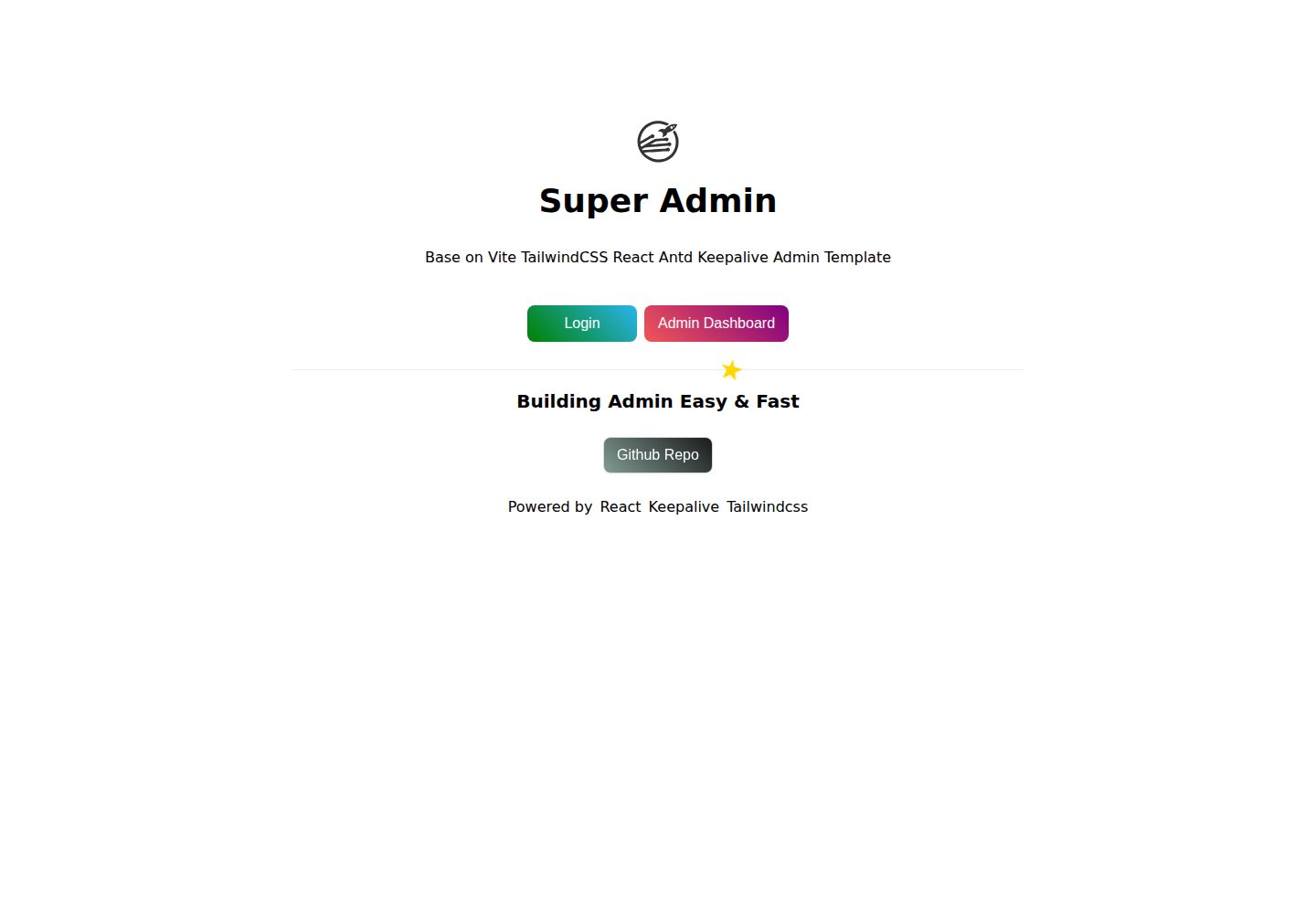
super-admin
A React, Vite, and Antd admin template that implements multi-tab route caching similar to Vue keepalive and route-based permission control.
Vite · Admin dashboard
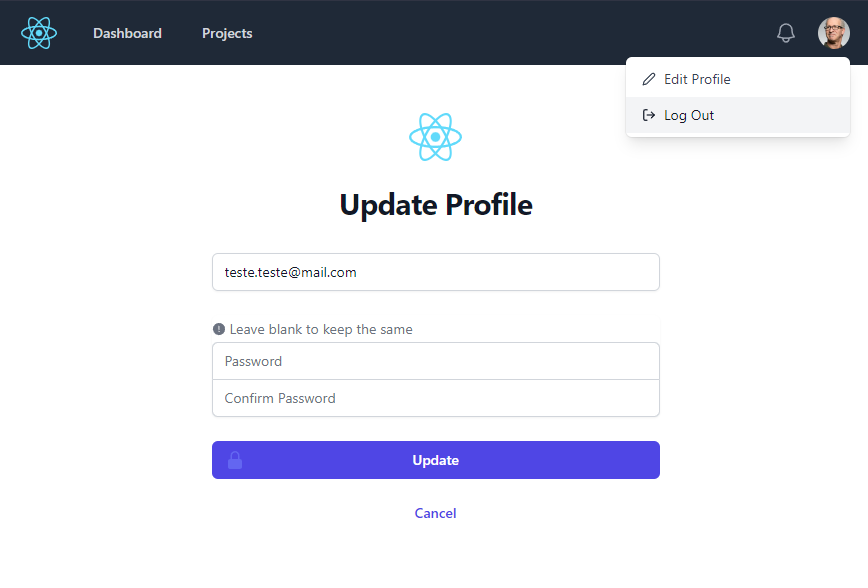
react-vite-tailwind-typescript-firebase-auth-template
A starter template for backend applications using Vite, React, TypeScript, TailwindCSS, and Firebase Auth, featuring login and dashboard interfaces. Requires your own Firebase project and credentials in .env; no backend logic included.
Vite · Admin dashboard