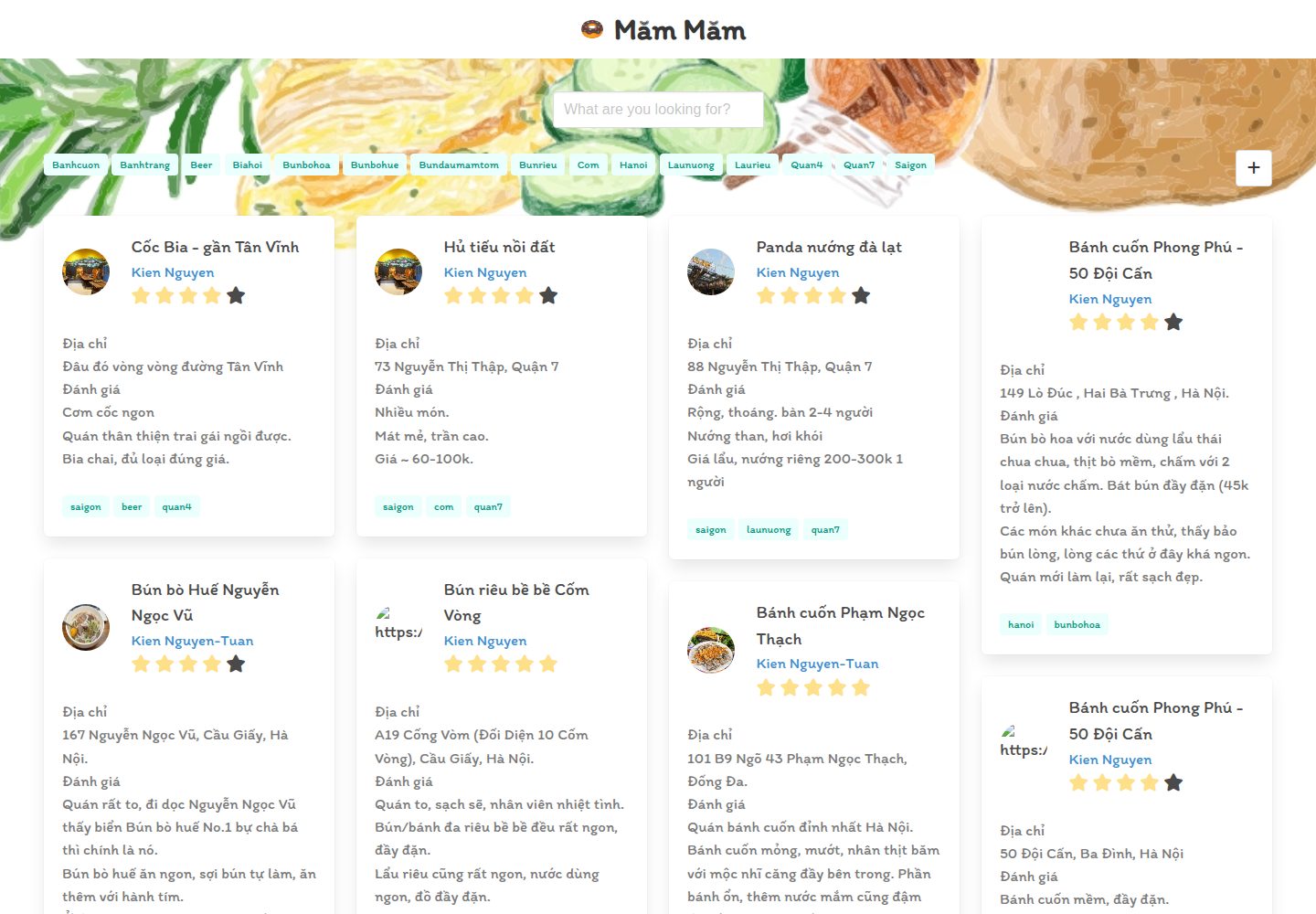
A Hugo-based recipe/cooking blog theme, described in the README as a simple theme
HugoBlog
hugo-cuisine-book — Hugo Blog Template
By ntk148v
hugo-cuisine-book is a Hugo-based recipe blog theme, released under the MIT license, and can be installed as a git submodule or Hugo module.
Explore the design
Compare the page layouts and mobile experience. Open any screenshot for a closer look.
Desktop homepage1 / 2
Desktop captureTop of page
Actual screenshot captured by the server browser.
All pages & views 2
Screenshots show visual appearance; interactive behavior may differ.
Recorded 2026-10-03View source
What stands out
A quick read of the recorded project description.
Requires the Hugo extended version, with the README noting 0.128.0 or later
Supports two installation methods: git submodule and Hugo module
config.toml can configure author, description, logo, comments, repository, and edit/new links
Default styles and templates can be overridden via _custom.scss, _fonts.scss, favicon.png, and comments.html
Released under the MIT license; the repository provides desktop and mobile homepage screenshots
Template Details
hugo-cuisine-book is a Hugo theme published by ntk148v, positioned as a simple recipe/cooking blog template. The README describes it as "A simple Hugo theme" and states that it was inspired by Recipe-Book. The theme requires the Hugo extended version, and the README notes that the version must be at least 0.128.0.
There are two installation methods: clone it as a git submodule into themes/cuisine-book, or use it as a Hugo module by importing github.com/ntk148v/hugo-cuisine-book in the [module] section of config.toml. Site configuration is centralized in config.toml, where you can set baseURL, title, theme, and under params: author, description, logo, comment, repo, editpath, newpath; enableGitInfo is an optional switch.
For customization, the README lists four files that can be overridden: static/favicon.png to replace the default icon, assets/_custom.scss to override or customize SCSS styles, assets/_fonts.scss to replace the default fonts, and layouts/partials/comments.html to override the comment template. The comment template includes Disqus by default and can be controlled via params.comment or the same-named parameter in a page's frontmatter. The repository includes desktop and mobile homepage screenshots, and the demo site is ntk148v.github.io/mammam.
HugoBlog
Is it right for your project?
Use Cases
- Building a Hugo blog focused on recipes and cooking
- Providing a page structure with author information and a comment entry point for cooking sites
- Introducing the theme as a module in an existing Hugo project
- Sites that want to override default colors, backgrounds, or fonts using SCSS variables
Suitable For
- Developers who use Hugo and are familiar with config.toml configuration
- Personal blogs centered on image-and-text recipe articles
- Projects that accept the MIT license terms and are willing to retain the copyright notice
- Site maintainers who need to customize the comment template or styles
Getting started & customization
Use these recorded setup notes alongside the repository instructions for your chosen version.
- 1
Requires the Hugo extended version; the README notes version 0.128.0 or later
- 2
Git submodule method: git submodule add https://github.com/ntk148v/hugo-cuisine-book themes/cuisine-book
- 3
Hugo module method: add a [module] section in config.toml and import github.com/ntk148v/hugo-cuisine-book, then run hugo mod get -u
- 4
Set theme = "cuisine-book" in config.toml, and fill in fields under params such as author, description, logo, and repo as needed
- 5
When overriding styles or templates, place custom files in assets/_custom.scss, assets/_fonts.scss, static/favicon.png, or layouts/partials/comments.html
License & source material
Usage conditions & limitations
Free to use · keep license noticeThis entry covers the free version under the MIT license in the public repository; the free scope is the code of this version and does not mean that external services or third-party assets are free.
Must comply with when using
- You may freely use, modify, commercialize, and distribute the code of this version.
- When distributing copies or substantial portions of the code, retain the original author's copyright notice and the full MIT license notice.
- The code is provided as is; warranties and limitations of liability are governed by the original license and applicable law.
Additional costs & items to verify
- The theme integrates a Disqus comment template by default in partials/comments.html; enabling comments requires the third-party Disqus service, which may involve account registration and external service terms.
- The README notes that image assets come from Freepik; these images may be subject to separate asset licenses, different from the theme code's MIT license, and you must verify authorization before use.
- Demo images, fonts, icons, and other third-party assets must be checked against their respective licenses and cannot be judged solely by the code's MIT license.
- External services such as domains, hosting, databases, payments, or AI may incur additional charges.
View Original Text Basis
Permission is hereby granted, free of charge
Original License Text
By default partials/comments.html includes Disqus template
Original README
https://github.com/ntk148v/hugo-cuisine-book/blob/master/LICENSEhttps://github.com/ntk148v/hugo-cuisine-book/blob/master/README.mdImages from [Freepik](https://freepik.com/)
Original README
Compiled by DeepSeek based on repository license and README ·2026-10-03. Results only cover the materials read; dependencies, images, fonts, and subsequent term changes are subject to their respective original texts.
Project checks & description sources
Template Information
- Source platforms
- Hugo Themes
- Documentation and maintenance reference score
- More documented · 79 / 100
- Technologies
- Hugo
- Website type
- Blog
How this score is calculated
Our heuristic uses license records (up to 30), a demo link (12), a preview (10), stars (15), recorded maintenance (15), description completeness (8), feature records (5) and classification data (5). It is not a code, security or performance test, or a Google score. A link does not establish tested functionality.
What to verify for this project
- Repository update recorded
- 2026-04-25
- Screenshot last checked
- 2026-10-03
A demo link is listed. Check it with your own content and viewport sizes; its presence does not confirm that forms, authentication or payments work.
The catalog identifies Hugo as the primary stack. Check the actual dependency manifest and lockfile for versions and hosting requirements. These notes use recorded metadata, not a code audit or a deployment test.
Use a selection guide →How this description was prepared
AI-assisted description based on catalog records and repository material. Repository authors are not automatically the reviewers of this description.
Review declaration: [email protected] · 2026-10-04
Inspect the recorded source material
SHA-256: d8e1405dc5cefc231baf200cf5b2dc36e662c3f9fdedf237b5316eb215e65e68
2026-10-03T20:45:47.213Z
Source file / repository<div align="center">
<h1>Hugo Cuisine Book</h1>
<blockquote align="center">A simple Hugo theme</blockquote>
<p>
<a href="https://github.com/ntk148v/hugo-cuisine-book/blob/master/LICENSE">
<img alt="GitHub license" src="https://img.shields.io/github/license/ntk148v/hugo-cuisine-book?style=for-the-badge">
</a>
<a href="https://github.com/ntk148v/hugo-cuisine-book/stargazers">
<img alt="GitHub stars" src="https://img.shields.io/github/stars/ntk148v/hugo-cuisine-book?style=for-the-badge">
</a>
<a href="https://gohugo.io">
<img alt="Hugo" src="https://img.shields.io/badge/hugo-0.68-blue.svg?style=for-the-badge">
</a>
<a href="https://ntk148v.github.io/mammam">
<img alt="Demo Site" src="https://img.shields.io/badge/demo-site-green.svg?style=for-the-badge">
</a>
</p><br>
<p>
<img src="./images/screenshot.png">
</p>
</div>
- [1. Requirements](#1-requirements)
- [2. Installation](#2-installation)
- [2.1. Install as git module](#21-install-as-git-module)
- [2.2. Install as hugo module](#22-install-as-hugo-module)
- [3. Configuration \& Customization](#3-configuration--customization)
- [3.1. Site configuration](#31-site-configuration)
- [3.2. Customization](#32-customization)
- [4. Contributing](#4-contributing)
Credits:
- Highly inspired by [Recipe-Book](https://github.com/rametta/recipe-book)
- Images from [Freepik](https://freepik.com/)
## 1. Requirements
- Hugo extended version, version >= 0.128.0.
## 2. Installation
### 2.1. Install as git module
- Navigate to your hugo project root and run:
```bash
git submodule add https://github.com/ntk148v/hugo-cuisine-book themes/cuisine-book
```
- Run hugo (or set theme = "cuisine-book"/theme: hugo-book in configuration file)
```bash
hugo server --minify --theme cuisine-book
```
### 2.2. Install as hugo module
You can also add this theme as a Hugo module instead of a git submodule.
- Start with initializing hugo modules, if not done yet:
```bash
hugo mod init github.com/repo/path
```
- Navigate to your hugo project root and add [module] section to `config.toml`:
```bash
[module]
[[module.imports]]
path = 'github.com/ntk148v/hugo-cuisine-book'
```
- Load/update the theme module and run hugo:
```bash
hugo mod get -u
hugo server --minify
```
## 3. Configuration & Customization
### 3.1. Site configuration
- There are a few configuration options that you can add to your `config.toml` file.
```toml
# Your base url
baseURL = "http://localhost/my-title"
# Your page title
title = "my-title"
theme = "cuisine-book"
# (Optional) Set this to true to enable Author.
enableGitInfo = true
[params]
author = "Your Name"
description = "Describe about you"
# (Optional) Your logo in the header navbar which has to be stored in static folder.
# If the logo is /static/logo.png then the path would be 'logo.png'
logo = "logo.png"
# (Optional) Enable comments template on pages
# By default partials/comments.html includes Disqus template
# See https://gohugo.io/content-management/comments/#configure-disqus
# Can be overwritten by same param in page frontmatter
comment = true
# Set source repository location.
repo = 'https://github.com/ntk148v/mammam'
# Enable 'Edit' links.
# Disabled by default. Uncomment to enable. Requires 'repo' param.
# Path must point to the site directory.
editpath = 'edit/master'
# Enable 'Add' links.
# Disabled by default. Uncomment to enable. Requires 'repo' param.
# Path must point to the site directory.
newpath = 'new/master'
```
### 3.2. Customization
- Extra customization:
| File | Description |
| -------------------------------- | ------------------------------------------------------------------------------------- |
| `static/favicon.png` | Override default favicon |
| `assets/_custom.scss` | Customize or override scss styles |
| `assets/_fonts.scss` | Replace default font with custom fonts (e.g. local files or remote like google fonts) |
| `layouts/partials/comments.html` | Override comments.html template |
- For example, you want to change default site's background.
- Add new background to `static/`, named it as `background.png`.
- Add `assets/_custom.scss`
```scss
body {
background-image: url('background.png');
}
```
## 4. Contributing
- Fork it.
- Create your feature branch (`git checkout -b my-new-feature`).
- Commit your changes (`git commit -am 'Add some feature'`).
- Push to the branch (`git push origin my-new-feature`).
- Create new Pull Request.
Explore similar templates
Compare previews and descriptions within the same stack and category.

hugo-PaperMod
A fast, clean, responsive Hugo theme for blogs and lightweight portfolios, with three layout modes (Regular, Home-Info, Profile), automatic and manual light/dark themes, Fuse.js client-side search, multilingual support, and built-in Open Graph, Twitter Cards, and Schema.org data.
Hugo · Portfolio

LoveIt
LoveIt is a clean, elegant, and feature-rich Hugo blog theme derived from LeaveIt and KeepIt, MIT-licensed. It offers light/dark modes, responsive layout, multilingual support, and search via Lunr.js or Algolia.
Hugo · Blog

hugo-coder
hugo-coder is a minimalist Hugo blog theme maintained by luizdepra under the MIT license. It provides a clean, text-focused blog appearance, configuration documentation in the docs directory, and a complete exampleSite with hugo.toml.
Hugo · Blog

blowfish
Blowfish is a Hugo personal website and blog theme built with Tailwind CSS 4, focused on lightness, simplicity, and content-first presentation.
Hugo · Blog

hugo-paper
hugo-paper is a simple, clean, and customizable Hugo blog theme configured through config.toml or hugo.toml.
Hugo · Blog

hextra
Hextra is a Hugo theme for documentation and blog sites, built on Hugo and Tailwind CSS with design referencing Nextra.
Hugo · Documentation