Responsive admin template based on Bootstrap 5, providing desktop and mobile layouts
HTMLAdmin dashboard
apollo-html-bootstrap — HTML Admin dashboard Template
By null-none
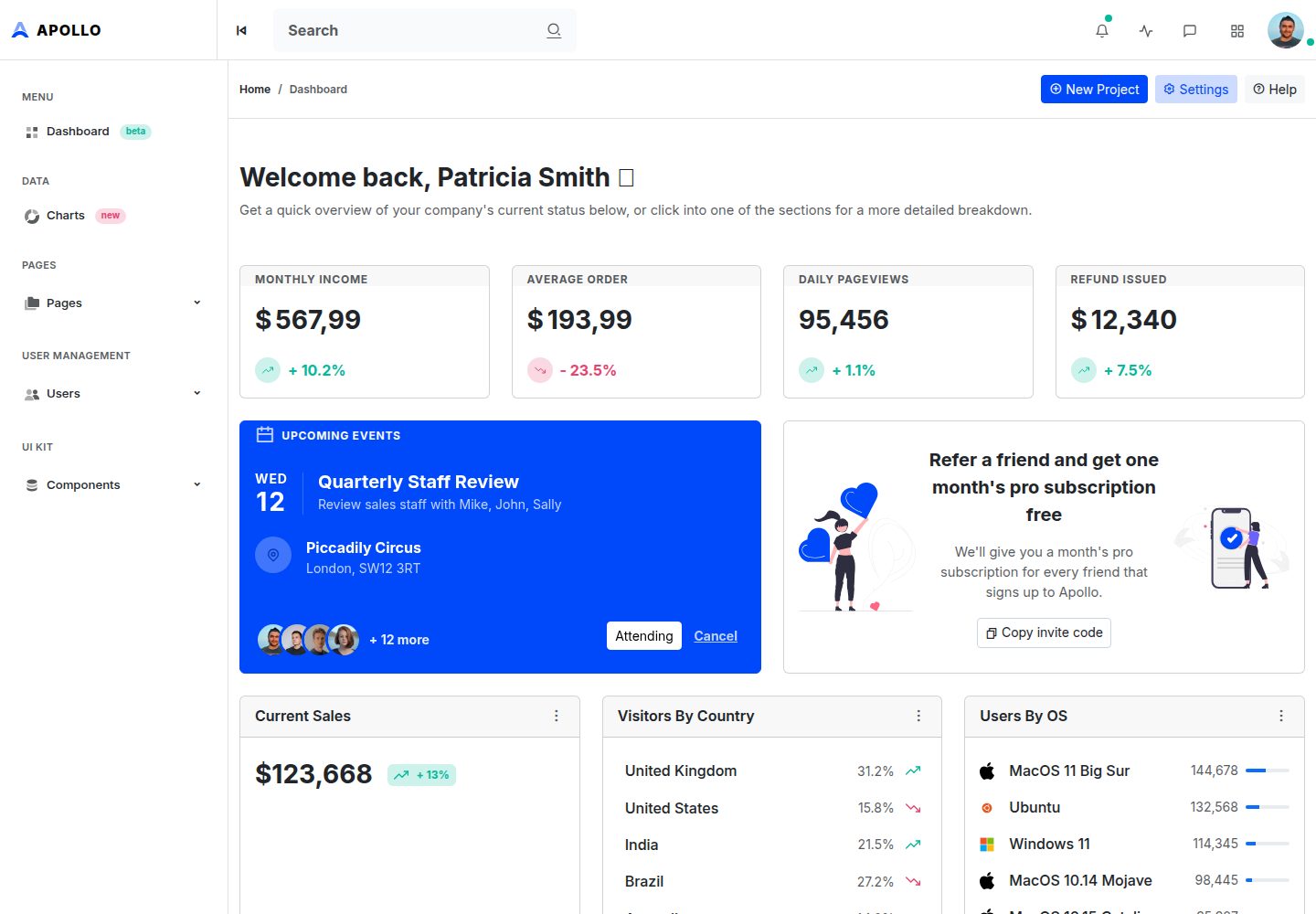
Apollo is a responsive Bootstrap 5 admin HTML template that includes dashboard, user management, charts, login and registration pages, with source organized using Handlebars.js and Webpack.
Explore the design
Compare the page layouts and mobile experience. Open any screenshot for a closer look.
Desktop homepage1 / 2
Desktop captureTop of page
Actual screenshot captured by the server browser.
All pages & views 2
Screenshots show visual appearance; interactive behavior may differ.
Recorded 2026-10-12View source
What stands out
A quick read of the recorded project description.
Includes dashboard, user management, chart examples, login, registration, forgot password, 404, and blank pages
Provides dropdown components such as user settings, activity, messages, and notifications, as well as various Chart.js chart components
Uses Handlebars.js templating engine and partials for code reuse, with JSON data plugin support for loop output
Source code is compiled via Webpack, and you can run a development server or build to the dist directory
Code is under the MIT license, allowing free use, modification, commercial use, and distribution
Template Details
Apollo is a clean, minimal responsive Bootstrap 5 admin template, with HTML as the primary technology stack in the repository. The template provides directly editable dist directory output as well as source code that requires Webpack compilation, making it suitable as a static page starting point for admin interfaces.
In terms of pages, the template includes a dashboard, user management page, chart example pages, login page, registration page, forgot password page, 404 page, and blank page. For components, it provides dropdown menus such as user settings, user activity, user messages, and user notifications, along with several Chart.js chart components and statistics for visitors by country and by operating system.
To reduce code duplication, the template uses Handlebars.js as the templating engine and reuses code through partials, and also uses Handlebars' JSON data plugin to output a single HTML code block in a loop. If you only edit files in the dist directory, no dependencies need to be installed; if you modify the source and recompile, Node.js is required, using npm install and npm start to launch the Webpack development server, and npm run build to recompile to the dist directory.
Regarding licensing, this version's code is under the MIT license, allowing free use, modification, commercial use, and distribution, but third-party assets such as demo images, fonts, and icons must be checked against their respective licenses, and external services such as domains, hosting, and databases may incur additional charges.
HTMLAdmin panel
Is it right for your project?
Use Cases
- Building static page prototypes for admin systems
- Reusing ready-made dashboard and chart components in Bootstrap 5 projects
- Finding ready-made templates for common pages such as login, registration, forgot password, and 404
- As a reference for organizing multi-page HTML templates with Handlebars.js and Webpack
Suitable For
- Front-end developers who need a Bootstrap 5 admin HTML template
- Users who want to edit files in the dist directory directly without running build tools
- Developers willing to install Node.js and compile source code with Webpack
- Projects that need a commercially usable admin template under the MIT license
Getting started & customization
Use these recorded setup notes alongside the repository instructions for your chosen version.
- 1
No dependencies need to be installed when only editing files in the dist directory; HTML and other files there can be modified directly
- 2
Before modifying source code and recompiling, Node.js must be installed first
- 3
Run npm install in the project root directory to install dependencies
- 4
Run npm start to launch the Webpack development server
- 5
Run npm run build to recompile the template files and output them to the dist directory
License & source material
Usage conditions & limitations
Free to use · keep license noticeThis entry covers the free version under the MIT license in the public repository; the free scope applies to this version's code and does not mean external services or third-party assets are free.
Must comply with when using
- Free use, modification, commercial use, and distribution of this version's code are permitted.
- When distributing copies or substantial portions of the code, retain the original author's copyright notice and the full MIT license notice.
- The code is provided as is; warranties and limitations of liability are governed by the original license and applicable law.
Additional costs & items to verify
- Demo images, fonts, icons, and other third-party assets must be checked against their respective licenses and cannot be judged solely by the code's MIT license.
- External services such as domains, hosting, databases, payment, or AI may incur additional charges.
View Original Text Basis
https://github.com/null-none/apollo-html-bootstrap/blob/main/LICENSE.mdhttps://github.com/null-none/apollo-html-bootstrap/blob/main/README.mdPermission is hereby granted, free of charge
Original License Text
Compiled by DeepSeek based on repository license and README ·2026-10-12. Results only cover the materials read; dependencies, images, fonts, and subsequent term changes are subject to their respective original texts.
Project checks & description sources
Template Information
- Source platforms
- GitHub
- Documentation and maintenance reference score
- More documented · 80 / 100
- Technologies
- HTML
- Website type
- Admin dashboard
How this score is calculated
Our heuristic uses license records (up to 30), a demo link (12), a preview (10), stars (15), recorded maintenance (15), description completeness (8), feature records (5) and classification data (5). It is not a code, security or performance test, or a Google score. A link does not establish tested functionality.
What to verify for this project
- Repository update recorded
- 2026-05-23
- Screenshot last checked
- 2026-10-12
A demo link is listed. Check it with your own content and viewport sizes; its presence does not confirm that forms, authentication or payments work.
The catalog identifies HTML as the primary stack. Check the actual dependency manifest and lockfile for versions and hosting requirements. These notes use recorded metadata, not a code audit or a deployment test.
Use a selection guide →How this description was prepared
AI-assisted description based on catalog records and repository material. Repository authors are not automatically the reviewers of this description.
Review declaration: [email protected] · 2026-10-13
Inspect the recorded source material
SHA-256: 06e2e7c9a965c66fd3407eae121eac703d6bcc3ebe98dd8be863d0cdaed91a8b
2026-10-12T19:00:38.283Z
Source file / repository# Apollo - Bootstrap 5 HTML Responsive Admin Template ## Overview Apollo is a clean and minimal responsive Bootstrap 5 admin template. <strong><a href="https://apollo-html-bootstrap.netlify.app">View Demo</a></strong> ## Requirements If you do not intend to work with the template source code (and that means you will not be compiling it or running the Webpack dev server), you do not need to install anything. You can simply navigate to the dist folder and start editing the files. Most developers will be editing the source code and will also be running Webpack to recompile the template files. If that's the case, then ensure that you have Node.js installed. [You can download it from here](https://nodejs.org/en/download/) ## Quick Start - Install Node.js if you don't already have it on your system. - Open the project root in your command line. - run `npm install` in your command line. - run `npm start` to start Webpack devserver. - if you want to recompile the template files (which output to the dist folder), run `npm run build` ## Template Pages The template consists of the following pages: * Dashboard * User Management Page * Chart Example Page * Login Page * Register Page * Forgot Password Page * 404 Page * Blank Page As well as the following widgets: * User Settings Dropdown * User Activity Dropdown * User Messages Dropdown * User Notifications Dropdown * Various Chart.js Widgets * Visitors By Country * Visitors By OS System To keep code repetition to a minimum, we've used Handlebars.js as the templating engine and partials to quickly add the same code to different pages. We also use a Handlebars plugin for JSON data - this allows us to use loops and output a single HTML code block instead of repeating the same HTML.
Explore similar templates
Compare previews and descriptions within the same stack and category.
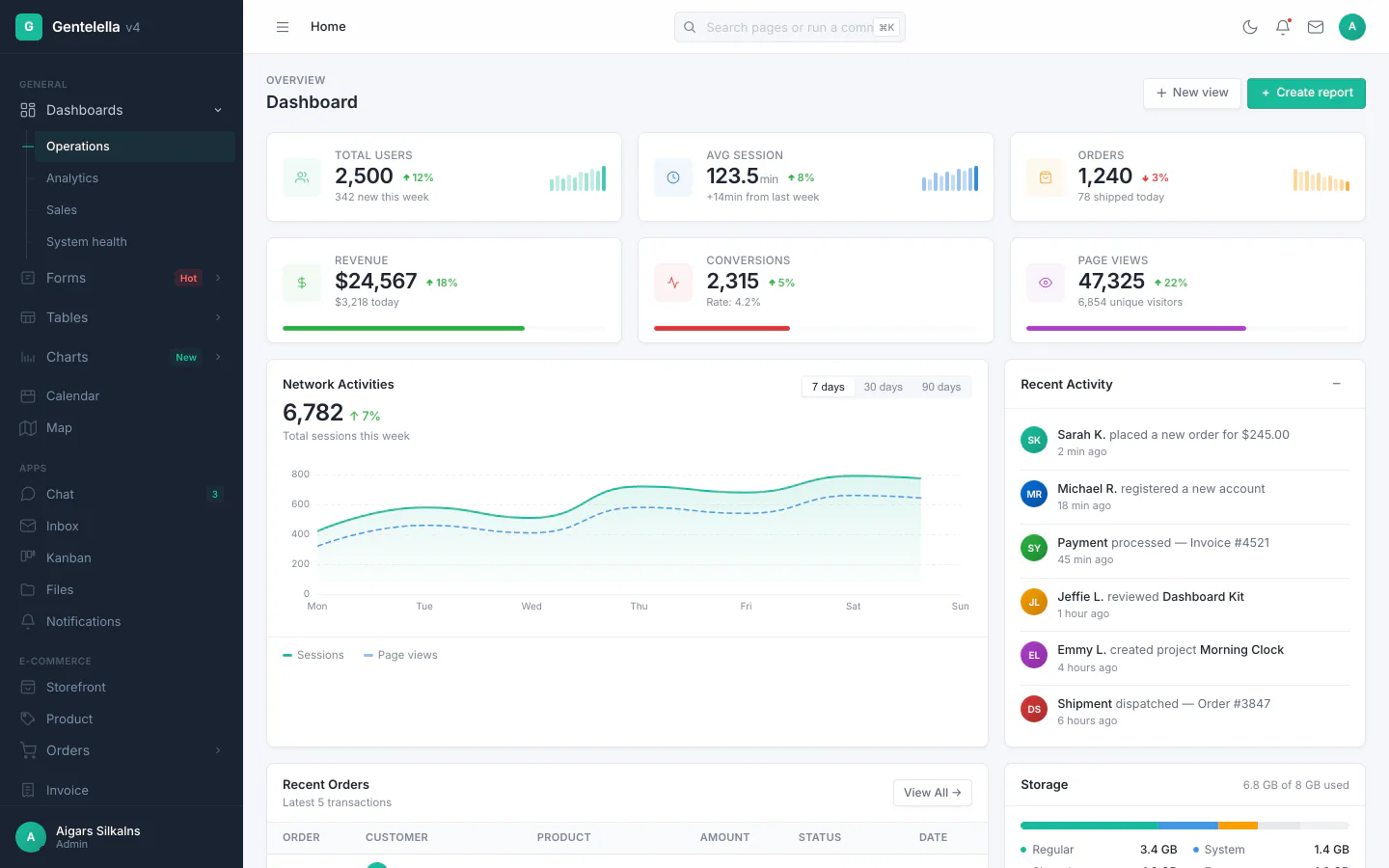
gentelella
Gentelella v4 is a free, open-source admin dashboard template maintained by Colorlib, built with vanilla JavaScript, SCSS, and Vite 8 without Bootstrap or jQuery.
HTML · Admin dashboard
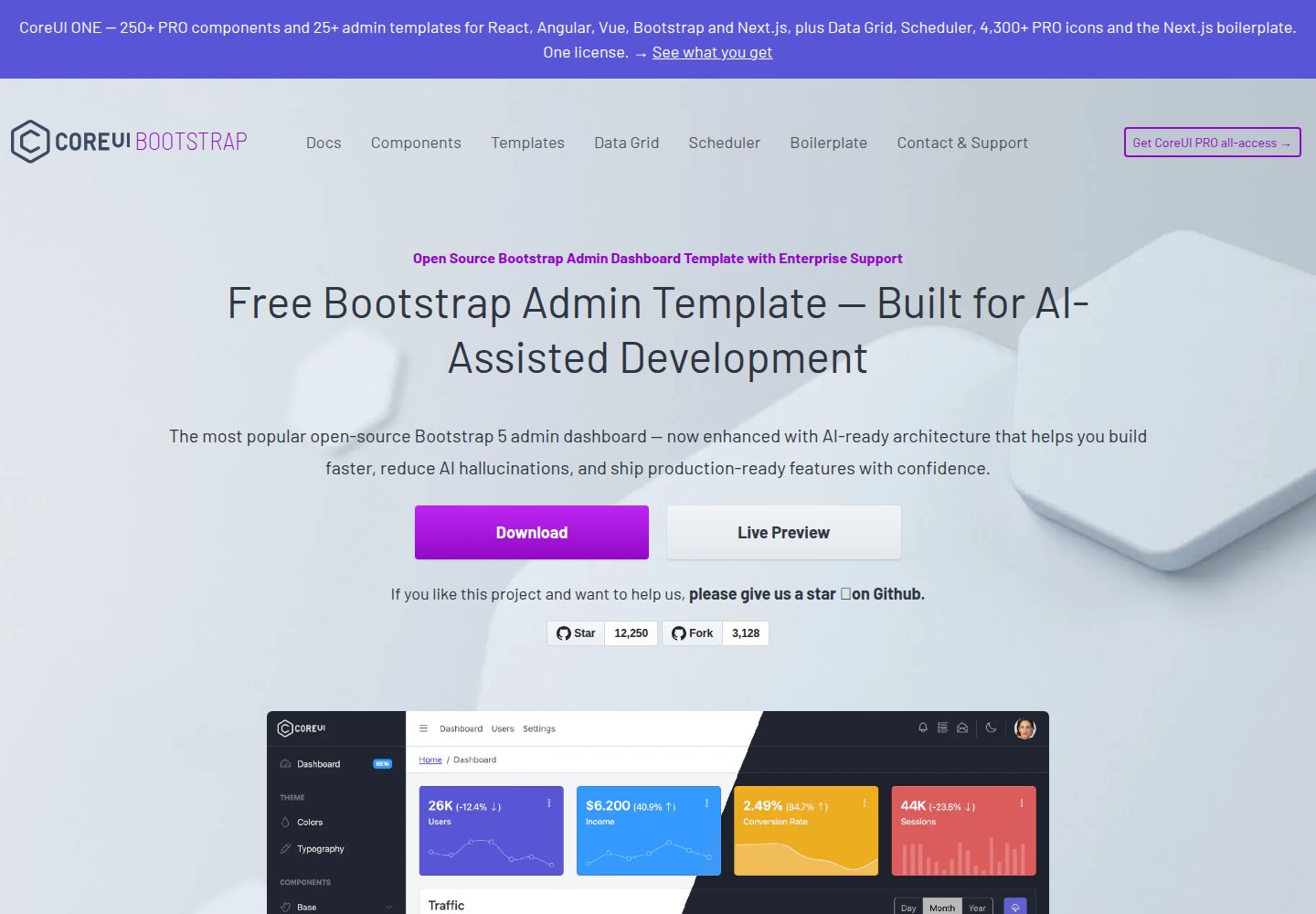
coreui-free-bootstrap-admin-template
A free Bootstrap admin template maintained by CoreUI, built on CoreUI's own UI component library. It provides compiled HTML pages and Pug template source code, covering dashboards, authentication, forms, components, icons, and error pages.
HTML · Admin dashboard
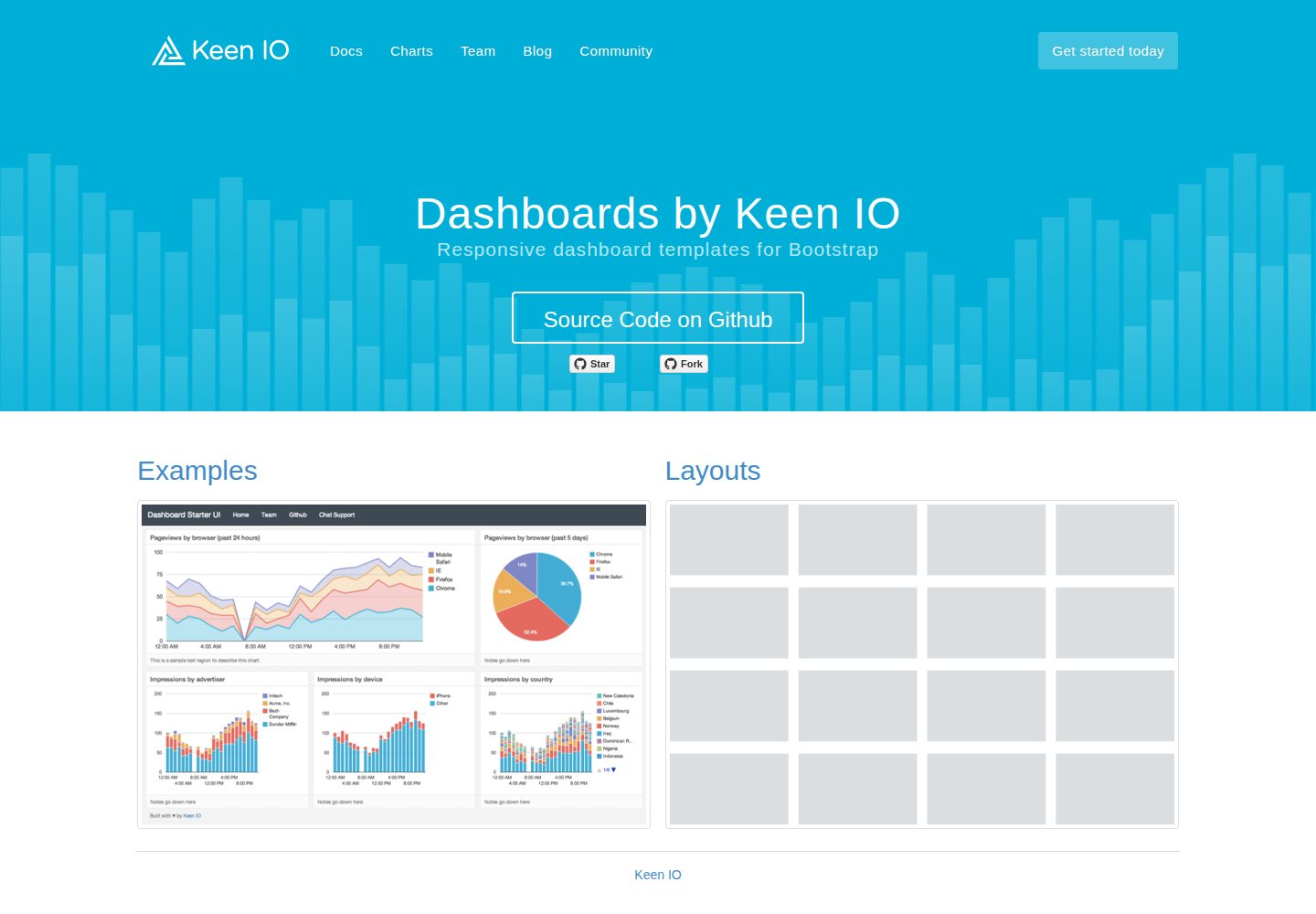
dashboards
A collection of responsive dashboard HTML templates open-sourced by Keen IO, built on CSS Grid, offering multiple prebuilt admin data interface layouts.
HTML · Admin dashboard
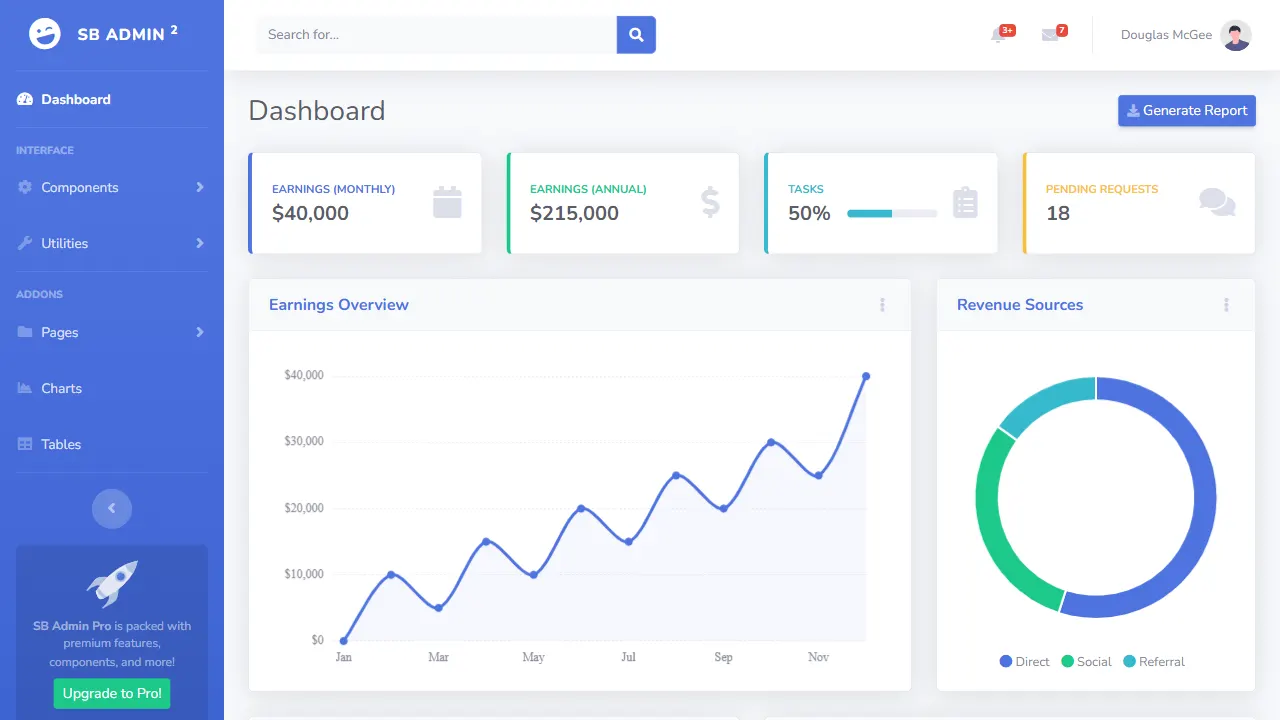
SB Admin 2
SB Admin 2 is a classic Bootstrap admin template from Start Bootstrap, offering dashboards, charts, tables, and common management pages.
HTML · Admin dashboard
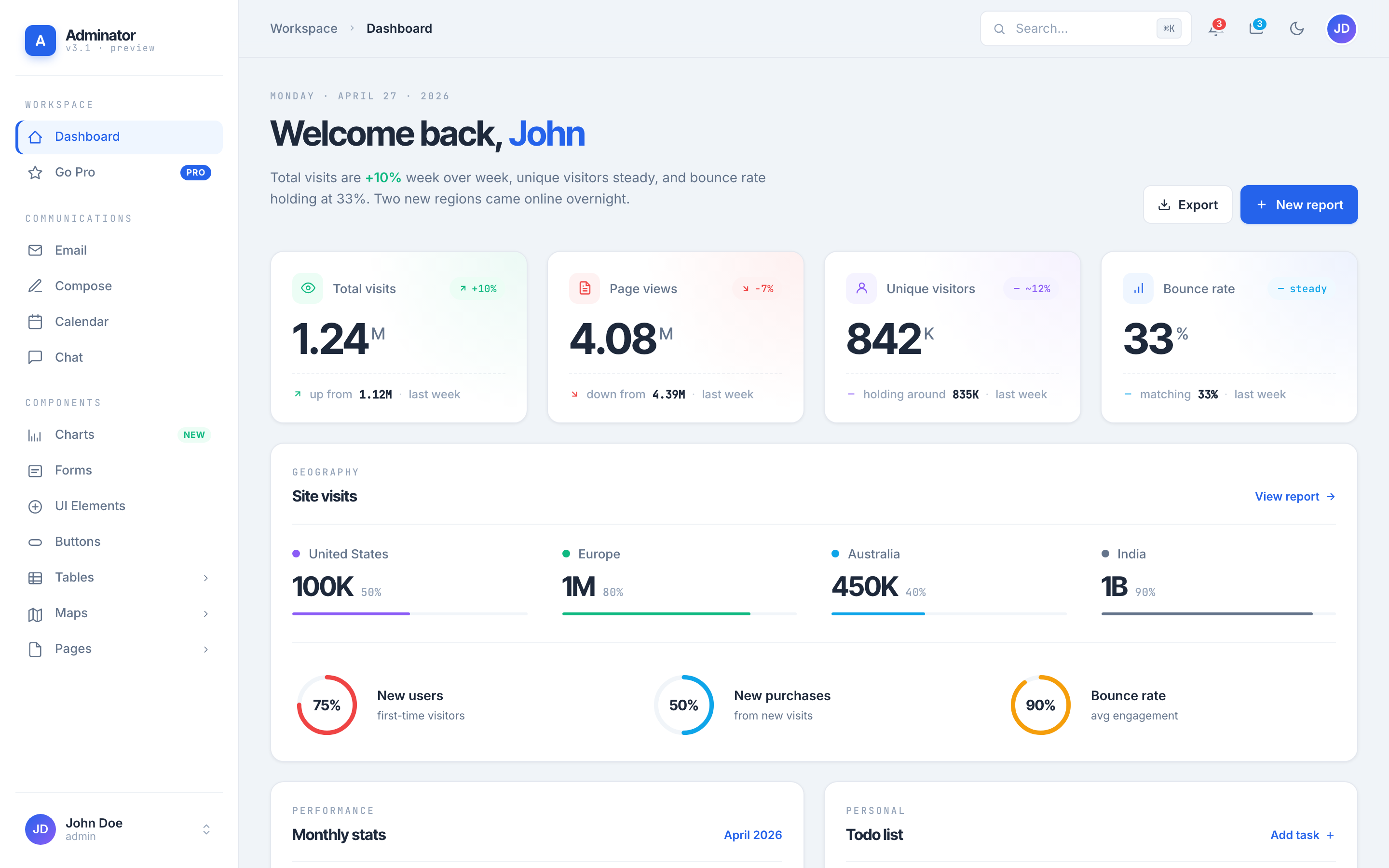
Adminator-admin-dashboard
Adminator 4 is a vanilla HTML, CSS and JavaScript admin dashboard template with a CSS-variable token design system, built-in light and dark themes, no jQuery or Bootstrap dependency, and 18 pages covering dashboards, mail, calendar, charts, forms, tables and error pages.
HTML · Admin dashboard
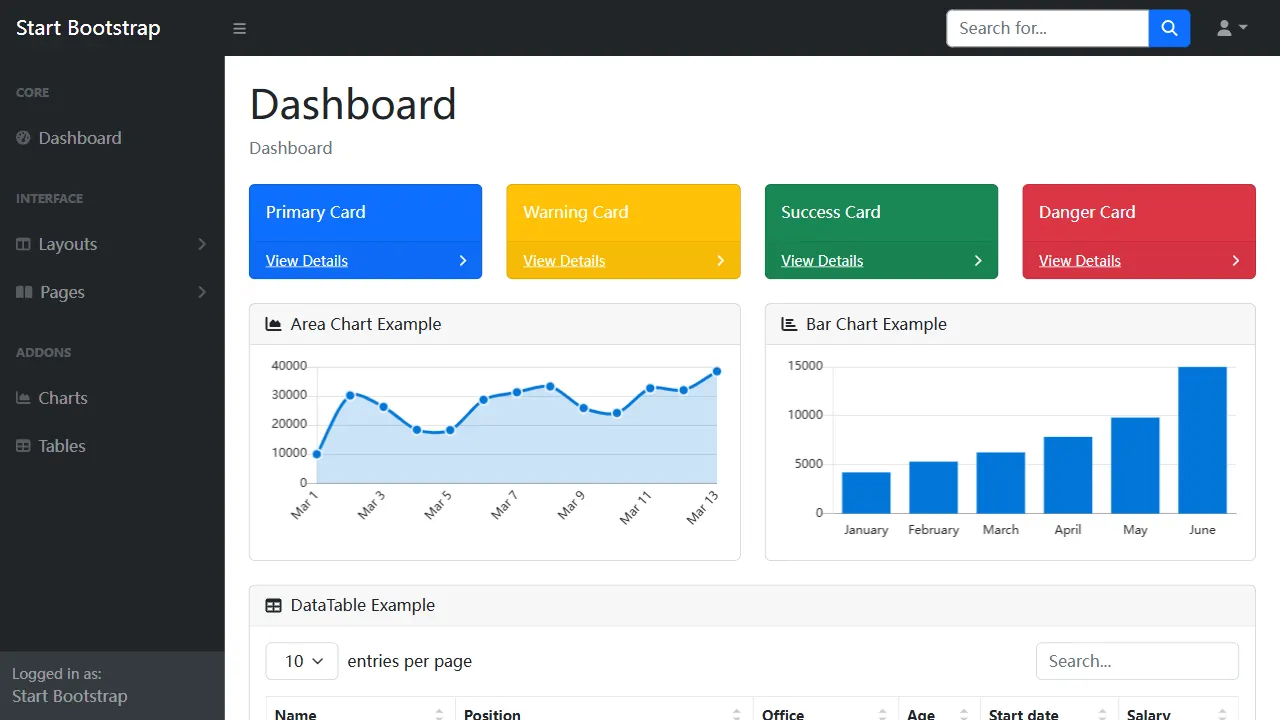
SB Admin
SB Admin is a lightweight, open-source Bootstrap admin template from Start Bootstrap. It offers a sidebar-and-top-bar layout with data tables, forms, and stat cards, plus responsive design.
HTML · Admin dashboard