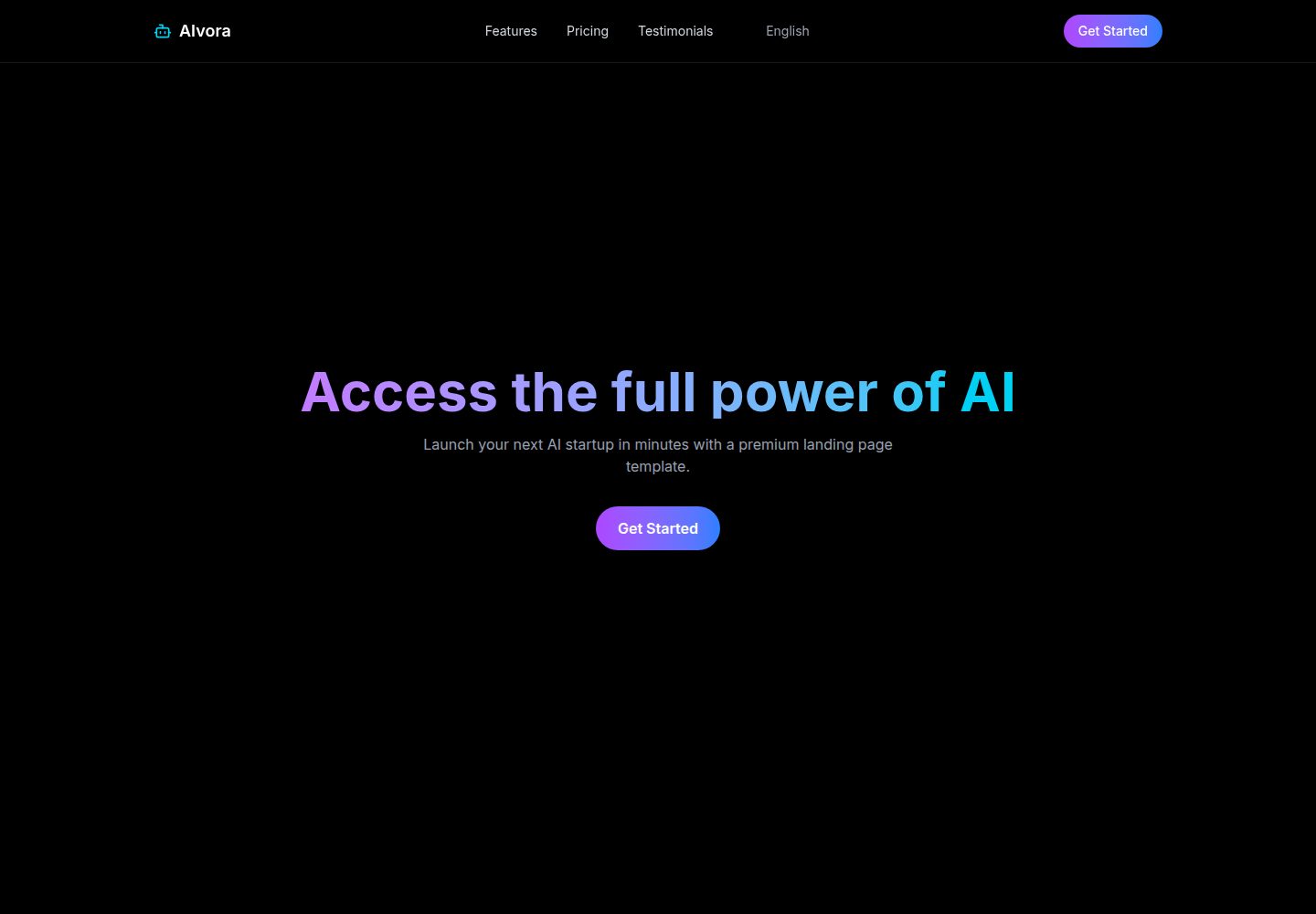
Landing page template built with Next.js and React
Next.jsReactCorporate Website
AIvora — Next.js Business Template
By nuresa07
AIvora is a dark, futuristic landing page template built with Next.js and React, aimed at AI startup projects and corporate website scenarios, released under the MIT license.
Explore the design
Compare the page layouts and mobile experience. Open any screenshot for a closer look.
Desktop homepage1 / 2
Desktop captureTop of page
Actual screenshot captured by the server browser.
All pages & views 2
Screenshots show visual appearance; interactive behavior may differ.
Recorded 2026-10-02View source
What stands out
A quick read of the recorded project description.
Dark, modern, futuristic visual style aimed at AI startup projects
Initialized with create-next-app, with the page entry point at app/page.tsx
Loads the Geist font via next/font
Repository uses the MIT license and includes the standard license text
Provides desktop and mobile homepage preview screenshots
Template Details
AIvora is a Next.js project initialized with create-next-app, with the page entry point at app/page.tsx and the Geist font loaded via next/font. The template is positioned as a landing page for AI startups, with an overall dark, modern, futuristic visual style. The repository description states it can be used to quickly build the homepage of an AI startup product.
Based on the repository materials, the template provides front-end page code. The README only covers basic workflows such as starting the development server, editing pages, and deploying to Vercel; it does not describe backend APIs, data sources, or specific business modules. The demo site is a separately deployed preview address, and the repository also provides desktop and mobile homepage screenshots, which can be used to judge how the page appears in both viewports.
Regarding licensing, the repository contains the standard MIT license text, allowing free use, modification, commercial use, and distribution of this version of the code, provided the copyright notice and license notice are retained when distributing. Note that the MIT license only covers the code itself; third-party assets such as demo images, fonts, and icons need to be checked separately for their respective licenses. External services such as domains, hosting, databases, payments, or AI may incur additional costs.
Next.jsReactCorporate website
Is it right for your project?
Use Cases
- Building an official website or landing page for an AI startup product
- Corporate sites that need a dark, futuristic homepage
- Using as a front-end page starting point for further development in a Next.js project
Suitable For
- Front-end developers using the Next.js and React stack
- Teams that need to quickly build an AI product homepage
- Projects that accept a dark, futuristic visual style
Getting started & customization
Use these recorded setup notes alongside the repository instructions for your chosen version.
- 1
Start the development server with npm run dev, yarn dev, pnpm dev, or bun dev, and access http://localhost:3000 by default
- 2
Page editing starts from app/page.tsx, and changes update automatically after saving
- 3
For deployment, refer to the Vercel deployment instructions in the official Next.js documentation
- 4
Third-party assets (images, fonts, icons) need to be checked separately for their licenses; the MIT license does not cover these
- 5
External services such as domains, hosting, databases, payments, or AI may be charged separately
License & source material
Usage conditions & limitations
Free to use · keep license noticeThis entry covers the free version under the MIT license in a public repository; the free scope is the code of this version and does not mean that external services or third-party assets are free.
Must comply with when using
- Free use, modification, commercial use, and distribution of this version of the code are allowed.
- When distributing copies or substantial portions of the code, retain the original author's copyright notice and the complete MIT license notice.
- The code is provided as is; warranties and limitations of liability are governed by the original license and applicable law.
Additional costs & items to verify
- The template loads the Geist font via next/font. This font is provided by Vercel and is a third-party asset; the MIT license does not cover the font itself, and its license terms must be checked independently before commercial use.
- The README recommends deploying on the Vercel platform, which is an external hosting service that may incur additional costs or require account registration; the MIT license does not cover this service.
- Demo images, fonts, icons, and other third-party assets need to be checked under their respective licenses and cannot be judged solely by the code's MIT license.
- External services such as domains, hosting, databases, payments, or AI may be charged separately.
View Original Text Basis
Permission is hereby granted, free of charge
Original License Text
This project uses [`next/font`](https://nextjs.org/docs/app/building-your-application/optimizing/fonts) to automatically optimize and load [Geist](https://vercel.com/font), a new font family for Vercel.
Original README
https://github.com/nuresa07/AIvora/blob/main/LICENSEhttps://github.com/nuresa07/AIvora/blob/main/README.mdThe easiest way to deploy your Next.js app is to use the [Vercel Platform](https://vercel.com/new?utm_medium=default-template&filter=next.js&utm_source=create-next-app&utm_campaign=create-next-app-readme) from the creators of Next.js.
Original README
Compiled by DeepSeek based on repository license and README ·2026-10-02. Results only cover the materials read; dependencies, images, fonts, and subsequent term changes are subject to their respective original texts.
Project checks & description sources
Template Information
- Source platforms
- GitHub
- Documentation and maintenance reference score
- More documented · 85 / 100
- Technologies
- Next.js · React
- Website type
- Corporate Website
How this score is calculated
Our heuristic uses license records (up to 30), a demo link (12), a preview (10), stars (15), recorded maintenance (15), description completeness (8), feature records (5) and classification data (5). It is not a code, security or performance test, or a Google score. A link does not establish tested functionality.
What to verify for this project
- Repository update recorded
- 2025-10-15
- Screenshot last checked
- 2026-10-02
A demo link is listed. Check it with your own content and viewport sizes; its presence does not confirm that forms, authentication or payments work.
The catalog identifies Next.js as the primary stack. Check the actual dependency manifest and lockfile for versions and hosting requirements. These notes use recorded metadata, not a code audit or a deployment test.
Use a selection guide →How this description was prepared
AI-assisted description based on catalog records and repository material. Repository authors are not automatically the reviewers of this description.
Automatically checked against source and license rules; no manual editorial review.
Inspect the recorded source material
SHA-256: 67d3aa94feb7fddbb2b1f9f8e84d40c0803ed92b113dec712ebe293b10aa15dc
2026-10-02T23:30:23.457Z
Source file / repository# AIvora Launch your next AI startup in minutes with AIvora — a premium dark, modern, and futuristic React/Next.js landing page template. This is a [Next.js](https://nextjs.org) project bootstrapped with [`create-next-app`](https://nextjs.org/docs/app/api-reference/cli/create-next-app). ## Getting Started First, run the development server: ```bash npm run dev # or yarn dev # or pnpm dev # or bun dev ``` Open [http://localhost:3000](http://localhost:3000) with your browser to see the result. You can start editing the page by modifying `app/page.tsx`. The page auto-updates as you edit the file. This project uses [`next/font`](https://nextjs.org/docs/app/building-your-application/optimizing/fonts) to automatically optimize and load [Geist](https://vercel.com/font), a new font family for Vercel. ## Learn More To learn more about Next.js, take a look at the following resources: - [Next.js Documentation](https://nextjs.org/docs) - learn about Next.js features and API. - [Learn Next.js](https://nextjs.org/learn) - an interactive Next.js tutorial. You can check out [the Next.js GitHub repository](https://github.com/vercel/next.js) - your feedback and contributions are welcome! ## Deploy on Vercel The easiest way to deploy your Next.js app is to use the [Vercel Platform](https://vercel.com/new?utm_medium=default-template&filter=next.js&utm_source=create-next-app&utm_campaign=create-next-app-readme) from the creators of Next.js. Check out our [Next.js deployment documentation](https://nextjs.org/docs/app/building-your-application/deploying) for more details.
Explore similar templates
Compare previews and descriptions within the same stack and category.

SaaS-Boilerplate
SaaS-Boilerplate is an open-source SaaS starter template built with Next.js App Router, React 19, TypeScript, Tailwind CSS, and Shadcn UI.
Next.js · SaaS
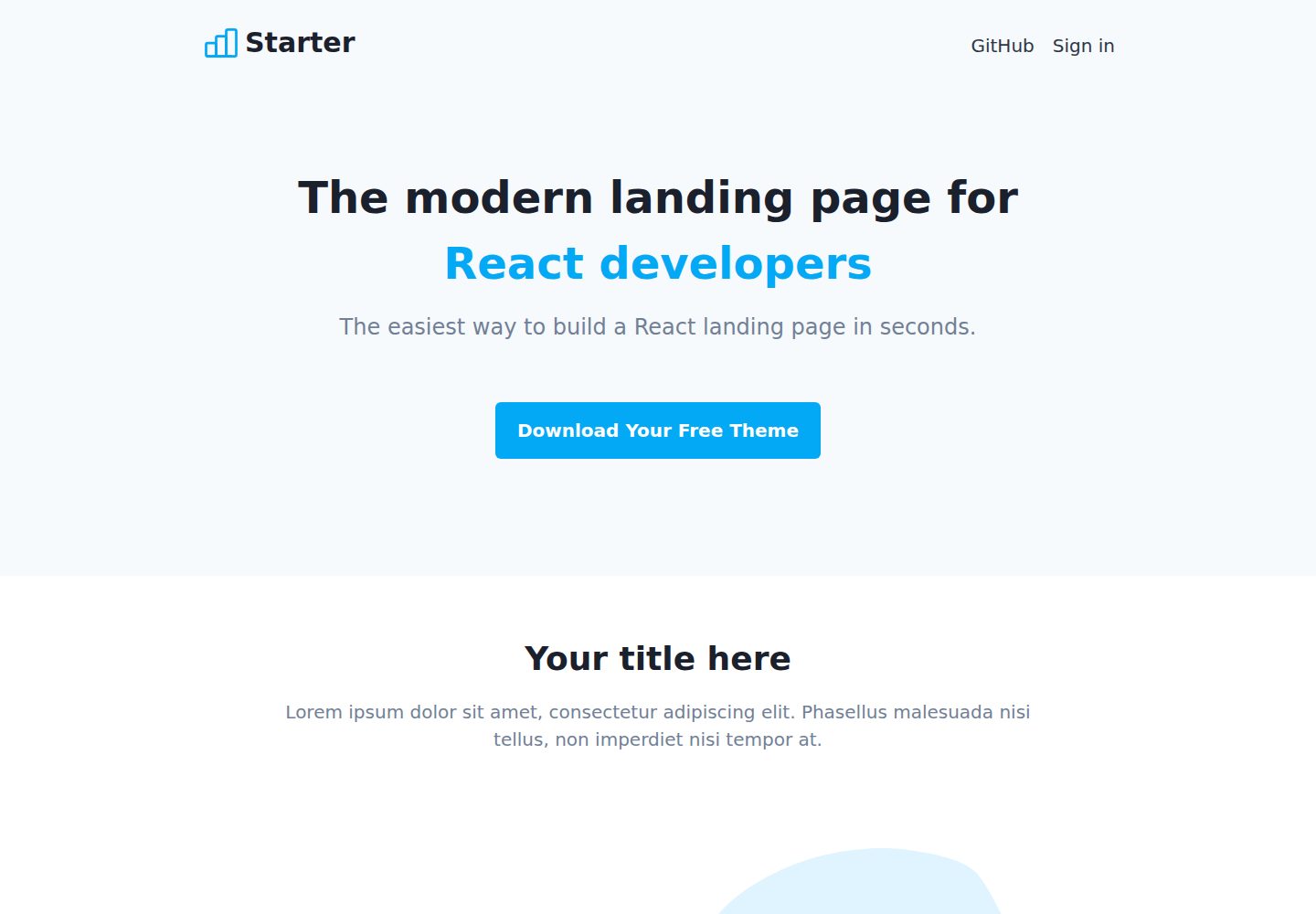
Next-JS-Landing-Page-Starter-Template
A free Next.js landing page starter template written in Tailwind CSS and TypeScript, featuring built-in navbar, hero, features, CTA banner, and footer sections.
Next.js · Corporate Website
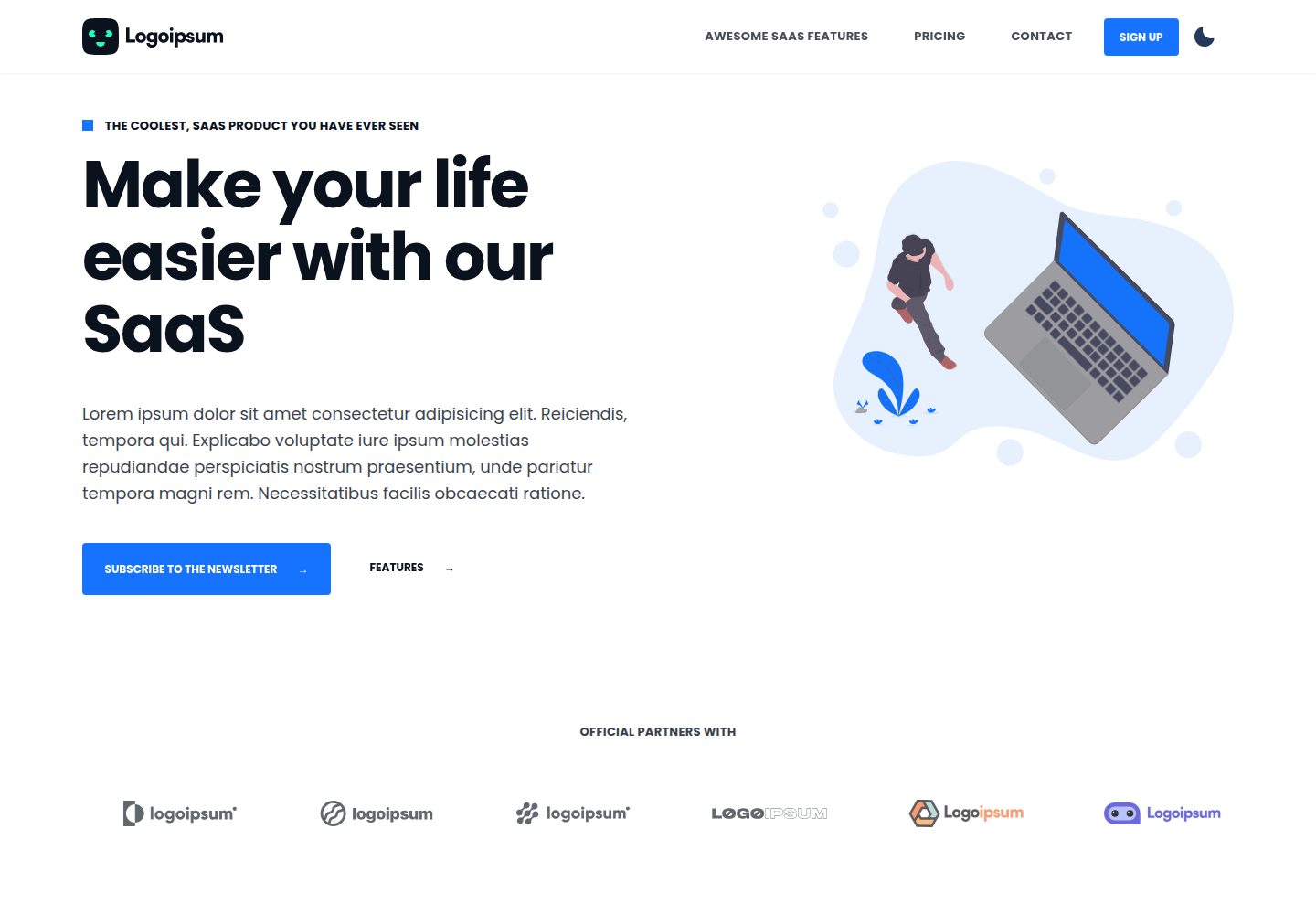
next-saas-starter
A free Next.js SaaS marketing landing page template from Blazity, using static generation and styled-components with no extra UI library.
Next.js · SaaS
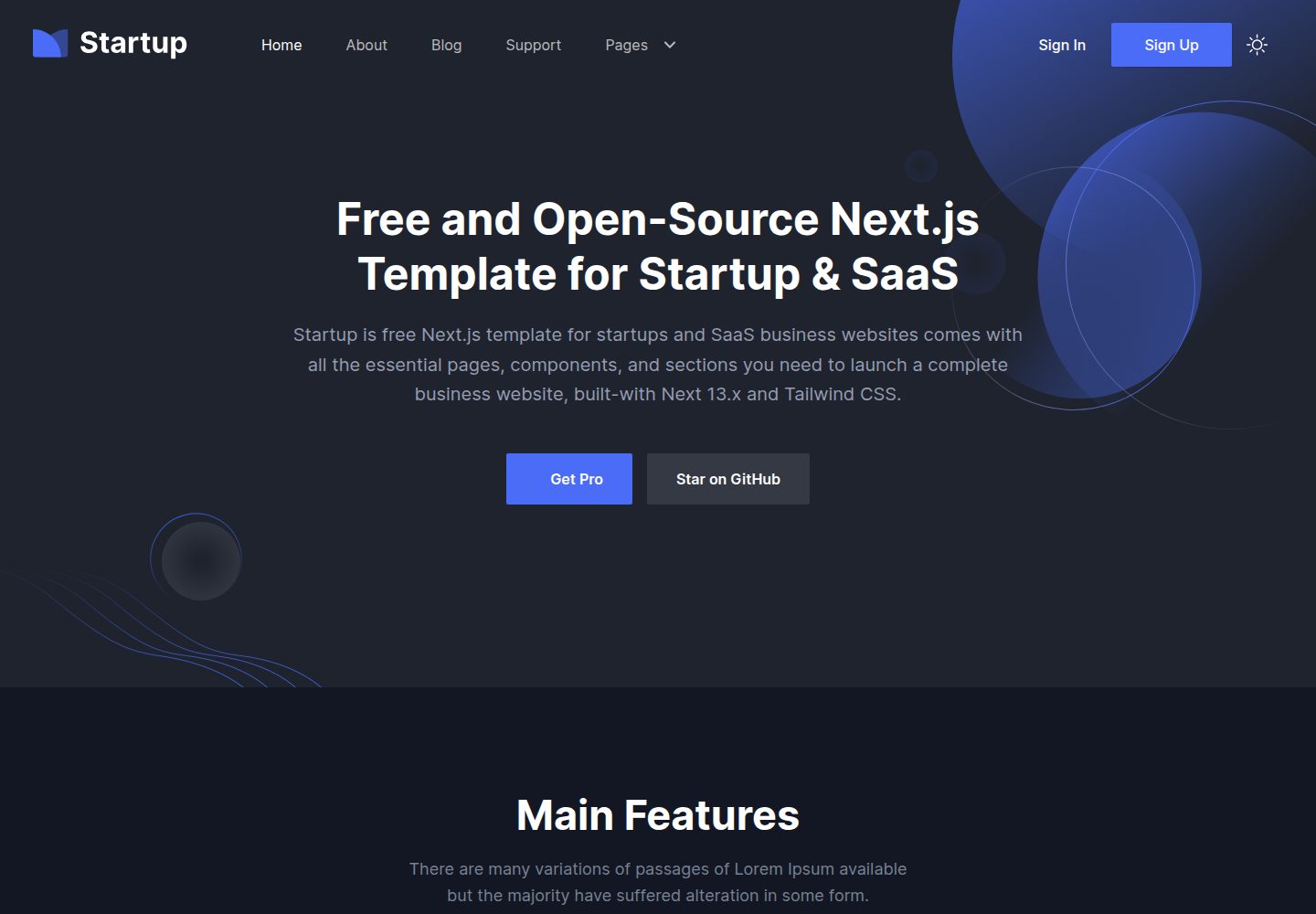
startup-nextjs
Startup is a free, MIT-licensed Next.js template from NextJSTemplates for SaaS startups and corporate landing pages.
Next.js · SaaS
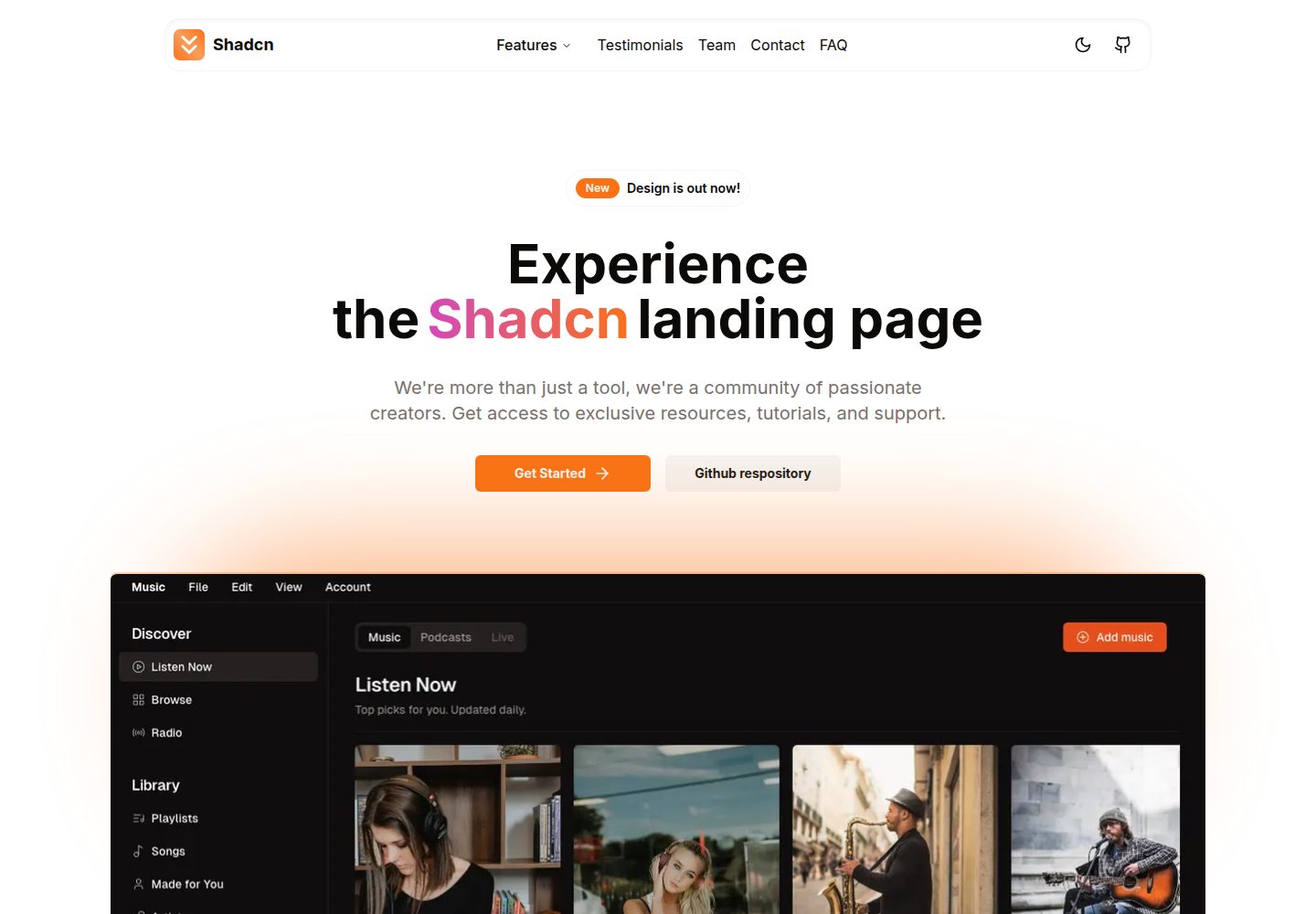
shadcn-landing-page
A Next.js landing page template built with Shadcn, TypeScript, and Tailwind, converted from a Shadcn-Vue version. It includes sections such as Navbar, mobile Sidebar, Hero, Pricing, FAQ, and Footer, and highlights responsive design, navigation, and dark mode.
Next.js · Corporate Website
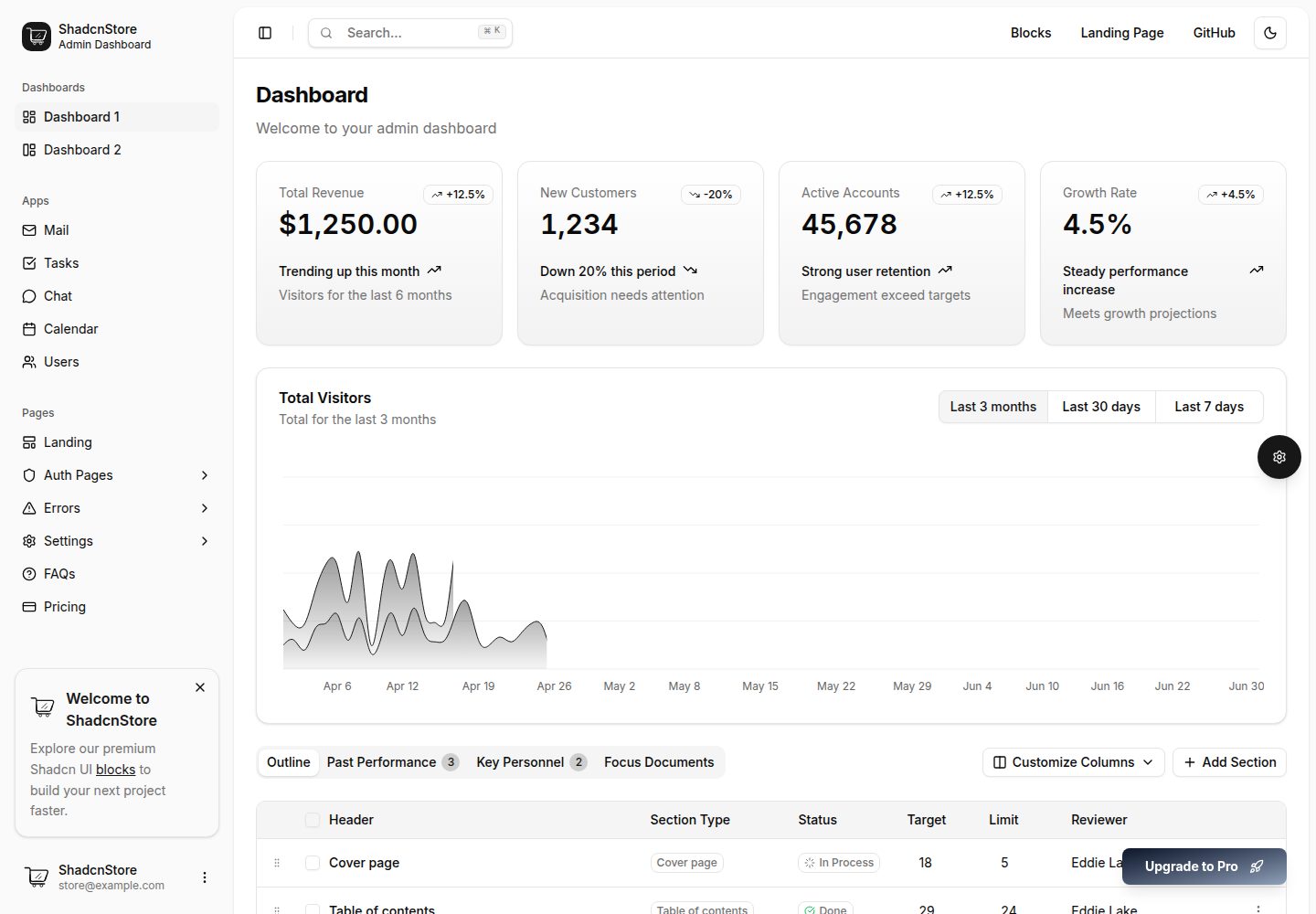
shadcn-dashboard-landing-template
An open-source admin dashboard and marketing landing page template built on shadcn/ui and Tailwind CSS, with both Vite + React and Next.js versions in one repository.
Next.js · Admin dashboard