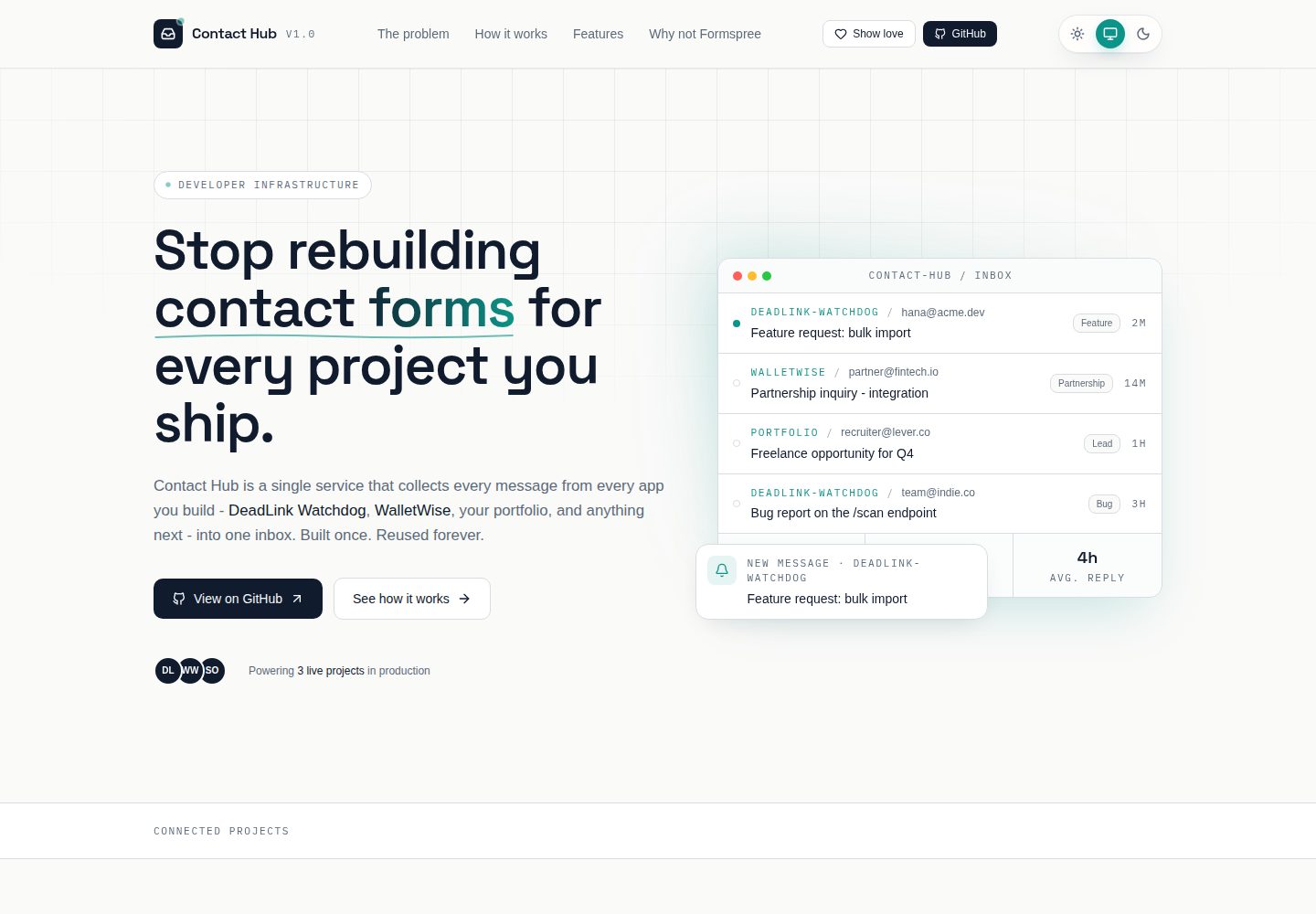
Multiple projects send contact messages to the same service via per-project API keys, with messages tagged by project
Next.jsReactAdmin dashboard
Contact-Hub — Next.js Admin dashboard Template
By Oluwaseg
Contact Hub is a self-hosted contact form backend service. Multiple projects send messages to one place via API, managed centrally through a dashboard, with notifications via email, Discord, or Telegram.
Explore the design
Compare the page layouts and mobile experience. Open any screenshot for a closer look.
Desktop homepage1 / 2
Desktop captureTop of page
Actual screenshot captured by the server browser.
All pages & views 2
Screenshots show visual appearance; interactive behavior may differ.
Recorded 2026-10-15View source
What stands out
A quick read of the recorded project description.
Admin dashboard supports login, inbox, search, tags, archiving, and bulk actions
New messages can trigger email, Discord webhook, or Telegram bot notifications; unconfigured providers are skipped
Email notifications use @unlayer/react-elements templates; the same template can render email HTML and a web preview
Provides project management and API key rotation interfaces
Rate limiting, analytics, attachment support, and reCAPTCHA listed in the README are planned features and are not yet stated as implemented
Template Details
Contact Hub solves the problem of each project repeatedly building its own contact form backend. Each project sends contact messages to Contact Hub, where messages are tagged by project and stored centrally, and administrators can view, search, and filter them in the dashboard. When a new message arrives, notifications can be sent via email, Discord webhook, or Telegram bot. Email notifications use @unlayer/react-elements templates, where the same JSX content can output both email HTML and a responsive web preview. The README states that the public landing page runs without configuration, but the dashboard and notification features require configuring .env yourself, including the database, admin password, and at least one notification provider. The project is built full-stack with Next.js App Router, using PostgreSQL (Neon), Prisma ORM, Zod validation, and Nodemailer (Gmail) for sending email, deployed on Vercel. The README roadmap lists completed and planned features; planned items include rate limiting, analytics, AI spam classification, attachment support, reCAPTCHA, and team accounts, which are not yet described in the README as implemented.
Next.jsBackend
Is it right for your project?
Use Cases
- Receive contact form messages centrally for personal portfolios, side projects, or SaaS products
- Filter, search, and archive contact messages by project in the dashboard
- Get instant notification of new contact requests via email, Discord, or Telegram
- Preview email and web rendering of notification emails in the dashboard
Suitable For
- Independent developers with multiple projects who want to manage contact messages centrally
- Teams or individuals who want to self-host the contact form backend and control their data
- Developers using the Next.js, PostgreSQL, and Prisma stack
Getting started & customization
Use these recorded setup notes alongside the repository instructions for your chosen version.
- 1
After cloning the repository, run pnpm install, copy .env.example to .env, and fill in the database, admin password, and at least one notification provider
- 2
Run pnpm prisma migrate dev to initialize the database, then run pnpm dev
- 3
Visit http://localhost:3000, log in at /login, and submit a test message via the contact API
- 4
The public landing page runs without configuration; the dashboard and notification features require completing .env configuration
- 5
For complete environment variables and setup steps, see SETUP.md in the repository
License & source material
Usage conditions & limitations
Free to use · keep license noticeThis entry covers the free version under the MIT license in the public repository; the free scope is the code of this version and does not mean external services or third-party assets are free.
Must comply with when using
- Free use, modification, commercial use, and distribution of this version's code are permitted.
- When distributing copies or substantial portions of the code, retain the original author's copyright notice and the full MIT license notice.
- The code is provided as is; warranties and limitations of liability are governed by the original license and applicable law.
Additional costs & items to verify
- The README mentions the Formspree form service; real submissions require configuring a service endpoint, and its usage quotas and fees must be checked separately.
- Demo images, fonts, icons, and other third-party assets must be checked under their respective licenses and cannot be judged solely by the code's MIT license.
- External services such as domains, hosting, databases, payments, or AI may incur additional charges.
- The public landing page runs without configuration, but the dashboard and notification features require configuring .env yourself, including the database, admin password, and at least one notification provider.
- One or more notification providers must be configured in .env; unconfigured providers are skipped.
- Email notifications are sent via Gmail and Nodemailer, requiring the corresponding email credential configuration.
- Discord notifications rely on webhooks, which must be created and configured yourself.
- Telegram notifications rely on a bot, which must be created and configured yourself.
- Uses a PostgreSQL database, mentioned in the README as provided via Neon, requiring the corresponding database service.
- The README lists Vercel as the hosting platform; deployment may require a Vercel account.
View Original Text Basis
Permission is hereby granted, free of charge
Original License Text
> The public landing page works out of the box. The dashboard and notifications require your own `.env` (database, admin password, and at least one notification provider).
Original README
Configure one or more providers in `.env`. The app skips any provider that isn't set up.
Original README
- **Email** (Gmail via Nodemailer), rendered with the Elements template
Original README
- **Discord** (webhook)
Original README
- **Telegram** (bot)
Original README
- **PostgreSQL** via **Neon**
Original README
https://github.com/Oluwaseg/Contact-Hub/blob/main/LICENSEhttps://github.com/Oluwaseg/Contact-Hub/blob/main/README.md- **Vercel** for hosting
Original README
Compiled by DeepSeek based on repository license and README ·2026-10-15. Results only cover the materials read; dependencies, images, fonts, and subsequent term changes are subject to their respective original texts.
Project checks & description sources
Template Information
- Source platforms
- GitHub
- Documentation and maintenance reference score
- More documented · 80 / 100
- Technologies
- Next.js · React
- Website type
- Admin dashboard
How this score is calculated
Our heuristic uses license records (up to 30), a demo link (12), a preview (10), stars (15), recorded maintenance (15), description completeness (8), feature records (5) and classification data (5). It is not a code, security or performance test, or a Google score. A link does not establish tested functionality.
What to verify for this project
- Repository update recorded
- 2026-07-22
- Screenshot last checked
- 2026-10-15
A demo link is listed. Check it with your own content and viewport sizes; its presence does not confirm that forms, authentication or payments work.
The catalog identifies Next.js as the primary stack. Check the actual dependency manifest and lockfile for versions and hosting requirements. These notes use recorded metadata, not a code audit or a deployment test.
Use a selection guide →How this description was prepared
AI-assisted description based on catalog records and repository material. Repository authors are not automatically the reviewers of this description.
Review declaration: codex-user-requested-batch-review-20261017 · 2026-10-16
Inspect the recorded source material
SHA-256: 09c9f752842291f50ae1698b062a6f275cdccb881c2596afda2509b9e973bc43
2026-10-15T11:08:28.751Z
Source file / repository# Contact Hub
**Stop rebuilding contact form backends for every side project.**
[](https://github.com/unlayer/elements)
[](LICENSE)
**Repo:** https://github.com/Oluwaseg/Contact-Hub
---
## The Problem
If you build a few different apps or sites (a portfolio, a SaaS product, a side project), each one usually ends up with its own scattered way of handling "someone wants to reach me."
Maybe it's a mailto link. Maybe it's a form that quietly emails a Gmail you forget to check. Maybe you find out three weeks later that someone tried to contact you about one of your apps, but the message went to the wrong inbox and got buried.
Multiply that across every project you build, and you get a mess: no single place to see who's reached out, when, or about what.
## The Idea
Contact Hub is a small, single service that every one of your projects talks to.
Instead of each app building (and re-building) its own contact form backend, they all send their messages to one place. Contact Hub stores them, can notify you through configurable providers such as Discord, Telegram, or email, and gives you one dashboard to see everything at a glance, filterable by project.
Think of it as your own private, self-hosted, open-source version of Formspree. Built once, owned entirely by you, and reusable forever.
**Example use case** (the project names below are just some of my own apps that talk to Contact Hub):
One side project gets a feature request. Another gets a partnership inquiry. Your portfolio gets a freelance lead. Instead of checking three different inboxes, every message lands in Contact Hub, tagged by project, in one place.
## How It Fits Together
```
Portfolio ──┐
DeadLink Watchdog ──┼──► Contact Hub ──► Email notification (Elements template)
WalletWise ──┘ │
(next project...) ▼
Admin dashboard
(message + email/web preview)
```
Every project sends its messages to Contact Hub. Contact Hub keeps a record of everything, notifies you the moment a message arrives, and shows it all in one admin dashboard (sorted, searchable, and filterable by project).
---
## Built with Unlayer Elements
Elements is a core part of this project, not a side experiment.
Contact Hub was already a real app with a real use case: I kept rebuilding contact-form backends for every project. The challenge gave me a reason to replace hand-written notification HTML with a proper, reusable template system powered by [@unlayer/react-elements](https://github.com/unlayer/elements).
### What the template does
When someone submits a contact form, Contact Hub sends a "New Contact Message Received" notification. That email is built entirely with Elements:
| Piece | Location |
|-------|----------|
| Template component | [`src/templates/ContactMessageNotification.tsx`](src/templates/ContactMessageNotification.tsx) |
| Render helpers | [`src/lib/renderContactMessageNotification.tsx`](src/lib/renderContactMessageNotification.tsx) |
| Live email sending | [`src/lib/mailer.ts`](src/lib/mailer.ts) |
| Dashboard email preview | `/dashboard/messages/[id]/email` |
| Dashboard web preview | `/dashboard/messages/[id]/web` |
### Write once, render everywhere
The same JSX content is wrapped in two Elements root components:
- `<Email>` produces table-based HTML for Gmail, Outlook, Apple Mail (used when Nodemailer sends notifications)
- `<Page>` produces responsive web HTML (shown in the dashboard's web preview)
One template. Two outputs. No duplicated markup.
```tsx
// Shared content, two render modes
<Email>...</Email> // notification in your inbox
<Page>...</Page> // responsive web preview in the dashboard
```
---
## Demo
[Watch the demo video](docs/videos/demo.mp4)
## Screenshots
### Message details

### Email preview (Elements `<Email>` mode)

### Web preview (Elements `<Page>` mode)

---
## Quick start
Full setup guide: **[SETUP.md](SETUP.md)**
```bash
git clone https://github.com/Oluwaseg/Contact-Hub.git
cd Contact-Hub
pnpm install
cp .env.example .env # then fill in your values
pnpm prisma migrate dev
pnpm dev
```
Open `http://localhost:3000`, sign in at `/login`, and submit a test message via the contact API (see [SETUP.md](SETUP.md) for environment variables).
> The public landing page works out of the box. The dashboard and notifications require your own `.env` (database, admin password, and at least one notification provider).
---
## Notifications
Every incoming message can trigger instant notifications through configurable providers:
- **Email** (Gmail via Nodemailer), rendered with the Elements template
- **Discord** (webhook)
- **Telegram** (bot)
Configure one or more providers in `.env`. The app skips any provider that isn't set up.
## What It Solves
- **No more guessing which inbox a message landed in.** Every message is tagged with the project it came from.
- **No more rebuilding the same contact form logic for every new project.** Build it once here, reuse it everywhere.
- **One place to check.** Instead of five different "contact" systems across five different projects, there's one.
- **A record you actually keep.** Emails get lost or archived. A proper dashboard doesn't.
- **Instant alerts.** Notifications mean you find out the moment someone reaches out.
## Why it's free
Contact Hub was built to solve a problem I kept running into across my own projects. Rather than turning it into a paid SaaS, I decided to keep it open source so anyone can self-host, contribute, or adapt it.
If it saves you time or helps your projects, consider:
- Starring the repo on GitHub
- Sharing feedback or opening issues
- [Supporting development with a donation](https://selar.com/showlove/oluwaseg) (optional, never required)
I don't intend to monetize Contact Hub. It's infrastructure I wanted for myself, and I'd rather share it than gate it.
## Why build this instead of a third-party tool?
Tools like Formspree or Getform are fine, but they come with limits on free tiers, monthly costs as you scale, and no real ownership of your data. Since the goal is to reuse this across every project for years, it made more sense to own the whole thing. No usage caps, no per-project pricing, and full control over how messages are stored and displayed.
## Roadmap
```
Done:
Core API
Project authentication (per-project API keys)
Email notifications (Unlayer Elements template)
Email + web template previews in dashboard
Basic spam protection
Admin dashboard (login, inbox, filters)
Project management UI (add/remove projects, rotate keys)
Search
Labels / tags
Archive & bulk actions
Webhooks (Discord / Telegram notifications)
Planned:
Rate limiting
Analytics (messages per project, over time)
AI spam / auto-categorization
Attachments support
reCAPTCHA verification
Team accounts (future)
```
## Tech stack
- **Next.js** (App Router, fullstack)
- **[@unlayer/react-elements](https://github.com/unlayer/elements)** for notification email + web template rendering
- **PostgreSQL** via **Neon**
- **Prisma** ORM
- **Zod** for validation
- **Nodemailer** (Gmail) for email delivery
- **Vercel** for hosting
## Contributing
See [CONTRIBUTING.md](CONTRIBUTING.md) if you want to report a bug, improve the docs, or send a pull request.
## License
MIT. See [LICENSE](LICENSE).
---
_Built by [Samuel Oluwasegun](https://github.com/Oluwaseg) as shared infrastructure for personal and portfolio projects._
Explore similar templates
Compare previews and descriptions within the same stack and category.
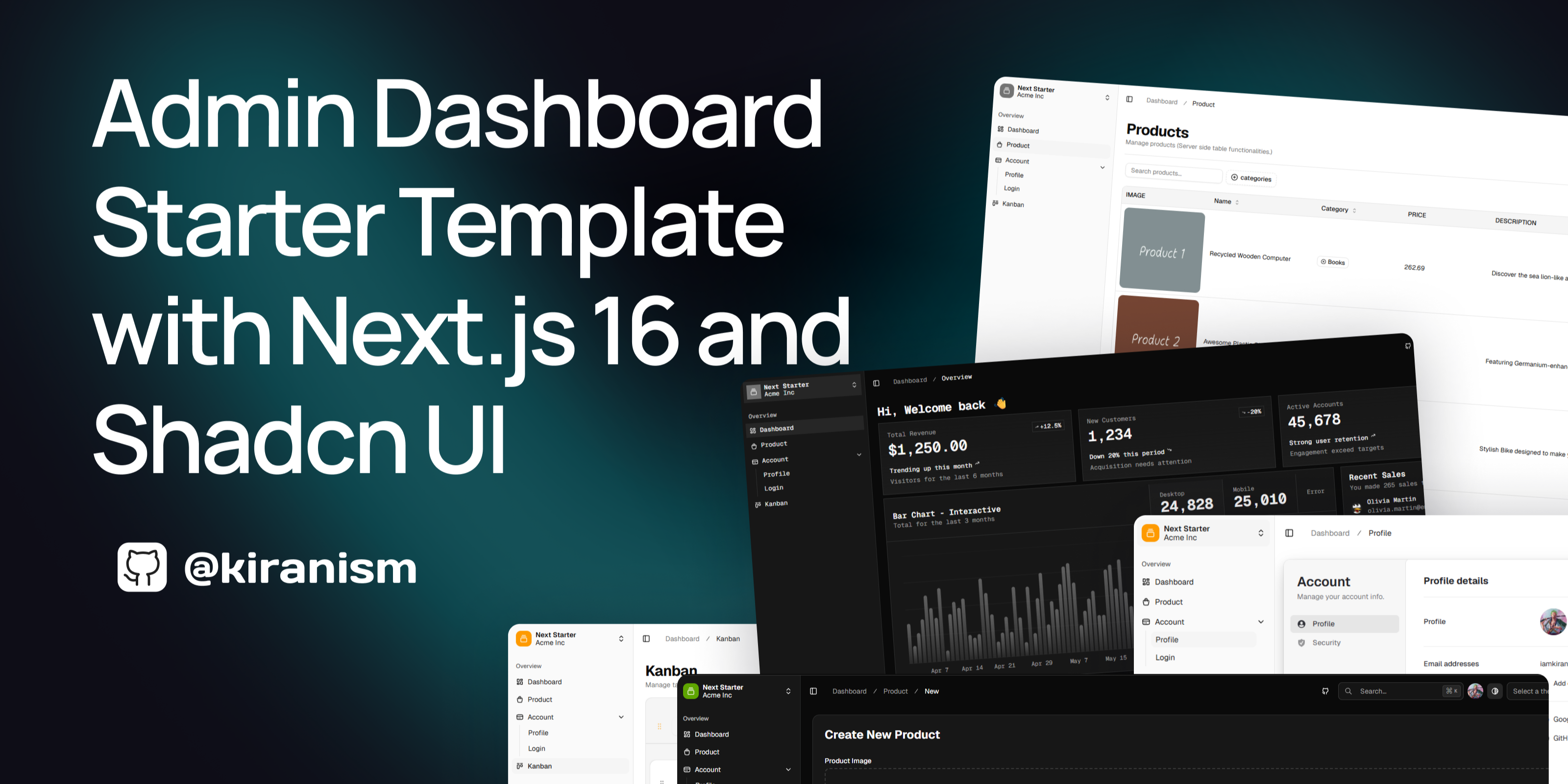
next-shadcn-dashboard-starter
An MIT-licensed admin dashboard starter built with Next.js 16, shadcn/ui, Tailwind CSS v4, and TypeScript.
Next.js · Admin dashboard
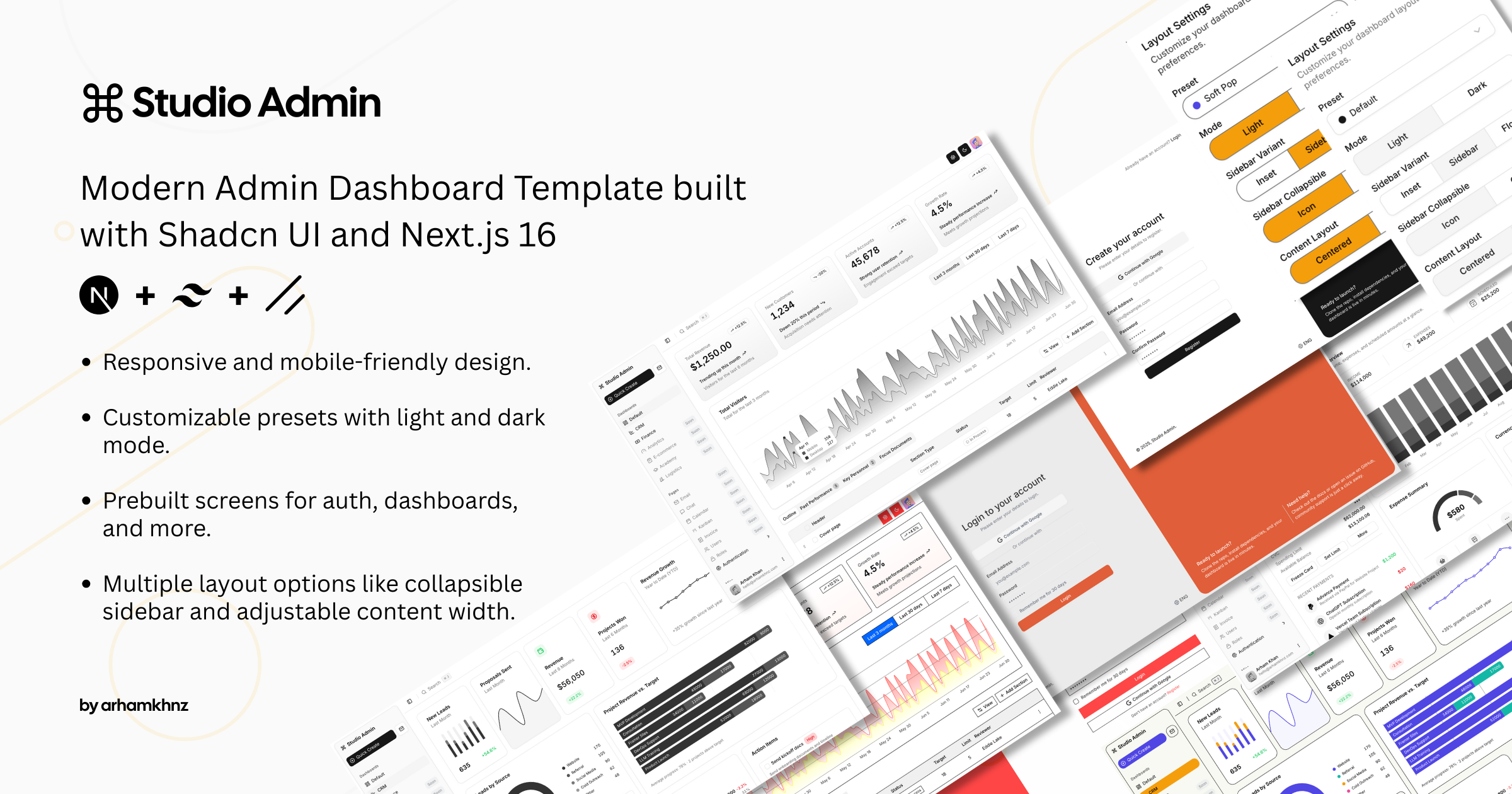
Studio Admin · Radix UI
Studio Admin is an admin dashboard template built with Next.js 16, TypeScript, Tailwind CSS v4, and Shadcn UI.
Next.js · Admin dashboard
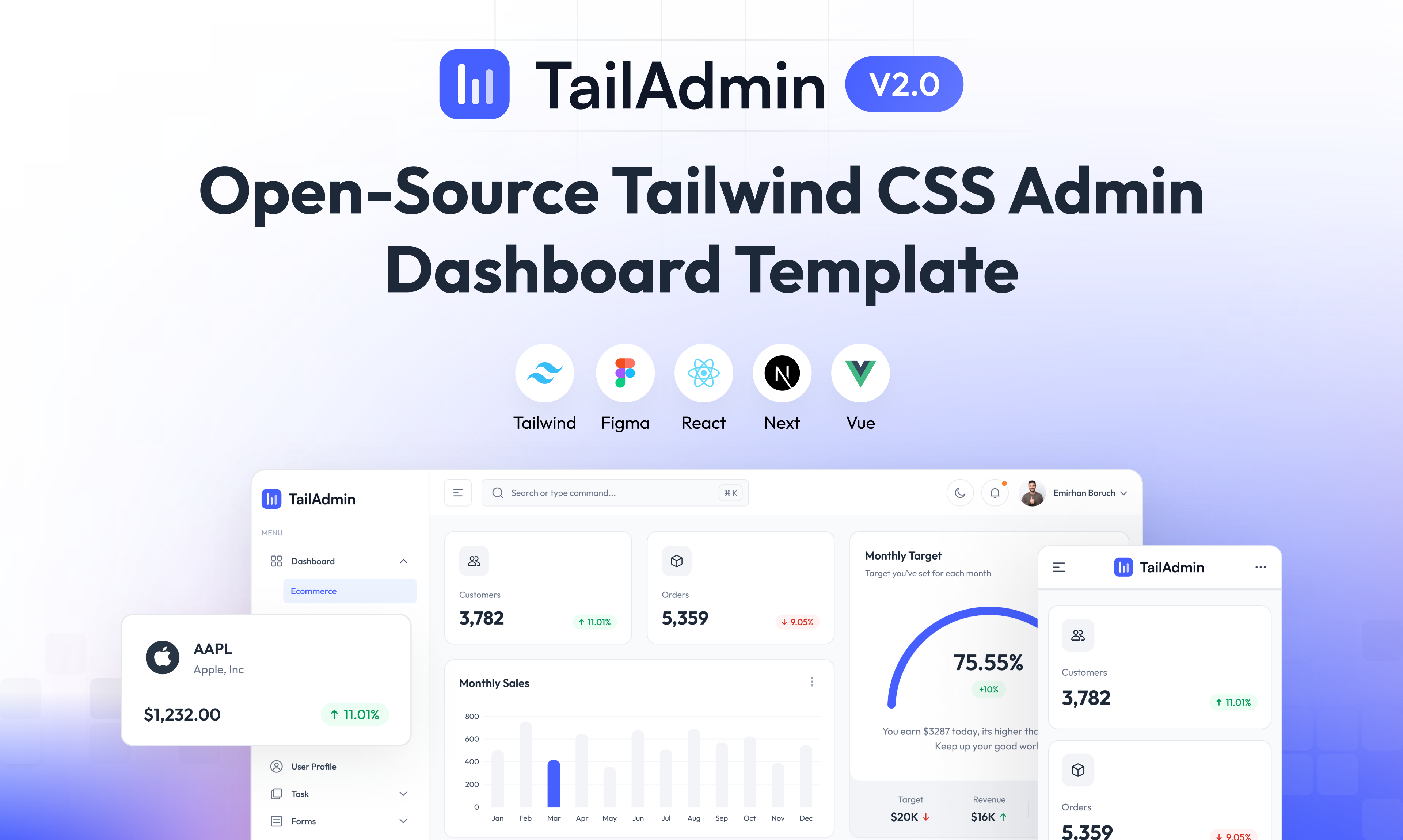
free-nextjs-admin-dashboard
A free, open-source admin dashboard template built on Next.js 16, React 19, TypeScript, and Tailwind CSS v4. It provides a collapsible sidebar, charts, tables, authentication forms, modals, dropdowns, and dark mode, with internationalization and RTL support since version 2.4.0.
Next.js · Admin dashboard
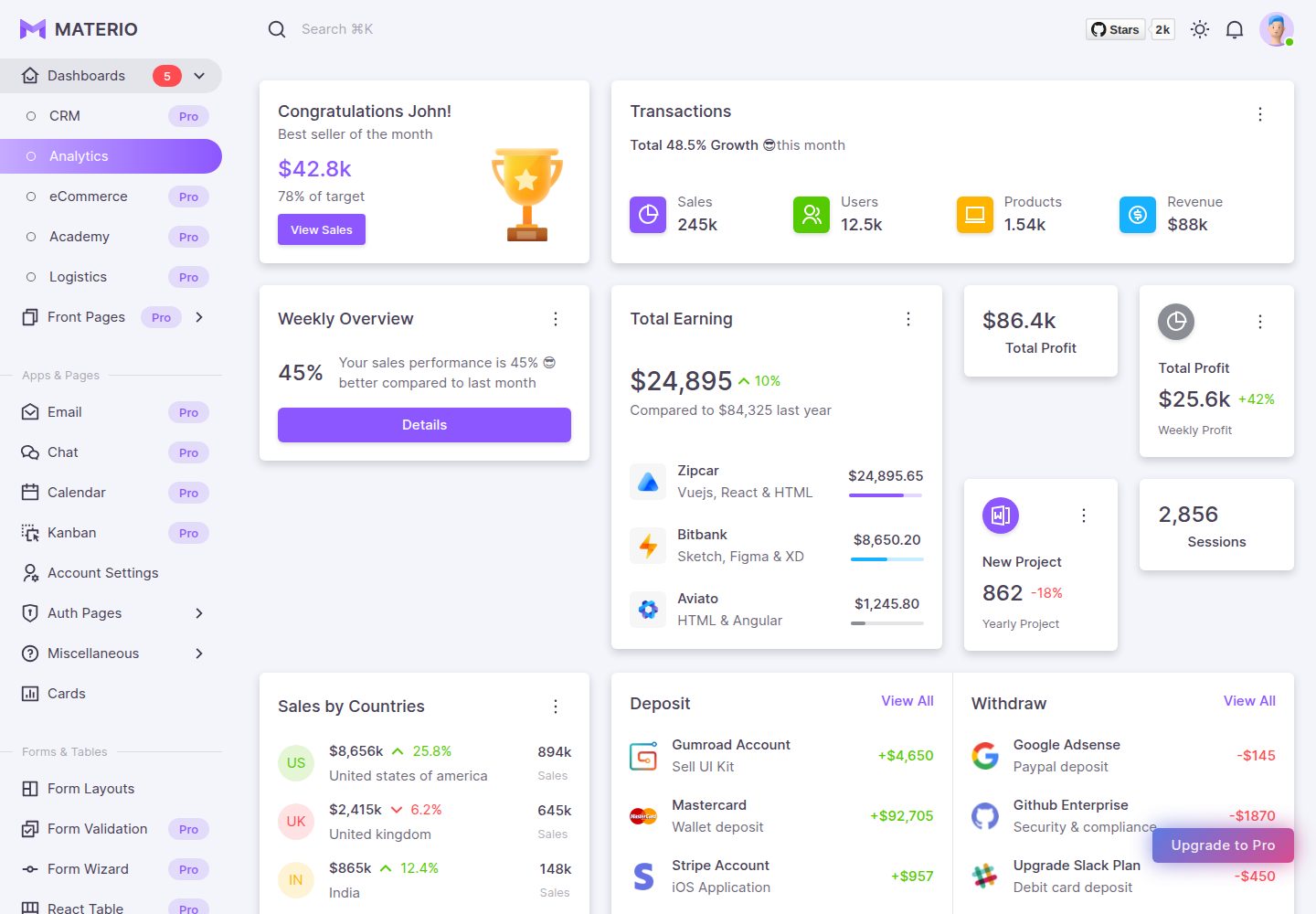
materio-mui-nextjs-admin-template-free
Materio Free is a Next.js admin dashboard template based on App Router and MUI, integrating Tailwind CSS and available in TypeScript and JavaScript versions.
Next.js · Admin dashboard
nextjs-postgres-nextauth-tailwindcss-template
A Vercel-maintained Next.js App Router admin dashboard starter with Auth.js GitHub OAuth, Postgres, Tailwind CSS, and Shadcn UI, plus a sample products table, seed endpoint, and CRUD interface.
Next.js · Admin dashboard
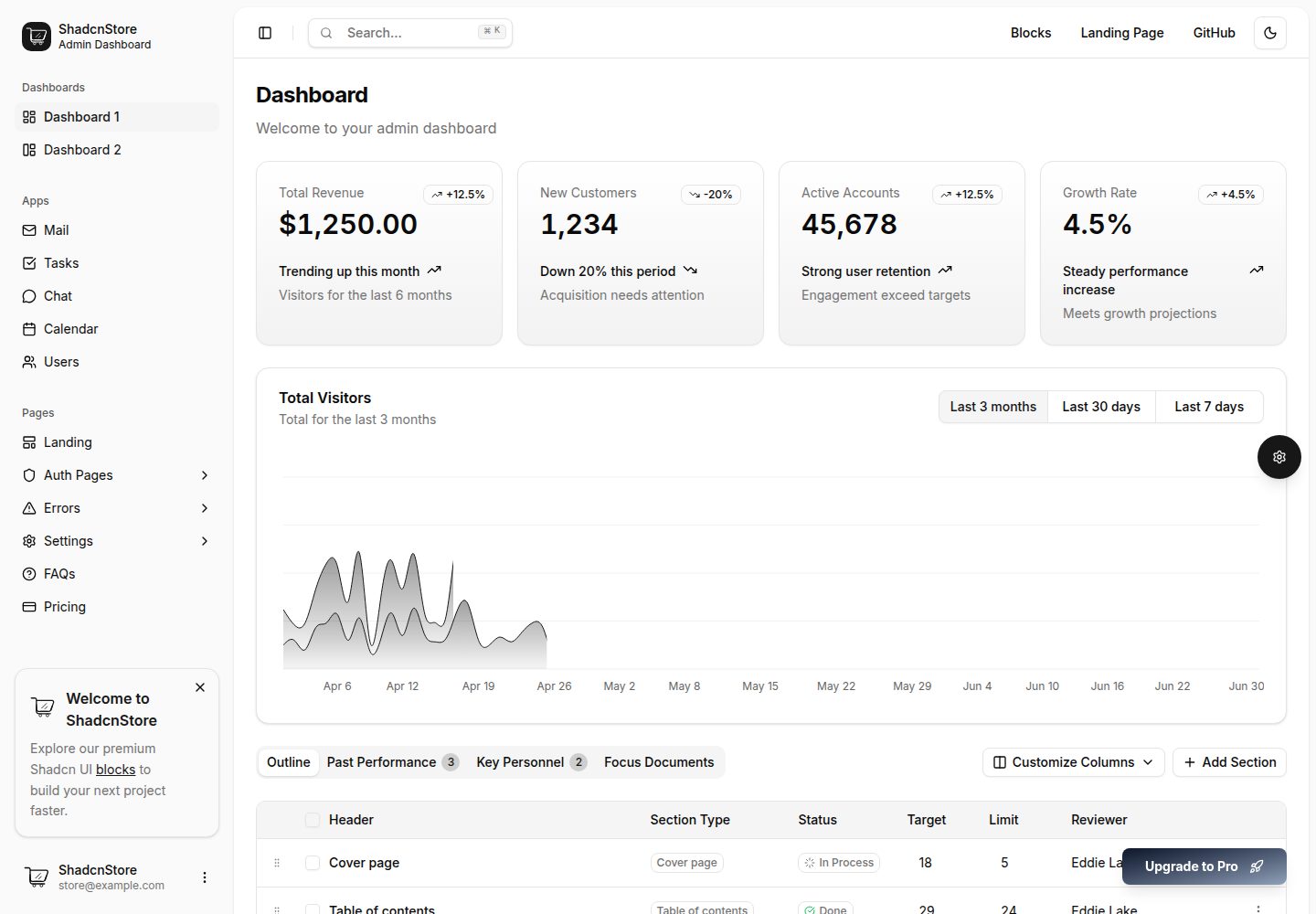
shadcn-dashboard-landing-template
An open-source admin dashboard and marketing landing page template built on shadcn/ui and Tailwind CSS, with both Vite + React and Next.js versions in one repository.
Next.js · Admin dashboard