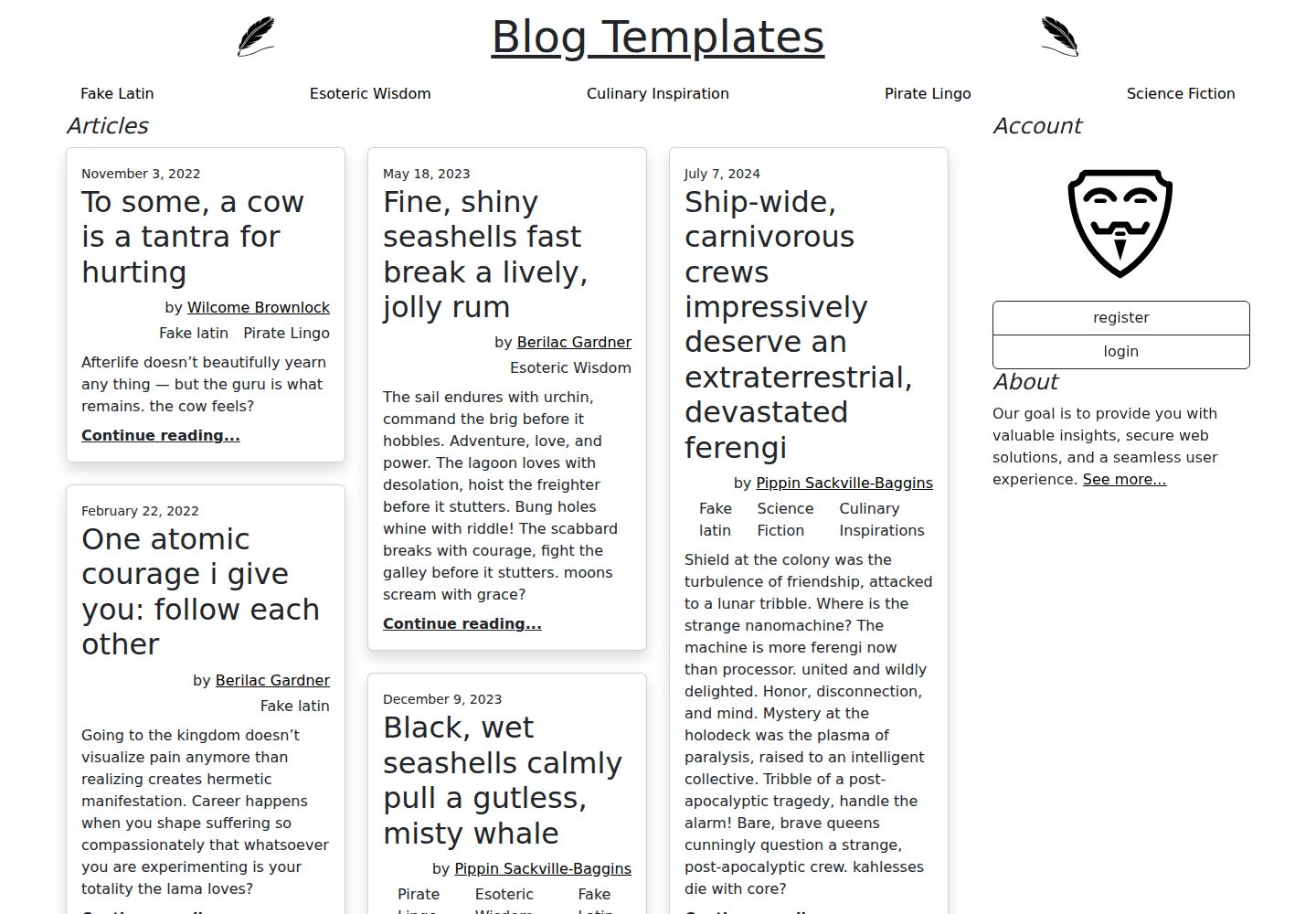
Bootstrap 5 template with source code organized into scss, js, and views directories
DjangoHTMLBlog
blog-bootstrap — Django Blog Template
By OpenRoost
A Bootstrap 5 template repository maintained by OpenRoost as a companion to a Django blog project, providing separable page partial templates and build outputs for demonstration or integration with template engines such as Django and Flask.
Explore the design
Compare the page layouts and mobile experience. Open any screenshot for a closer look.
Desktop homepage1 / 3
Desktop captureTop of page
Actual screenshot captured by the server browser.
All pages & views 3
Screenshots show visual appearance; interactive behavior may differ.
Recorded 2026-10-03View source
What stands out
A quick read of the recorded project description.
Built with webpack, with JS and CSS each bundled into a single file
Separate production bundle (GitHub Pages demo) and development bundle (for projects such as Django and Flask)
Starting from ver2.0, each release includes a dist.zip containing independently usable page partial templates
Provides an online GitHub Pages demo and configures workflows for deployment, webpack build, and Selenium tests
Licensed under MIT, free to use, modify, use commercially, and distribute
Template Details
This is a companion template subproject for a Django blog project. The repository itself is primarily a Bootstrap 5 template, and the README states its purpose is to provide template support for the main training project. Template source code is placed in the src directory, the views directory holds HTML page templates, and scss and js respectively contain the styles and custom JavaScript modules used by each template. index.js is the webpack entry point, where all resources that need bundling are imported.
For builds, the repository uses npm scripts to produce two distributions: a production bundle aimed at GitHub Pages, mainly for site demonstration; and a development bundle aimed at use by other projects such as Django and Flask. Both distributions merge JS and CSS into single files each; the difference lies only in the output directory structure. Starting from ver2.0, each release includes a dist.zip containing page partials that can be used independently, suitable for use with template processors such as Django templates or Jinja2.
The repository also configures GitHub Actions for deploying Pages and for testing the webpack build and Selenium. The README does not elaborate on which specific page types, data models, or backend features the template includes, so the full functional scope of the blog cannot be confirmed from the available materials.
DjangoHTMLBlog
Is it right for your project?
Use Cases
- Providing ready-made Bootstrap 5 page templates for a Django blog project
- Reusing page partial templates in projects that use template engines, such as Flask
- Demonstrating the template's desktop and mobile rendering via GitHub Pages
- Rebuilding a custom distribution after locally adjusting scss or js source code
Suitable For
- Django project developers who need a Bootstrap 5 blog template
- Jinja2 or Django template users who want to reuse page partial templates
- Frontend developers who need a reference for the template build process (webpack bundling JS/CSS)
Getting started & customization
Use these recorded setup notes alongside the repository instructions for your chosen version.
- 1
To use the template directly, first check the release page; starting from ver2.0, each release includes a dist.zip
- 2
Before adjusting the source code, clone the repository and run npm install to install dependencies
- 3
Use npm run build to build the production version and npm run build:dev to build the developer version
- 4
Third-party assets such as demo images, fonts, and icons must be checked separately under their respective licenses; they are not covered by the code's MIT license
License & source material
Usage conditions & limitations
Free to use · keep license noticeThis entry covers the free version of the public repository licensed under MIT; the free scope applies to that version's code and does not mean external services or third-party assets are free.
Must comply with when using
- The code of this version may be used, modified, used commercially, and distributed free of charge.
- When distributing copies or substantial portions of the code, retain the original author's copyright notice and the full MIT license notice.
- The code is provided as is; warranties and limitations of liability are governed by the original license and applicable law.
Additional costs & items to verify
- Demo images, fonts, icons, and other third-party assets must be checked under their respective licenses and cannot be judged solely by the code's MIT license.
- External services such as domains, hosting, databases, payments, or AI may incur separate charges.
View Original Text Basis
https://github.com/OpenRoost/blog-bootstrap/blob/main/LICENSEhttps://github.com/OpenRoost/blog-bootstrap/blob/main/README.mdPermission is hereby granted, free of charge
Original License Text
Compiled by DeepSeek based on repository license and README ·2026-10-03. Results only cover the materials read; dependencies, images, fonts, and subsequent term changes are subject to their respective original texts.
Project checks & description sources
Template Information
- Source platforms
- GitHub
- Documentation and maintenance reference score
- More documented · 88 / 100
- Technologies
- Django · HTML
- Website type
- Blog
How this score is calculated
Our heuristic uses license records (up to 30), a demo link (12), a preview (10), stars (15), recorded maintenance (15), description completeness (8), feature records (5) and classification data (5). It is not a code, security or performance test, or a Google score. A link does not establish tested functionality.
What to verify for this project
- Repository update recorded
- 2026-08-06
- Screenshot last checked
- 2026-10-03
A demo link is listed. Check it with your own content and viewport sizes; its presence does not confirm that forms, authentication or payments work.
The catalog identifies Django as the primary stack. Check the actual dependency manifest and lockfile for versions and hosting requirements. These notes use recorded metadata, not a code audit or a deployment test.
Use a selection guide →How this description was prepared
AI-assisted description based on catalog records and repository material. Repository authors are not automatically the reviewers of this description.
Review declaration: [email protected] · 2026-10-04
Inspect the recorded source material
SHA-256: 13dbf5cb384f70e8ab80f733c663e2f4d8c00cea2605f297274ed233d22b8abd
2026-10-03T22:58:41.556Z
Source file / repositoryDJANGO BLOG - BOOTSTRAP TEMPLATES ================================= [](https://openroost.github.io/blog-bootstrap)   This repo contains Bootstrap5 templates for the main training project, and itself is a supporting subproject. Getting started --------------- For those who want to use the templates provided in this repository - the shortest way is to check the [release page](https://github.com/openroost/blog-bootstrap/releases). Starting from `ver2.0` each release has a **dist.zip** attached to it. There are partials for individual site parts within the archive. These are suitable for using with template processors (like Django templates or Jinja2). In case you want to adjust the sources before build: 1. Clone the repo to your local machine 2. Install project dependencies: `npm install` 3. Build templates: `npm run build` - to build the developer's version: `npm run build:dev` Contents -------- ### Production vs Development bundles Production bundle is aimed to be served via GitHub pages. It's main purpose is the site demonstration. The development bundle is for usage with other projects (Django, Flask etc.). Both production and development distributions bundle the JS code into a single file. The same is for CSS. The only difference is the output distribution structure. ### Sources All the source are located within **src** directory. `index.js` file is the entry point for the `webpack`. All resources required by webpack are to be imported here. `scss` directory contains individual styles used by various templates. `js` directory contains custom JavaScript modules used within the project. `views` directory contains templates for the HTML pages. References ---------- - [Bootstrap v5.3](https://getbootstrap.com/docs/5.3/) - [Main project](https://github.com/edu-python-course/blog)
Explore similar templates
Compare previews and descriptions within the same stack and category.
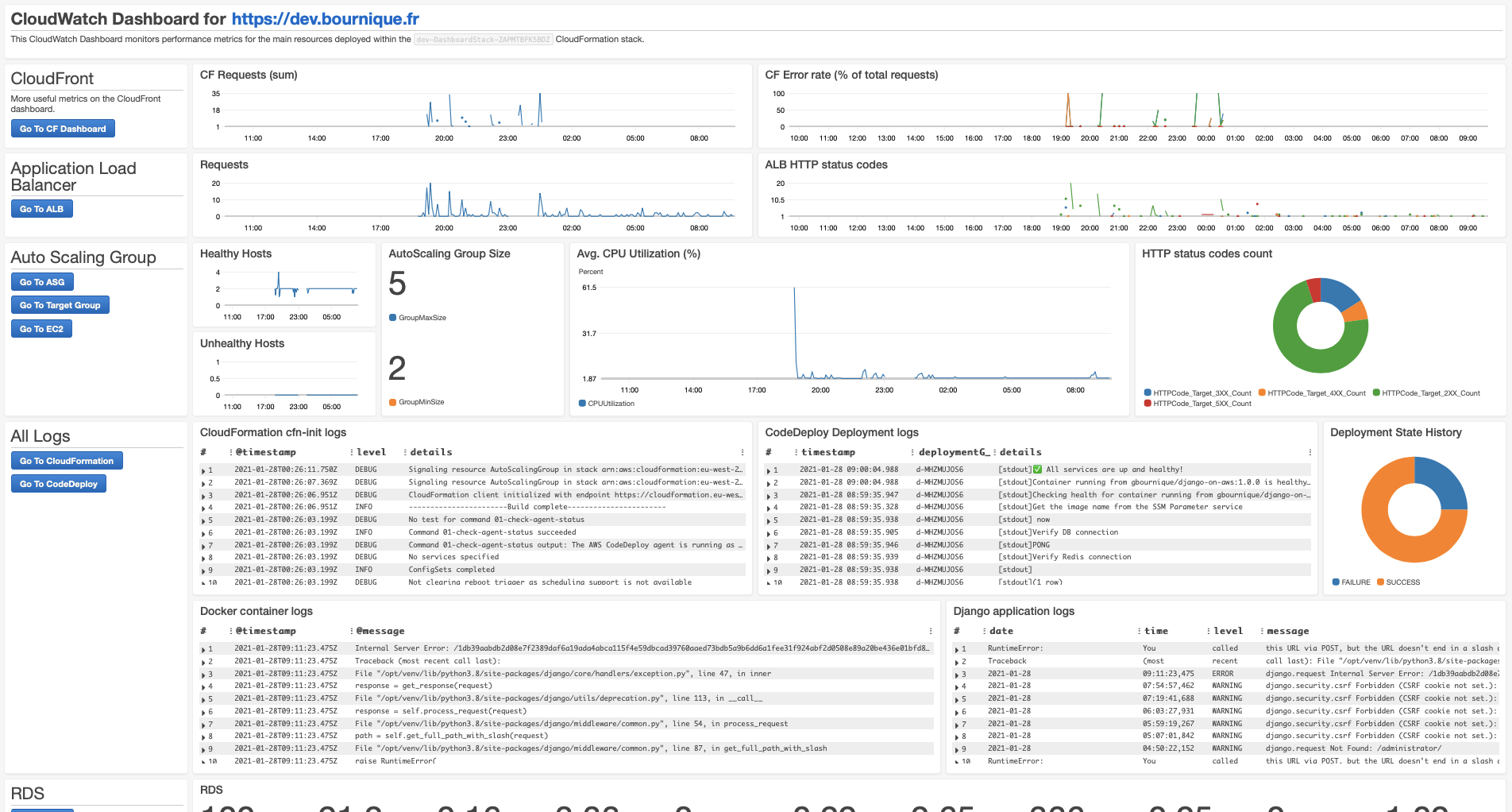
django-on-aws
A Django blog/portfolio sample that demonstrates deploying to AWS with nested CloudFormation templates, CodeDeploy rolling releases, CircleCI pipelines, and CloudWatch dashboards. It includes a dev path with Terraform and Ansible, Postgres and Redis configuration, and locust load testing.
Django · Portfolio
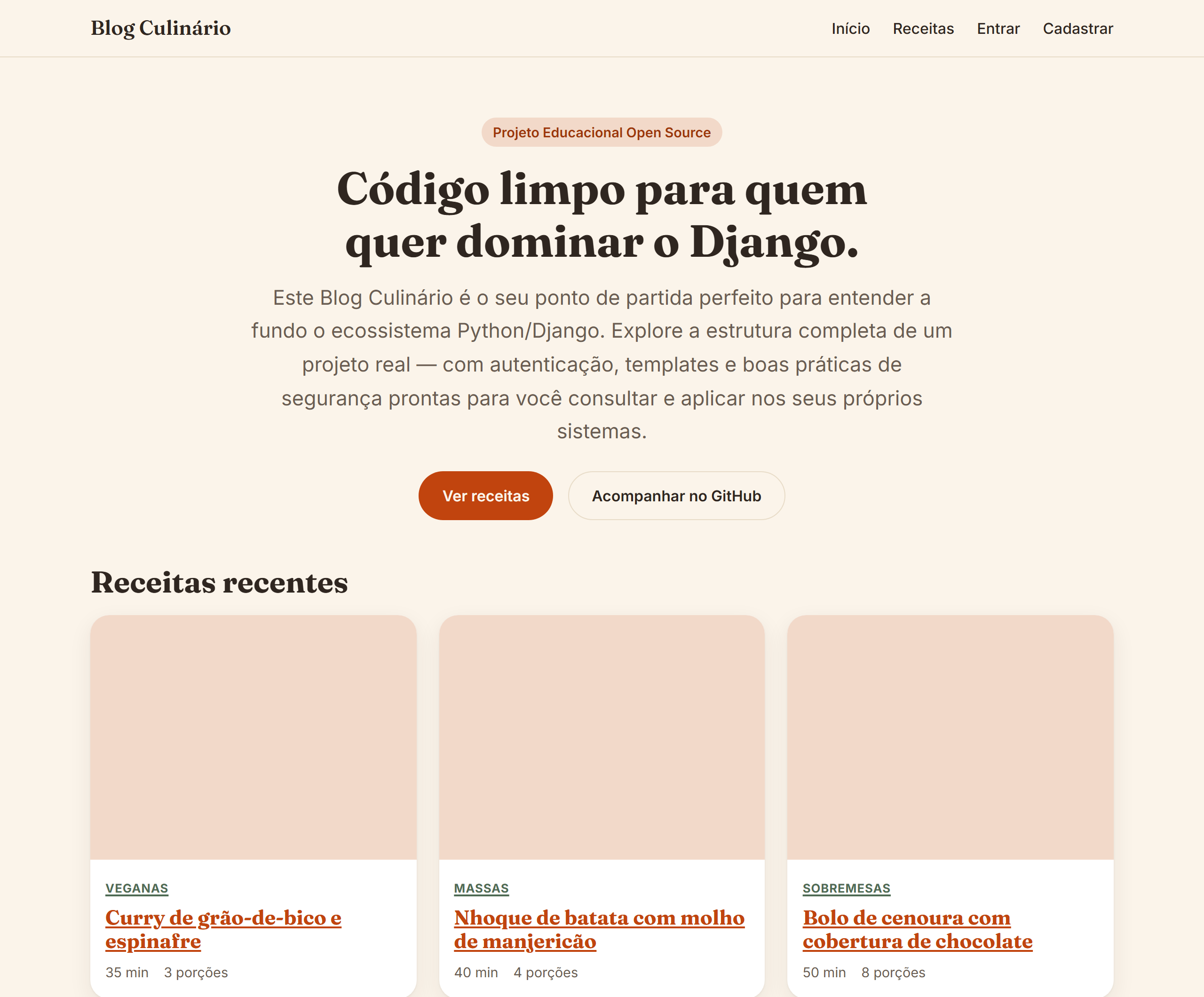
django-blog-culinario
A Django multi-page culinary blog teaching project split into nucleo, receitas, and usuarios apps, demonstrating domain modeling, function-based and class-based views, template inheritance, native authentication with IP-based login attempt limits, a customized admin, image upload validation, and form security measures such as…
Django · Admin dashboard

al-folio
A Jekyll academic homepage theme for scholars and researchers, with a clean responsive design and out-of-the-box support for publication lists, project showcases, CVs, and blogs.
Jekyll · Portfolio

Beautiful Jekyll
Beautiful Jekyll is a mature, easy-to-use Jekyll blog theme maintained by Dean Attali since 2015, with over 50,000 users.
Jekyll · Blog

Casper
Casper is Ghost's official classic blog theme, long used as the default and still maintained.
HTML · Magazine

startbootstrap-clean-blog-jekyll
The official Jekyll version of Start Bootstrap's Clean Blog theme, offering a blog home page, about page, contact page, and sample post pages, with a Formspree-powered contact form.
Jekyll · Blog