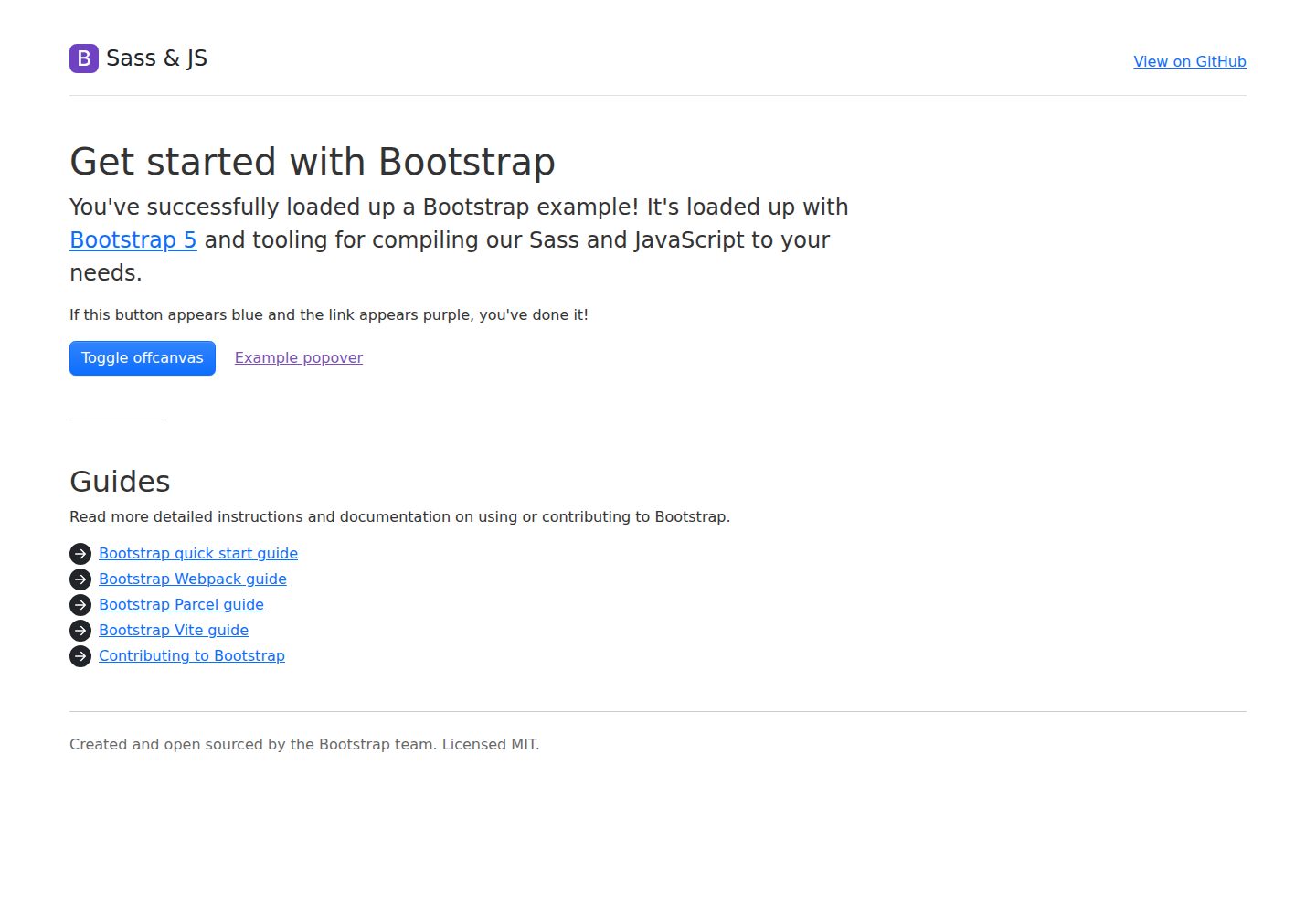
Uses Grunt as the build tool to compile SCSS to CSS and deploy to GitHub Pages
HTMLStarter
basic-bs-gh-website-template — HTML Starter Template
By tspauld98
A Bootstrap static website template built with Grunt for deployment to GitHub Pages, requiring Ruby Sass and Node.js environments.
Explore the design
Compare the page layouts and mobile experience. Open any screenshot for a closer look.
Desktop homepage1 / 2
Desktop captureTop of page
Actual screenshot captured by the server browser.
All pages & views 2
Screenshots show visual appearance; interactive behavior may differ.
Recorded 2026-10-02View source
What stands out
A quick read of the recorded project description.
Builds static pages based on Bootstrap's Sass and JS examples
grunt run starts a local server and automatically reloads the browser when files in the src/public directory change
grunt deploy publishes the build output to GitHub Pages with one command
Requires the Ruby runtime and Ruby Sass transpiler, not Dart Sass
Template Details
This is a static website project template for GitHub Pages. It uses Grunt as the build tool to transpile SCSS to CSS via Ruby Sass and deploys the build output to GitHub Pages. The template content is based on Bootstrap's Sass and JS examples, and the author notes it also serves as the foundation for several of their subsequent front-end project templates.
In terms of workflow, the template requires local installations of Ruby, Sass (the Ruby Sass transpiler installed via gem install sass), Node.js, and Grunt CLI. After running npm install to install dependencies, you can build the project with grunt and build and start a local server with grunt run; modifications to files in the src/public directory trigger live browser reload. For deployment, you must first commit and push changes to your own GitHub repository created from this template, then run grunt deploy, after which the site is accessible at https://[username].github.io/[repository-name].
Important limitations: The README explicitly states that the deployment steps only apply to personal GitHub repositories created from this template; directly cloning the original repository or downloading and extracting the zip will not allow deployment. Additionally, the template requires the Ruby Sass transpiler rather than Dart Sass, which affects environment setup. In the README's to-do list, the contributing guidelines item is not yet complete.
HTMLLauncher
Is it right for your project?
Use Cases
- Building a Bootstrap static site deployed on GitHub Pages
- Needing a front-end starter project with a local development server and live reload
- Creating a static website with Grunt as the build tool and styles written in SCSS
Suitable For
- Developers familiar with or willing to set up Ruby, Node.js, and Grunt command-line environments
- Personal projects planning to use GitHub Pages for free static hosting
- Those who want to start a front-end project from Bootstrap Sass examples
Getting started & customization
Use these recorded setup notes alongside the repository instructions for your chosen version.
- 1
Requires pre-installed Ruby, Sass (gem install sass), Node.js, and Grunt CLI (npm install -g grunt-cli)
- 2
Recommended to use rbenv for managing Ruby versions and nvm for managing Node.js versions
- 3
Run npm install in the project root to install dependencies, then use grunt to build and grunt run to start the local server
- 4
Before deployment, create your own GitHub repository based on this template and push changes, then run grunt deploy
- 5
Directly cloning the original repository or extracting the zip will not allow using the GitHub Pages deployment steps in the README
License & source material
Usage conditions & limitations
Free to use · keep license noticeThis entry covers the free version under the ISC license in the public repository; the free scope applies to that version's code and does not imply that external services or third-party assets are free.
Must comply with when using
- Permits free use, copying, modification, and distribution for any purpose, including commercial use.
- All copies must retain the original copyright notice and license notice.
- The code is provided as-is; warranties and liability limitations are governed by the original license and applicable law.
Additional costs & items to verify
- The build environment must use the Ruby Sass transpiler (installed via gem install sass) and cannot use Dart Sass, otherwise it is incompatible with the template's Grunt build configuration.
- The GitHub Pages deployment steps in the README only apply to personal GitHub repositories created from this template; directly cloning the original repository or downloading and extracting the zip will not allow completing deployment as documented.
- Demo images, fonts, icons, and other third-party assets must be checked against their respective licenses and cannot be judged solely based on the code's ISC license.
- External services such as domains, hosting, databases, payments, or AI may incur additional charges.
View Original Text Basis
for any purpose with or without fee is hereby granted
Original License Text
You must use the Ruby Sass transpiler which is installed by running `gem install sass`
Original README
https://github.com/tspauld98/basic-bs-gh-website-template/blob/main/LICENSEhttps://github.com/tspauld98/basic-bs-gh-website-template/blob/main/README.mdThese instructions will NOT work if you have cloned this repository directly or if you have downloaded the source code as a zip file and extracted it to your local development workstation but have not created a Github repository from it.
Original README
Compiled by DeepSeek based on repository license and README ·2026-10-02. Results only cover the materials read; dependencies, images, fonts, and subsequent term changes are subject to their respective original texts.
Project checks & description sources
Template Information
- Source platforms
- GitHub
- Documentation and maintenance reference score
- Partly documented · 65 / 100
- Technologies
- HTML
- Website type
- Starter
How this score is calculated
Our heuristic uses license records (up to 30), a demo link (12), a preview (10), stars (15), recorded maintenance (15), description completeness (8), feature records (5) and classification data (5). It is not a code, security or performance test, or a Google score. A link does not establish tested functionality.
What to verify for this project
- Repository update recorded
- 2024-01-03
- Screenshot last checked
- 2026-10-02
A demo link is listed. Check it with your own content and viewport sizes; its presence does not confirm that forms, authentication or payments work.
The catalog identifies HTML as the primary stack. Check the actual dependency manifest and lockfile for versions and hosting requirements. These notes use recorded metadata, not a code audit or a deployment test.
Use a selection guide →How this description was prepared
AI-assisted description based on catalog records and repository material. Repository authors are not automatically the reviewers of this description.
Automatically checked against source and license rules; no manual editorial review.
Inspect the recorded source material
SHA-256: e531f4c4ce21b29abbae464e51bde894b76888fa75493298a05bea46a045002e
2026-10-02T08:54:38.923Z
Source file / repository# Basic Bootstrap Website Project Template for Github Pages This is a basic template for a static website project using Grunt as the build tool and Github Pages for hosting. This template is the basis for several other front-end project templates in development. The contents of this template are based on the [Bootstrap Sass and JS Template](https://github.com/twbs/examples/blob/main/sass-js/README.md). ## Getting Started ### Prerequisites You will need to have the following installed on your machine: * [Ruby](https://www.ruby-lang.org/en/) - This project uses sass to transpile scss into css and the grunt plugin for sass requires the Ruby runtime environment for Sass on the local development workstation that will be used to build your project. You can find OS-specific installation instructions [here](https://www.ruby-lang.org/en/documentation/installation/). Also, it is HIGHLY recommended to use a Ruby version manager such as [rbenv](https://github.com/rbenv/rbenv) to install Ruby. * [Sass](https://sass-lang.com/) - This project uses sass to transpile scss into css. You must use the Ruby Sass transpiler which is installed by running `gem install sass` in a terminal window once you have installed Ruby. * (Optional, but HIGHLY Recommended) [Node Version Manager](https://github.com/nvm-sh/nvm) - This will allow you to easily install and switch between different versions of Node.js and npm. You can find OS-specific installation instructions [here](https://github.com/nvm-sh/nvm#installing-and-updating). * [Node.js](https://nodejs.org/en/) - This is the runtime environment for Grunt on the local development workstation that will be used to build your project. The best way to install Node.js is to use nvm [see these usage instructions](https://github.com/nvm-sh/nvm#usage). If you are not using nvm, you can find OS-specific installation instructions [here](https://nodejs.org/en/download/). `npm` should be installed along with Node.js automatically. If it is not, you can find instructions for installing `npm` [here](https://docs.npmjs.com/downloading-and-installing-node-js-and-npm). * [Grunt](https://gruntjs.com/) - This is the build tool that will be used to build your project. You can install Grunt by running the following command in a terminal window: ```bash npm install -g grunt-cli ``` ### Usage 1. If you want to contribute to this template repository, clone this repository to your local development workstation. If you want to build a project based on this template, you can either clone this repository, create your own repository using this template repository or download the source code as a zip file and extract it to your local development workstation. The rest of these instructions assume you have used one of the preceding methods to establish a local copy of this repository on your local development workstation for active development. 2. Open a terminal window and navigate to the root directory of the project. 3. Run the following command to install the project dependencies: ```bash npm install ``` 4. Run the following command to build the project: ```bash grunt ``` 5. Run the following command to build and start the local web server hosting the built project: ```bash grunt run ``` 6. Grunt and the web content in this template project is configured to live reload the target browser whenever a change is made to files in the `src/public` directory. After running the `grunt run` command, simply open your preferred editor to make changes and once you have saved your changes, the browser will automatically reload to display the changes. #### Deploying to Github Pages The following steps assume that you have created a personal Github repository from this project template and that you have cloned that repository to your local development workstation. These instructions will NOT work if you have cloned this repository directly or if you have downloaded the source code as a zip file and extracted it to your local development workstation but have not created a Github repository from it. 7. After you have finished making changes and you want to publish them to Github Pages, commit all of your changes to your local Git repository and push them to your Github hosted repository. 8. Once your local repository and the Github repository are synchronized, run the following command to deploy the latest version of the project to Github Pages: ```bash grunt deploy ``` 9. You can now view the deployed project at the following URL: https://[your-github-username].github.io/[your-github-repository-name] ## Next Steps 1. [x] ~~Update the README.md with usage instructions for Grunt.~~ 2. [x] ~~Add Bootstrap to the project.~~ 3. [x] ~~Add tasks to deploy to Github Pages.~~ 4. [ ] Add contribution instructions for this repository.
Explore similar templates
Compare previews and descriptions within the same stack and category.
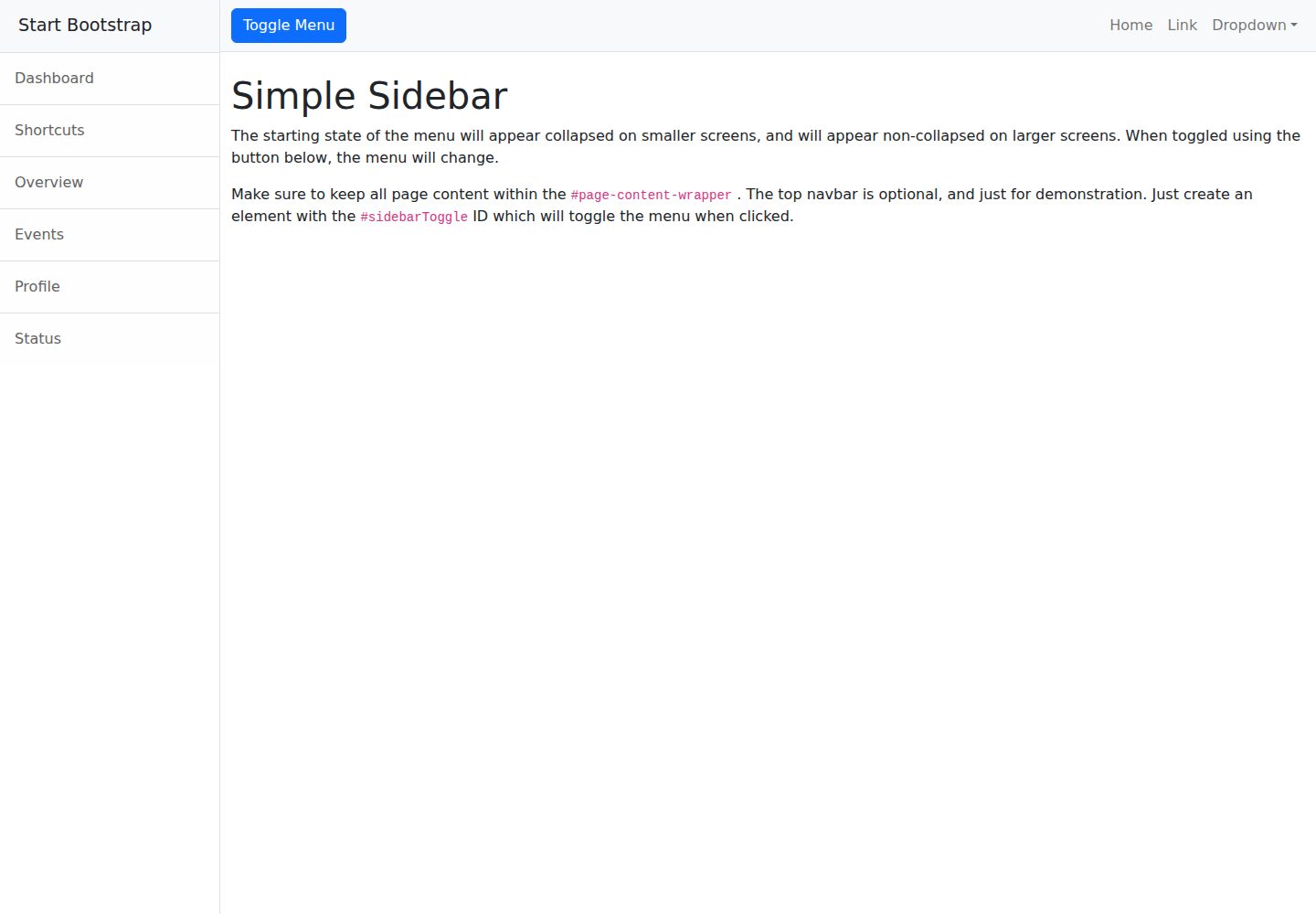
startbootstrap-simple-sidebar
A Bootstrap off-canvas sidebar navigation HTML starter template from Start Bootstrap. It provides directly editable HTML and CSS in the dist directory, while the source uses Pug, SCSS, and JavaScript with npm build scripts for live preview and compilation.
HTML · Starter
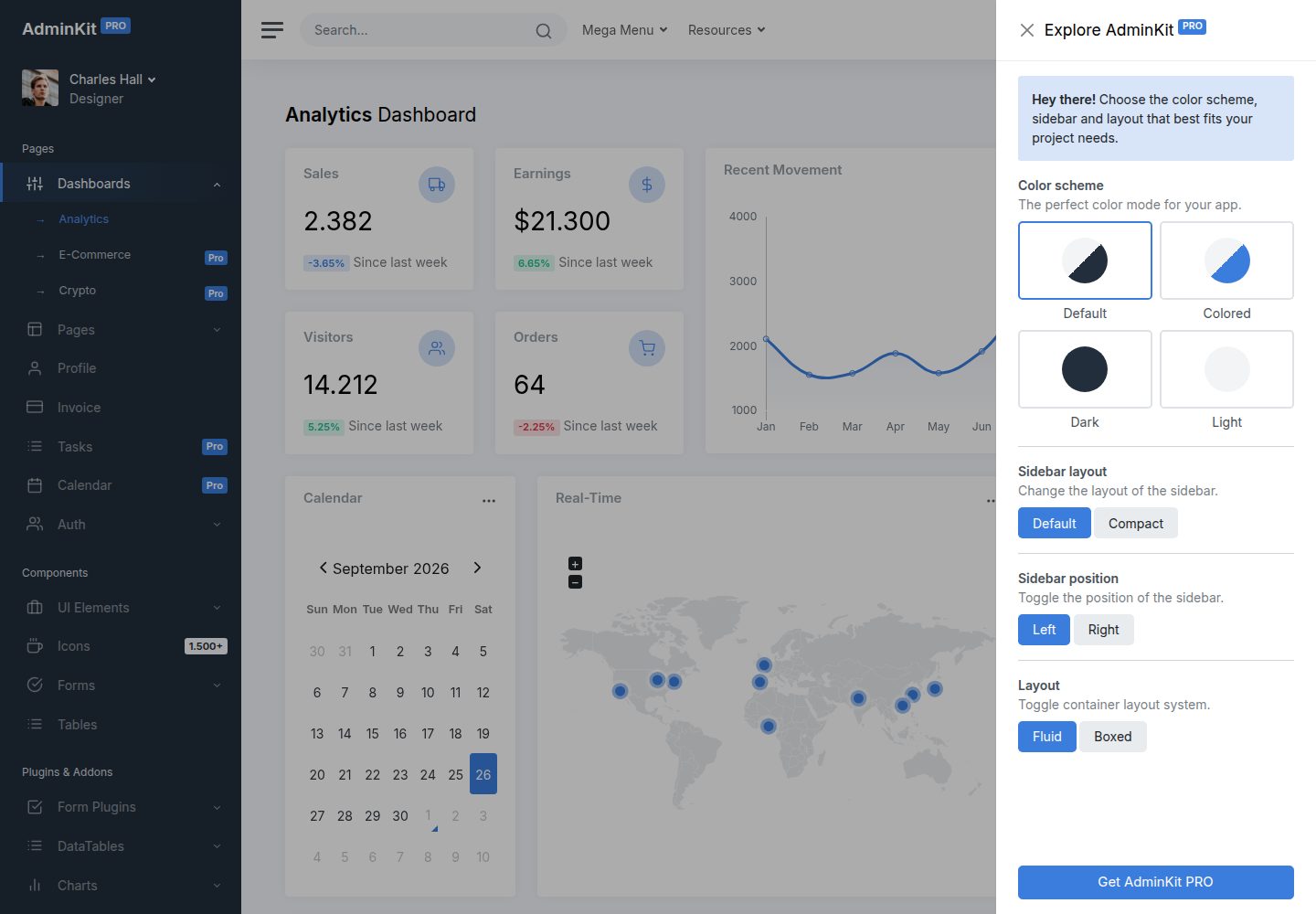
adminkit
AdminKit is a free, MIT-licensed HTML admin and dashboard template built on Bootstrap 5. The free version includes 15 demo pages, 1 plugin, and 1 color scheme, with hundreds of UI components, forms, tables, charts, and icons.
HTML · Admin dashboard
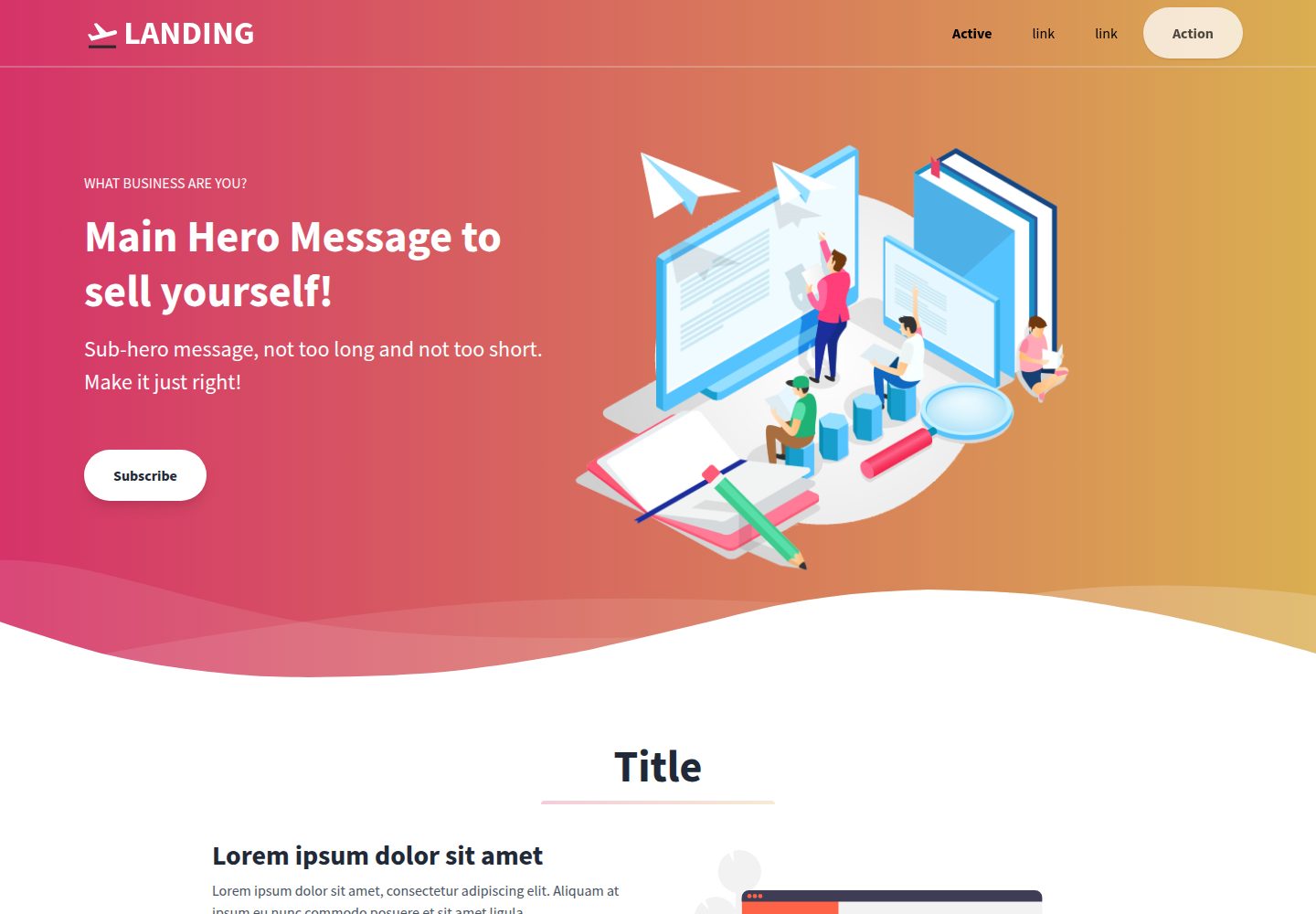
Landing-Page
A general-purpose landing page HTML template maintained by Tailwind Toolbox, written in pure HTML and loading the complete Tailwind CSS via CDN.
HTML · Corporate Website
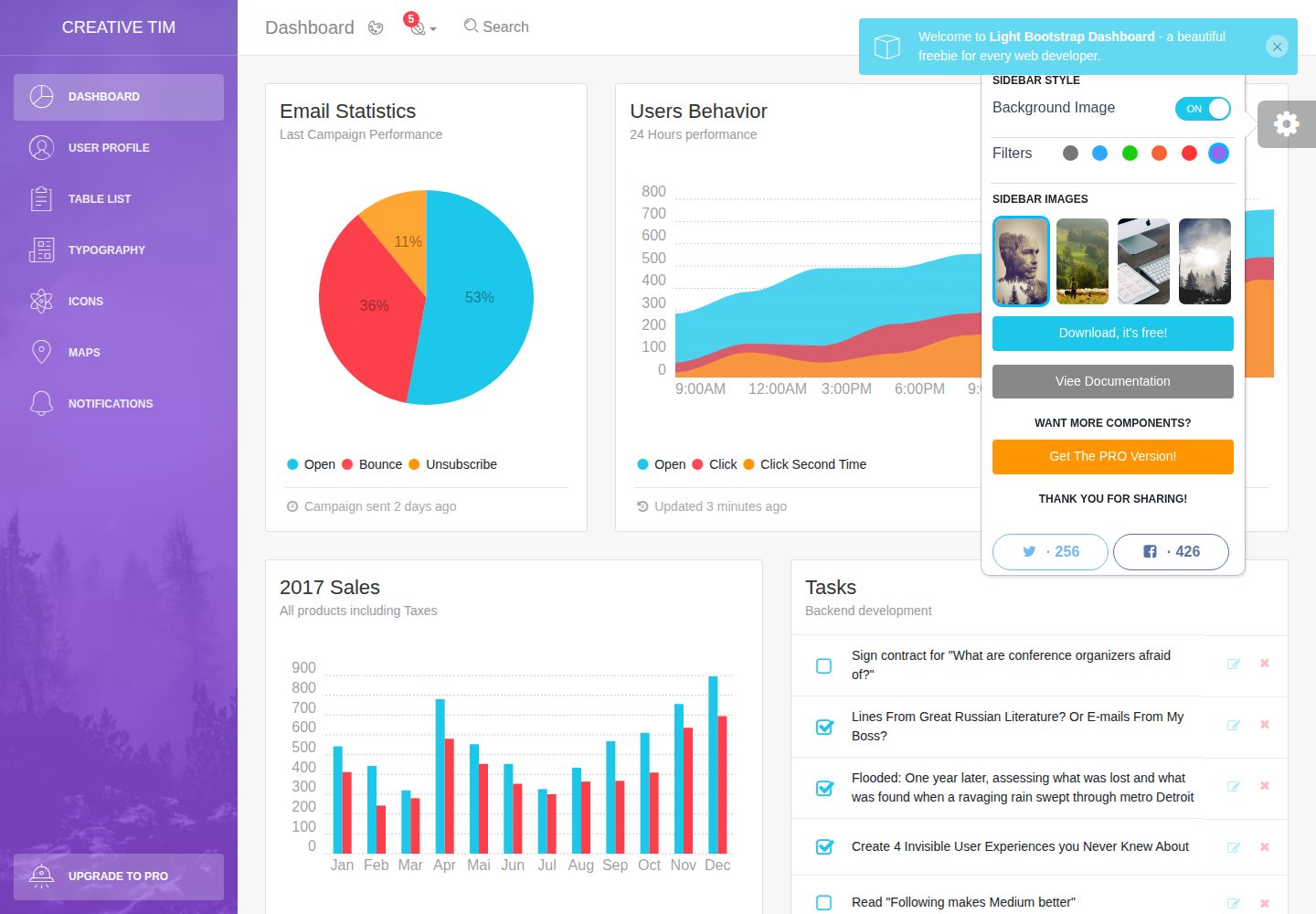
light-bootstrap-dashboard
Light Bootstrap Dashboard is a free, MIT-licensed admin dashboard template from Creative Tim, built on Bootstrap with a responsive static HTML structure.
HTML · Admin dashboard
sing-app
Sing App Lite is a free, open-source admin dashboard template from Flatlogic, built with Bootstrap 4.5 and SCSS. It provides a responsive layout, dashboard examples, typography, tables, notifications, basic charts, icons, maps, and a hover sidebar, along with styled Bootstrap components.
HTML · Admin dashboard
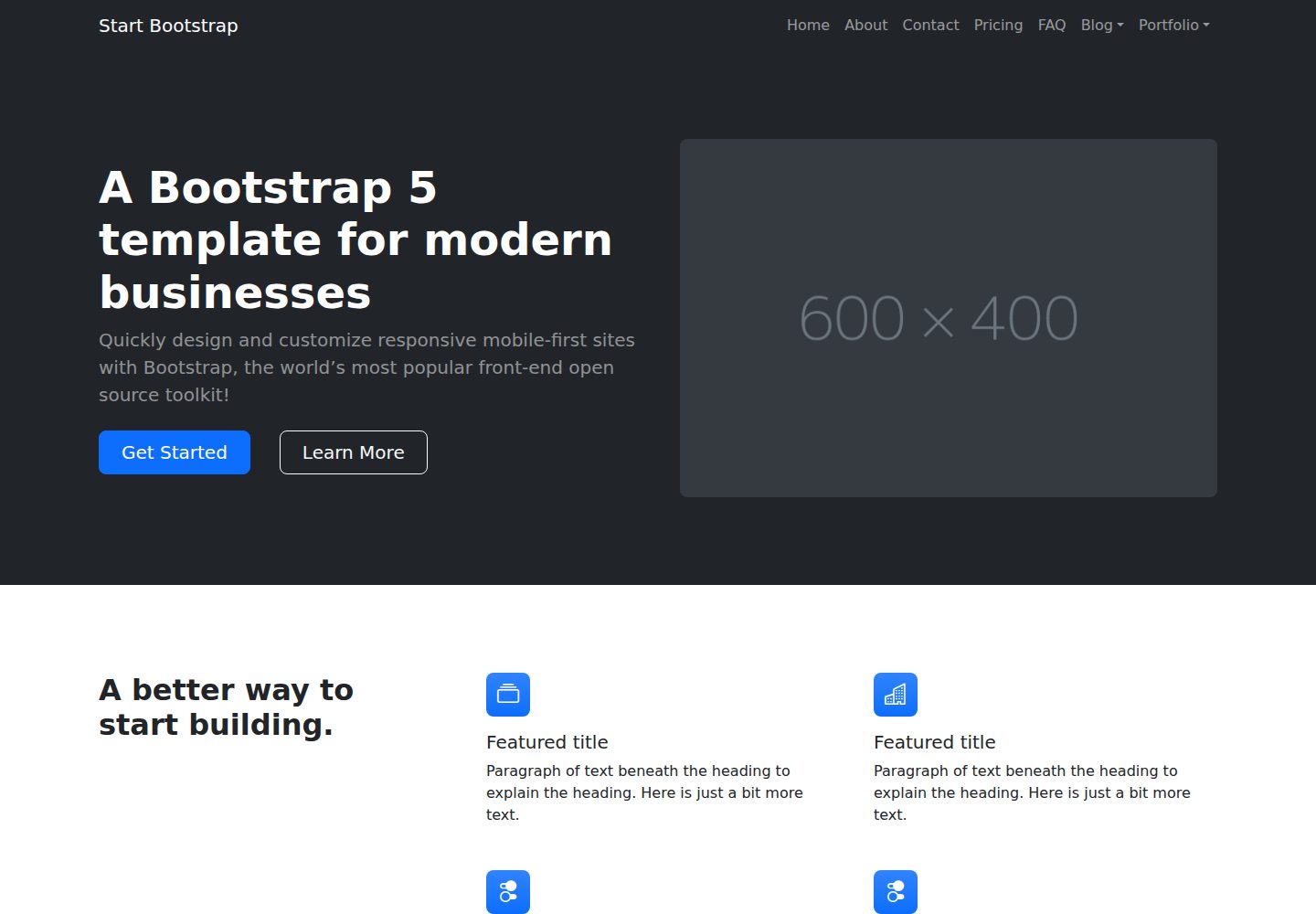
startbootstrap-modern-business
Modern Business is a multipurpose Bootstrap full-site HTML template from Start Bootstrap with 17 standalone pages covering home, about, services, portfolio, pricing, blog, FAQ, and contact.
HTML · Starter