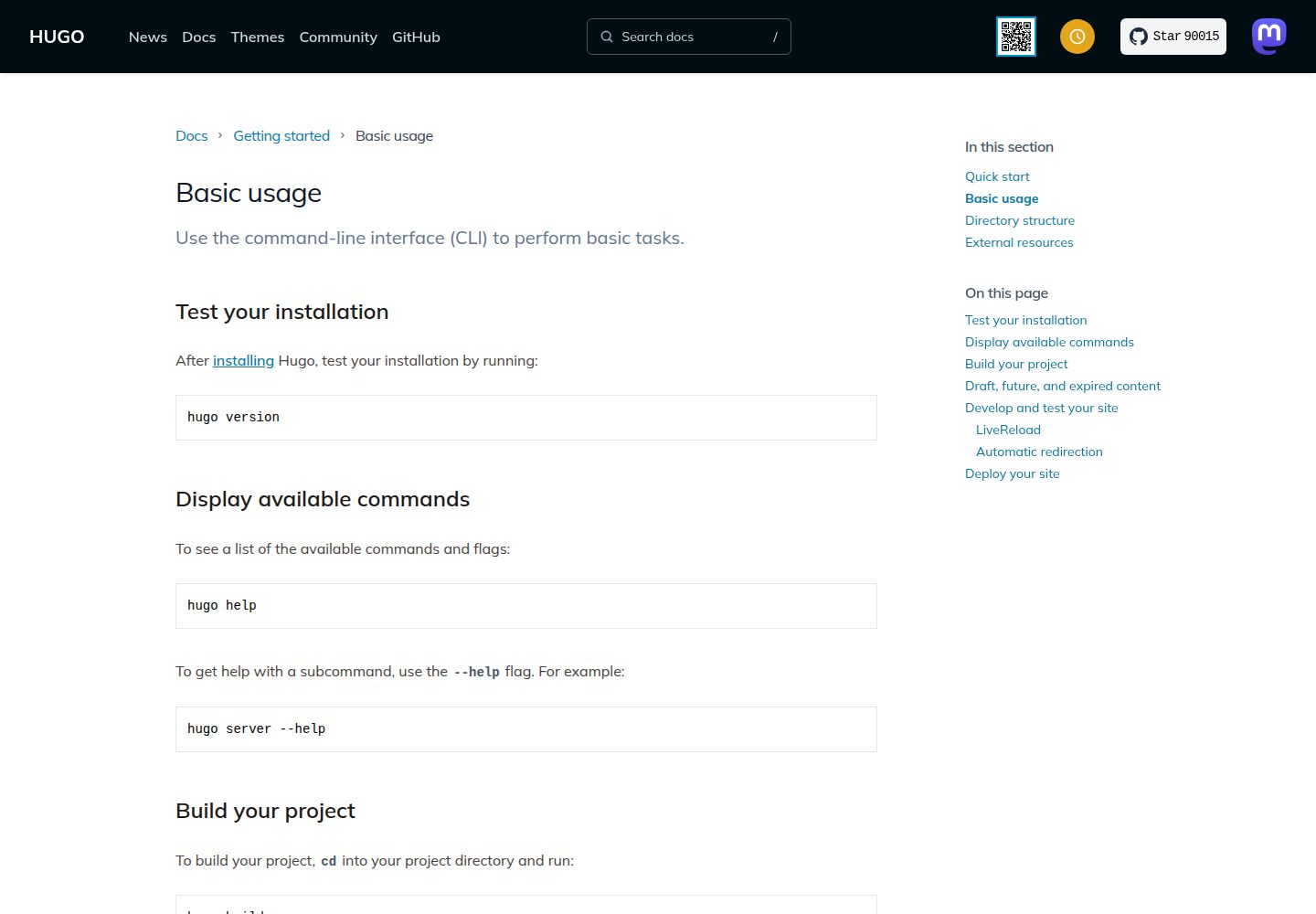
Hugo-based static site theme deployable to Neocities or GitHub Pages
HugoPortfolioTool Site
neofeed-theme — Hugo Portfolio Template
By victoriadrake
Neofeed is a Hugo-based personal timeline theme aimed at IndieWeb, deployable to Neocities or GitHub Pages, supporting multiple post types and CSS skins.
Explore the design
Compare the page layouts and mobile experience. Open any screenshot for a closer look.
Desktop homepage1 / 2
Desktop captureTop of page
Actual screenshot captured by the server browser.
All pages & views 2
Screenshots show visual appearance; interactive behavior may differ.
Recorded 2026-10-02View source
What stands out
A quick read of the recorded project description.
Built-in self-documenting Makefile with make entry and make ship for the publishing workflow
Supports note, reply, and other post types, rendered differently by category
Includes multiple CSS skins with automatic light/dark mode, switchable in config.toml
Includes IndieWeb support such as Webmention, microformats2, and IndieAuth rel=me
Optional Plausible analytics and Web Monetization payment pointer configuration
Template Details
Neofeed is a personal feed/timeline theme built with Hugo, positioned as a "personal feed" suitable for publishing microblog-like short content. It offers two usage modes: as a standalone site by forking the repository, or as a Hugo theme added to an existing site via git submodule. The theme includes a self-documenting Makefile with make entry and make ship commands to create entries and deploy.
For content display, Neofeed distinguishes post types based on the category in front matter: note type shows only the body, reply type generates a title link pointing to the replied-to page. The theme comes with several CSS skins (such as macintosh, minimal, cloudy-day) and supports automatic light/dark mode; skin files are located in static/skins/ and can be switched via params.skin in config.toml.
For IndieWeb support, the theme includes Webmention rendering (requires Webmention.io), Bridgy forwarding, microformats2 h-card/h-feed/h-entry markup, and IndieAuth rel=me links. It also provides optional Plausible analytics and Web Monetization payment pointer configuration.
For deployment, the repository includes GitHub Actions workflows that can publish to Neocities or GitHub Pages; using Neocities requires setting the NEOCITIES_API_TOKEN repository secret. In standalone site mode, only Git and Make are needed to build and deploy, with no additional dependencies to install.
HugoPortfolioTool site
Is it right for your project?
Use Cases
- Build a personal timeline on Neocities to publish short notes or replies
- Host a personal feed on GitHub Pages with automatic deployment via GitHub Actions
- Add as a Hugo theme to an existing site to introduce a timeline-style content stream
- Customize the site appearance with CSS skins, or create and share your own skin
- Integrate IndieWeb interactions such as Webmention and Bridgy for a personal site
Suitable For
- IndieWeb practitioners who want a personal feed independent of social platforms
- Developers using Hugo who need a lightweight timeline theme
- Users hosting static personal sites on Neocities or GitHub Pages
- Front-end learners who want to quickly change site style via CSS skins
Getting started & customization
Use these recorded setup notes alongside the repository instructions for your chosen version.
- 1
Standalone site mode: fork the repository, clone it, edit config.toml, and publish using make entry and make ship
- 2
Deploying to Neocities requires setting the NEOCITIES_API_TOKEN secret in the repository settings
- 3
When used as a Hugo theme, add the theme via git submodule add and copy the exampleSite config.toml
- 4
Deploying to GitHub Pages requires configuring the publish source to the docs/ directory
- 5
Local preview or theme modification requires Hugo installed; it can be installed via make gethugo
License & source material
Usage conditions & limitations
Free to use · keep license noticeThis entry covers the free version under the BSD-2-Clause license in the public repository; the free scope is the code of that version and does not imply that external services or third-party assets are free.
Must comply with when using
- Free use, modification, commercial use, and distribution in source or binary form are permitted.
- Source distribution must retain the copyright notice, the two conditions, and the disclaimer; binary distribution must reproduce these in the documentation or accompanying materials.
- The code is provided as is; warranties and liability limitations are governed by the original license and applicable law.
Additional costs & items to verify
- Deploying to Neocities requires registering a Neocities account and obtaining an API key, which must be set as the repository secret NEOCITIES_API_TOKEN for automatic publishing.
- Optional Plausible site analytics is a third-party external service; you need to register a Plausible account and may incur costs. It is not a built-in feature of the theme.
- Optional Web Monetization requires setting up a wallet supporting the Interledger protocol and configuring a payment pointer; it is an external service dependency.
- Webmention rendering depends on the third-party service Webmention.io, which requires separate registration and configuration to receive interactions.
- The POSSE feature for automatic forwarding to social media depends on the third-party service Bridgy and requires separate integration.
- Demo images, fonts, icons, and other third-party assets must be checked against their respective licenses; they cannot be judged solely by the code's BSD-2-Clause license.
- External services such as domains, hosting, databases, payments, or AI may incur additional charges.
View Original Text Basis
Redistribution and use in source and binary forms, with or without modification, are permitted
Original License Text
Get your Neocities API key by going to:
Original README
You can set up site analytics using [Plausible](https://plausible.io/), a service that respects user privacy
Original README
You'll need to [set up a wallet](https://webmonetization.org/docs/getting-started) that supports the Interledger Protocol (ILP).
Original README
Individual posts will render [Webmentions](https://www.w3.org/TR/webmention/) with support via [Webmention.io](https://webmention.io/)
Original README
https://github.com/victoriadrake/neofeed-theme/blob/master/LICENSEhttps://github.com/victoriadrake/neofeed-theme/blob/master/README.mdYour posts can be automatically shared with other social media thanks to [Bridgy](https://brid.gy/)
Original README
Compiled by DeepSeek based on repository license and README ·2026-10-02. Results only cover the materials read; dependencies, images, fonts, and subsequent term changes are subject to their respective original texts.
Project checks & description sources
Template Information
- Source platforms
- Hugo Themes
- Documentation and maintenance reference score
- More documented · 96 / 100
- Technologies
- Hugo
- Website type
- Portfolio · Tool Site
How this score is calculated
Our heuristic uses license records (up to 30), a demo link (12), a preview (10), stars (15), recorded maintenance (15), description completeness (8), feature records (5) and classification data (5). It is not a code, security or performance test, or a Google score. A link does not establish tested functionality.
What to verify for this project
- Repository update recorded
- 2026-06-20
- Screenshot last checked
- 2026-10-02
A demo link is listed. Check it with your own content and viewport sizes; its presence does not confirm that forms, authentication or payments work.
The catalog identifies Hugo as the primary stack. Check the actual dependency manifest and lockfile for versions and hosting requirements. These notes use recorded metadata, not a code audit or a deployment test.
Use a selection guide →How this description was prepared
AI-assisted description based on catalog records and repository material. Repository authors are not automatically the reviewers of this description.
Automatically checked against source and license rules; no manual editorial review.
Inspect the recorded source material
SHA-256: 037fd071cf1dbfa944116d6728a5c13791aa87d0aaf19f4d72f417bcc2eae755
2026-10-02T23:42:32.091Z
Source file / repository#  Neofeed 
(っ◔◡◔)っ A personal timeline for the IndieWeb that can deploy to Neocities and GitHub Pages.
- Like Twitter but it doesn't suck
- Like Geocities except it exists
✨ Neofeed is a beginner-friendly starter site to learn to use Hugo and generate awesome static websites with continuous delivery. This enriched Hugo theme helps you create a plain HTML static website. You can deploy to Neocities and GitHub Pages with continuous deployment workflows out of the box!
🖌 Use CSS skins to switch it up and make it your own. Feeling brave? All the source code is at your fingertips. Go nuts! 🥜
- [Screenshots](#screenshots)
- [The General Idea](#the-general-idea)
- [Git Started](#git-started)
- [Deploy without Hugo (stand alone site)](#deploy-without-hugo-stand-alone-site)
- [Use as a Hugo theme](#use-as-a-hugo-theme)
- [1. Add this theme](#1-add-this-theme)
- [2. Update your `config` file](#2-update-your-config-file)
- [3. Write and deploy](#3-write-and-deploy)
- [IndieWeb Features](#indieweb-features)
- [Different Post Types](#different-post-types)
- [Learn and Customize with Hugo](#learn-and-customize-with-hugo)
- [Edit or Create a CSS Skin](#edit-or-create-a-css-skin)
- [Totally Optional Cool Stuff](#totally-optional-cool-stuff)
- [Plausible](#plausible)
- [Web Monetization](#web-monetization)
- [Contributing](#contributing)
- [Values](#values)
## Screenshots
With just CSS you can make your Neofeed look like _anything you can imagine._ Here are a few options for you to use, change, or extend right out of the box.
<img width="500" alt="Neofeed with macintosh CSS skin" src="https://raw.githubusercontent.com/victoriadrake/neofeed-theme/master/images/macintosh.png" />
<img width="500" alt="Neofeed with minimal CSS skin" src="https://raw.githubusercontent.com/victoriadrake/neofeed-theme/master/images/minimal.png" />
<img width="500" alt="Neofeed with cloudy-day CSS skin" src="https://raw.githubusercontent.com/victoriadrake/neofeed-theme/master/images/cloudy-day-dark.png" />
## The General Idea
Neofeed is an enriched Hugo theme. It gives you a fun starting point for creating your own personal feed on your own personal website! Customize as little or as much as you want and join the IndieWeb movement.
Starting from scratch? Check out the [Neocities Tutorials](https://neocities.org/tutorials).
You can edit your `config.toml` to customize basic website things, like your site title, your name, and some "about me" text. That's all you need to deploy a great-looking Neofeed.
You can choose from pre-made CSS skins with automatic light and dark modes. Create your own to give your Neofeed personality, or share a CSS skin you made with a pull request to this repository!
Day-to-day, you can deploy your own personal feed updates to your Neocities website as well as GitHub Pages with two commands.
```sh
make entry
# ---
# title: 7c483a16-7931-43d7-9417-80124a06a4fa
# date: 2021-01-03T07:03:33
# categories: ["note"]
# tags:
# ---
# Hello world! Let's take back the timeline.
make ship
```
A special [self-documenting Makefile](https://victoria.dev/blog/how-to-create-a-self-documenting-makefile/) makes this possible. Run `make help` in the repository root to see what you can do.
## Git Started
### Deploy without Hugo (stand alone site)
If you have [Git](https://git-scm.com/) and [Make](https://pubs.opengroup.org/onlinepubs/9699919799/) or [GNU Make](https://www.gnu.org/software/make/), Neofeed can be set up and deployed without installing any additional dependencies.
1. Fork the repository.
2. Get your Neocities API key by going to:
`https://neocities.org/settings/{{your-sitename}}#api_key`
3. Set up your Neocities API key as a [repository secret](https://docs.github.com/en/free-pro-team@latest/actions/reference/encrypted-secrets#creating-encrypted-secrets-for-a-repository) called `NEOCITIES_API_TOKEN`.
Then run:
```sh
git clone https://github.com/<your username>/neofeed-theme.git neofeed
cd neofeed
```
3. Edit the `config.toml` file to name your site and choose options.
4. Create your first entry and ship it!
```sh
make entry
# Write something clever in your $EDITOR
make ship
```
This will build your Neofeed and deploy it to Neocities using the [included GitHub Actions workflow](https://github.com/victoriadrake/neofeed-theme/blob/master/.github/workflows/build.yaml)!
Your site can also be served by Github Pages. Make it so by [configuring the publishing source](https://docs.github.com/en/free-pro-team@latest/github/working-with-github-pages/configuring-a-publishing-source-for-your-github-pages-site) to be your `docs/` directory.
### Use as a Hugo theme
[Hugo](https://gohugo.io/) is a static site generator that helps make it easy to create a website made with plain HTML. See the [quickstart](https://gohugo.io/getting-started/quick-start/) to create your site then follow these three steps.
#### 1. Add this theme
Add this theme to your Hugo site by running this command from the site's main folder:
```sh
cd <whatever you named your site folder>
git submodule add https://github.com/victoriadrake/neofeed-theme.git
```
#### 2. Update your `config` file
Copy the [exampleSite configuration file](https://github.com/victoriadrake/neofeed-theme/blob/master/exampleSite/config.toml) to your site's main folder. Update the settings as you like -- helpful comments are included.
Be sure to replace `example.com` with your own domain throughout the file.
#### 3. Write and deploy
You can use the `make entry` command or manually [add some content](https://gohugo.io/getting-started/quick-start/#step-4-add-some-content).
When you're ready, you can deploy automatically with services like:
- [Neocities](https://neocities.org/), either using the [included workflow](https://github.com/victoriadrake/neofeed-theme/blob/master/.github/workflows/build.yaml) or drag-and-drop upload.
- GitHub Actions can deploy to [GitHub Pages](https://pages.github.com/) using the [included workflow](https://github.com/victoriadrake/neofeed-theme/blob/master/.github/workflows/build.yaml). Just [configure your publishing source](https://docs.github.com/en/free-pro-team@latest/github/working-with-github-pages/configuring-a-publishing-source-for-your-github-pages-site) to be your `docs/` directory.
- Other repository hosting services, like [GitLab Pages](https://docs.gitlab.com/ee/user/project/pages/) can also serve static sites.
## IndieWeb Features
Neofeed supports formats and protocols that encourage independent websites! To learn more about these, the community over at [IndieWebCamp](https://indieweb.org/discuss) is a great place to ask questions.
Here are the features Neofeed currently supports:
- Individual posts will render [Webmentions](https://www.w3.org/TR/webmention/) with support via [Webmention.io](https://webmention.io/)
- Your posts can be automatically shared with other social media thanks to [Bridgy](https://brid.gy/) (see more about Publish (on your) Own Site, Syndicate Elsewhere [(POSSE)](https://indieweb.org/POSSE) on the IndieWebCamp wiki)
- Your feed can be parsed by RSS and feed readers thanks to [h-card](https://microformats.org/wiki/h-card), [h-feed](https://microformats.org/wiki/h-feed), and [h-entry](https://microformats.org/wiki/h-entry) [microformats2](https://microformats.org/wiki/microformats2) markup
- You can log into supported services using [IndieAuth](https://indieweb.org/IndieAuth) [`rel=me` links](https://indieweb.org/rel-me) (they're in the [head](https://github.com/victoriadrake/neofeed-theme/blob/master/layouts/partials/head.html) file)
### Different Post Types
Your posts will be displayed slightly differently depending on the `category` you put in your front matter:
```text
---
title: My Awesome Post
date: 2021-08-05T23:01:26
categories: ["note"] # note, reply, anything else
reply: # If you choose "reply" above, the URL you're replying to
tags:
---
```
- If it's a `note`, just the text will show in your feed, like a tweet or microblog (this takes precedence over other categories)
- A post with category `reply` will display a post title that links to the page you're replying to with proper [reply markup](https://microformats.org/wiki/h-entry)
Check out the example site for... examples! Just do `make demo` to see it.
## Learn and Customize with Hugo
If you wish to edit the theme, create a CSS skin, or preview your timeline locally before deploying it, you'll need the [Hugo static site generator](http://gohugo.io/).
You can install the latest version by running `make gethugo`.
To see available Hugo commands, type `hugo --help`. [Hugo's searchable documentation](https://gohugo.io/documentation/) is also excellent. I recommend familiarizing yourself with Hugo's concepts using the [Quickstart](https://gohugo.io/getting-started/quick-start/).
### Edit or Create a CSS Skin
Look in `static/skins/` to find the CSS files that give Neofeed personality. Choose one or create your own and configure your Neofeed to use it in `config.toml`:
```toml
[params]
skin = "macintosh"
```
Consider this your CSS playground! You can preview changes in your browser with [live reload](https://gohugo.io/getting-started/usage/#livereload) by running Hugo's local server with `hugo server`. See the Hugo docs for [more server options](https://gohugo.io/commands/hugo_server/).
If you create a CSS skin you'd like to share, please consider sending a pull request to add it to this repository!
### Totally Optional Cool Stuff
Neofeed has out-of-the-box support for these features.
#### Plausible
You can set up site analytics using [Plausible](https://plausible.io/), a service that respects user privacy while still letting you see your site traffic and sources.
Once you've set up your Plausible account, just turn it on in your `config.toml`. Neofeed will use your site's URL automatically.
```toml
[params]
plausible = true
```
#### Web Monetization
[Web Monetization](https://webmonetization.org/) is a proposed standard that can let you receive micropayments when visitors browse your site. You'll need to [set up a wallet](https://webmonetization.org/docs/getting-started) that supports the Interledger Protocol (ILP).
Add your wallet's payment pointer to your `config.toml`, for example:
```toml
[params]
paymentPointer = "$wallet.provider.com/myspecialid123"
```
## Contributing
You are absolutely encouraged to contribute to this friendly open source project!
### Values
As a project, Neofeed has these main goals:
1. Make it easy for people to ship a fun and useful website.
2. Make it easy to participate in Neocities to encourage the creation of personal static sites.
3. Demonstrate excellent open source community practices and repository maintenance practices.
Any contribution that works towards these goals is welcome. See [CONTRIBUTING.md](https://github.com/victoriadrake/neofeed-theme/blob/master/.github/CONTRIBUTING.md) for details.
Explore similar templates
Compare previews and descriptions within the same stack and category.

hugo-PaperMod
A fast, clean, responsive Hugo theme for blogs and lightweight portfolios, with three layout modes (Regular, Home-Info, Profile), automatic and manual light/dark themes, Fuse.js client-side search, multilingual support, and built-in Open Graph, Twitter Cards, and Schema.org data.
Hugo · Portfolio

hugo-coder
hugo-coder is a minimalist Hugo blog theme maintained by luizdepra under the MIT license. It provides a clean, text-focused blog appearance, configuration documentation in the docs directory, and a complete exampleSite with hugo.toml.
Hugo · Blog
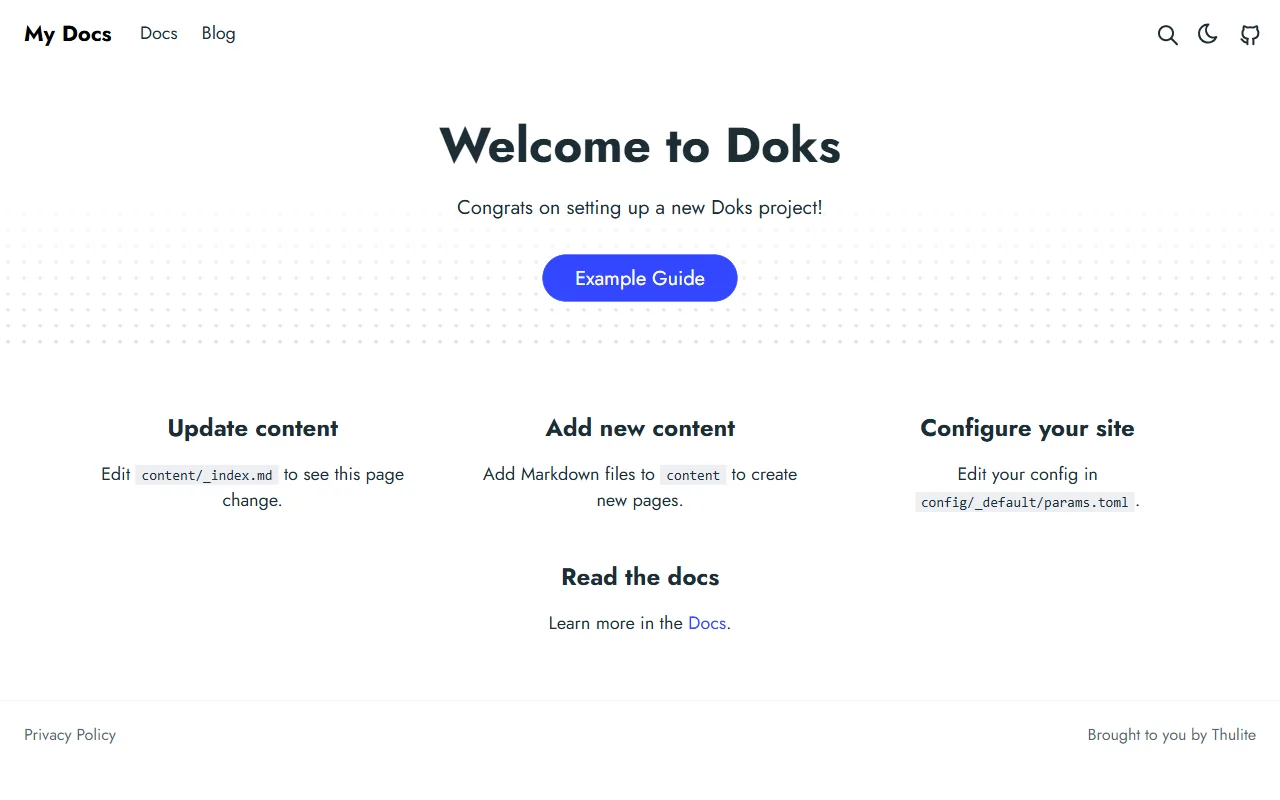
doks
Doks is a Hugo documentation theme in the Thulite ecosystem, built for long-form reading with a minimal responsive layout and documentation-optimized typography. It includes FlexSearch-powered configurable search, dark/light mode, code syntax highlighting, i18n, multi-version documentation management, and blog pages.
Hugo · Tool Site

Congo
Congo is a minimal Hugo content theme built on Tailwind CSS 3.0, designed for blogs, portfolios, and lightweight content sites. It offers multiple homepage layouts, customizable dark mode, multilingual support including RTL, and built-in client-side search, Mermaid, Chart.js, and KaTeX.
Hugo · Blog

toha
Toha is a Hugo theme for personal portfolios, featuring a minimalist, responsive design with configurable homepage sections such as about, experience timeline, and achievements gallery.
Hugo · Portfolio

hugo-profile
hugo-profile is a mobile-first Hugo theme for personal portfolios and blogs, with multilingual support, light/dark themes, categories and tags, Google Analytics, Disqus comments, and Formspree contact forms.
Hugo · Portfolio