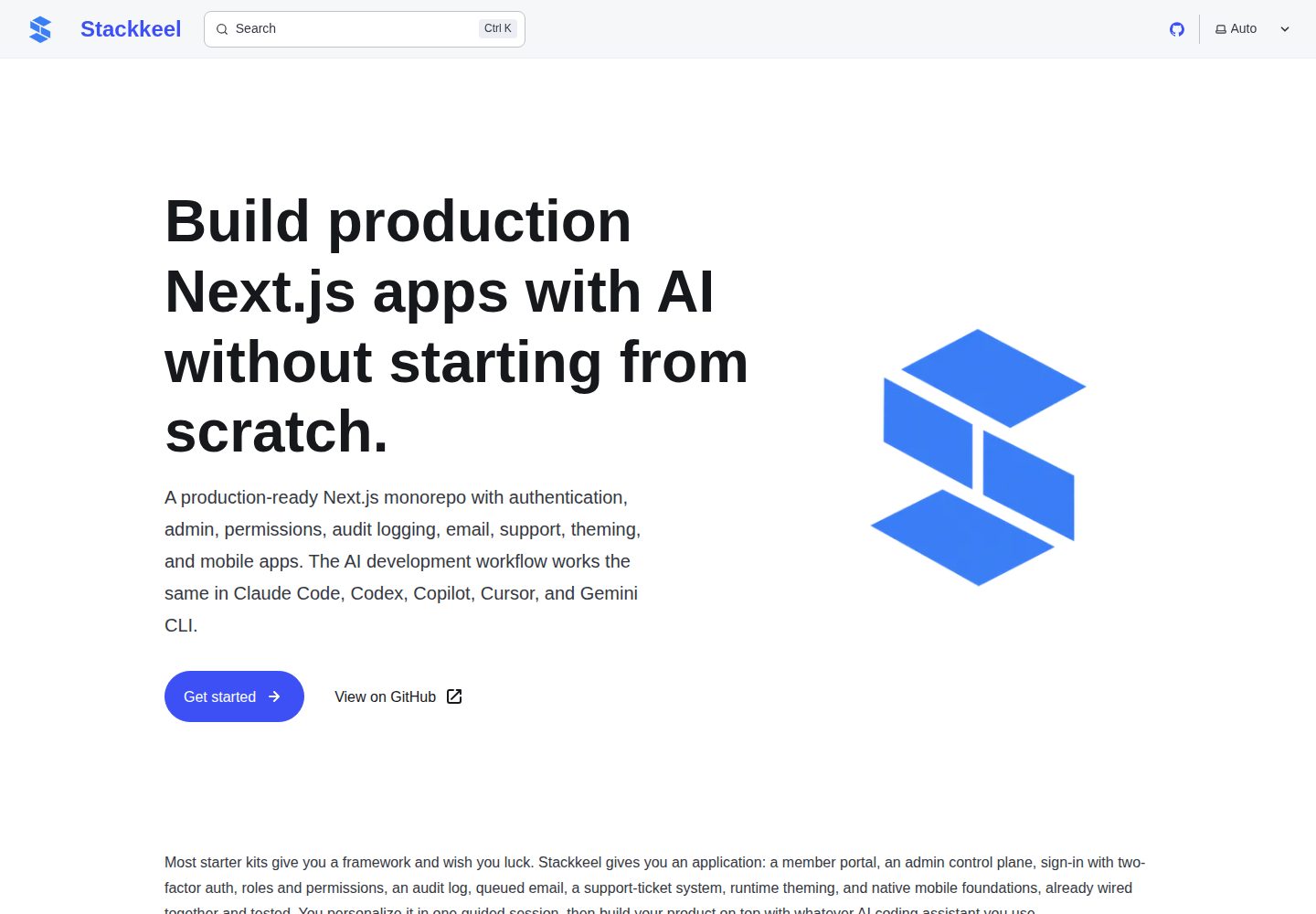
Four built-in apps: portal, admin panel, Capacitor shell, and Expo mobile app
Next.jsReactAdmin dashboardStarter
stackkeel — Next.js Admin dashboard Template
By chenson42
Stackkeel is an open-source Next.js monorepo starter kit with a built-in portal, admin panel, authentication, RBAC, audit logging, email queue, help desk, dynamic theming, and mobile foundations, plus a cross-AI-assistant development workflow built around AGENTS.md and Agent Skills.
Explore the design
Compare the page layouts and mobile experience. Open any screenshot for a closer look.
Desktop homepage1 / 3
Desktop captureTop of page
Actual screenshot captured by the server browser.
All pages & views 3
Screenshots show visual appearance; interactive behavior may differ.
Recorded 2026-10-14View source
What stands out
A quick read of the recorded project description.
Authentication and security: NextAuth v5, TOTP 2FA, account lockout, rate limiting, OIDC slots
Operational capabilities: append-only audit logging, feature flags, health endpoints, cleanup cron jobs
Communication and support: retrying email queue, in-app feedback, ticket escalation, and help desk
Brand theming: a single seed color generates WCAG-compliant light and dark themes, with an admin editor
AI workflow: AGENTS.md and Agent Skills, with a six-phase pipeline enforced by git hooks and CI
Template Details
Stackkeel is an open-source Next.js monorepo starter kit for AI-assisted software development. The README states that it provides built and tested modules: a portal (apps/portal), an admin panel (apps/admin), a Capacitor shell (apps/shell), an Expo mobile app (apps/mobile), as well as authentication (NextAuth v5, TOTP 2FA, account lockout, rate limiting, OIDC slots), roles and permissions, audit logging, feature flags, a retrying email queue, support tickets, runtime theming, and mobile device token authentication. The stack includes Next.js, React, TypeScript, Tailwind, Drizzle + Postgres, Turborepo + pnpm, and Vitest + Playwright.
The kit emphasizes that the AI workflow lives in the repository: a six-phase development pipeline is provided through AGENTS.md and Agent Skills, with gates enforced by git hooks and CI, and it is not tied to a specific model. Companion lifecycle commands include /personalize (trim modules), /upstream-sync (pull kit updates), and /downstream-sync (contribute general fixes back).
The README gives quick-start steps: copy the template, run pnpm install, complete /personalize in an AI assistant, configure .env.local, run database migrations and seeds, then run pnpm dev (portal :3000, admin panel :3001). It requires Node ≥ 22, pnpm 10, and Postgres (Neon recommended); optional services such as Resend, Upstash, Turnstile, and Google/OIDC degrade gracefully when not configured. Status is v0.1 (September 2026), MIT licensed. The README does not provide performance data, production deployment details, or specific implementation notes for each module.
Next.jsAdmin panelStarter kit
Is it right for your project?
Use Cases
- Quickly starting a Next.js full-stack project that includes authentication, RBAC, and audit logging
- Collaborating with assistants such as Claude Code, Codex, Copilot, Cursor, or Gemini CLI without being tied to a single model
- Needing to provide a web portal, an admin panel, and Capacitor/Expo mobile foundations at the same time
- Needing built-in operational and branding modules such as an email queue, help desk tickets, and dynamic theming
- Managing kit updates and contributions through /upstream-sync and /downstream-sync
Suitable For
- Teams building multi-app monorepos with Next.js and TypeScript
- Developers using AI-assisted development who want the process codified in the repository
- Projects that need out-of-the-box foundations for authentication, permissions, auditing, and support tickets
- Users who accept the Node ≥ 22, pnpm 10, and Postgres environment requirements
Getting started & customization
Use these recorded setup notes alongside the repository instructions for your chosen version.
- 1
Copy the template via GitHub "Use this template", then run pnpm install, which also installs git hooks
- 2
Open the repository in an AI assistant and follow the prompts to complete /personalize (identity, apps, features, branding)
- 3
Configure .env.local from .env.example, then run pnpm --filter @repo/db db:migrate and db:seed
- 4
Run pnpm dev; the portal defaults to :3000 and the admin panel defaults to :3001
- 5
Environment requirements: Node ≥ 22, pnpm 10, Postgres (Neon recommended); optional services such as Resend, Upstash, Turnstile, and Google/OIDC degrade gracefully when not configured
License & source material
Usage conditions & limitations
Free to use · keep license noticeThis listing covers the free version under the MIT license in the public repository; the free scope is that version's code and does not mean external services or third-party assets are free.
Must comply with when using
- You may use, modify, commercialize, and distribute that version's code for free.
- When distributing copies or substantial portions of the code, retain the original author's copyright notice and the full MIT license notice.
- The code is provided as is; warranties and limitations of liability are governed by the original license and applicable law.
Additional costs & items to verify
- Demo images, fonts, icons, and other third-party assets must be checked against their respective licenses and cannot be judged solely by the code's MIT license.
- External services such as domains, hosting, databases, payments, or AI may incur separate charges.
- The runtime environment requires Node ≥ 22, pnpm 10, and Postgres (Neon recommended); optional services such as Resend, Upstash, Turnstile, and Google/OIDC degrade gracefully when not configured.
- Optional services such as Resend, Upstash, Turnstile, and Google/OIDC require corresponding credentials; related features degrade when they are not configured.
- It must be used by copying the template via GitHub "Use this template" rather than by cloning directly.
View Original Text Basis
Permission is hereby granted, free of charge
Original License Text
Requirements: Node ≥ 22, pnpm 10, Postgres (Neon recommended). Optional services
Original README
(Resend, Upstash, Turnstile, Google/OIDC credentials) degrade gracefully when
Original README
https://github.com/chenson42/stackkeel/blob/main/LICENSEhttps://github.com/chenson42/stackkeel/blob/main/README.md# 1. Copy the template (GitHub "Use this template"), then:
Original README
Compiled by DeepSeek based on repository license and README ·2026-10-14. Results only cover the materials read; dependencies, images, fonts, and subsequent term changes are subject to their respective original texts.
Project checks & description sources
Template Information
- Source platforms
- GitHub
- Documentation and maintenance reference score
- More documented · 88 / 100
- Technologies
- Next.js · React
- Website type
- Admin dashboard · Starter
How this score is calculated
Our heuristic uses license records (up to 30), a demo link (12), a preview (10), stars (15), recorded maintenance (15), description completeness (8), feature records (5) and classification data (5). It is not a code, security or performance test, or a Google score. A link does not establish tested functionality.
What to verify for this project
- Repository update recorded
- 2026-10-08
- Screenshot last checked
- 2026-10-14
A demo link is listed. Check it with your own content and viewport sizes; its presence does not confirm that forms, authentication or payments work.
The catalog identifies Next.js as the primary stack. Check the actual dependency manifest and lockfile for versions and hosting requirements. These notes use recorded metadata, not a code audit or a deployment test.
Use a selection guide →How this description was prepared
AI-assisted description based on catalog records and repository material. Repository authors are not automatically the reviewers of this description.
Review declaration: codex-user-requested-batch-review-20261015 · 2026-10-15
Inspect the recorded source material
SHA-256: 6700fe83e3dbcea065f4f96236241e8a1e3c0ba1a168e7bdad553ac4eb827cd3
2026-10-14T23:08:53.459Z
Source file / repository# Stackkeel  **Production-ready apps. AI-native development. No model lock-in.** *The keel is the first thing a shipyard lays down — the spine the whole vessel is built on. Stackkeel is that keel for your stack.* Stackkeel is an open-source Next.js monorepo starter kit built for AI-assisted software development. Start with a production-ready portal, admin app, authentication, RBAC, audit logging, queued email, a helpdesk, dynamic theming, and mobile foundations. Then build with Claude Code, Codex, GitHub Copilot, Cursor, Gemini CLI, or any assistant that reads [AGENTS.md](https://agents.md) and [Agent Skills](https://agentskills.io). [](https://github.com/chenson42/stackkeel/actions/workflows/ci.yml) [](https://github.com/chenson42/stackkeel/releases) [](./LICENSE)  **[Documentation](https://stackkeel.org)** · **[Get started](https://stackkeel.org/getting-started/)** · **[Why Stackkeel](https://stackkeel.org/why-stackkeel/)** ## Why Stackkeel? 1. **You don't start from an empty repo.** Auth (credentials, Google, native Google ID-token, generic OIDC), TOTP 2FA, account lockout, roles and permissions with anti-lockout guarantees, an audit log with CI-enforced coverage, feature flags, a retrying email queue, a real support-ticket system, runtime theming with WCAG contrast guarantees, and device-token mobile auth are already built and tested. 2. **The AI workflow lives in the repository.** A structured six-phase development pipeline with work logs, evidence discipline, and gates enforced by git hooks and CI, not by any one assistant's goodwill. 3. **No model lock-in.** Instructions in `AGENTS.md`, procedures as Agent Skills, enforcement in git + CI. Use Claude today and Codex tomorrow; the project treats them identically. ## What you get | | | |---|---| | **Apps** | `apps/portal` (member-facing) · `apps/admin` (control plane) · `apps/shell` (Capacitor iOS/Android) · `apps/mobile` (Expo) | | **Identity & security** | NextAuth v5, TOTP 2FA + recovery codes, lockout, rate limiting, OIDC slot | | **Access control** | Feature catalog in code, role matrix UI, admin anti-lockout | | **Operations** | Append-only audit log, feature flags, health endpoints, cleanup crons | | **Communication** | Queued email (retry/backoff, delivery webhooks), What's New announcements | | **Support** | In-app feedback, promote-to-ticket, threaded helpdesk with triage queue | | **Branding** | One seed color → WCAG-safe light/dark themes, admin branding editor | | **Stack** | Next.js 16 · React 19 · TypeScript · Tailwind 4 · Drizzle + Postgres · Turborepo + pnpm · Vitest + Playwright | ## A starter kit that stays current The kit has a lifecycle, not just a download: personalization strips the modules you don't want, `/upstream-sync` pulls kit improvements as a reviewable punch-list, and `/downstream-sync` packages your generic fixes for contribution back. ## Works with Claude Code · OpenAI Codex · GitHub Copilot · Cursor · Gemini CLI, and any other tool that reads AGENTS.md and the Agent Skills `SKILL.md` format. [How the cross-assistant layer works.](https://stackkeel.org/cross-ai/) ## Quickstart ```bash # 1. Copy the template (GitHub "Use this template"), then: pnpm install # also installs the git hooks # 2. Open the repo in your AI assistant — it detects the fresh copy and # walks you through /personalize (identity, apps, features, branding). # 3. Configure .env.local from .env.example, then: pnpm --filter @repo/db db:migrate && pnpm --filter @repo/db db:seed pnpm dev # portal :3000, admin :3001 ``` Requirements: Node ≥ 22, pnpm 10, Postgres (Neon recommended). Optional services (Resend, Upstash, Turnstile, Google/OIDC credentials) degrade gracefully when unconfigured. ## Status v0.1, September 2026. New, and built end-to-end by the workflow it ships: every feature went through the six-phase pipeline, and the release was verified with more than 1,000 unit tests plus Playwright smoke suites against a live Postgres. MIT licensed. Contributions arrive as [contribution-kit specs](https://stackkeel.org/sync/) via PR.
Explore similar templates
Compare previews and descriptions within the same stack and category.
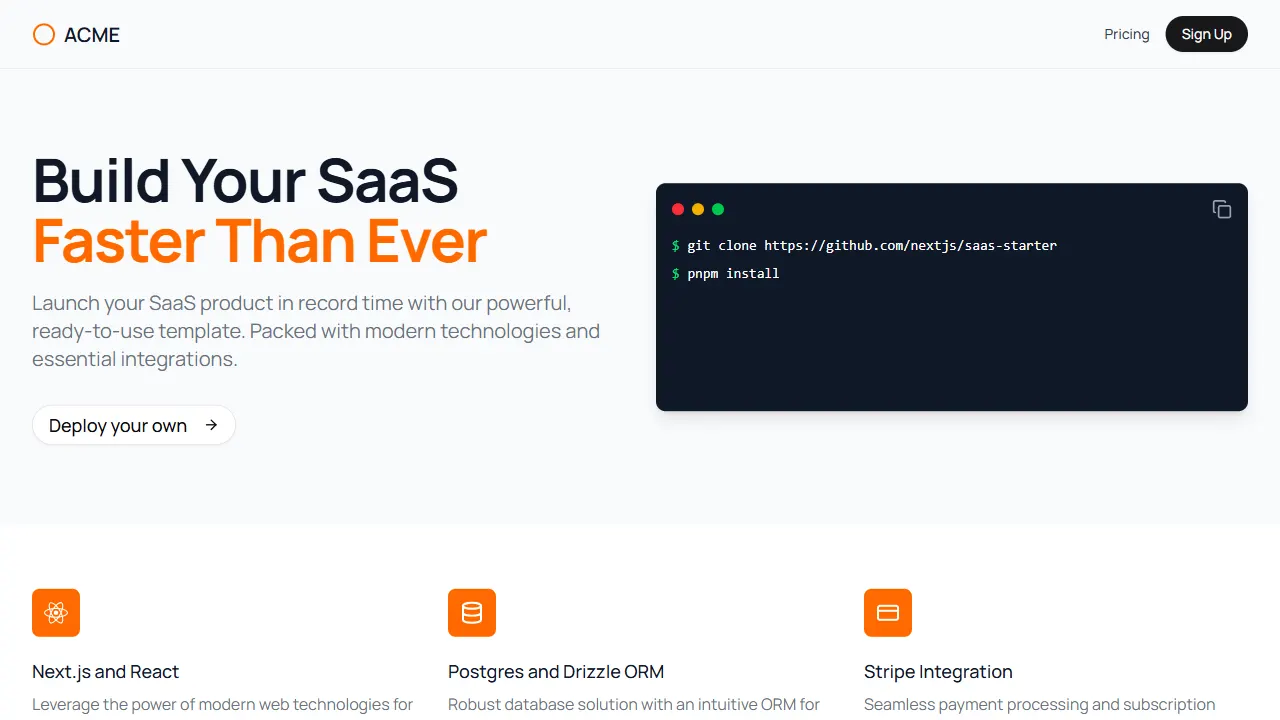
Next.js SaaS Starter
The official Next.js SaaS starter template, integrating email/password authentication, Stripe Checkout subscriptions, a dashboard with user/team CRUD, basic Owner/Member RBAC, and activity logging.
Next.js · SaaS
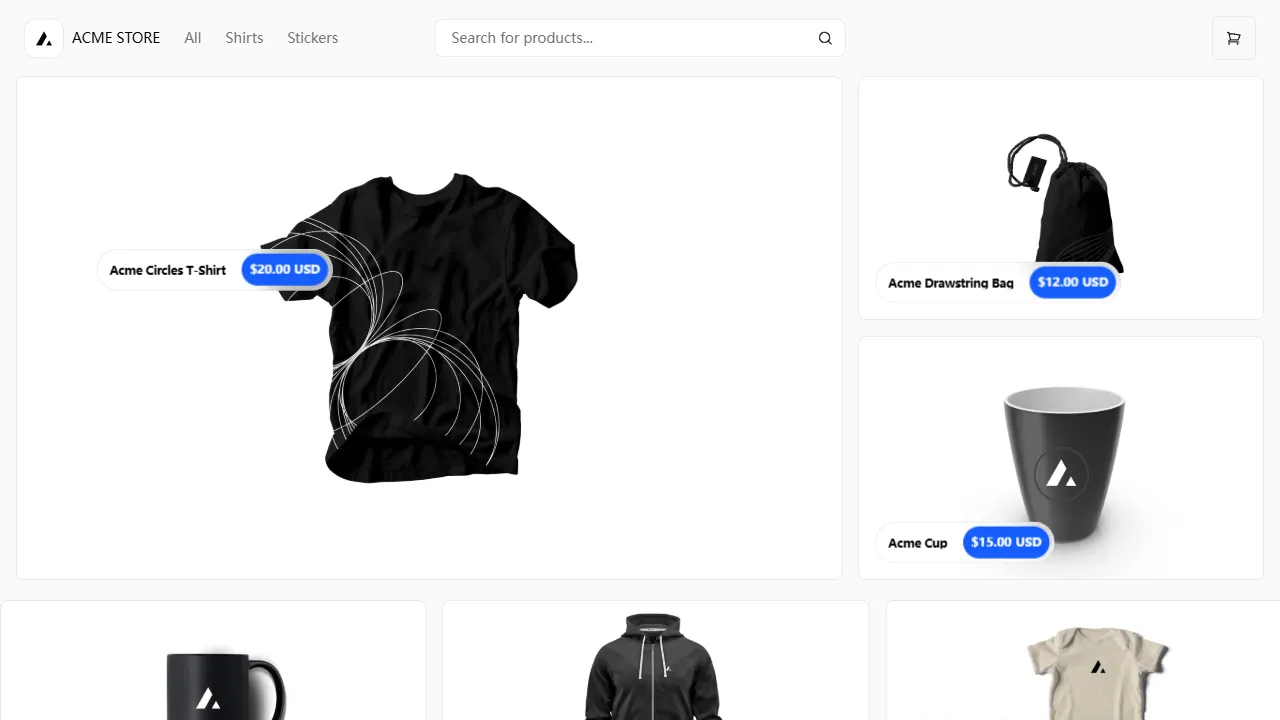
Next.js Commerce
Vercel's officially maintained Next.js App Router ecommerce starter with deep Shopify integration, offering a complete product catalog, cart, and checkout flow. Core logic is modular for swapping backends, and community provider versions exist for BigCommerce, Medusa, and Saleor.
Next.js · E-commerce
Next-js-Boilerplate
A developer-first Next.js 16 starter with Tailwind CSS 4 and TypeScript, supporting both App Router and Page Router.
Next.js · Starter

tailwind-nextjs-starter-blog
A Next.js and Tailwind CSS blog starter template using Contentlayer for Markdown/MDX, with built-in SEO, code highlighting, and tags. It targets personal technical blogs and migration from Jekyll/Hugo to React, and supports one-click Vercel deployment.
Next.js · Blog
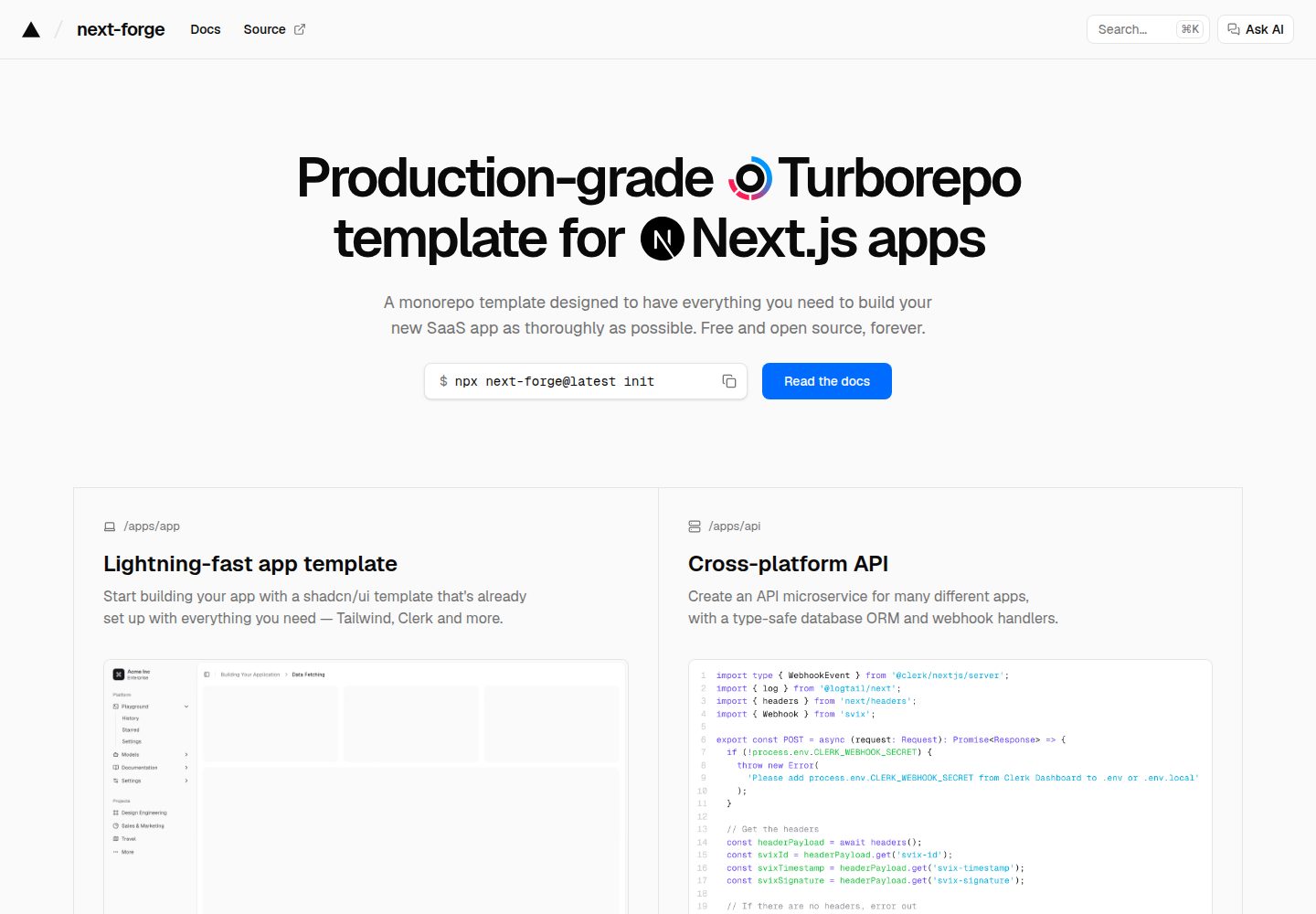
next-forge
next-forge is a Turborepo-based Next.js template maintained by Vercel, positioned as a starting point for SaaS products.
Next.js · Starter
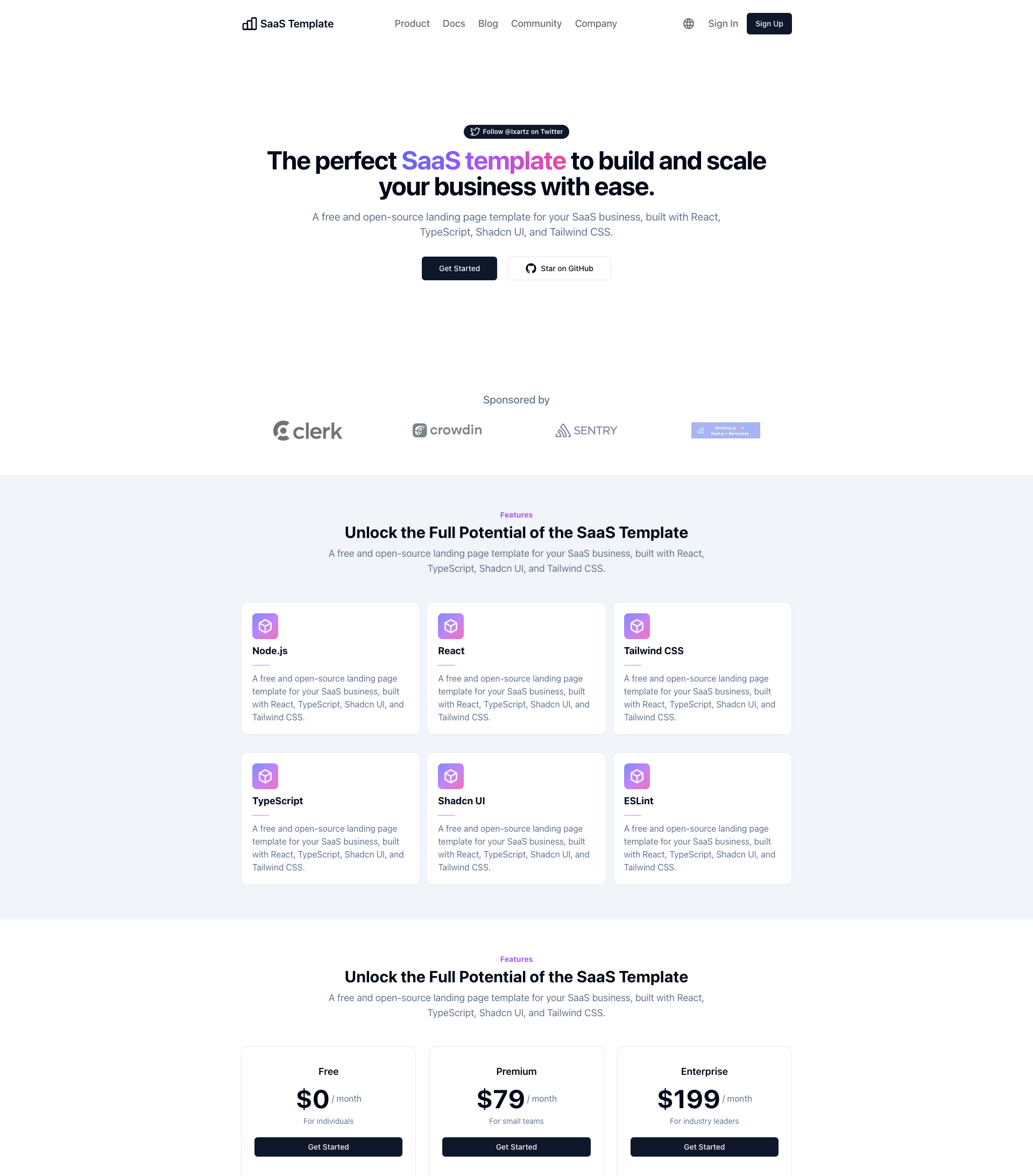
SaaS-Boilerplate
SaaS-Boilerplate is an open-source SaaS starter template built with Next.js App Router, React 19, TypeScript, Tailwind CSS, and Shadcn UI.
Next.js · SaaS