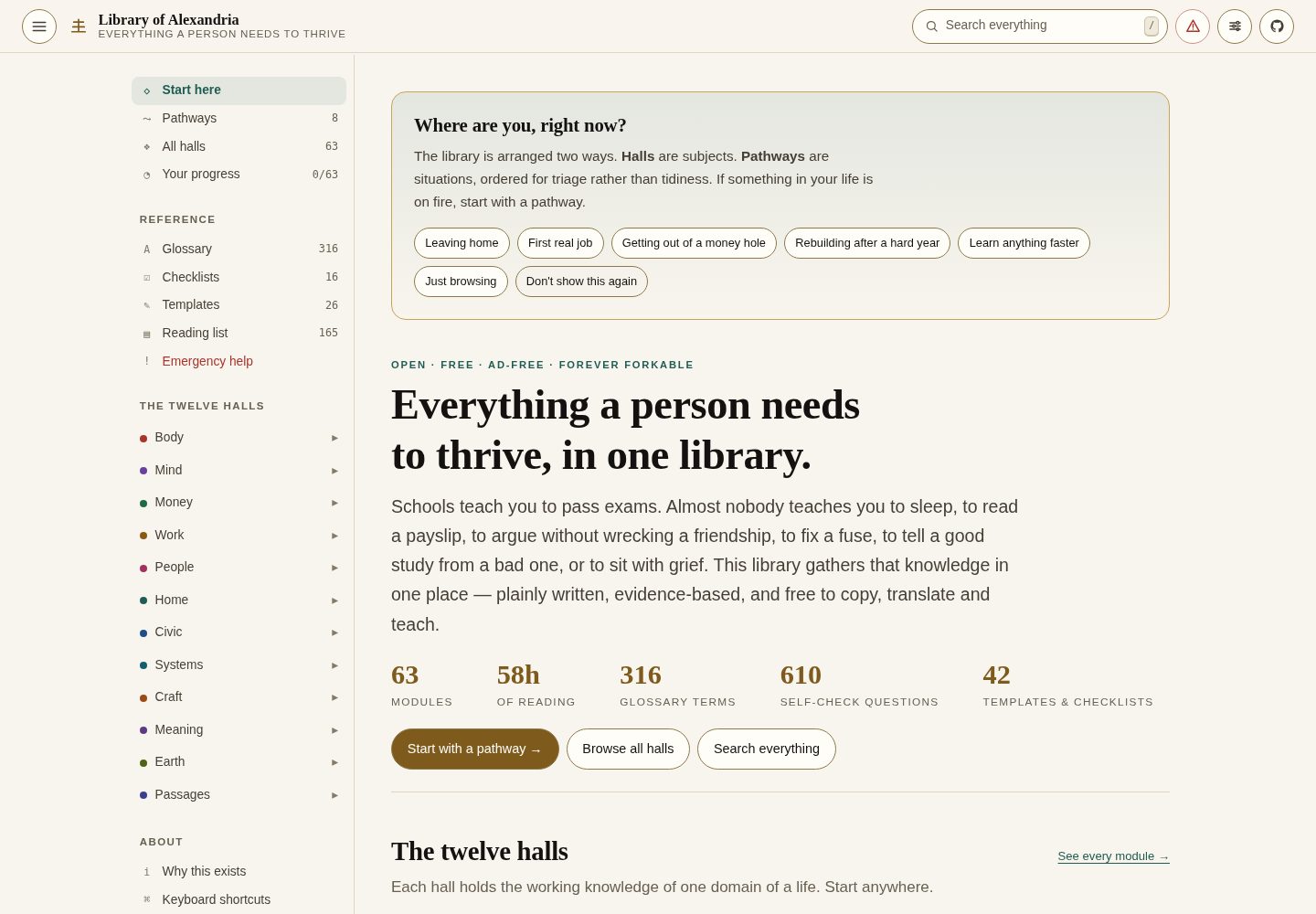
12 halls and 63 modules covering body, mind, money, work, relationships, home, civics, systems, craft, meaning, Earth, and life stages.
HTMLDirectory siteCorporate Website
library-of-alexandria — HTML Directory site Template
By sobanan-breakthrough
An open-source learning platform that organizes practical life knowledge—sleep, money, conflict, rights—into 12 halls and 63 modules, with content stored as Markdown and JSON and runnable locally without a build step.
Explore the design
Compare the page layouts and mobile experience. Open any screenshot for a closer look.
Desktop homepage1 / 2
Desktop captureTop of page
Actual screenshot captured by the server browser.
All pages & views 2
Screenshots show visual appearance; interactive behavior may differ.
Recorded 2026-10-13View source
What stands out
A quick read of the recorded project description.
Each module follows a consistent structure: one action item, core knowledge, practice, common pitfalls, frequently asked questions, myths, failure modes, self-check questions, and more.
Includes a glossary (294 terms), checklists (16), templates (26), reading lists (165 sources), and an emergency directory (12 scenarios).
No build step or dependencies; uses HTML, CSS, vanilla JavaScript, JSON, and Markdown, and runs locally via python3 -m http.server.
Supports offline access; a service worker pre-caches the shell, data files, and emergency pages; progress, bookmarks, notes, and more are stored in the browser's localStorage.
Content is stored as Markdown and structure as JSON, making it easy to fork, translate, and localize.
Template Details
Library of Alexandria is a free, open-source learning platform that aims to bring together the practical knowledge needed to become a capable person—sleep, money, conflict, rights, evidence, repair, caregiving, meaning, and more—into a single curriculum. The README states it contains 12 halls, 63 modules, approximately 124,000 words of body text, and reference layers such as a glossary, checklists, templates, reading lists, and an emergency directory. Each module follows a consistent structure, including one action item, core knowledge, practice, common pitfalls, frequently asked questions, myths, failure modes, self-check questions, and more. Platform content is stored as Markdown and structure as JSON, and can be forked, translated, printed, or used for teaching.
On the technical side, the README explicitly states there is no build step, no dependencies, and no package manager, using only HTML, CSS, vanilla JavaScript, JSON, and Markdown. Running locally requires starting a server via python3 -m http.server, because pages use fetch to load course and content files. The platform uses hash routing and supports search, glossary decoration, reading preferences, locally stored progress, and offline caching. Content is licensed under CC BY-SA 4.0, and code under the MIT license.
The README does not provide information on production deployment, scalability, performance benchmarks, or integration with other systems. Its content is general life knowledge and does not constitute professional advice; legal, welfare, and health guidance varies by country and changes over time.
HTMLDirectory siteCorporate Website
Is it right for your project?
Use Cases
- Individuals self-studying practical life skills such as sleep management, debt handling, conflict resolution, and rental rights.
- Educators or community organizations using its modules and templates for teaching or workshops.
- Developers or translators forking the repository to translate content into other languages or adapt it to local laws and services.
- Accessing the emergency directory and read modules offline in no-network environments.
Suitable For
- Learners who want free access to structured life knowledge.
- Teachers or trainers who need printable, teachable materials.
- Open-source contributors willing to contribute corrections, translations, or new modules.
- Developers who need to run locally or self-host a static site.
Getting started & customization
Use these recorded setup notes alongside the repository instructions for your chosen version.
- 1
Clone the repository: git clone https://github.com/sobanan-breakthrough/library-of-alexandria.git
- 2
Enter the directory and start a local server: cd library-of-alexandria && python3 -m http.server 8000
- 3
Open http://localhost:8000 in a browser; a server is required because pages use fetch to load course and content files.
- 4
Before submitting, you can run python3 tools/validate.py && python3 tools/build_index.py to validate and generate the index.
License & source material
Usage conditions & limitations
Free to use · keep license noticeThis entry covers the free version under the MIT license in the public repository; the free scope applies to that version's code and does not mean external services or third-party materials are free.
Must comply with when using
- You are allowed to use, modify, commercially use, and distribute this version's code for free.
- When distributing copies or substantial portions of the code, retain the original author's copyright notice and the full MIT license notice.
- The code is provided as is; warranties and limitations of liability are governed by the original license and applicable law.
Additional costs & items to verify
- Demo images, fonts, icons, and other third-party materials must be checked against their respective licenses and cannot be judged solely by the code's MIT license.
- External services such as domains, hosting, databases, payments, or AI may incur separate charges.
- The project's content does not constitute professional advice and cannot replace a doctor, lawyer, debt advisor, or crisis hotline; legal, welfare, and health guidance varies by country and changes over time.
- In emergencies, use local emergency services rather than relying on this platform's content.
- Running locally must be accessed via an HTTP server because pages use fetch to load course and content files; opening index.html directly as a file will be blocked by the browser.
- When localizing, replace jurisdiction-specific sections and referenced services, especially in the emergency directory where incorrect numbers could be dangerous.
- Third-party works listed in "Go deeper" and reading lists remain the property of their authors and are cited rather than copied.
View Original Text Basis
Permission is hereby granted, free of charge
Original License Text
Not professional advice, and not a substitute for a doctor, lawyer, debt adviser or
Original README
**In an emergency, use the emergency services where you live.**
Original README
Then open <http://localhost:8000>. A server is needed because the page `fetch`es the
Original README
`data/emergency.json`, where wrong numbers are actively dangerous.
Original README
https://github.com/sobanan-breakthrough/library-of-alexandria/blob/main/LICENSEhttps://github.com/sobanan-breakthrough/library-of-alexandria/blob/main/README.mdThird-party works listed in "Go deeper" and the reading list remain the property of
Original README
Compiled by DeepSeek based on repository license and README ·2026-10-13. Results only cover the materials read; dependencies, images, fonts, and subsequent term changes are subject to their respective original texts.
Project checks & description sources
Template Information
- Source platforms
- GitHub
- Documentation and maintenance reference score
- More documented · 85 / 100
- Technologies
- HTML
- Website type
- Directory site · Corporate Website
How this score is calculated
Our heuristic uses license records (up to 30), a demo link (12), a preview (10), stars (15), recorded maintenance (15), description completeness (8), feature records (5) and classification data (5). It is not a code, security or performance test, or a Google score. A link does not establish tested functionality.
What to verify for this project
- Repository update recorded
- 2026-08-28
- Screenshot last checked
- 2026-10-13
A demo link is listed. Check it with your own content and viewport sizes; its presence does not confirm that forms, authentication or payments work.
The catalog identifies HTML as the primary stack. Check the actual dependency manifest and lockfile for versions and hosting requirements. These notes use recorded metadata, not a code audit or a deployment test.
Use a selection guide →How this description was prepared
AI-assisted description based on catalog records and repository material. Repository authors are not automatically the reviewers of this description.
Review declaration: codex-user-requested-batch-review-20261015 · 2026-10-15
Inspect the recorded source material
SHA-256: 969ed530f9f96cac020d7a59165cfe1983c34a3af81219e590144bc18aba2a80
2026-10-13T21:45:58.216Z
Source file / repository# Library of Alexandria **Everything a person needs to thrive, in one open library.** A free, open-source learning platform gathering the practical knowledge of being a capable human being — sleep, money, conflict, rights, evidence, repair, care, meaning — into a single curriculum that anyone can read, fork, translate, print or teach from. | | | | --- | --- | | **12** halls | **63** modules · **124,000** words of prose | | **8** pathways | ordered for triage, not tidiness | | **316** glossary terms | linked to the modules that use them, and underlined in the text | | **610** self-check questions | ~10 per module, retrieval-practice style | | **26** templates | the actual words: letters, scripts, forms | | **16** checklists | 211 tickable, printable items | | **165** catalogued sources | 105 of them free | | **12** emergency situations | what to do in the first minutes, works offline | | **164,000** words in total | prose plus every reference layer | Accessibility: **WCAG 2.2 AA**, verified across every route with a purpose-built audit harness — zero findings over ~5,000 checked text nodes, and 0 of 256 colour pairs below threshold in all four themes. - 📖 **[Browse the whole curriculum](CURRICULUM.md)** - 🌐 **Live site: <https://sobanan-breakthrough.github.io/library-of-alexandria/>** - 🤝 **[Contributing](CONTRIBUTING.md)** — corrections, translations and new modules welcome --- ## Why this exists A person can leave school able to factorise a quadratic and unable to read a tenancy agreement. The knowledge that most determines whether a life goes well — how to sleep, how debt works, how to argue without wrecking a friendship, how to tell a good study from a bad one, what to do in the first five minutes of a cardiac arrest, how to sit with grief — is treated as something you pick up by luck, from a family that happened to know it. That is a distribution problem, not a difficulty problem. This library is an attempt to fix the distribution. ## The twelve halls | | Hall | What it holds | | --- | --- | --- | | 01 | **Body** | Sleep, food, movement, navigating healthcare, first aid | | 02 | **Mind** | Learning, clear thinking, attention, emotion, mental health | | 03 | **Money** | Cashflow, debt, tax, investing, scams and consumer rights | | 04 | **Work** | Finding work, portfolios, interviews, rights, negotiation, self-employment | | 05 | **People** | Listening, conflict and repair, friendship, love, boundaries, family | | 06 | **Home** | Cooking, renting, repairs, admin, clothes and kit | | 07 | **Civic** | Law and rights, how power works, media literacy, privacy, organising | | 08 | **Systems** | Statistics, computing, AI literacy, evidence, systems thinking | | 09 | **Craft** | Making things, writing, speaking, creative practice, tools | | 10 | **Meaning** | Purpose, ethics, mortality, grief, rest and play | | 11 | **Earth** | Supply chains, climate, growing food, weather, wilderness | | 12 | **Passages** | Adulthood, moving out, first job, parenthood, caring, the end | ## What a module contains Every one of the 63 modules follows the same contract, so a reader always knows where to look: - a one-line hook, and **one thing to do** before any reading - **Why this matters** — including who it goes wrong for, and why it is not their fault - **Core knowledge** — bolded claims in plain language, with numbers where they exist - **Practices** — imperative, doable this week, with no money - **Common traps** and **Signals you have it** - **Common questions** — six to eight, written as the questions people actually arrive with rather than the ones that are tidy to answer - **Myths worth killing** — false beliefs, including several that popular books and well-meaning advice get wrong - **When it goes wrong** — failure modes with a route out; or **Where this differs by country** for the law-, money- and benefits-heavy modules - most modules also carry a **worked example**, a **numbers worth knowing** table, or **word-for-word scripts** — and a tickable checklist - **Go deeper** — free, public sources first - around ten **self-check questions**, because retrieval is what makes knowledge stick Anything jurisdiction-specific is marked with a country and a year. Anywhere a reader could come to harm carries a `::: safety` callout with a named service and a number. ## Beyond the modules - **[Glossary](data/glossary.json)** — 294 terms. If a word in this library feels like gatekeeping, it belongs here. Terms are underlined in the prose and link to their definition. - **[Checklists](data/checklists.json)** — move-in day, money triage, digital hardening, the four documents, the day pack. Ticks persist; every list prints cleanly. - **[Templates](data/templates.json)** — a disrepair report, a creditor hardship letter, a grievance, the pay rise conversation, a condolence message, the first hour after a scam. Placeholders are fillable in the page and the result copies to your clipboard. - **[Reading list](data/reading.json)** — the sources behind the content, free ones first, each with an honest note including where a popular book overstates its case. - **[Emergency directory](data/emergency.json)** — twelve situations, the first steps, and who to call. Precached, so it works with no connection. ## Principles - **Assume nothing.** No prior study, no jargon, no gatekeeping. - **Plain language.** If a sentence needs re-reading, that is our fault. - **Practice over theory.** Every module names one thing to do this week. - **Show the source.** Claims are signposted to free, public, authoritative material. - **Name the limits.** Where a decision needs a doctor, lawyer or adviser, we say so. - **No dark patterns.** No accounts, no adverts, no tracking, no upsell, no streak guilt. Progress lives in your browser and nowhere else. - **Never assume resources.** No "ask your accountant", no "your parents can help". - **Forkable by design.** Content is Markdown; structure is JSON. ## What this is not Not professional advice, and not a substitute for a doctor, lawyer, debt adviser or crisis line. Law, benefits and health guidance vary by country and change over time. **In an emergency, use the emergency services where you live.** ## Run it locally No build step, no dependencies, no package manager. HTML, CSS, vanilla JS, JSON and Markdown. ```bash git clone https://github.com/sobanan-breakthrough/library-of-alexandria.git cd library-of-alexandria python3 -m http.server 8000 ``` Then open <http://localhost:8000>. A server is needed because the page `fetch`es the curriculum and content files; opening `index.html` from disk is blocked by browsers. ## Repository layout ``` index.html the application shell manifest.webmanifest installable as an app sw.js offline support; precaches the shell and emergency page assets/css/styles.css one stylesheet: tokens, four themes, no framework assets/js/markdown.js escape-first Markdown renderer (~200 lines) assets/js/store.js everything remembered, and nothing sent anywhere assets/js/data.js loading, indexing and search scoring assets/js/ui.js palette, preferences, sidebar, glossary decoration assets/js/app.js router and every view data/curriculum.json the spine: halls, modules, levels, times, tags, pathways data/glossary.json 294 terms data/selfcheck.json 315 questions data/templates.json 26 letters, scripts and forms data/checklists.json 16 checklists data/reading.json 165 catalogued sources data/emergency.json 12 emergency situations content/<hall>/<mod>.md one Markdown file per module tools/validate.py structural and editorial checks (CI runs this) tools/build_index.py regenerates CURRICULUM.md tools/merge_sections.py inserts new sections into existing modules CURRICULUM.md generated human-readable index ``` ## How the platform works - **`data/curriculum.json` is the spine.** Add a module entry and a Markdown file and the site picks it up — no code changes. - **Hash routing**, so it works on any static host with no rewrites: `#/hall/body`, `#/module/body/sleep`, `#/path/leaving-home`, `#/glossary?t=APR`, `#/checklist/move-in-day`, `#/template/grievance`, `#/emergency`, `#/progress`. - **Markdown is rendered in the browser** by `assets/js/markdown.js`, which escapes input *before* parsing, so content files can never inject HTML or script. It supports tables, task lists and `::: note | safety | example | script | numbers | jurisdiction | details` callouts. - **Search** (`/` or `Cmd-K`) covers modules, sections, glossary, checklists, templates, resources, pathways and emergency situations. Scoring only allows mid-word matches for queries of five characters or more, so "rent" does not match "current". Each module carries **aliases** — the words people actually type, like "skint", "sacked", "hacked", "bailiffs" — so search finds the right module even when it never uses that word. - **Glossary decoration** underlines the first appearance of each known term in a module and links it to the definition. Toggleable in reading preferences. - **Reading preferences**: four themes (dark, light, sepia, high contrast), four text sizes, three line widths, four typefaces including a legibility face, plus toggles for glossary underlining and the page outline. - **Everything is local.** Progress, bookmarks, notes, checklist ticks, self-check marks and preferences live in `localStorage`. No server, no account, no analytics, no outbound requests. You can export it all to a JSON file and import it elsewhere. - **Offline.** A service worker precaches the shell, all six data files and the emergency directory; module Markdown is cached as you read it. - **Keyboard**: `/` or `Cmd-K` search · `g` then `h/p/g/c/t/r/e` to jump · `j`/`k` next and previous module · `m` mark complete · `b` bookmark · `t` cycle theme · `?` shortcut list. ## Validate before you commit ```bash python3 tools/validate.py && python3 tools/build_index.py ``` `validate.py` checks all seven data files and their cross-references: that every module has a content file, that internal links and related-module references resolve, that required sections exist, that callout types are known and balanced, that glossary terms are unique and linked, that templates and checklists point at real modules, and that nothing is a stub. `--strict` treats warnings as failures. CI runs the same check on every pull request. ## Translating and localising The structure is deliberately separable from the prose: 1. Fork the repo. 2. Translate the Markdown in `content/`, keeping filenames identical. 3. Translate the `title`, `summary`, `tagline`, `description`, `oneThing` and `aliases` strings in `data/curriculum.json`, and the reference corpora in `data/`. 4. Replace the jurisdiction-specific sections and signposted services with local equivalents. This matters most in Money, Work, Home, Civic and Passages, and in `data/emergency.json`, where wrong numbers are actively dangerous. 5. Open a pull request, or publish your own edition. Both are welcome. ## Licence - **Content** (`content/`, `data/`, `CURRICULUM.md`): [CC BY-SA 4.0](LICENSE-CONTENT) — copy it, adapt it, teach from it, print and sell an edition; keep it open and credit it. - **Code** (`index.html`, `assets/`, `tools/`, `sw.js`): [MIT](LICENSE). Third-party works listed in "Go deeper" and the reading list remain the property of their authors; they are references, not reproductions.
Explore similar templates
Compare previews and descriptions within the same stack and category.
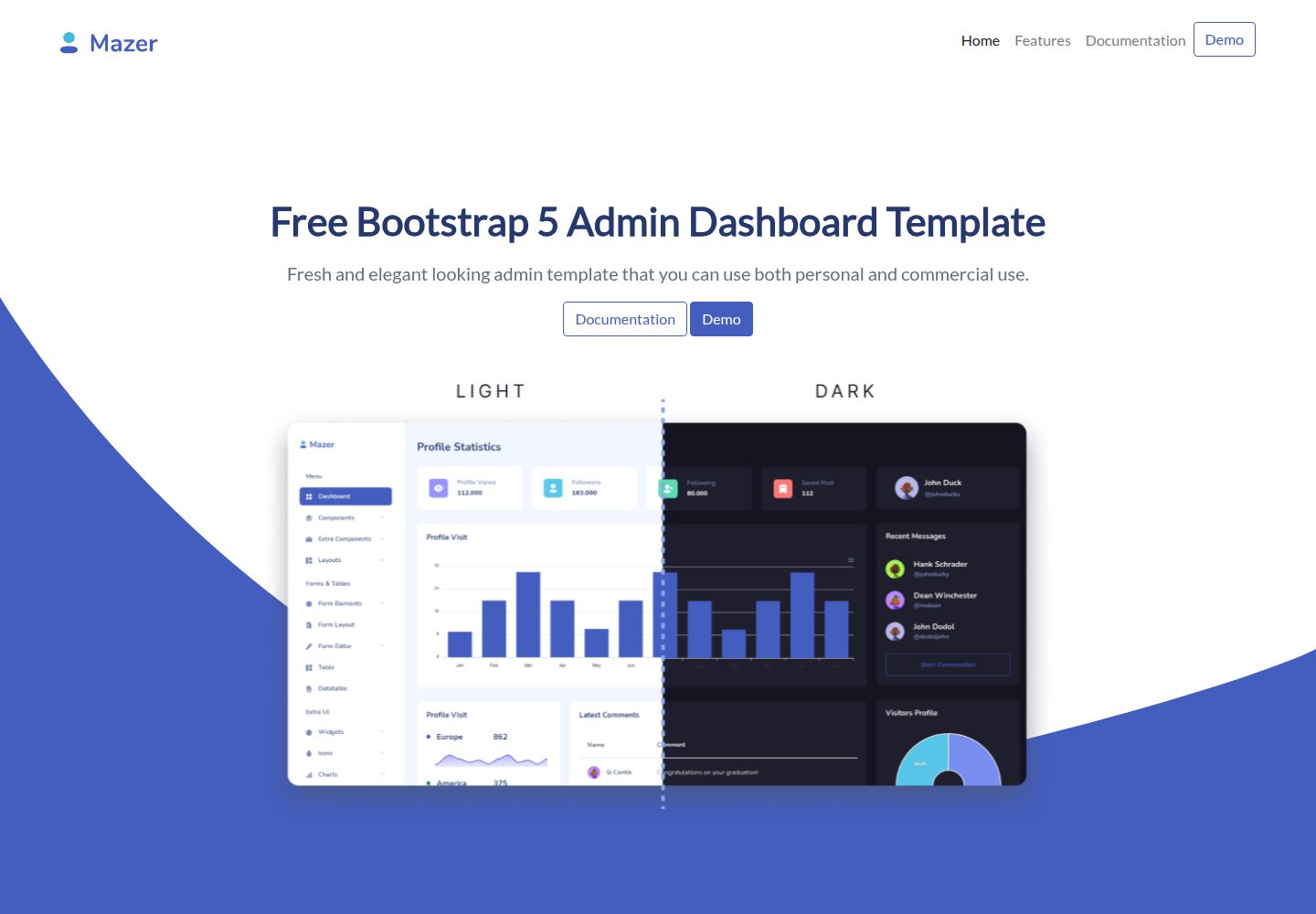
mazer
Mazer is a free and open-source Bootstrap 5 admin dashboard and landing page template that does not depend on jQuery. It provides prebuilt releases, source builds, and CDN inclusion, and includes dark mode, perfect-scrollbar, and ApexCharts examples.
HTML · Admin dashboard
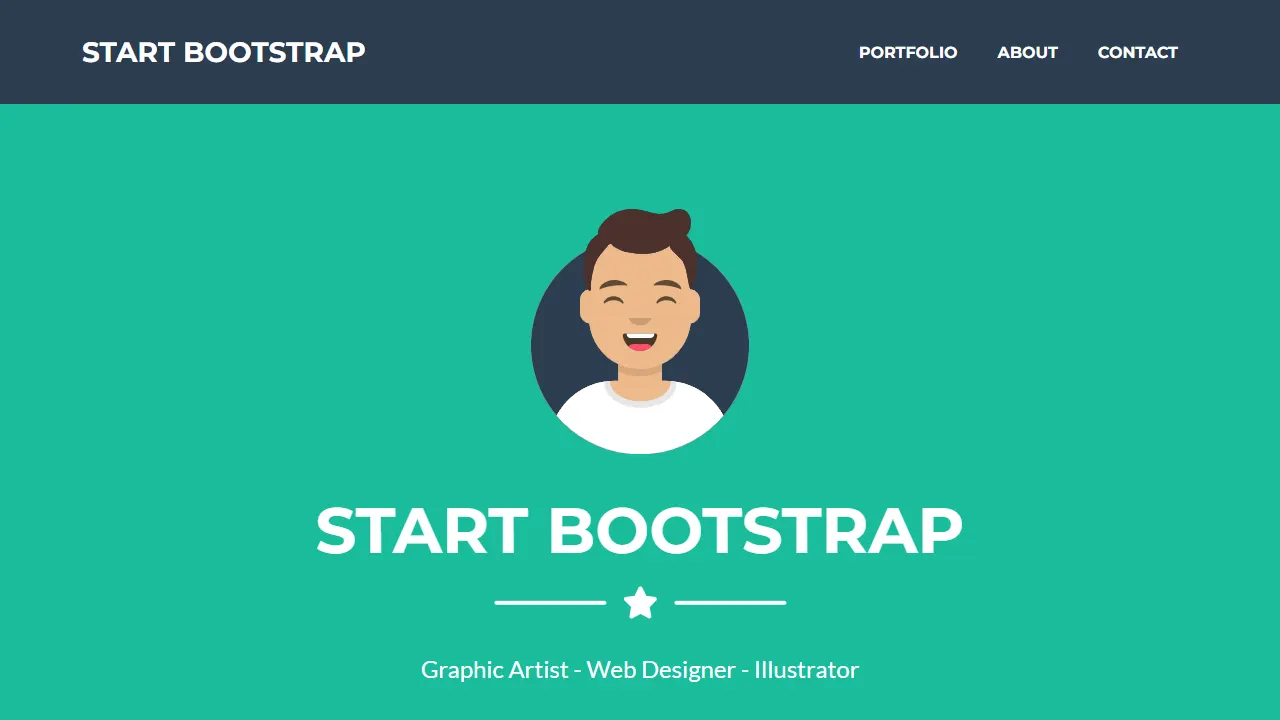
Freelancer
A bright, single-page Bootstrap portfolio template for freelancers, designers, and small studios. It includes a responsive portfolio grid with modal detail windows and an SB Forms contact form that requires an API token.
HTML · Portfolio
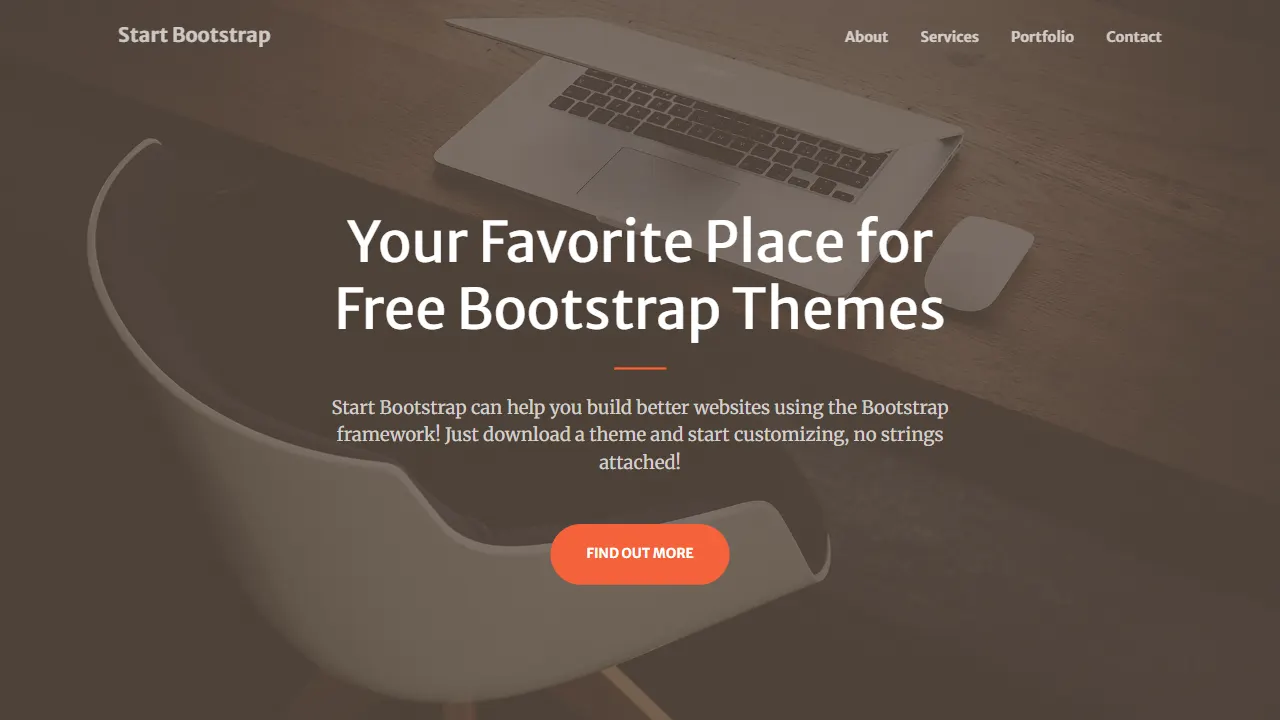
Creative
A single-page marketing template by Start Bootstrap for creative agencies and product services, built on Bootstrap with SCSS, featuring a portfolio grid and call-to-action sections. It includes pre-set SB Forms markers for form integration and npm build scripts for source customization.
HTML · Corporate Website
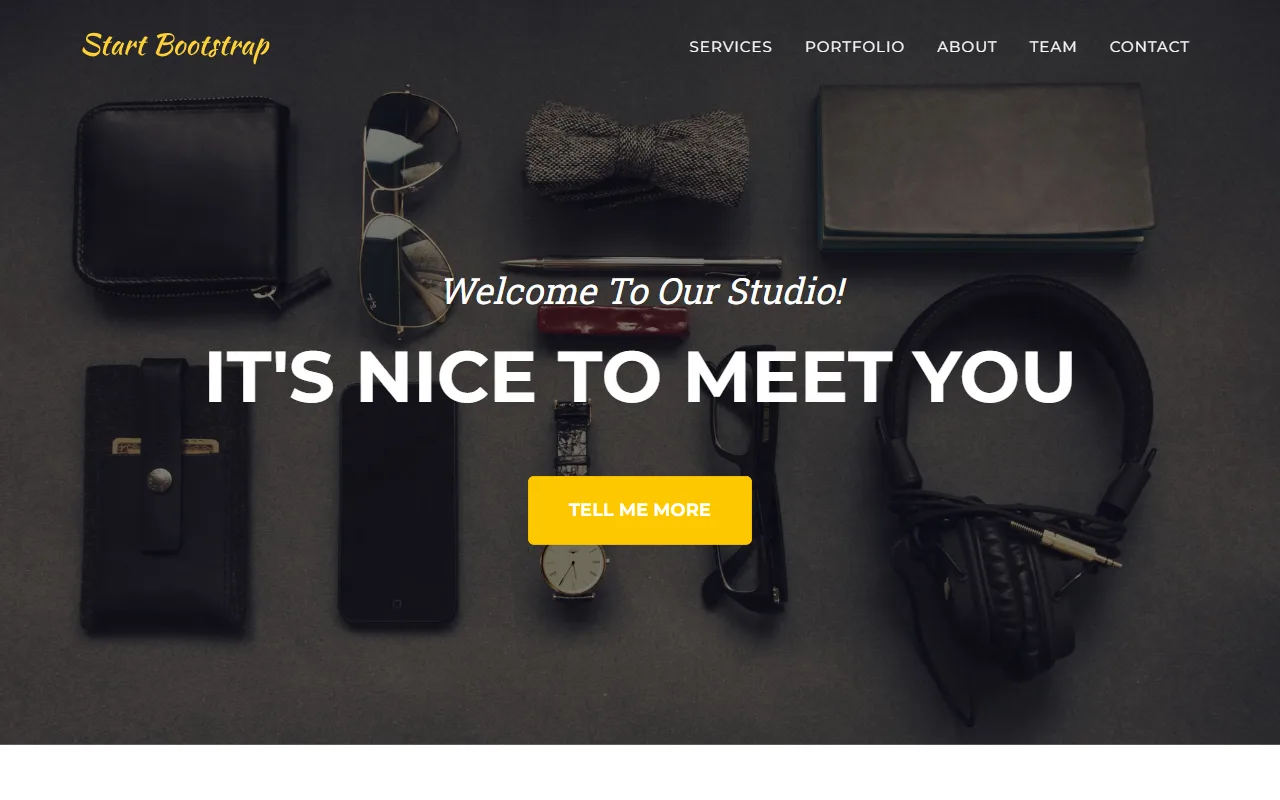
startbootstrap-agency
Agency is a one-page Bootstrap portfolio theme from Start Bootstrap, MIT licensed. It includes a responsive portfolio grid with modal details and a preconfigured SB Forms contact form that requires an API token.
HTML · Corporate Website
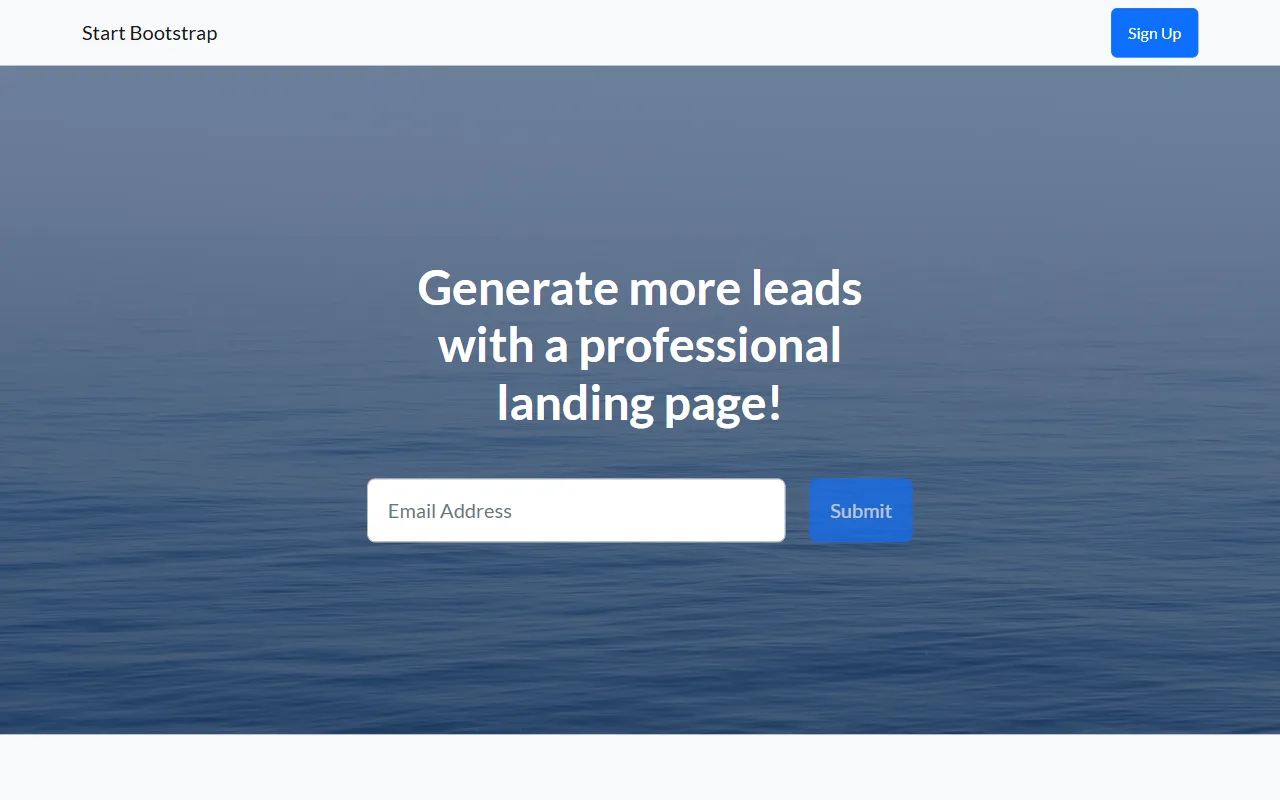
startbootstrap-landing-page
A general-purpose Bootstrap landing page template from Start Bootstrap, MIT licensed, with a Pug/SCSS/npm build pipeline.
HTML · Corporate Website
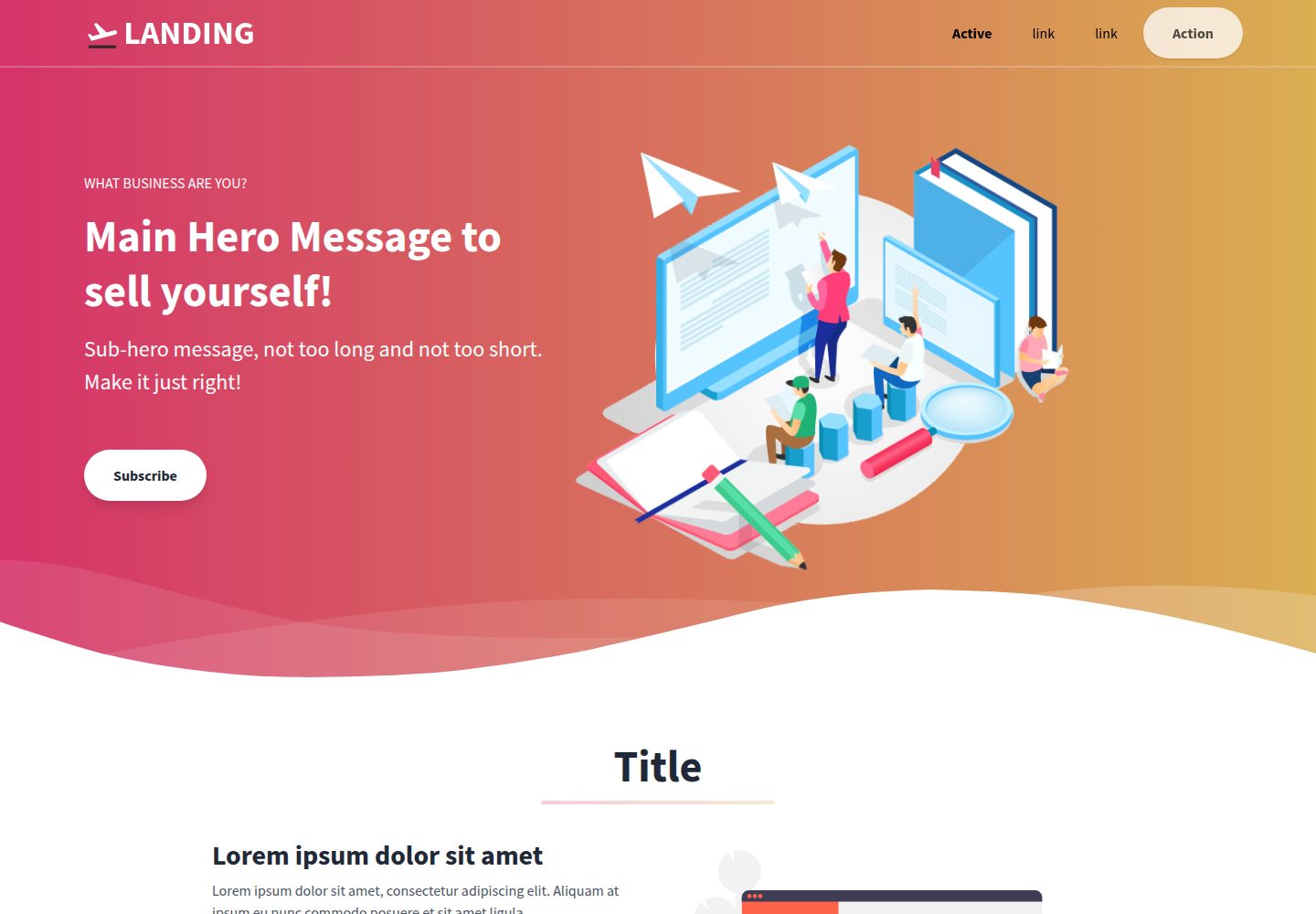
Landing-Page
A general-purpose landing page HTML template maintained by Tailwind Toolbox, written in pure HTML and loading the complete Tailwind CSS via CDN.
HTML · Corporate Website