Built with Next.js + React + TypeScript, styled with Tailwind CSS
Next.jsReactPortfolio
resume-website — Next.js Portfolio Template
By TamarRishe
A personal resume website template built with Next.js, React, TypeScript, and Tailwind CSS, with content centralized in a single data file for easy replacement and deployment.
Explore the design
Compare the page layouts and mobile experience. Open any screenshot for a closer look.
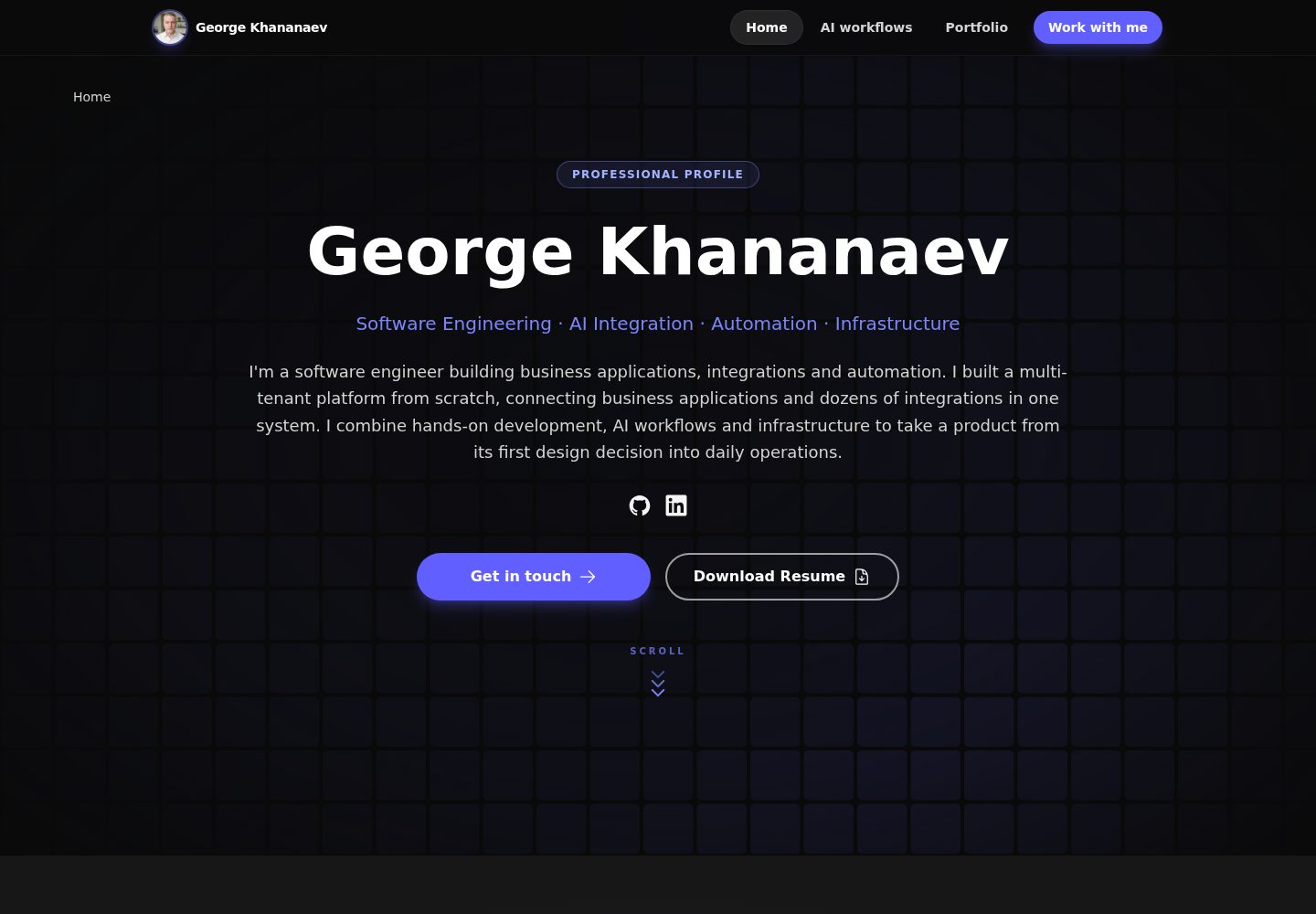
Desktop homepage1 / 3
Desktop captureTop of page
Actual screenshot captured by the server browser.
All pages & views 3
Screenshots show visual appearance; interactive behavior may differ.
Recorded 2026-10-02View source
What stands out
A quick read of the recorded project description.
Site content centralized in /src/data/data.tsx, with type definitions in dataDef.ts
Includes a matrix effect, a text typing effect, and a contact form
Contact form sends via EmailJS and validates with Google reCAPTCHA
README provides complete steps from installing dependencies to deploying on Netlify
Template Details
This is a personal resume website template written with the Next.js framework, React, and TypeScript, and styled with Tailwind CSS. Site content is driven by a single data file at /src/data/data.tsx, with corresponding type definitions in dataDef.ts. Sample images are placed in src/images/ and imported in the data file, so customization is completed by replacing personal information, experience, and images.
The template includes a matrix effect, a text typing effect, and a contact form. The contact form sends emails via EmailJS and validates with Google reCAPTCHA; you need to fill in EmailJS's serviceID, templateID, and publicKey, as well as the reCAPTCHA sitekey, in ContactForm.tsx. The README states that pages are server-side rendered and adapted for mobile, with Netlify given as a deployment example.
Before use, Node and Yarn must be installed locally; run yarn install to install dependencies and yarn dev to start the development environment. The repository uses the MIT license, allowing free use, modification, commercial use, and distribution of this version of the code, provided copyright and license notices are retained. Third-party assets such as demo images, fonts, and icons, as well as external services like domains and hosting, require separate verification of licensing and costs.
Next.jsReactPortfolio
Is it right for your project?
Use Cases
- Creating a personal resume or portfolio website
- As a starting point for learning and further development with Next.js + TypeScript + Tailwind
- Static personal sites that need a contact form
Suitable For
- Developers who want to maintain resume content with a single data file
- Front-end personnel familiar with or willing to use Node, Yarn, and Next.js
- Users who need a personal site template freely modifiable under the MIT license
Getting started & customization
Use these recorded setup notes alongside the repository instructions for your chosen version.
- 1
Node and Yarn must be installed locally, then run yarn install to install dependencies and yarn dev to start
- 2
Modify content in /src/data/data.tsx to update site information; place images in src/images/ and replace them at the original paths
- 3
The contact form requires filling in EmailJS's serviceID, templateID, and publicKey, as well as the reCAPTCHA sitekey, in ContactForm.tsx
- 4
Deployment is exemplified with Netlify, and the README provides the corresponding process
License & source material
Usage conditions & limitations
Free to use · keep license noticeThis listing covers the free version from a public repository under the MIT license; the free scope applies to this version's code and does not imply that external services or third-party assets are free.
Must comply with when using
- Free use, modification, commercial use, and distribution of this version's code are permitted.
- When distributing copies or substantial portions of the code, retain the original author's copyright notice and the full MIT license notice.
- The code is provided as-is; warranties and limitations of liability are governed by the original license and applicable law.
Additional costs & items to verify
- The contact form relies on third-party services EmailJS and Google reCAPTCHA; you must register accounts and obtain keys yourself, and it may be subject to their terms of service and free-tier limits.
- Using the contact form requires filling in EmailJS's serviceID, templateID, and publicKey, which are external service account requirements.
- Using the contact form requires filling in the Google reCAPTCHA sitekey, requiring registration for the reCAPTCHA service.
- The README uses Netlify as a deployment example; hosting is provided by a third party, and its free tier and terms may change, so you must verify them yourself.
- Demo images, fonts, icons, and other third-party assets must be checked against their respective licenses; they cannot be judged solely by the code's MIT license.
- External services such as domains, hosting, databases, payments, or AI may incur additional charges.
View Original Text Basis
Permission is hereby granted, free of charge
Original License Text
I added [EmailJS](https://www.emailjs.com/) contact form with [reCaptcha](https://www.google.com/recaptcha).
Original README
1. row 55: insert your serviceID, templateID, publicKey from EmailJS
Original README
2. row 119: insert your recaptcha sitekey from reCaptcha
Original README
https://github.com/TamarRishe/resume-website/blob/main/LICENSEhttps://github.com/TamarRishe/resume-website/blob/main/README.mddeploying your React based static website to **netlify** is simple and free
Original README
Compiled by DeepSeek based on repository license and README ·2026-10-02. Results only cover the materials read; dependencies, images, fonts, and subsequent term changes are subject to their respective original texts.
Project checks & description sources
Template Information
- Source platforms
- GitHub
- Documentation and maintenance reference score
- Partly documented · 70 / 100
- Technologies
- Next.js · React
- Website type
- Portfolio
How this score is calculated
Our heuristic uses license records (up to 30), a demo link (12), a preview (10), stars (15), recorded maintenance (15), description completeness (8), feature records (5) and classification data (5). It is not a code, security or performance test, or a Google score. A link does not establish tested functionality.
What to verify for this project
- Repository update recorded
- 2023-12-06
- Screenshot last checked
- 2026-10-02
A demo link is listed. Check it with your own content and viewport sizes; its presence does not confirm that forms, authentication or payments work.
The catalog identifies Next.js as the primary stack. Check the actual dependency manifest and lockfile for versions and hosting requirements. These notes use recorded metadata, not a code audit or a deployment test.
Use a selection guide →How this description was prepared
AI-assisted description based on catalog records and repository material. Repository authors are not automatically the reviewers of this description.
Automatically checked against source and license rules; no manual editorial review.
Inspect the recorded source material
SHA-256: 9edf3be719e19c80301153acb2642a74afc691bbd0064ac5aa6c37553ccdc3f7
2026-10-02T23:06:04.288Z
Source file / repository# React JS Resume Website Template  ## Perfect Google PageSpeed Insights Score  ## Description This is a React based personal resume website template. It based on Tim Baker's code, however I changed here multiple things and added matrix effect, contact form, text typing effect, and removed all annoying errors with latest react versions. Built with typescript on the Next.js framework, styled with Tailwind css, and populated with data from a single file, you can easily create, customize and host your own personal website in minutes. Even better, the site is fully mobile-optimized and server-side rendered to ensure fast loading and a clean UI on any device. Read on to learn how to make it your own. ## Make it Your Own! ### 1. Make sure you have what you need To build this website, you will need to have the latest stable versions of Node and Yarn downloaded and installed on your machine. If you don't already have them, you can get Node [here,](https://nodejs.org/en/download/) and Yarn [here.](https://yarnpkg.com/getting-started/install) ### 2. Fork and download this repo (and star if you like!) Next, find the `Fork` button in the top right of this page. This will allow you to make your own copy, for more info on forking repo's see [here.](https://docs.github.com/en/get-started/quickstart/fork-a-repo#forking-a-repository) After this, download to your development machine using the green `Code` button at the top of the repo page. ### 3. Install dependencies and run Once you have your own copy of this repo forked and downloaded, open the folder in your favorite terminal and run `yarn install` to install dependencies. Following this, run `yarn dev` to run the project. In your terminal you should be given the url of the running instance (usually http://localhost:3000 unless you have something else running). ### 4. Customize the data to make it your own All of the data for the site is driven via a file at `/src/data/data.tsx`. This is where you'll find the existing content, and updating the values here will be reflected on the site. If you have the site running as described above, you should see these changes reflected on save. The data types for all of these items are given in the same folder in the `dataDef.ts` file. Example images can be found at `src/images/` and are imported in the data file. To change, simply update these images using the same name and location, or add new images and update the imports. ### 5. Hook up contact form I added [EmailJS](https://www.emailjs.com/) contact form with [reCaptcha](https://www.google.com/recaptcha). to use the contact form simply edit the file ContactForm.tsx ``` 1. row 55: insert your serviceID, templateID, publicKey from EmailJS 2. row 119: insert your recaptcha sitekey from reCaptcha ``` ### 6. Make any other changes you like Of course, all of the code is there and nothing is hidden from you so if you would like to make any other styling/data changes, feel free! ### 7. Deploy to Netlify and enjoy your new Resume Website After editing the content, deploying your React based static website to **netlify** is simple and free. It takes nearly 2 minutes to push your forked repository to production. You can join [here.](https://www.netlify.com) **Congratulations!** [](https://app.netlify.com/sites/georgekhananaev/deploys)
Explore similar templates
Compare previews and descriptions within the same stack and category.
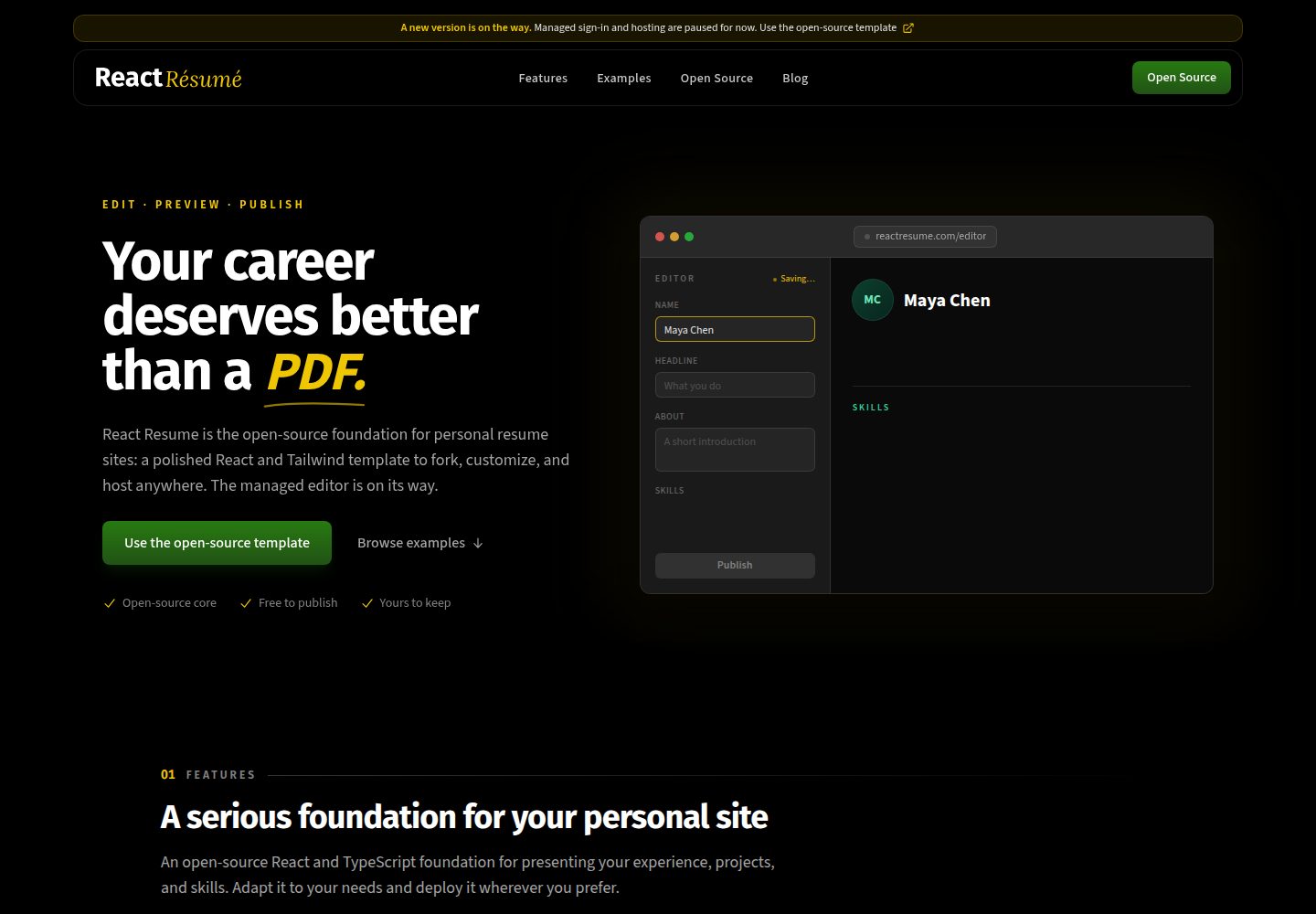
react-resume-template
A personal resume website template for software developers, built with Next.js, React, and TypeScript and styled with Tailwind CSS. Site content is driven by a single data file at /src/data/data.tsx, with types in dataDef.ts and images in src/images/.
Next.js · Portfolio
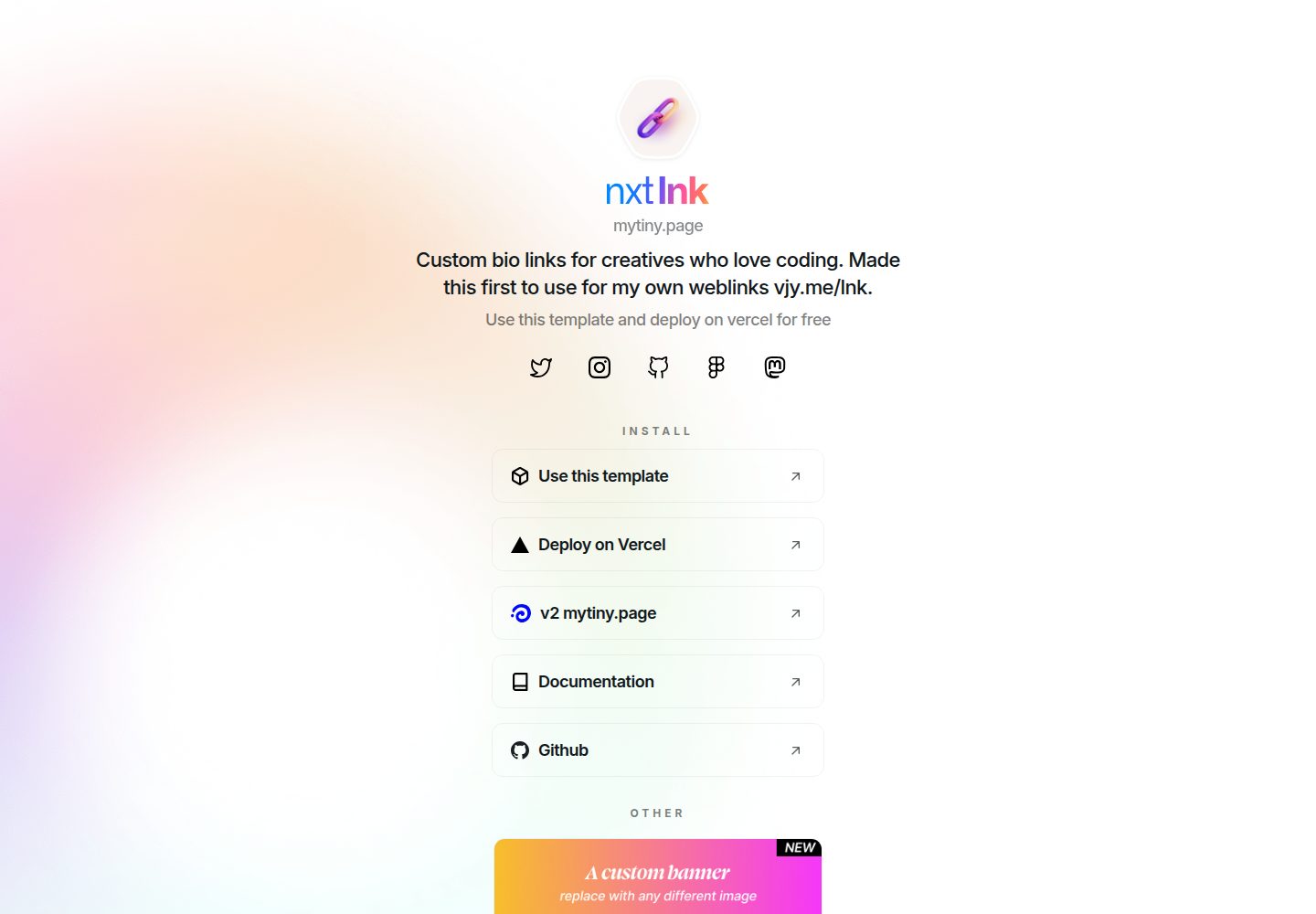
nxt-lnk
nxt-lnk is a Next.js-based bio link page template that manages personal information and links via BioData.js and LinksData.js, positioned as a self-hosted alternative to Linktree. It groups links by type, supports enabling/disabling individual links, and offers hexagonal or oval avatars.
Next.js · Portfolio
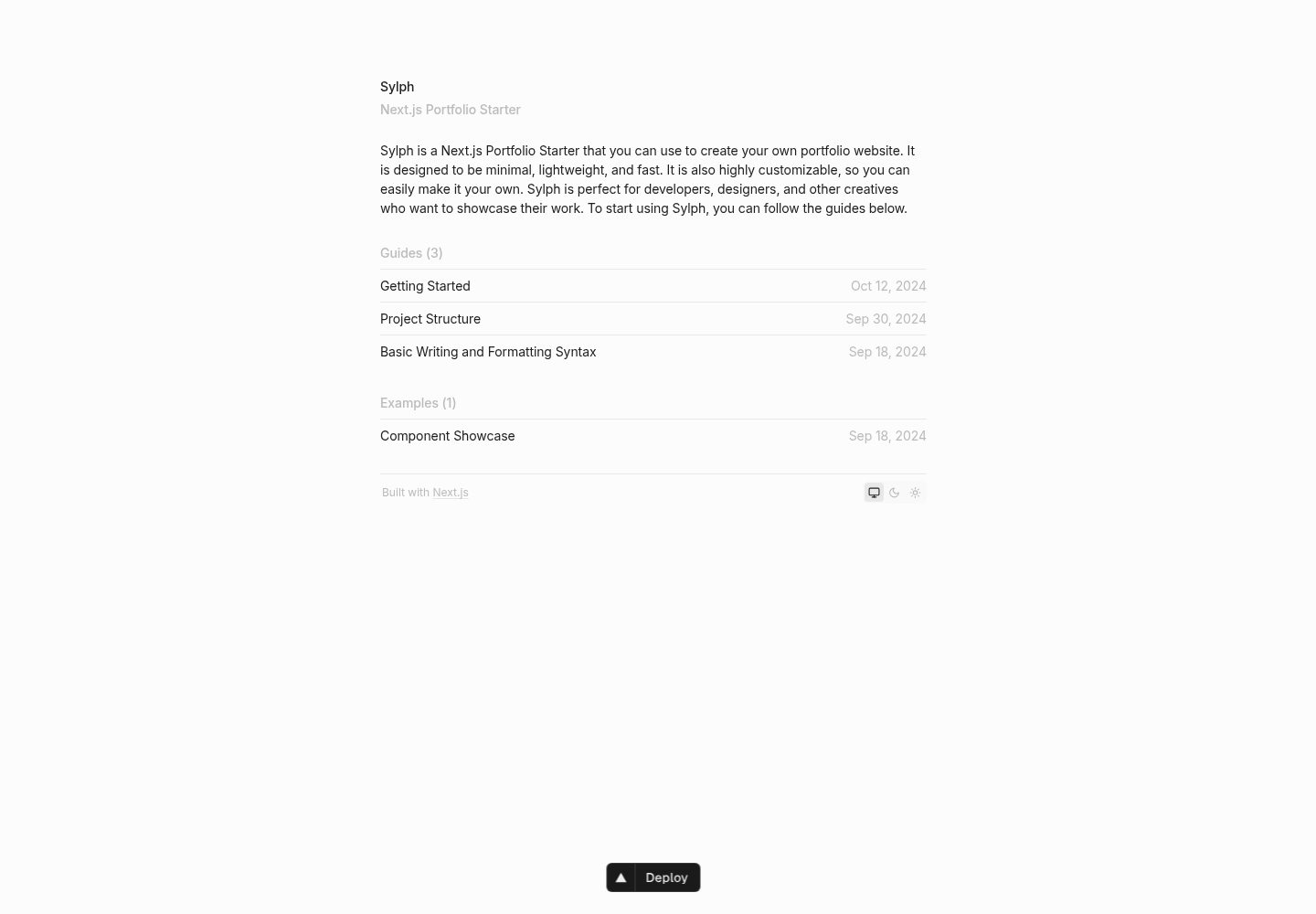
sylph
Sylph is a minimal portfolio and blog template built on Next.js, supporting MDX/Markdown writing, light/dark themes, and automatic OG image generation. It includes sitemap, robots.txt, metadata, and syntax highlighting, with automatic blog timestamps.
Next.js · Portfolio
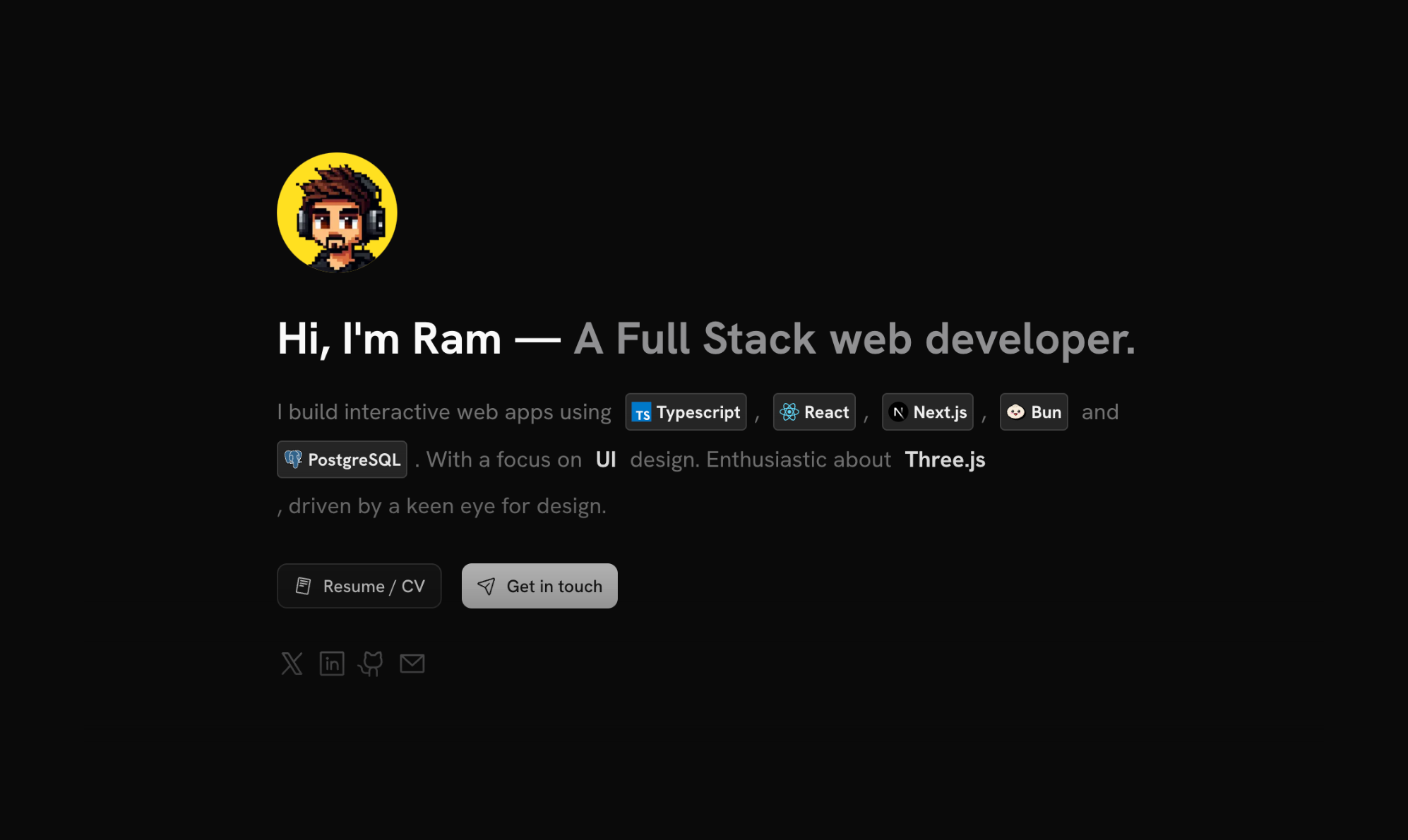
sleek-portfolio
A modern, responsive portfolio template built with Next.js 15, TypeScript, Tailwind CSS, and Shadcn UI. It includes an MDX blog, project showcase, work experience timeline, and a contact form that receives messages via Telegram Bot.
Next.js · Portfolio
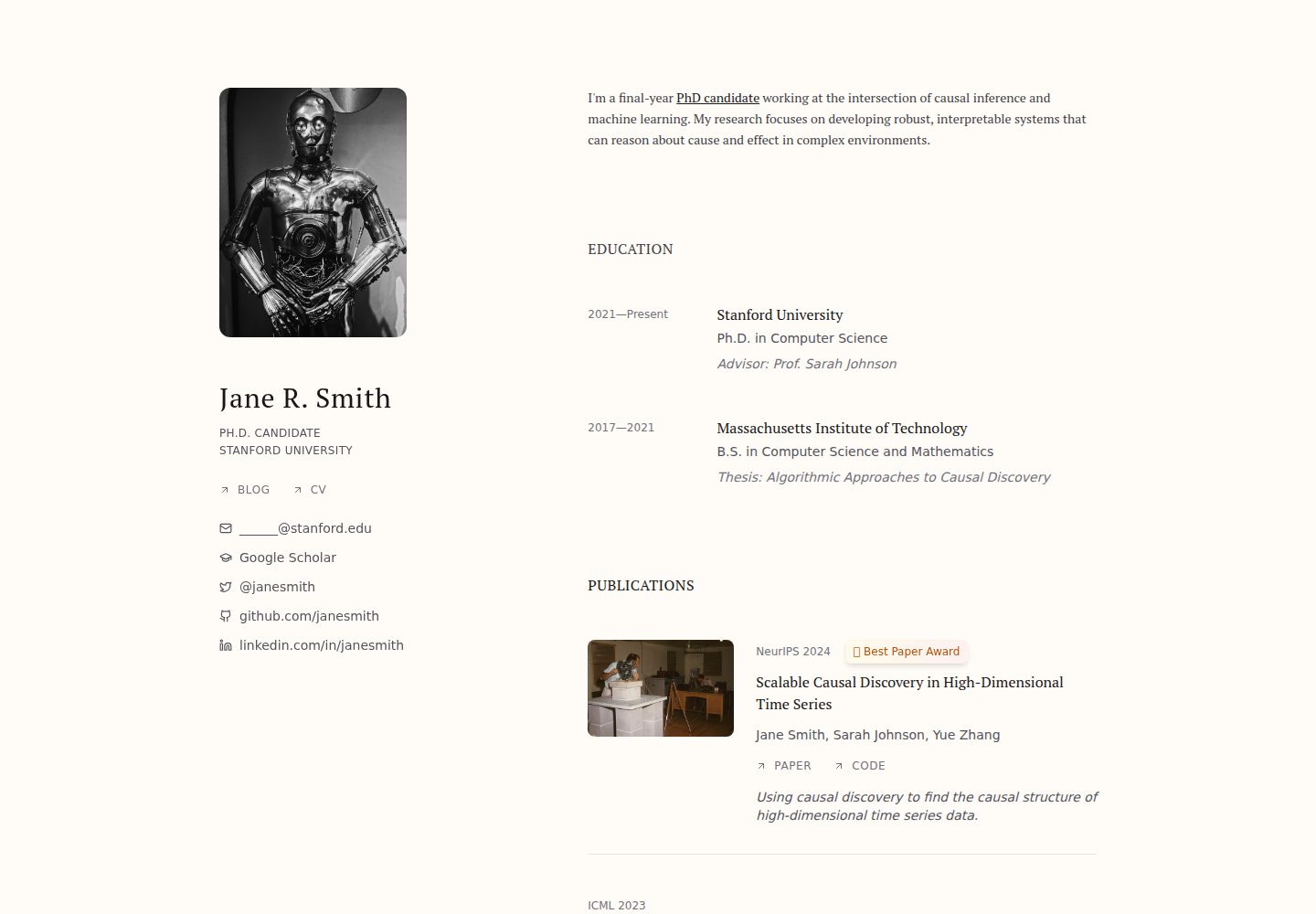
research-website-template
A React + Next.js template for research personal websites, aimed at PhD students and researchers. It centralizes publications, projects, and other content in src/data as arrays of objects, with optional fields automatically generating UI components.
Next.js · Portfolio
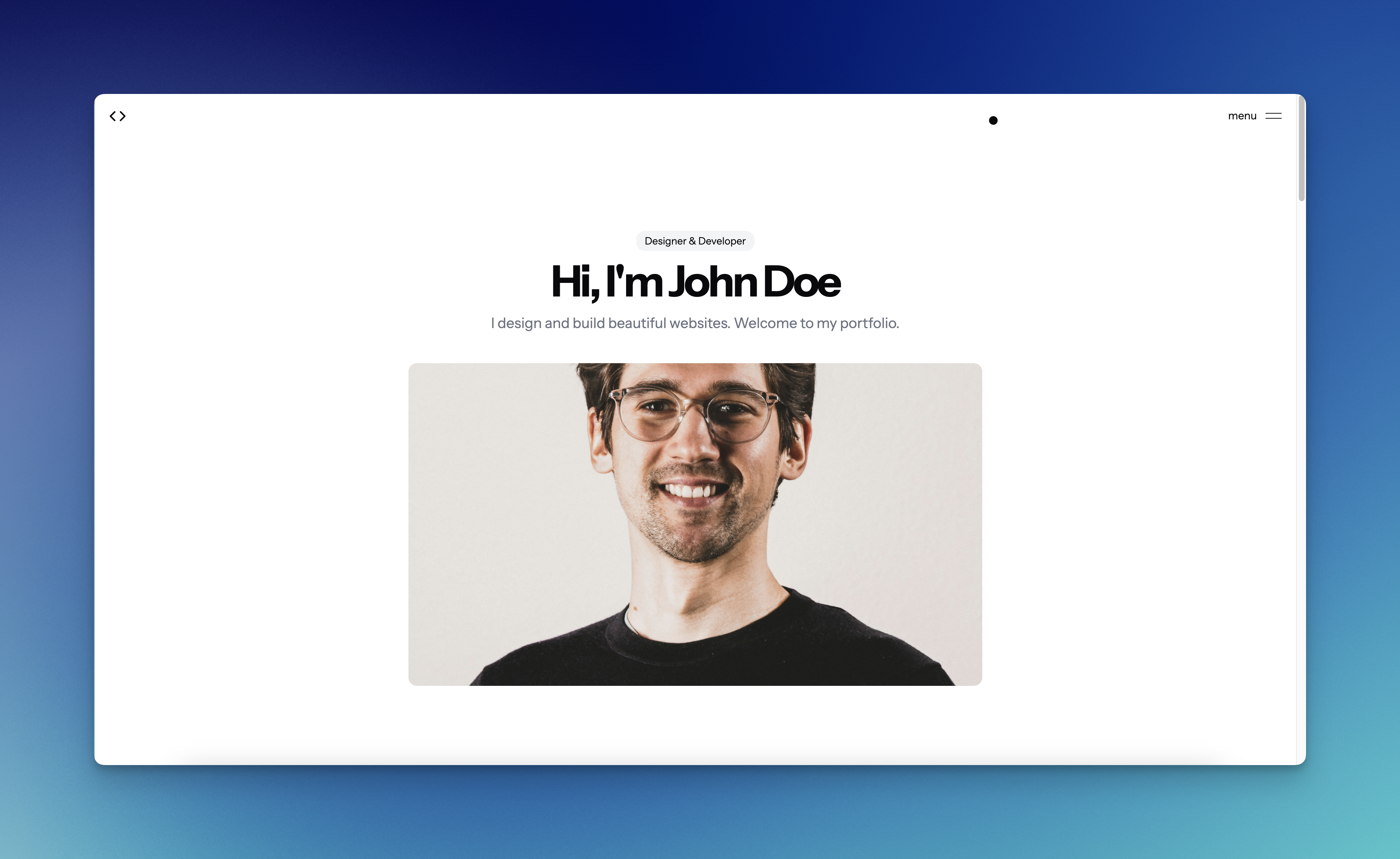
shadcn-portfolio
A developer portfolio template built with Next.js 15, shadcn/ui, Tailwind CSS, and Framer Motion, featuring an MDX blog, light and dark modes, responsive design, and SEO meta tags.
Next.js · Portfolio