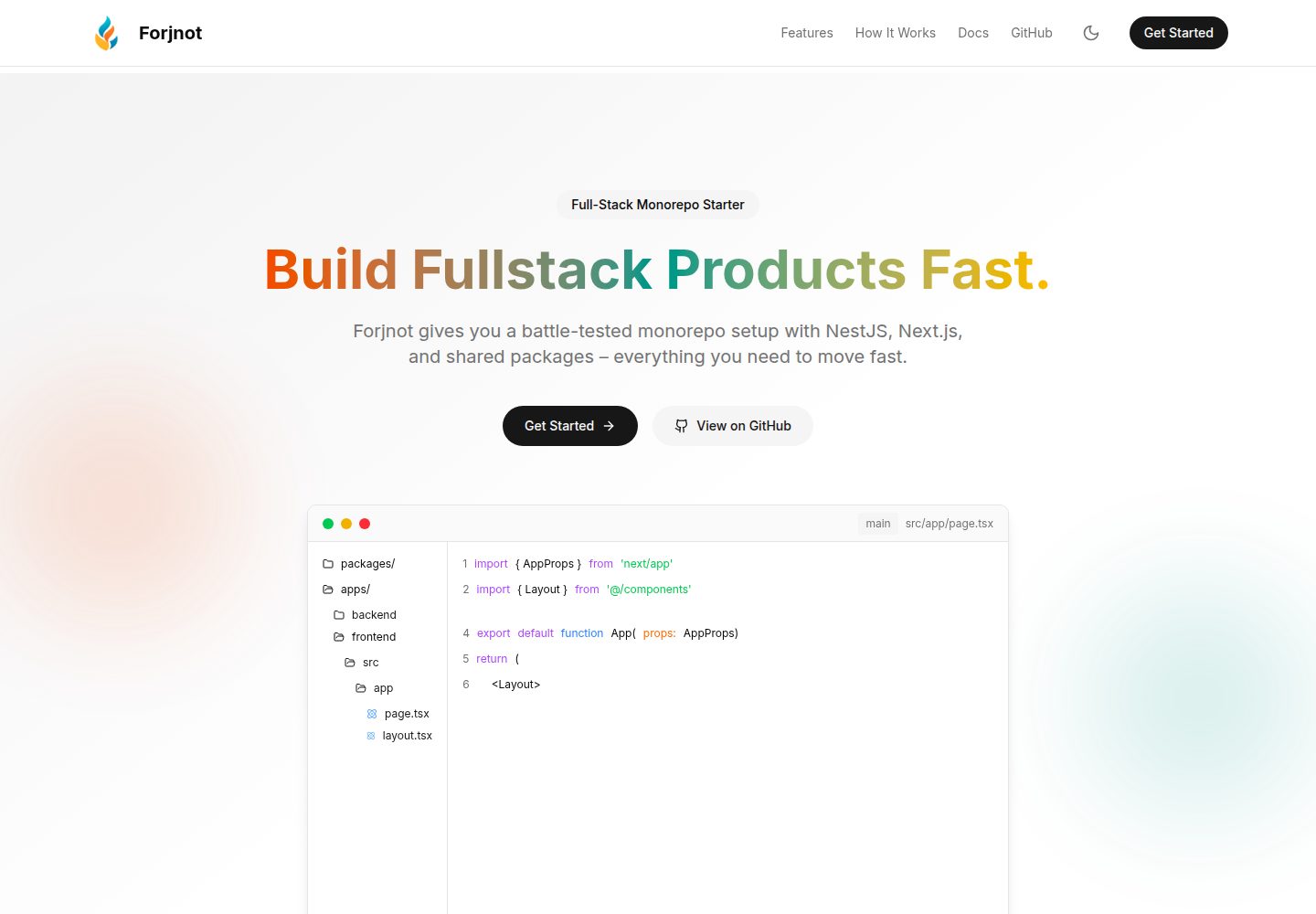
monorepo 结构:apps/ 下含 NestJS 后端与 Next.js 前端,packages/ 下含 shared-configs、shared-constants、shared-dtos、shared-env、shared-logger、shared-types、shared-utils 等共享包
Next.jsReact启动器
forjnot — Next.js 启动器模板
作者 aman-sharma-dev
Forjnot 是一个基于 pnpm workspace 与 TurboRepo 的 monorepo 起步模板,包含 NestJS 后端与 Next.js 前端,并提供共享配置、常量、DTO、环境、日志、类型与工具等 packages。
看看你的网站会是什么样
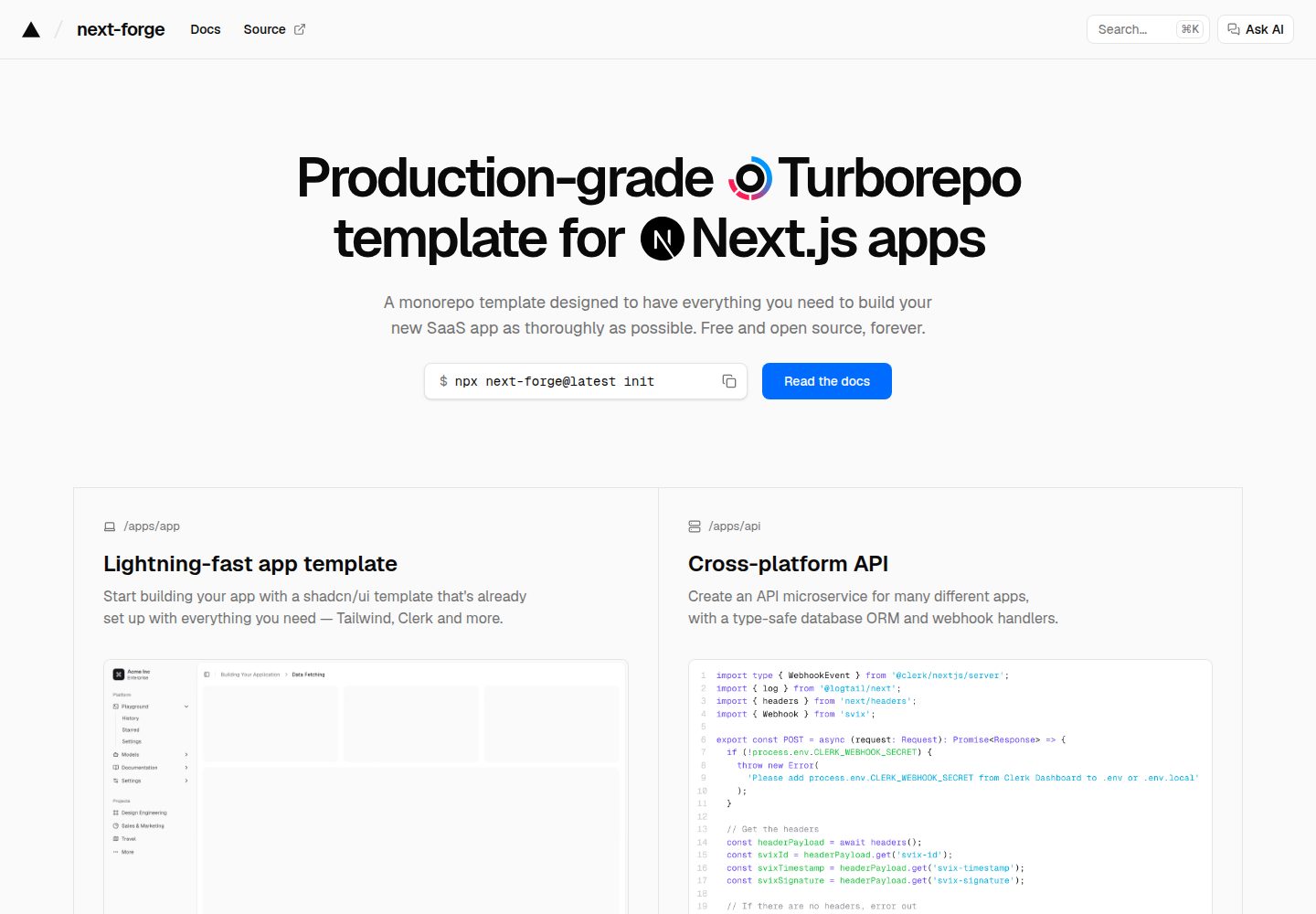
浏览真实页面截图,比较内容排版与手机效果。点击下方缩略图切换,放大查看整页细节。
全部页面与视图 2
截图用于了解视觉与布局,交互效果请以实际项目为准。
采集于 2026-10-14查看来源
值得关注的模板亮点
从已有项目资料中,快速了解它的特点。
使用 pnpm workspace 与 TurboRepo 管理 monorepo,根目录提供 pnpm-workspace.yaml 与 turbo.json
提供 pnpm run doctor 检查工作站缺失的工具、依赖与环境配置,并给出后续步骤
开发脚本包括 pnpm run client 启动前端、pnpm run server 启动后端、pnpm run build:all 构建全部服务
工具链包含 Biome 的 lint 与 format、Swagger 自动生成 API 文档、Makefile 任务管理,以及 pnpm check 执行与 CI 相同的 lint、test、build 校验
提供 docker-compose.yml 基础容器化配置,并采用 main 与 deployment 的双分支模板模型
模板详细介绍
Forjnot 的 README 将其定位为 monorepo 起步模板,用于搭建前后端分离的项目骨架。仓库结构分为 apps/ 与 packages/ 两部分:apps/backend 为 NestJS API,apps/frontend 为 Next.js 应用;packages/ 下包含 shared-configs、shared-constants、shared-dtos、shared-env、shared-logger、shared-types、shared-utils 等共享包,用于在多个应用与服务之间复用代码与配置。根目录提供 .editorconfig、.gitignore、.env.example、.nvmrc、biome.json、docker-compose.yml、Makefile、package.json、pnpm-workspace.yaml、tsconfig 与 turbo.json 等文件。
安装流程为:先运行 pnpm run doctor 检查工作站缺失的工具、依赖与环境配置,再执行 pnpm install;随后可用 pnpm run client 启动前端、pnpm run server 启动后端。构建与部署方面,README 说明可用 pnpm run build:all 构建全部服务,并在 docker-compose.yml 中提供了基础 Docker 配置。开发工具包括 Biome 的 lint 与 format、Swagger 自动生成的 API 文档、Makefile 任务管理,以及一条命令 pnpm check 执行与 CI 相同的 lint、test、build 校验。README 还提到双分支模板模型:在 main 上开发可复用代码,再同步到负责公开前端的 deployment 分支,细节指向 docs/BRANCH_STRATEGY.md。
README 未提供具体框架版本号、各共享包的实际实现细节、测试框架与测试覆盖情况、Docker 配置的具体内容,也未说明生产环境的部署要求与运维方式,这些方面需要查阅仓库文件本身。
Next.js启动器
适合你的项目吗?
适用场景
- 需要同时开发 NestJS 后端与 Next.js 前端,并希望两者共享类型、DTO、常量与配置的项目
- 希望以 monorepo 方式组织多个应用与共享包,并使用 TurboRepo 与 pnpm workspace 管理构建流程的团队
- 需要一套包含 lint、format、Swagger 文档与统一校验命令的初始工程规范
- 计划使用 Docker 进行容器化部署,并希望从基础 docker-compose 配置起步的项目
适合人群
- 熟悉 pnpm、TurboRepo 与 TypeScript,希望快速搭建前后端分离 monorepo 骨架的开发者
- 需要 NestJS 与 Next.js 组合,并希望复用共享类型、DTO、常量与配置的团队
- 希望采用 main 与 deployment 双分支模型管理模板代码与公开前端的项目维护者
上手与定制指南
结合仓库当前版本的说明,按下面的资料检查内容、配置与运行要求。
- 1
先运行 pnpm run doctor 检查工作站缺失的工具、依赖与环境配置,再执行 pnpm install 安装依赖
- 2
使用 pnpm run client 启动前端,使用 pnpm run server 启动后端
- 3
使用 pnpm run build:all 构建全部服务,或参考 docker-compose.yml 中的基础配置进行容器化部署
- 4
使用 pnpm run lint 与 pnpm run format 维护代码风格,使用 pnpm check 执行与 CI 相同的 lint、test、build 校验
- 5
双分支模型细节参见 docs/BRANCH_STRATEGY.md;README 未提供具体框架版本号与生产部署要求
授权与来源资料
使用条件与限制
免费使用 · 保留许可声明本次收录的是公开仓库中采用 MIT 许可的免费版本;免费范围为该版本代码,不代表外部服务或第三方素材免费。
使用时需要遵守
- 允许免费使用、修改、商用和分发该版本代码。
- 分发代码副本或实质性部分时,保留原作者版权声明和完整 MIT 许可声明。
- 代码按现状提供;担保与责任限制以原许可证及适用法律为准。
额外费用与待核对事项
- 演示图片、字体、图标及其他第三方素材需按各自许可核对,不能仅凭代码的 MIT 许可判断。
- 域名、托管、数据库、支付或 AI 等外部服务可能另外收费。
查看原文依据
https://github.com/aman-sharma-dev/forjnot/blob/main/LICENSEhttps://github.com/aman-sharma-dev/forjnot/blob/main/README.mdPermission is hereby granted, free of charge
许可证原文
DeepSeek 根据仓库许可证和 README 整理 ·2026-10-14。结果仅覆盖已读取资料,依赖、图片、字体及后续条款变更以各自原文为准。
项目核对记录与介绍依据
模板资料
- 来源平台
- GitHub
- 资料与维护参考分
- 资料较完整 · 83 / 100
- 技术栈
- Next.js · React
- 网站类型
- 启动器
这个分数如何计算
本站按许可资料(最高30分)、演示链接(12分)、预览图(10分)、Star数(15分)、记录的维护时间(15分)、描述完整度(8分)、功能记录(5分)和分类资料(5分)计算。它不是代码、安全或性能测试,也不是 Google 评分;有链接不代表已实测可用。
这个项目需要核对什么
- 记录的仓库更新时间
- 2026-08-27
- 截图检查日期
- 2026-10-14
已收录演示链接。请用你的内容与屏幕尺寸检查;有演示不代表表单、认证或支付已经可用。
目录记录的主要技术栈是 Next.js。请通过依赖清单和锁文件核对实际版本与托管要求。这些说明基于收录资料,不代表代码审计或部署实测。
查看具体选型方法 →介绍的制作与核对状态
介绍由 AI 辅助整理目录与仓库资料。仓库作者不等于这篇介绍的审核者。
审核声明: codex-user-requested-batch-review-20261015 · 2026-10-15
查看当时使用的来源资料
SHA-256: a9a0f53f4a10fb7ad6ade8d323f803541a2fe073ac0fb961d9c46f8b73e7bf12
2026-10-14T07:26:53.291Z
来源文件 / 仓库# Forjnot: Monorepo Starter for Scalable Projects ## Overview **Forjnot** is a high-performance monorepo starter template, designed to help developers quickly set up scalable, production-ready applications. It integrates **NestJS**, **Next.js**, and **TurboRepo** for a seamless experience in building real-world, microservice-based projects. --- ## Key Features * **Modular & Scalable Backend**: Utilize **NestJS** for building flexible, maintainable backend applications. * **Next.js with SSG**: Leverage **Next.js** for your frontend, with Static Site Generation (SSG) support out of the box. * **TurboRepo Integration**: Build fast, with optimal monorepo management and efficient CI/CD workflows. * **Shared Packages**: Easily manage reusable code and configurations across multiple apps and services within the monorepo. --- ## Why Choose Forjnot? Forjnot is tailored for serious development needs and offers: * A streamlined setup for rapid project initiation. * A clean, efficient architecture for both frontend and backend development. * A modular approach that allows for seamless scaling and microservice integration. * A configuration-free experience—no unnecessary bloat or overhead, just exactly what you need to get started. This is not a generic starter template. Forjnot is meticulously crafted for developers who seek clarity, precision, and real-world scalability. --- ## Project Structure The repository follows a monorepo structure for scalability and modularity. ``` apps/ ├── backend # NestJS API └── frontend # Next.js app packages/ ├── shared-configs/ # Shared configurations ├── shared-constants/ # Shared constants ├── shared-dtos/ # Shared DTOs ├── shared-env/ # Environment configuration ├── shared-logger/ # Shared logger ├── shared-types/ # Shared TypeScript types └── shared-utils/ # Shared utilities Root Files: .editorconfig .gitignore .env.example .nvmrc biome.json docker-compose.yml LICENSE Makefile package.json pnpm-workspace.yaml tsconfig.json / tsconfig.base.json turbo.json ``` --- ## Installation & Setup To get started with Forjnot, follow these steps: ### 0. Check your workstation ```bash pnpm run doctor ``` The doctor identifies missing tools, dependencies, environment configuration, and the active template variant, then gives exact next steps. ### 1. Install Dependencies ```bash pnpm install ``` ### 2. Run the Frontend ```bash pnpm run client ``` ### 3. Run the Backend ```bash pnpm run server ``` --- ## Build and Deployment Forjnot is ready for deployment and offers an initial Docker configuration. The following command builds all necessary services: ```bash pnpm run build:all ``` You can also use Docker for containerized deployment, with basic configurations provided in `docker-compose.yml`. --- ## Development Tools Forjnot is designed to maintain code quality and consistency: * **Linting & Formatting**: Ensure your code meets style standards. ```bash pnpm run lint pnpm run format ``` * **Swagger Docs**: Automatically generated documentation for APIs. * **Makefile**: Manage project tasks, including builds and testing. * **One-command validation**: Run the same lint, test, and build gate used by CI. ```bash pnpm check ``` * **Two-branch template model**: Develop reusable code on `main`, then sync it forward into `deployment`, which owns the public frontend. See [the branch strategy](docs/BRANCH_STRATEGY.md). --- ## Technologies Used * **NestJS**: Backend framework for building scalable and maintainable APIs. * **Next.js**: Frontend framework with support for Static Site Generation (SSG). * **TurboRepo**: Efficient monorepo management tool. * **pnpm**: Fast, disk space-efficient package manager. * **Swagger**: Swagger integration for auto-generated API documentation, simplifying the testing and exploration of your APIs. * **Makefile**: A Makefile is included for simplified task management, such as building, testing, and deployment processes. * **Biome**: Linting and formatting integration. * **Docker**: Basic containerization setup for easy deployment. --- ## License Forjnot is licensed under the MIT License. Feel free to use, modify, and distribute the project according to the terms of the license. --- ## Contribution Forjnot is an open-source project, and contributions are always welcome. You can contribute by: * Reporting bugs or issues * Submitting feature requests or improvements * Reviewing pull requests Forjnot is already a powerful tool, but it can always be improved. We encourage contributions that help enhance its functionality and usability. --- ## Final Thoughts Forjnot is designed to help developers build scalable applications quickly and efficiently, with a focus on performance and maintainability. It provides a clean, modular foundation for both backend and frontend development, eliminating unnecessary complexity. Feel free to use, modify, and extend Forjnot for your projects. Whether you're working on a new startup or a larger-scale enterprise application, Forjnot has you covered.
看看同类模板
对比同技术栈与用途的模板,找到更适合的视觉与内容结构。

ai-website-cloner-template
Clone any website with one command using AI coding agents
Next.js · 启动器
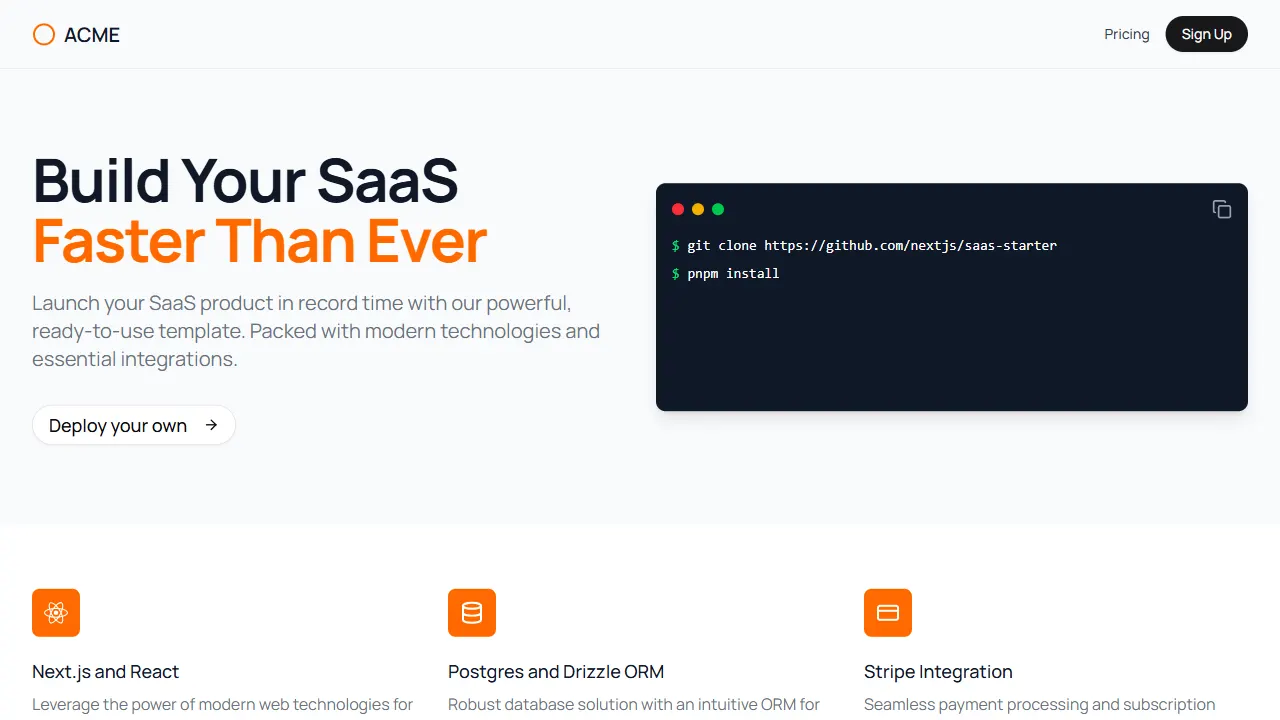
Next.js SaaS Starter
Next.js SaaS Starter 是 Next.js 官方维护的 SaaS 起点模板,定位介于学习资源和可直接部署的脚手架之间。
Next.js · SaaS
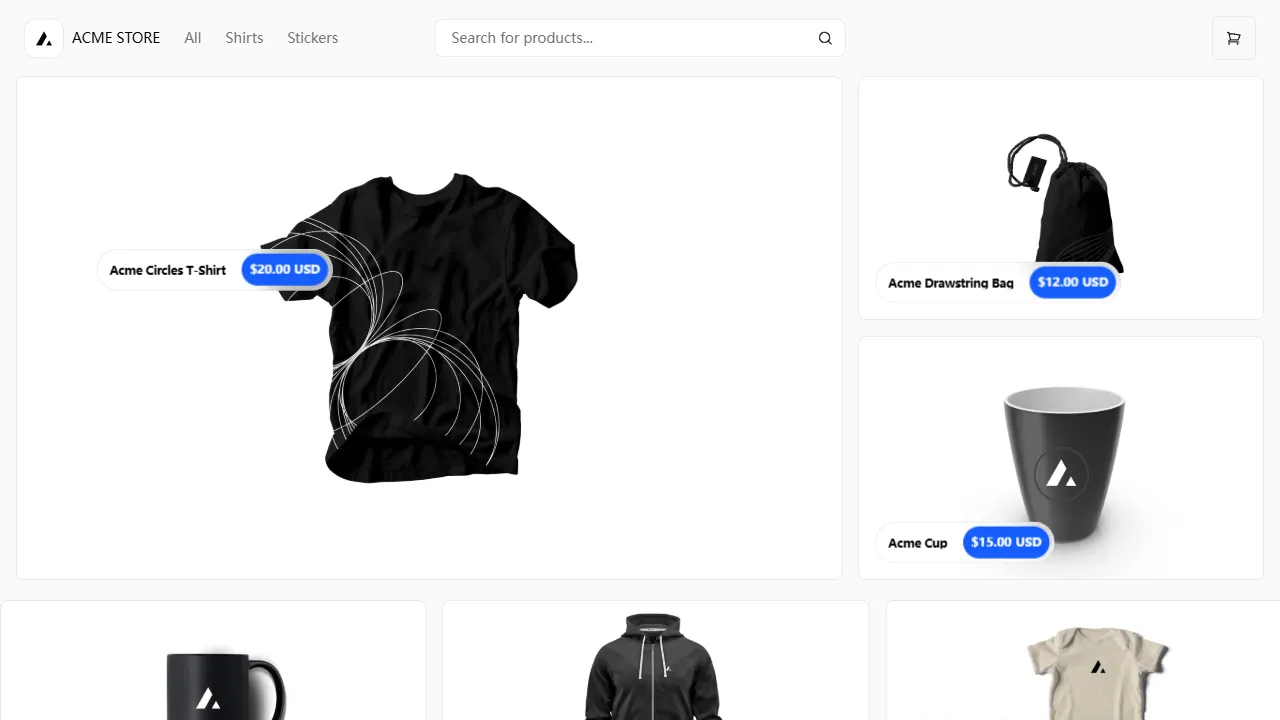
Next.js Commerce
Next.js Commerce 是 Vercel 团队维护的电商启动模板,基于 Next.js App Router 构建,采用服务端渲染、React Server Components、Server Actions …
Next.js · 电商
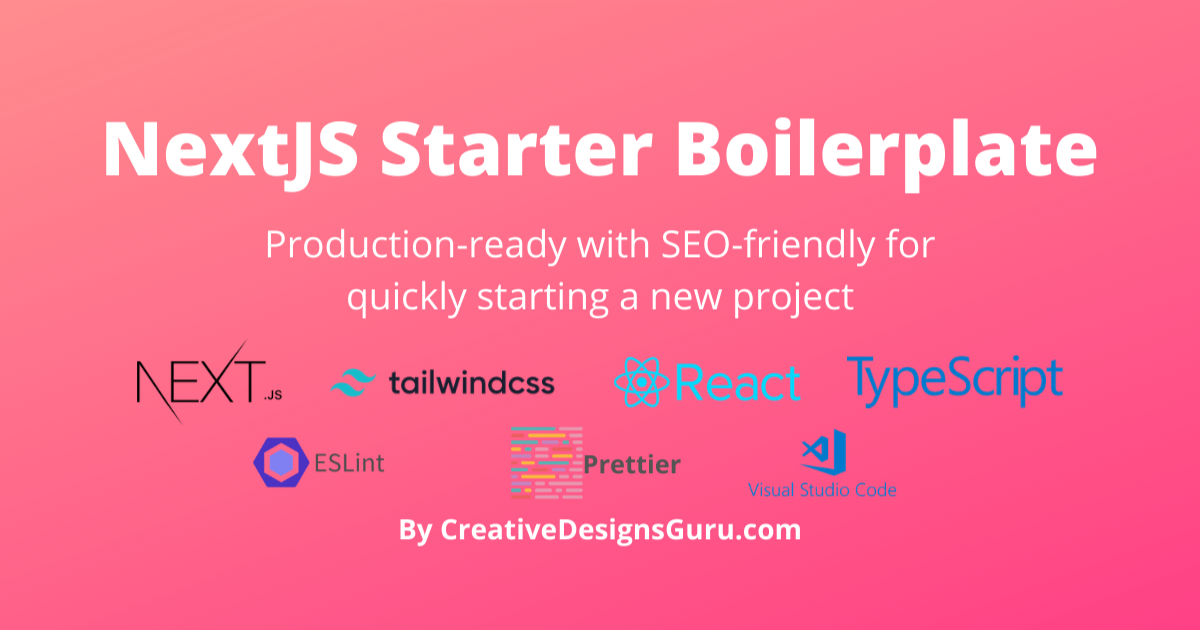
Next-js-Boilerplate
Next-js-Boilerplate 是一个面向 Next.js 16、Tailwind CSS 4 和 TypeScript 的启动器,核心定位是开发者体验优先。
Next.js · 启动器

tailwind-nextjs-starter-blog
tailwind-nextjs-starter-blog 是一个面向个人技术博客的 Next.js 与 Tailwind CSS 启动模板,其 v2 版本基于 App Router 与 React Server Comp…
Next.js · 博客
next-forge
Production-grade Turborepo template for Next.js apps.
Next.js · 启动器