Hugo 静态站点,内容以 Markdown 文件管理,文章位于 content/post 目录
Hugo作品集博客
srinidhi-github-blog — Hugo 作品集模板
作者 srinidhibhat45
基于 Hugo 的静态博客与作品集站点模板,采用 GitHub 风格界面,通过 Markdown 内容与 TOML 配置生成页面,支持置顶文章、摘要截断、LaTeX 公式与最后修改时间。
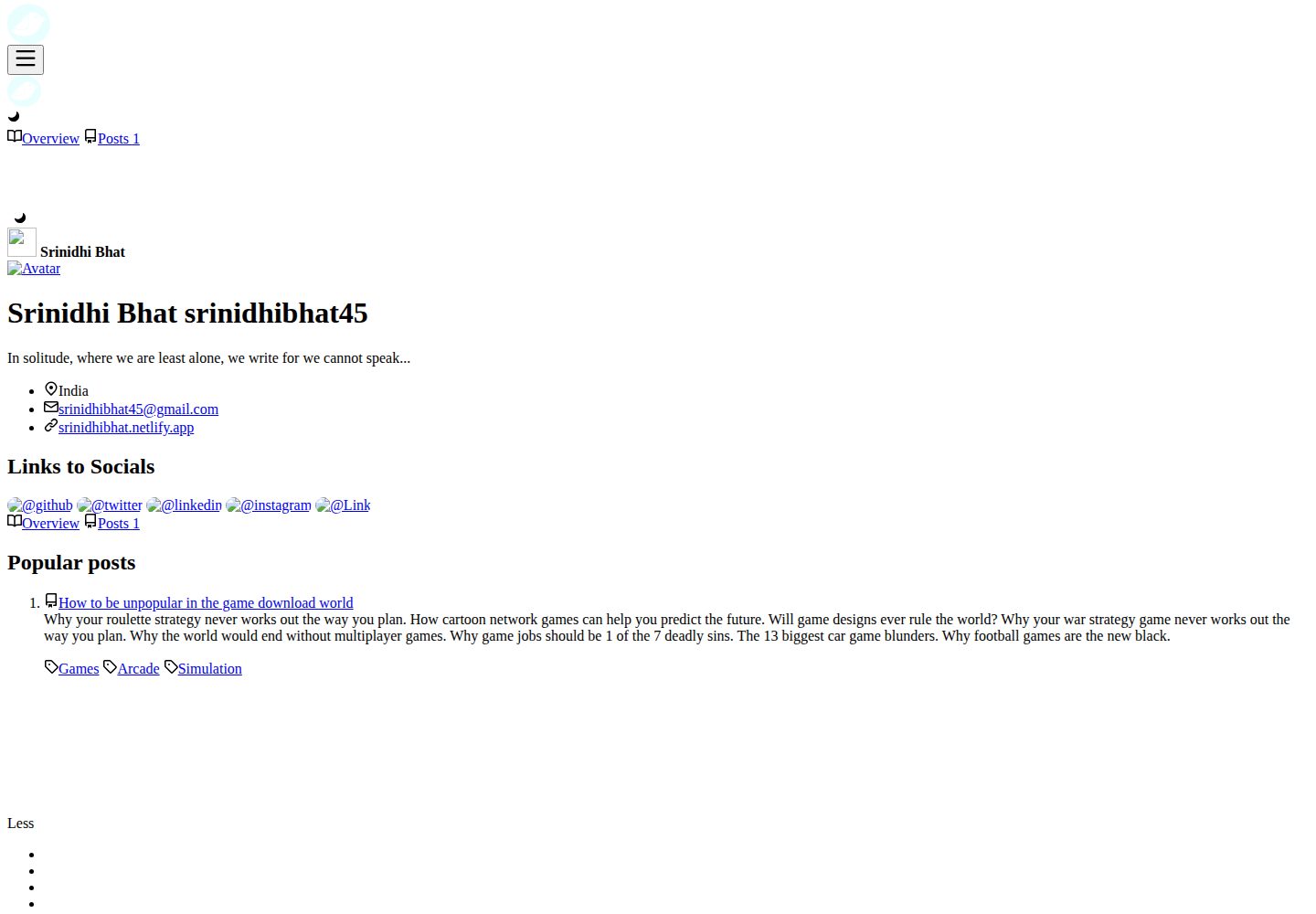
看看你的网站会是什么样
浏览真实页面截图,比较内容排版与手机效果。点击下方缩略图切换,放大查看整页细节。
全部页面与视图 2
截图用于了解视觉与布局,交互效果请以实际项目为准。
采集于 2026-10-03查看来源
值得关注的模板亮点
从已有项目资料中,快速了解它的特点。
GitHub 风格界面,首页支持放置 readme.md 作为站点介绍
front matter 中设置 pin: true 可置顶文章
支持 summary 字段或 <!--more--> 两种摘要截断方式
front matter 开启 math 后由 KaTeX 渲染行内与块级公式
config.toml 可配置作者、社交账号、自定义链接、RSS 与 favicon
模板详细介绍
这是一个 Hugo 静态站点模板,仓库名为 srinidhi-github-blog,README 说明其主题为 github-style。站点内容以 Markdown 文件组织,文章放在 content/post 目录下,通过 hugo new post/标题.md 创建;Hugo 默认生成 draft: true 的草稿,需改为 false 才会在站点中显示。首页可放置一个 readme.md 作为个人介绍或站点说明。
模板提供若干内容控制能力:在 front matter 中设置 pin: true 可置顶文章;用 summary 字段或 <!--more--> 标记控制列表页展示的摘要范围,两者区别在于 summary 不会出现在正文中。在 config.toml 中开启 lastmod 并配置 frontmatter 后,可显示文章最后修改时间。文章 front matter 中加入 math: true(README 示例写作 katex: math)后,KaTeX 会自动渲染 \( ... \) 行内公式与 $$ ... $$ 块级公式。
配置集中在 config.toml,可设置站点标题、作者、描述、社交账号(GitHub、Facebook、Twitter、LinkedIn、Instagram、Tumblr、邮箱)、关键词、RSS、favicon、位置信息以及自定义链接列表。README 还给出一个 deploy.sh 示例,通过 git worktree 将构建产物发布到 gh-pages 分支,并建议在生产构建时设置 HUGO_ENV=production 以启用 Google Analytics。
该仓库采用 MIT 许可,可免费使用、修改、商用和分发代码,但需保留版权与许可声明;演示图片、字体、图标等第三方素材以及域名、托管等外部服务需另行核对许可与费用。仓库 stars 为 0,更新时间为 2021 年,README 主要基于上游 github-style 主题的说明,未提供关于可访问性、浏览器兼容性或长期维护状态的额外信息。
Hugo作品集博客
适合你的项目吗?
适用场景
- 搭建个人技术博客并发布 Markdown 文章
- 制作带有个人介绍首页的作品集或简历型站点
- 需要置顶重点文章或控制列表页摘要展示的博客
- 撰写包含数学公式的技术笔记或学习记录
适合人群
- 熟悉或愿意学习 Hugo 与 Markdown 的个人开发者
- 需要静态博客、可托管在 GitHub Pages 或 Netlify 的用户
- 偏好 GitHub 视觉风格界面的写作者
- 希望以 MIT 许可自由修改和分发代码的使用者
上手与定制指南
结合仓库当前版本的说明,按下面的资料检查内容、配置与运行要求。
- 1
先执行 hugo new site mysite 创建站点,再以 git submodule 方式将主题加入 themes/github-style
- 2
若从旧版本升级,需将 content/posts 重命名为 content/post
- 3
新建文章默认 draft: true,需改为 false 才会显示
- 4
在 config.toml 中填写 baseURL、title、author 及社交账号等参数
- 5
README 提供 deploy.sh 示例,通过 git worktree 发布到 gh-pages 分支;生产构建建议设置 HUGO_ENV=production
授权与来源资料
使用条件与限制
免费使用 · 保留许可声明本次收录的是公开仓库中采用 MIT 许可的免费版本;免费范围为该版本代码,不代表外部服务或第三方素材免费。
使用时需要遵守
- 允许免费使用、修改、商用和分发该版本代码。
- 分发代码副本或实质性部分时,保留原作者版权声明和完整 MIT 许可声明。
- 代码按现状提供;担保与责任限制以原许可证及适用法律为准。
额外费用与待核对事项
- 启用 Google Analytics 需自行申请账号并填写跟踪 ID,属于外部服务,可能涉及隐私与合规要求。
- 部署示例依赖 Hugo 命令行工具与 git worktree 发布到 gh-pages 分支,需自行准备构建与托管环境。
- 主题以 git submodule 方式从上游仓库引入,使用与更新需访问该外部 GitHub 仓库。
- 演示图片、字体、图标及其他第三方素材需按各自许可核对,不能仅凭代码的 MIT 许可判断。
- 域名、托管、数据库、支付或 AI 等外部服务可能另外收费。
查看原文依据
Permission is hereby granted, free of charge
许可证原文
googleAnalytics = "UA-123456-789"
README 原文
env HUGO_ENV="production" hugo -t github-style
README 原文
https://github.com/srinidhibhat45/srinidhi-github-blog/blob/main/LICENSEhttps://github.com/srinidhibhat45/srinidhi-github-blog/blob/main/README.mdgit submodule add [email protected]:MeiK2333/github-style.git themes/github-style
README 原文
DeepSeek 根据仓库许可证和 README 整理 ·2026-10-03。结果仅覆盖已读取资料,依赖、图片、字体及后续条款变更以各自原文为准。
项目核对记录与介绍依据
模板资料
- 来源平台
- GitHub
- 资料与维护参考分
- 资料一般 · 70 / 100
- 技术栈
- Hugo
- 网站类型
- 作品集 · 博客
这个分数如何计算
本站按许可资料(最高30分)、演示链接(12分)、预览图(10分)、Star数(15分)、记录的维护时间(15分)、描述完整度(8分)、功能记录(5分)和分类资料(5分)计算。它不是代码、安全或性能测试,也不是 Google 评分;有链接不代表已实测可用。
这个项目需要核对什么
- 记录的仓库更新时间
- 2021-04-15
- 截图检查日期
- 2026-10-03
已收录演示链接。请用你的内容与屏幕尺寸检查;有演示不代表表单、认证或支付已经可用。
目录记录的主要技术栈是 Hugo。请通过依赖清单和锁文件核对实际版本与托管要求。这些说明基于收录资料,不代表代码审计或部署实测。
查看具体选型方法 →介绍的制作与核对状态
介绍由 AI 辅助整理目录与仓库资料。仓库作者不等于这篇介绍的审核者。
审核声明: [email protected] · 2026-10-04
查看当时使用的来源资料
SHA-256: 77b2f5808f623d2fbb39014550615d3b7960ab747f2b495f5558dc859896fd99
2026-10-03T22:38:37.161Z
来源文件 / 仓库# github-style ## Init hugo site ```bash hugo new site mysite cd mysite ``` ## Install the theme ```bash git submodule add [email protected]:MeiK2333/github-style.git themes/github-style ``` ## Update the theme If you just installed the theme, it is already in the latest version. If not, you can update using the below commands ```bash cd themes/github-style git pull ``` Then, you need to rename the previous `posts` folder to `post` ```bash cd <you-project-folder> mv content/posts content/post ``` ## Setup readme ```bash hugo new readme.md echo '`Hello World!`' > content/readme.md ``` ## Pin post ``` --- pin: true --- ``` ## Add new post Hugo will create a post with `draft: true`, change it to false in order for it to show in the website. ``` hugo new post/title_of_the_post.md ``` ## Limit display content ### Approch 1: use summary ``` --- title: "title" date: 2019-10-22T18:46:47+08:00 draft: false summary: "The summary content" --- ``` ### Approch 2: use `<!--more-->` Use `<!--more-->` to seperate content that will display in the posts page as abstraction and the rest of the content. This is different from summary, as summary will not appear in the post. ``` --- title: "title" date: 2019-10-22T18:46:47+08:00 draft: false --- abstraction show in the post page <!--more--> other content ``` ## add last modified data add to `config.toml` ```toml lastmod = true [frontmatter] lastmod = ["lastmod", ":fileModTime", ":default"] ``` ## Support LaTex In you post add `math: true` to [front matter](https://gohugo.io/content-management/front-matter/) ``` --- katex: math --- ``` Then the [katex script](https://katex.org/docs/autorender.html) will auto render the string enclosed be delimiters. ``` # replace ... with latex formula display inline \\( ... \\) display block $$ ... $$ ```  ## config.toml example ```toml baseURL = "https://meik2333.com/" languageCode = "zh-cn" title = "MeiK's blog" theme = "github-style" googleAnalytics = "UA-123456-789" pygmentsCodeFences = true pygmentsUseClasses = true [params] author = "MeiK" description = "In solitude, where we are least alone." github = "MeiK2333" facebook = "MeiK2333" twitter = "MeiK2333" linkedin = "MeiK2333" instagram = "MeiK2333" tumblr = "MeiK2333" email = "[email protected]" url = "https://meik2333.com" keywords = "blog, google analytics" rss = true lastmod = true favicon = "/images/github.png" location = "China" [[params.links]] title = "Link" href = "https://github.com/meik2333" [[params.links]] title = "Link2" href = "https://meik2333.com" icon = "https://meik2333.com/images/avatar.png" [frontmatter] lastmod = ["lastmod", ":fileModTime", ":default"] ``` ## deploy.sh example There are various way to deploy to github, here is a link to official [document](https://gohugo.io/hosting-and-deployment/hosting-on-github/). Here is an sample. Note line 22 have `env HUGO_ENV="production"`, makes sure googleAnalysis is loaded during production, but is not loaded when we are testing it in localhost. ```bash #!/bin/sh if [ "`git status -s`" ] then echo "The working directory is dirty. Please commit any pending changes." exit 1; fi echo "Deleting old publication" rm -rf public mkdir public git worktree prune rm -rf .git/worktrees/public/ echo "Checking out gh-pages branch into public" git worktree add -B gh-pages public origin/gh-pages echo "Removing existing files" rm -rf public/* echo "Generating site" env HUGO_ENV="production" hugo -t github-style echo "Updating gh-pages branch" cd public && git add --all && git commit -m "Publishing to gh-pages (publish.sh)" #echo "Pushing to github" #git push --all ``` Then you can verify the site is working and use `git push --all` to push the change to github. If you don't want to check again every time, you can uncomment the `#git push --all` in the script.
看看同类模板
对比同技术栈与用途的模板,找到更适合的视觉与内容结构。

hugo-PaperMod
PaperMod 是 Hugo 生态里知名度较高的主题之一,定位很明确:给博客和轻量作品集站点提供一套干净、响应式的阅读界面。
Hugo · 作品集

LoveIt
❤️A clean, elegant but advanced blog theme for Hugo 一个简洁、优雅且高效的 Hugo 主题
Hugo · 博客

hugo-coder
A minimalist blog theme for hugo.
Hugo · 博客

blowfish
Personal Website & Blog Theme for Hugo
Hugo · 博客

hugo-paper
🪺 A simple, clean, customizable Hugo theme
Hugo · 博客

hextra
Hextra 是一个 Hugo 主题,定位在文档站与博客之间:既提供侧边栏导航、目录、面包屑、分页这类文档站结构,也能承载博客内容。
Hugo · 文档