使用 MaterializeCSS 实现 Material Design 风格的博客界面
Jekyll博客
materialize-jekyll — Jekyll 博客模板
作者 victorpre
基于 MaterializeCSS 的 Jekyll 博客主题,采用 Material Design 视觉风格,以 Gem 或 remote_theme 方式引入。
看看你的网站会是什么样
浏览真实页面截图,比较内容排版与手机效果。点击下方缩略图切换,放大查看整页细节。
全部页面与视图 3
截图用于了解视觉与布局,交互效果请以实际项目为准。
采集于 2026-10-02查看来源
值得关注的模板亮点
从已有项目资料中,快速了解它的特点。
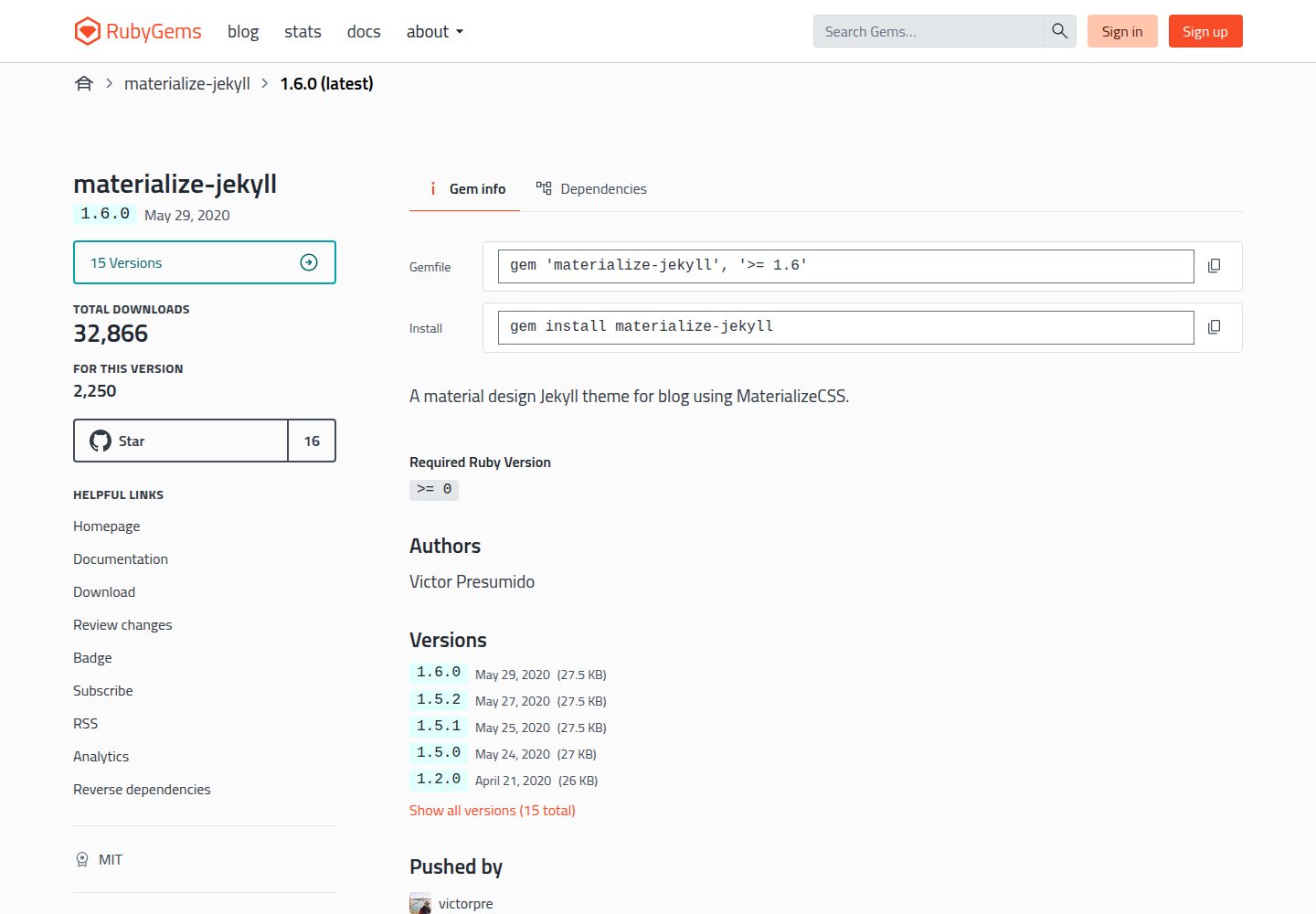
以 Ruby Gem 发布,可通过 Gemfile 或 gem install 安装
支持 GitHub Pages 的 remote_theme 方式引用
提供 default、home、post 三个主要布局与多个可复用片段
样式与主色可在 _sass 和 assets/css/main.scss 中调整
采用 MIT 许可,允许修改、商用与分发
模板详细介绍
materialize-jekyll 是一个 Jekyll 博客主题,把 MaterializeCSS 的 Material Design 组件应用到 Jekyll 站点上。主题以 Ruby Gem 形式发布,可通过 Gemfile 添加 gem "materialize-jekyll" 并在 _config.yml 中设置 theme,也可用 gem install 单独安装;在 GitHub Pages 上可通过 remote_theme: victorpre/materialize-jekyll 引用。
主题提供 default、home、post 三个主要布局:default 是页面骨架,负责引入 header、footer 与静态资源;home 用于首页展示博客文章列表;post 用于渲染单篇文章。_includes 目录下包含 author、comments、date、footer、header、navbar、share 等片段,供布局调用。样式分布在 _sass 与 assets/css/main.scss,主色在 _sass/variables.scss 中调整,JavaScript 逻辑位于 assets/js/init.js。文章以 Markdown 文件放入 _posts 目录。
仓库资料未说明主题的具体功能细节、浏览器兼容性或维护状态,README 中提到的演示站点为作者个人博客。主题采用 MIT 许可,可免费使用、修改、商用和分发,但演示图片、字体、图标等第三方素材需单独核对许可。
Jekyll博客
适合你的项目吗?
适用场景
- 搭建以文章列表和详情页为主的个人博客
- 在 GitHub Pages 上使用 remote_theme 快速套用主题
- 基于现有布局和 Sass 变量定制配色与页面结构
- 作为学习 Jekyll 布局、include 与 Sass 组织方式的参考项目
适合人群
- 使用 Jekyll 构建静态博客的开发者
- 希望采用 Material Design 视觉风格的站点作者
- 需要在 GitHub Pages 上引用远程主题的用户
- 愿意通过 Sass 与 HTML 片段自行调整主题的人
上手与定制指南
结合仓库当前版本的说明,按下面的资料检查内容、配置与运行要求。
- 1
在 Jekyll 站点的 Gemfile 中添加 gem "materialize-jekyll",并在 _config.yml 中设置 theme: materialize-jekyll,然后执行 bundle。
- 2
也可直接运行 gem install materialize-jekyll 安装。
- 3
GitHub Pages 场景可在 _config.yml 中写入 remote_theme: victorpre/materialize-jekyll。
- 4
本地开发运行 bundle install 后执行 bundle exec jekyll serve,访问 http://localhost:4000 预览。
- 5
文章 Markdown 文件放入 _posts 目录;主色在 _sass/variables.scss 调整,脚本在 assets/js/init.js 修改。
授权与来源资料
使用条件与限制
免费使用 · 保留许可声明本次收录的是公开仓库中采用 MIT 许可的免费版本;免费范围为该版本代码,不代表外部服务或第三方素材免费。
使用时需要遵守
- 允许免费使用、修改、商用和分发该版本代码。
- 分发代码副本或实质性部分时,保留原作者版权声明和完整 MIT 许可声明。
- 代码按现状提供;担保与责任限制以原许可证及适用法律为准。
额外费用与待核对事项
- 演示图片、字体、图标及其他第三方素材需按各自许可核对,不能仅凭代码的 MIT 许可判断。
- 域名、托管、数据库、支付或 AI 等外部服务可能另外收费。
查看原文依据
https://github.com/victorpre/materialize-jekyll/blob/master/LICENSE.txthttps://github.com/victorpre/materialize-jekyll/blob/master/README.mdPermission is hereby granted, free of charge
许可证原文
DeepSeek 根据仓库许可证和 README 整理 ·2026-10-02。结果仅覆盖已读取资料,依赖、图片、字体及后续条款变更以各自原文为准。
项目核对记录与介绍依据
模板资料
- 来源平台
- GitHub
- 资料与维护参考分
- 资料一般 · 72 / 100
- 技术栈
- Jekyll
- 网站类型
- 博客
这个分数如何计算
本站按许可资料(最高30分)、演示链接(12分)、预览图(10分)、Star数(15分)、记录的维护时间(15分)、描述完整度(8分)、功能记录(5分)和分类资料(5分)计算。它不是代码、安全或性能测试,也不是 Google 评分;有链接不代表已实测可用。
这个项目需要核对什么
- 记录的仓库更新时间
- 2020-05-29
- 截图检查日期
- 2026-10-02
已收录演示链接。请用你的内容与屏幕尺寸检查;有演示不代表表单、认证或支付已经可用。
目录记录的主要技术栈是 Jekyll。请通过依赖清单和锁文件核对实际版本与托管要求。这些说明基于收录资料,不代表代码审计或部署实测。
查看具体选型方法 →介绍的制作与核对状态
介绍由 AI 辅助整理目录与仓库资料。仓库作者不等于这篇介绍的审核者。
已完成服务器许可规则与 AI 来源核对;未经过人工编辑审核。
查看当时使用的来源资料
SHA-256: 0f35c521030f9b9047cb44ccb34791712aeab564f9f1efffa5227acad23b95e6
2026-10-02T10:52:23.436Z
来源文件 / 仓库# materialize-jekyll

Welcome to your **materialize-jekyll** theme! This is where [Materialize](http://materializecss.com/) meets [Jekyll](https://jekyllrb.com/).
Demo available: [here](http://victorpre.com/blog/)
## Installation
Add this line to your Jekyll site's `Gemfile`:
```ruby
gem "materialize-jekyll"
```
And add this line to your Jekyll site's `_config.yml`:
```yaml
theme: materialize-jekyll
```
And then execute:
$ bundle
Or install it yourself as:
$ gem install materialize-jekyll
> **Note**: ~~if you are hosting your site with [GitHub Pages](https://pages.github.com/) you will have to clone this project and copy the theme files manually to your directory.~~
> Since [November 2017](https://blog.github.com/2017-11-29-use-any-theme-with-github-pages/) you can use this theme by adding: `remote_theme: victorpre/materialize-jekyll` on your `_config.yml` file.
## Usage
### Project tree:
```
materialize-jekyll
│
├─── _includes
| ├─── author.html
| ├─── comments.html
| ├─── date.html
| ├─── footer.html
| ├─── header.html
| ├─── navbar.html
│ └─── share.html
├─── _layouts
│ ├─── compress.html
│ ├─── default.html
│ ├─── home.html
│ └─── post.html
├─── _posts
│
├─── _sass
│ ├─── _author.scss
│ ├─── _cards.scss
│ ├─── _navbar.scss
│ ├─── _post.scss
│ ├─── _syntax.scss
│ ├─── _tags.scss
│ └─── _variables.html
└─── assets
│
└─── css
│ └─── main.scss
└─── img
│ └─── icons
└─── js
├─── init.js
└─── vendor
```
This gem offers some *main* layouts that can be used/edited:
- The `_layouts/default.html`, is the skeleton of the pages, where header,footer, assets are called. It should be used in most of the other layouts,
- The `_layouts/home.html` is the main layout the will be your home, where your blog posts will be shown;
- The `_layouts/post.html` is the layout used to present the blog posts themselves, where they will be rendered.
Inside the `_includes/` directory there are the partials that are used inside the layouts.
The stylesheets of this gem can be edited both in `_sass/` and in `assets/css/main.scss`.
The main colors of the theme can be found and customized in `_sass/variables.scss`.
To edit the current JavaScript functions of the gem, the file you are looking for is in `assets/js/init.js`.
Your blog posts (`*.md` files) should be put in the `_posts` directory.
## Contributing
Bug reports and pull requests are welcome on GitHub at https://github.com/victorpre/materialize-jekyll. This project is intended to be a safe, welcoming space for collaboration, and contributors are expected to adhere to the [Contributor Covenant](http://contributor-covenant.org) code of conduct.
## Development
To set up your environment to develop this theme, run `bundle install`.
Your theme is setup just like a normal Jekyll site! To test your theme, run `bundle exec jekyll serve` and open your browser at `http://localhost:4000`. This starts a Jekyll server using your theme. Add pages, documents, data, etc. like normal to test your theme's contents. As you make modifications to your theme and to your content, your site will regenerate and you should see the changes in the browser after a refresh, just like normal.
When your theme is released, only the files in `_layouts`, `_includes`, and `_sass` tracked with Git will be released.
## Credits
This theme was inspired by the [Google's Material Design](https://material.io/guidelines/#introduction-goals), using the components from [Materialize](https://github.com/Dogfalo/materialize) framework and it has a lot of influence from [Willian Justen's Card Jekyll Template](https://github.com/willianjusten/cards-jekyll-template).
## License
The theme is available as open source under the terms of the [MIT License](https://opensource.org/licenses/MIT).
看看同类模板
对比同技术栈与用途的模板,找到更适合的视觉与内容结构。

al-folio
al-folio 是一个面向学者与研究人员的 Jekyll 作品集主题,设计简洁、响应式,适合搭建个人学术主页。
Jekyll · 作品集

minimal-mistakes
:triangular_ruler: Jekyll theme for building a personal site, blog, project documentation, or portfolio.
Jekyll · 作品集

Beautiful Jekyll
Beautiful Jekyll 是一个在 Jekyll 生态中经过长期打磨的博客主题,由 Dean Attali 维护,自 2015 年起积累了超过 5 万用户。
Jekyll · 博客

jekyll-TeXt-theme
💎 🐳 A super customizable Jekyll theme for personal site, team site, blog, project, documentation, etc.
Jekyll · 博客

startbootstrap-clean-blog-jekyll
A Jekyll version of the Clean Blog theme by Start Bootstrap
Jekyll · 博客

So Simple
So Simple 是 Michael Rose 开发的 Jekyll 主题,定位清晰:为文字和图片提供一个干净、可读性强的展示框架。
Jekyll · 博客