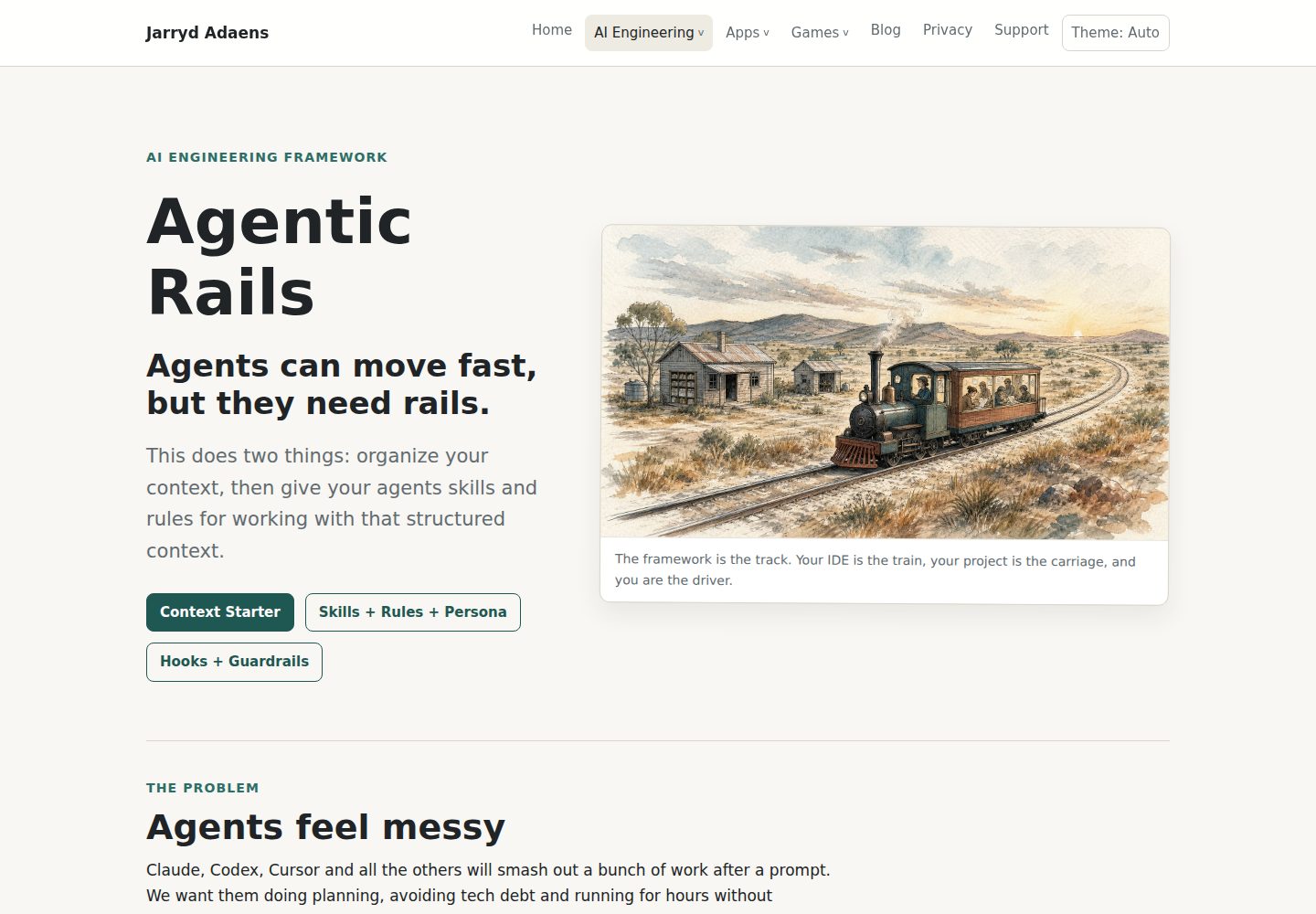
Provides three explicit profiles — core, planned-delivery, and high-consequence — to generate context at different levels of granularity as needed
RailsDocumentationStarter
agentic_rails_context_starter — Rails Documentation Template
By JarrydAdaens
A template repository that generates a durable context structure for AI-assisted Rails projects, including identity, commands, constraints, and conditional reading rules.
Explore the design
Compare the page layouts and mobile experience. Open any screenshot for a closer look.
Desktop homepage1 / 2
Desktop captureTop of page
Actual screenshot captured by the server browser.
All pages & views 2
Screenshots show visual appearance; interactive behavior may differ.
Recorded 2026-10-11View source
What stands out
A quick read of the recorded project description.
The generator requires an explicit profile and host; it does not silently install skills, plugins, rules, or roles
Commands are recorded as data and are not executed during generation; when none are provided, it explicitly states that none have been adopted
Supports four host entry points: generic, codex, claude, and cursor; hosts not listed are unsupported
Includes a safe re-run and update mechanism that rejects writes on conflict and does not perform commits, pushes, or deployments
Uses Python 3.10+ with no third-party dependencies, and includes regression checks and a fresh Core test fixture
Template Details
This repository is a context starter for AI-assisted development, used to generate a small, explicit context structure in Rails projects that covers project identity, commands, constraints, and conditional reading rules. The generator offers three profiles: core, planned-delivery, and high-consequence. Core generates AGENTS.md, a project README, a brief purpose/design note, a baseline checklist, and the selected host wrapper. Planned-delivery adds a current plan with goals, acceptance, dependencies, and continuity on top of core. High-consequence further adds an independent review scope, recovery procedures, and required checks. The generation process requires an explicit profile and host; it does not silently install skills, plugins, rules, memory, advisors, or roles, and it does not copy the repository's optional milestone, backlog, or test fixture reference materials.
The generator is based on Python 3.10 or newer and has no third-party dependencies. Before use, --name, --repo, --owner, and --purpose must be resolved; unresolved identity placeholders and template markers are rejected. Commands are recorded as data and are not executed during generation; when no commands are provided, the documentation explicitly states that no commands have been adopted. Four hosts are supported: generic, codex, claude, and cursor; hosts not listed are unsupported.
The repository also includes a safe re-run and update mechanism: generation only adds content to a non-empty directory when all target files are absent, and any conflict rejects the entire operation before writing. Updates merge using the previous framework baseline, the current source rendering, and the current project content; overlaps, concurrent creation, or deletion reject all writes. Updates do not modify product version sources and do not perform commits, pushes, or deployments. This mechanism is not a crash-safe transaction across the entire tree; snapshot before adoption or significant updates. For existing projects without a baseline, the documentation explicitly requires not fabricating a baseline or overwriting directly; instead, generate into a separate review directory and adopt selectively.
RailsDocumentationStarter
Is it right for your project?
Use Cases
- Quickly establish an AI-readable context structure for a new Rails project, clarifying identity, commands, and constraints
- Generate a separate review directory in an existing project, compare it, and selectively adopt routing and policy changes
- Generate a delivery plan for high-consequence projects that includes independent review scope, recovery procedures, and required checks
- Record project identity, components, inputs, and content hashes via .agentic-rails.json to support reproducible updates
Suitable For
- Rails teams using AI-assisted development that need persistent project context
- Developers who want to control generated content through explicit profiles and hosts and avoid automatic installation of extra components
- Maintainers who need to evaluate and selectively adopt a context structure without overwriting an existing project
Getting started & customization
Use these recorded setup notes alongside the repository instructions for your chosen version.
- 1
Requires Python 3.10 or newer; no third-party dependencies
- 2
Before generation, --name, --repo, --owner, and --purpose must be resolved; unresolved placeholders are rejected
- 3
Use --dry-run to preview the generated result, then remove the flag to write after confirmation
- 4
Snapshot the project before updates; this mechanism is not a crash-safe transaction across the entire tree
- 5
For existing projects without a baseline, do not overwrite directly; generate into a separate directory and adopt selectively
License & source material
Usage conditions & limitations
Free to use · keep license noticeThis entry covers the free version in the public repository under the Apache-2.0 license; the free scope is the code of that version and does not mean external services or third-party materials are free.
Must comply with when using
- Free use, modification, commercial use, and distribution are permitted; when distributing, include the Apache-2.0 license.
- Modified files must be prominently marked as changed, and relevant copyright, patent, trademark, and attribution notices must be retained.
- If the original project includes a NOTICE file, applicable attribution notices in it must be retained when distributing derivative works.
- The license includes an applicable contributor patent grant; initiating patent litigation as described in the license terminates that patent grant, and no trademark rights are granted.
- The code is provided as is; warranties and limitations of liability are governed by the original license and applicable law.
Additional costs & items to verify
- Demo images, fonts, icons, and other third-party materials must be checked against their respective licenses; they cannot be judged solely by the code's Apache-2.0 license.
- External services such as domains, hosting, databases, payments, or AI may incur separate charges.
- Using the generator requires Python 3.10 or newer; there are no third-party dependencies.
- Only four hosts are supported: generic, codex, claude, and cursor; hosts not listed are unsupported.
- Generation can only add content to a non-empty directory when all target files are absent; any conflict rejects the entire operation before writing.
- Changing identity, profile, host, or generation inputs is rejected and requires a separate review migration.
- This mechanism is not a crash-safe transaction across the entire tree; snapshot before adoption or significant updates.
- The generation and update processes do not perform commits, pushes, or deployments.
- For existing projects without a baseline, do not fabricate a baseline or overwrite directly.
- Automatic updates require a trusted generator manifest.
View Original Text Basis
no-charge, royalty-free, irrevocable copyright license
Original License Text
Python 3.10 or newer is sufficient; no third-party dependency is required.
Original README
Unlisted hosts are unsupported by this generator.
Original README
Generation may add context to a nonempty directory only when none of its target files already exists. Any collision refuses the entire operation before writing.
Original README
Changed identity, profile, host, or generation inputs are refused; use a separately reviewed migration.
Original README
This is not a crash-safe transaction across the whole tree: take a project snapshot before adoption or an important update.
Original README
No commit, push, or deployment is performed.
Original README
Do not fabricate a baseline from their current files or copy the starter over them.
Original README
https://github.com/JarrydAdaens/agentic_rails_context_starter/blob/main/LICENSEhttps://github.com/JarrydAdaens/agentic_rails_context_starter/blob/main/README.mdAutomatic updates require a trustworthy generator manifest.
Original README
Compiled by DeepSeek based on repository license and README ·2026-10-11. Results only cover the materials read; dependencies, images, fonts, and subsequent term changes are subject to their respective original texts.
Project checks & description sources
Template Information
- Source platforms
- GitHub
- Documentation and maintenance reference score
- More documented · 85 / 100
- Technologies
- Rails
- Website type
- Documentation · Starter
How this score is calculated
Our heuristic uses license records (up to 30), a demo link (12), a preview (10), stars (15), recorded maintenance (15), description completeness (8), feature records (5) and classification data (5). It is not a code, security or performance test, or a Google score. A link does not establish tested functionality.
What to verify for this project
- Repository update recorded
- 2026-10-11
- Screenshot last checked
- 2026-10-11
A demo link is listed. Check it with your own content and viewport sizes; its presence does not confirm that forms, authentication or payments work.
The catalog identifies Rails as the primary stack. Check the actual dependency manifest and lockfile for versions and hosting requirements. These notes use recorded metadata, not a code audit or a deployment test.
Use a selection guide →How this description was prepared
AI-assisted description based on catalog records and repository material. Repository authors are not automatically the reviewers of this description.
Review declaration: [email protected] · 2026-10-11
Inspect the recorded source material
SHA-256: c775f27a8254e895c05a3c9b363b4b2b8d58d303ae2e75440c18ea08423fb6dc
2026-10-11T07:00:56.455Z
Source file / repository--- name: readme description: Profiles, deterministic project generation, checks, and selective starter migration. metadata: version: "4.0" agentic_rails_source_version: "4.0" owner: "Jarryd Adaens" repo: "agentic_rails_context_starter" --- # Agentic Rails context starter Create a small project context with explicit identity, commands, constraints, and conditional reading. Core is the recommended starting profile. Generation requires an explicit profile and host so automation never guesses the destination's policy. The canonical framework overview is the [tooling README](../agentic_rails_tooling/AGENTIC_RAILS_README.MD). | Profile | Generated content | | --- | --- | | `core` | `AGENTS.md`, project `README.md`, a short purpose/design note, baseline manifest, selected host wrapper. | | `planned-delivery` | Core plus a concrete current plan with objective, acceptance, dependencies, and continuity. | | `high-consequence` | Planned delivery plus explicit independent review scope, recovery procedure, and required checks. | No profile silently installs skills, plugins, rules, memory, advisors, or personas. Core has no required milestone, plan, numerical score, or per-story commit. The optional milestone/backlog/harness reference material in this repository is not copied by the generator. Adopt it selectively when actual work needs it. ## Generate Python 3.10 or newer is sufficient; no third-party dependency is required. From this starter's root, preview a fresh Core project: ```powershell python scripts/starter.py generate --destination "D:/Code Projects/example" --profile core --host codex --name "Example" --repo example --owner "Project Owner" --purpose "A local tool that summarizes task status." --check "python -m unittest discover -s tests -v" --constraint "Keep task data on this machine." --dry-run ``` Remove `--dry-run` to write the reviewed selection. Supply only commands the actual project uses. Repeat `--setup`, `--build`, `--check`, `--run`, and `--constraint` as needed. Commands are recorded as data and are never executed by generation. Without a command, the instructions explicitly say that none has been adopted; no success is fabricated. Resolve `--name`, `--repo`, `--owner`, and `--purpose` before generation. Unresolved identity placeholders and template tokens are rejected. Repeat `--stack-pack` to declare specific pack identifiers (for example `wpf`, `qt`, or `unreal`). The manifest and instructions record this explicit selection; the starter does not copy rule bodies, install packs, or assert activation. Leave it empty until the actual stack is known. Tooling owns pack contents and host-specific activation. Delivery profiles additionally require `--objective` and at least one `--acceptance`. Repeat `--dependency` for real dependencies. High consequence also requires `--review-scope`, `--recovery`, and at least one `--check`. These become the current plan's concrete controls; a human or supported independent reviewer may fulfill review. | Host | Instruction entry point | Validation status | | --- | --- | --- | | `generic` | `AGENTS.md`; load using the host's project-instruction mechanism. | Generated structure tested. | | `codex` | `AGENTS.md`. | Generated structure tested; fresh-session activation belongs to rollout. | | `claude` | `CLAUDE.md` imports `AGENTS.md`. | Import structure tested; runtime activation untested here. | | `cursor` | `.cursor/rules/project.mdc`, always applied, points to `AGENTS.md`. | Rule structure tested; runtime activation untested here. | Unlisted hosts are unsupported by this generator. Host choice does not infer a stack. WPF needs evidence beyond XAML; Qt and Unreal need distinct C++ stack selections. ## Safe reruns and updates Generation may add context to a nonempty directory only when none of its target files already exists. Any collision refuses the entire operation before writing. Unrelated files remain intact. An identical rerun with the recorded inputs performs no writes, including when project content or source templates have changed. Changed identity, profile, host, or generation inputs are refused; use a separately reviewed migration. The schema-versioned `.agentic-rails.json` records project identity, selected components, inputs, source Git revision, source-content hash, rendered-content hash, and the exact framework baseline plus SHA-256 for each generated file. A Git revision alone does not describe uncommitted templates; content hashes disambiguate them. There is no timestamp, absolute destination, or random identity in the output. Equivalent source and inputs produce identical files in different destinations. ```powershell python scripts/starter.py update --destination "D:/Code Projects/example" --dry-run python scripts/starter.py update --destination "D:/Code Projects/example" ``` Update uses the previous framework baseline, current source rendered with recorded inputs, and current project content. Disjoint line changes merge while project edits remain outside the new framework baseline. Overlap, concurrent creation, or deletion against a changed source refuses all writes with a diagnostic. Matching changes are accepted. A project deletion remains deleted when source is unchanged. Retired source files and historical paths are preserved. Linked destination paths and malformed or tampered baselines are refused. Updates never modify product version sources. Dry runs report exact affected paths and actions without creating directories. Normal writes recheck file snapshots and replace files atomically; ordinary I/O failures roll back applied file content. This is not a crash-safe transaction across the whole tree: take a project snapshot before adoption or an important update. Empty directories may remain after an I/O failure. No commit, push, or deployment is performed. ## Existing projects without a baseline Do not fabricate a baseline from their current files or copy the starter over them. Generate the desired profile into a separate review directory, compare it with the project, and explicitly adopt only useful routing and policy changes. Keep project identity, architecture, commands, historical plans, version sources, and published versions intact. Only record ownership for content whose old baseline can be proven. Automatic updates require a trustworthy generator manifest. Cross-project migration is selective and never a bulk rewrite. ## Checks and fixture Run `python scripts/check-starter.py` for all regression checks and instruction word counts, or `python -m unittest discover -s tests -v`. Counts include mandatory host imports once. The 400-800-word target is a review warning; necessary project constraints are preserved. Global instructions and tool/skill catalogs are separate measurements. The [fresh Core fixture](tests/fixtures/fresh-core/README.md) includes a working addition feature and a regression check. It demonstrates ordinary work without a milestone or delivery plan. Generation/update checks cover conflicts, nonempty targets, repeated runs, identity resolution, ownership, paths, newline handling, and interruption hazards. Use [AGENTS.md](AGENTS.md) for contributor routing and [context/versioning-policy.md](context/versioning-policy.md) only if adopting that optional product policy.
Explore similar templates
Compare previews and descriptions within the same stack and category.
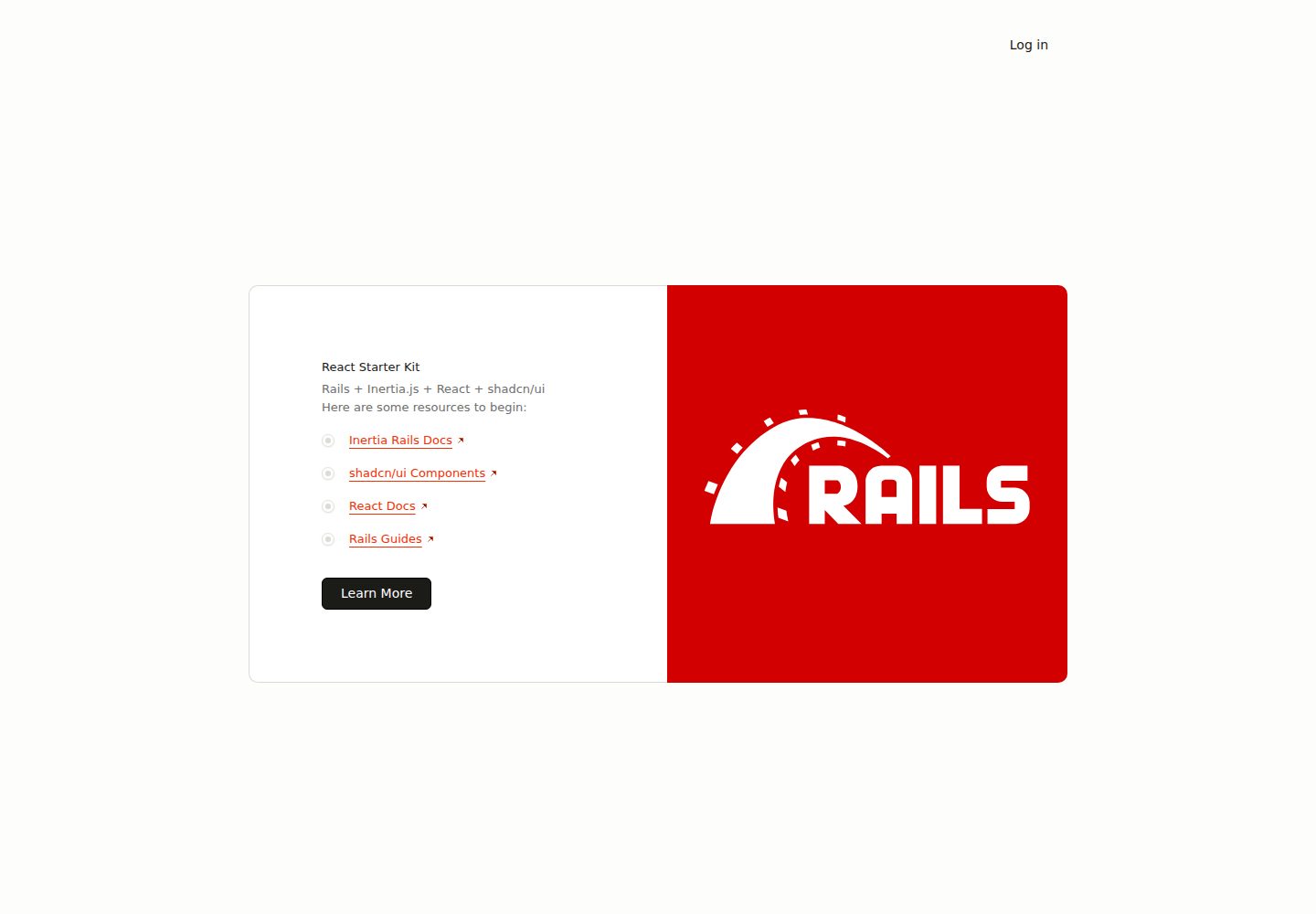
react-starter-kit
A full-stack Inertia.js starter with a Rails backend and React + TypeScript frontend, generated by inertia-rails/generator and automatically synced.
Rails · Starter
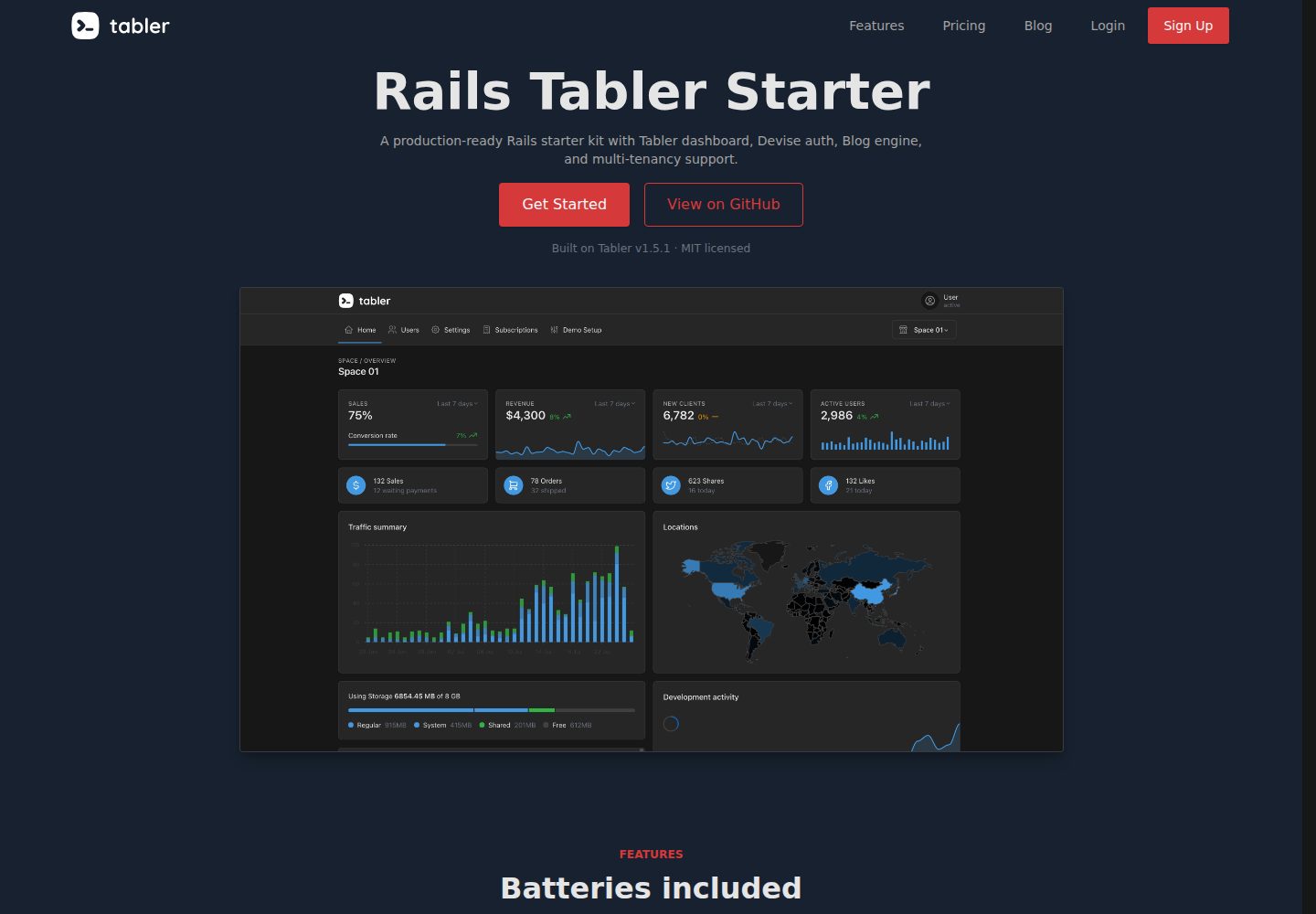
rails-tabler-starter
A free, open-source Ruby on Rails backend starter using Tabler (Bootstrap 5) with Hotwire/Turbo.
Rails · Admin dashboard
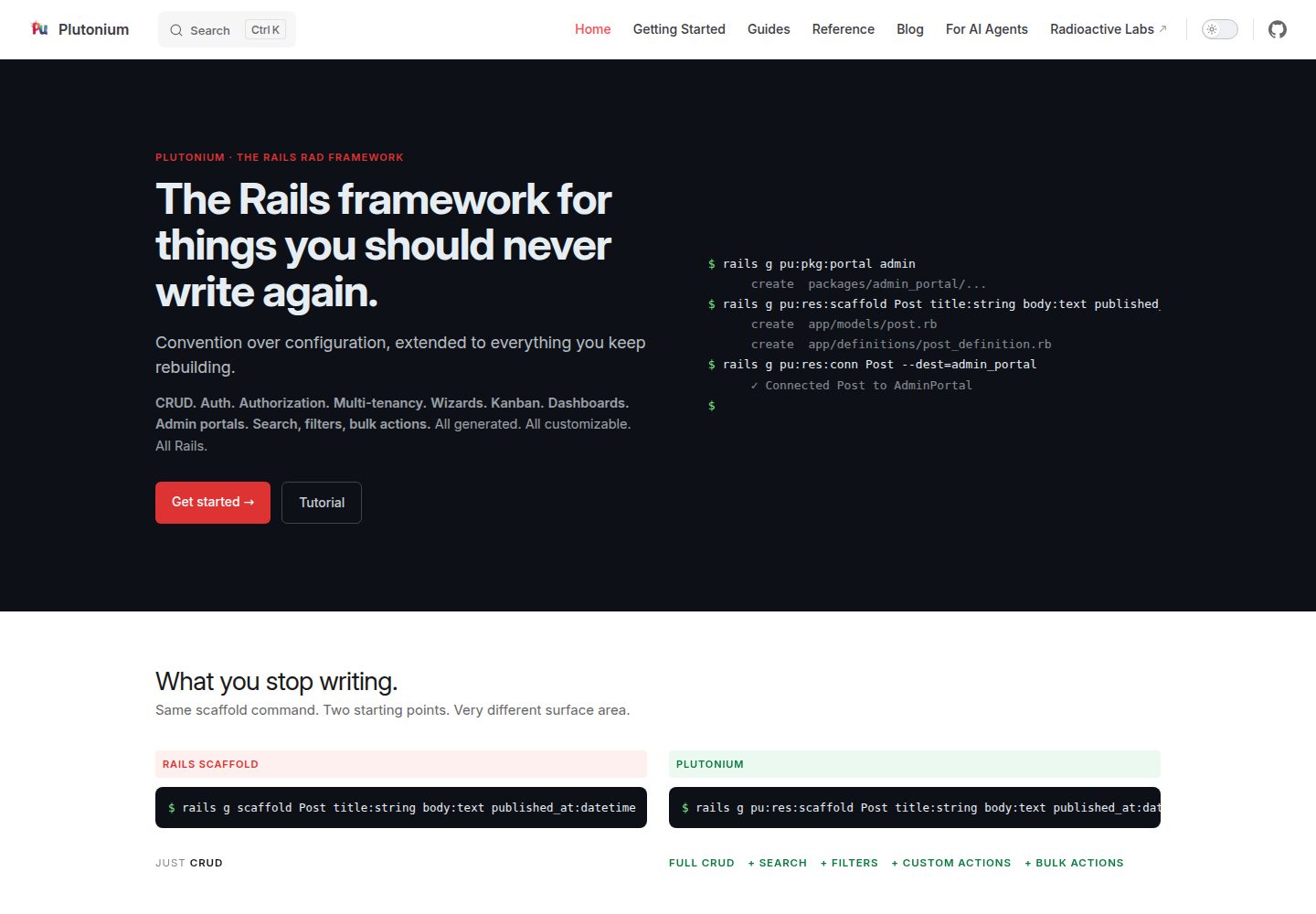
plutonium-core
Plutonium is a Rails-based admin and starter template that uses generators to write CRUD, authentication, authorization, multi-tenancy, portals, search and filtering, and bulk actions directly into project code.
Rails · Admin dashboard
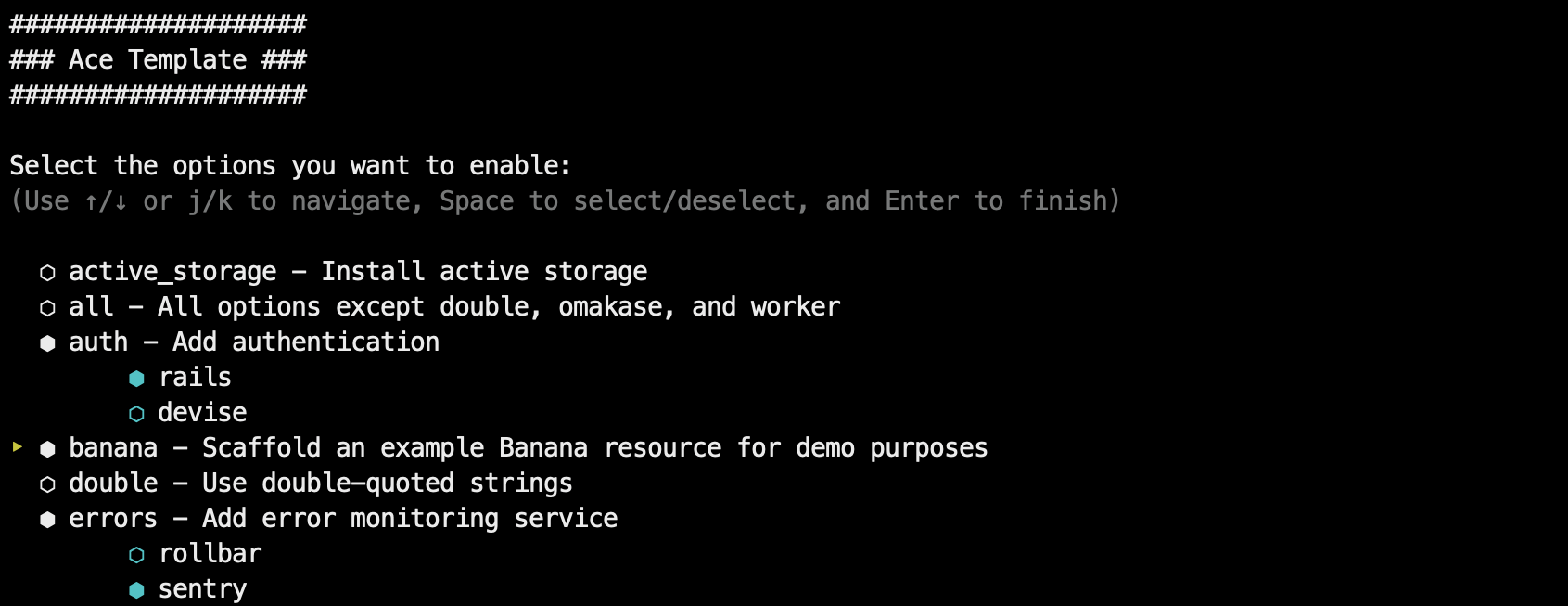
ace-template
Ace Template is a Rails application template applied via rails new, supporting interactive mode and command-line options, with SQLite, Postgres, and MySQL support, Tailwind or Bootstrap styling, and deployment instructions for Kamal, Fly.io, and Heroku.
Rails · Starter
kern
Kern is a Rails engine that provides foundational SaaS features: authentication and user settings based on Rails' authentication generator, multi-tenancy via Workspace and Member with multiple Roles, team invitations, Stripe subscription billing configured through plans.yml and credentials, plus a form builder, basic…
Rails · SaaS
rails-react-starter
Rails React Starter is an MIT-licensed starter that pairs a Rails JSON API backend with a React frontend, including TailwindCSS and Docker configuration.
Rails · Starter