Provides a CLAUDE.md template that can be placed directly in an Elixir project root
RailsStarter
claude-md-elixir-starter — Rails Starter Template
By sublimecoder
A CLAUDE.md starter file for Elixir / Phoenix codebases, used to pin down project conventions during Claude Code sessions and reduce Ruby habits leaking into Elixir code.
Explore the design
Compare the page layouts and mobile experience. Open any screenshot for a closer look.
Desktop homepage1 / 3
Desktop captureTop of page
Actual screenshot captured by the server browser.
All pages & views 3
Screenshots show visual appearance; interactive behavior may differ.
Recorded 2026-10-13View source
What stands out
A quick read of the recorded project description.
Covers umbrella layout, context boundaries, and OTP supervision structure
Specifies rules for GenServer, processes, and state ownership
Locks down Ecto's changeset / context / schema separation
Lists anti-patterns such as Rails-style code, premature actor models, and overuse of try/rescue
Provides a list of mix tasks to reduce the model inventing commands
Template Details
This is a CLAUDE.md template that can be placed directly in the repository root, targeting the Elixir ecosystem, including Phoenix applications, umbrella projects, and OTP services. Claude Code reads this file on every run and uses it to constrain its suggestions.
The template requires filling in bracketed fields such as the application name, whether Phoenix is used, umbrella versus single application, primary database, and deployment target, and deleting sections that do not apply. The content covers umbrella layout, context boundaries, OTP supervision structure, GenServer and process rules, state ownership, Ecto's changeset / context / schema separation, and anti-patterns to avoid (Rails-style code, premature actor models, overuse of try/rescue), and lists mix tasks to reduce the model inventing commands on its own.
The author notes that Elixir has less training data than Go or Python, and models easily confuse Elixir with Ruby or Erlang, so a conventions file has a more noticeable effect in Elixir projects. The repository is MIT-licensed and is the Elixir-specific starter file in the Vault; the Vault itself is paid content, separate from this free template.
Railsstarter
Is it right for your project?
Use Cases
- Getting Claude Code to follow existing context and schema separation in a Phoenix application
- Explaining each application's responsibility boundaries and supervision tree structure in an umbrella project
- Constraining the scope of GenServer and process usage in an OTP service
- Unifying coding conventions between the team and AI assistants in an existing Elixir codebase
Suitable For
- Elixir / Phoenix development teams using Claude Code
- Engineers maintaining umbrella projects or OTP services
- Developers who want to reduce AI-generated Ruby-style Elixir code
Getting started & customization
Use these recorded setup notes alongside the repository instructions for your chosen version.
- 1
Copy CLAUDE.md to the Elixir project root
- 2
Fill in the bracketed fields: application name, whether Phoenix is used, umbrella or single application, primary database, deployment target
- 3
Delete sections that do not apply and add missing content according to the project
- 4
Commit it to the repository so Claude Code can read it in every session
License & source material
Usage conditions & limitations
Free to use · keep license noticeThis entry covers the free version in the public repository under the MIT license; the free scope applies to that version's code and does not mean external services or third-party assets are free.
Must comply with when using
- The code in this version may be used, modified, used commercially, and distributed for free.
- When distributing copies or substantial portions of the code, retain the original author's copyright notice and the full MIT license notice.
- The code is provided as is; warranties and limitations of liability are governed by the original license and applicable law.
Additional costs & items to verify
- Demo images, fonts, icons, and other third-party assets must be checked against their respective licenses; the code's MIT license alone is not sufficient to judge them.
- External services such as domains, hosting, databases, payments, or AI may incur separate charges.
- The Vault (including three CLAUDE.md starter files for Go, Elixir, and AI agents, .cursorrules, 50 prompts, and a Notion blueprint) is a paid product: the $39 founder version is limited to the first 50 people, after which it is $49; this repository only provides the free Elixir-specific starter file from it.
- This repository only contains the Elixir version of the CLAUDE.md starter file; the other starter files, .cursorrules, prompts, and Notion blueprint listed in the README belong to the paid Vault and are not within the scope of this free repository.
View Original Text Basis
Permission is hereby granted, free of charge
Original License Text
**$39 founders edition** — first 50 buyers, then $49 · 7-day refund · lifetime updates · no app, no login.
Original README
https://github.com/sublimecoder/claude-md-elixir-starter/blob/main/LICENSEhttps://github.com/sublimecoder/claude-md-elixir-starter/blob/main/README.mdThis is the **Elixir-only** starter. The [Senior Engineer's AI Prompt Vault](https://sublimecoding.com/vault) includes:
Original README
Compiled by DeepSeek based on repository license and README ·2026-10-13. Results only cover the materials read; dependencies, images, fonts, and subsequent term changes are subject to their respective original texts.
Project checks & description sources
Template Information
- Source platforms
- GitHub
- Documentation and maintenance reference score
- More documented · 80 / 100
- Technologies
- Rails
- Website type
- Starter
How this score is calculated
Our heuristic uses license records (up to 30), a demo link (12), a preview (10), stars (15), recorded maintenance (15), description completeness (8), feature records (5) and classification data (5). It is not a code, security or performance test, or a Google score. A link does not establish tested functionality.
What to verify for this project
- Repository update recorded
- 2026-06-25
- Screenshot last checked
- 2026-10-13
A demo link is listed. Check it with your own content and viewport sizes; its presence does not confirm that forms, authentication or payments work.
The catalog identifies Rails as the primary stack. Check the actual dependency manifest and lockfile for versions and hosting requirements. These notes use recorded metadata, not a code audit or a deployment test.
Use a selection guide →How this description was prepared
AI-assisted description based on catalog records and repository material. Repository authors are not automatically the reviewers of this description.
Review declaration: [email protected] · 2026-10-13
Inspect the recorded source material
SHA-256: 25f14447c5b0d880d0e1f9eabd8ed277ca3258cd815ea2d41713520f4224e5a8
2026-10-13T05:07:46.180Z
Source file / repository# CLAUDE.md Starter — Elixir / Phoenix A drop-in `CLAUDE.md` for Elixir codebases — Phoenix apps, umbrella projects, OTP services — so [Claude Code](https://claude.com/claude-code) stops writing Ruby in Elixir syntax and actually respects your supervision tree, contexts, and let-it-crash conventions. By [Jared Smith](https://sublimecoding.com) — staff engineer, Director of Information Security at Lavender. Production Elixir at AAMP Global (40K+ telematics devices streaming). 13+ years shipping Go, Elixir, and Ruby. ## What this is A real, opinionated `CLAUDE.md` that: - Tells Claude Code your umbrella layout, context boundaries, and OTP supervision shape - Sets the rules for GenServers, processes, and where state actually belongs - Locks in the Ecto changeset / context / schema separation - Lists the anti-patterns (Rails-isms, premature actor model, `try`/`rescue` overuse) you don't want suggested - Gives Claude the mix tasks so it stops inventing them This file goes at the root of your repo. Claude Code reads it on every run and uses it to ground its suggestions. ## Quick start 1. Copy [`CLAUDE.md`](./CLAUDE.md) into the root of your Elixir project. 2. Fill in the `[bracketed]` fields — app name, Phoenix vs not, umbrella vs single-app, primary database, deployment target. 3. Delete sections that don't apply. Add ones that do. 4. Commit it. Claude Code now starts every session with your conventions in context. ## Why CLAUDE.md matters more in Elixir Elixir is the language Claude Code hallucinates hardest on. It has less training data than Go or Python, and the model frequently confuses Elixir with Ruby or Erlang. Without conventions in context, you get: - GenServers used where a plain function would do - `try`/`rescue` blocks that should be pattern matches - Mutated state that doesn't exist - "Service objects" that should be contexts A `CLAUDE.md` cuts most of this on the first message. ## What's in the Vault This is the **Elixir-only** starter. The [Senior Engineer's AI Prompt Vault](https://sublimecoding.com/vault) includes: - 3 `CLAUDE.md` starters: **Go services**, **Elixir umbrellas**, **AI agent projects** - 5 `.cursorrules` files (one per category — code review, debugging, refactoring, system design, docs) - 50 production-tested prompts for Claude Code and Cursor - Notion blueprint with category, tool, and usage views **$39 founders edition** — first 50 buyers, then $49 · 7-day refund · lifetime updates · no app, no login. → **[Get the Vault](https://sublimecoding.com/vault)** ## Related - [Go CLAUDE.md starter](https://github.com/sublimecoder/claude-md-go-starter) - [AI agents CLAUDE.md starter](https://github.com/sublimecoder/claude-md-ai-agents-starter) - [5 free sample prompts](https://github.com/sublimecoder/sublimecoding/tree/main/prompts) - [FAQ](https://github.com/sublimecoder/sublimecoding/blob/main/FAQ.md) - [How I Prompt Claude as a Staff Engineer (50 Prompts I Actually Use)](https://sublimecoding.com/blog/staff-engineer-claude-prompts) - [sublimecoding.com](https://sublimecoding.com) ## License MIT. Use it, fork it, ship it.
Explore similar templates
Compare previews and descriptions within the same stack and category.

react-starter-kit
A full-stack Inertia.js starter with a Rails backend and React + TypeScript frontend, generated by inertia-rails/generator and automatically synced.
Rails · Starter
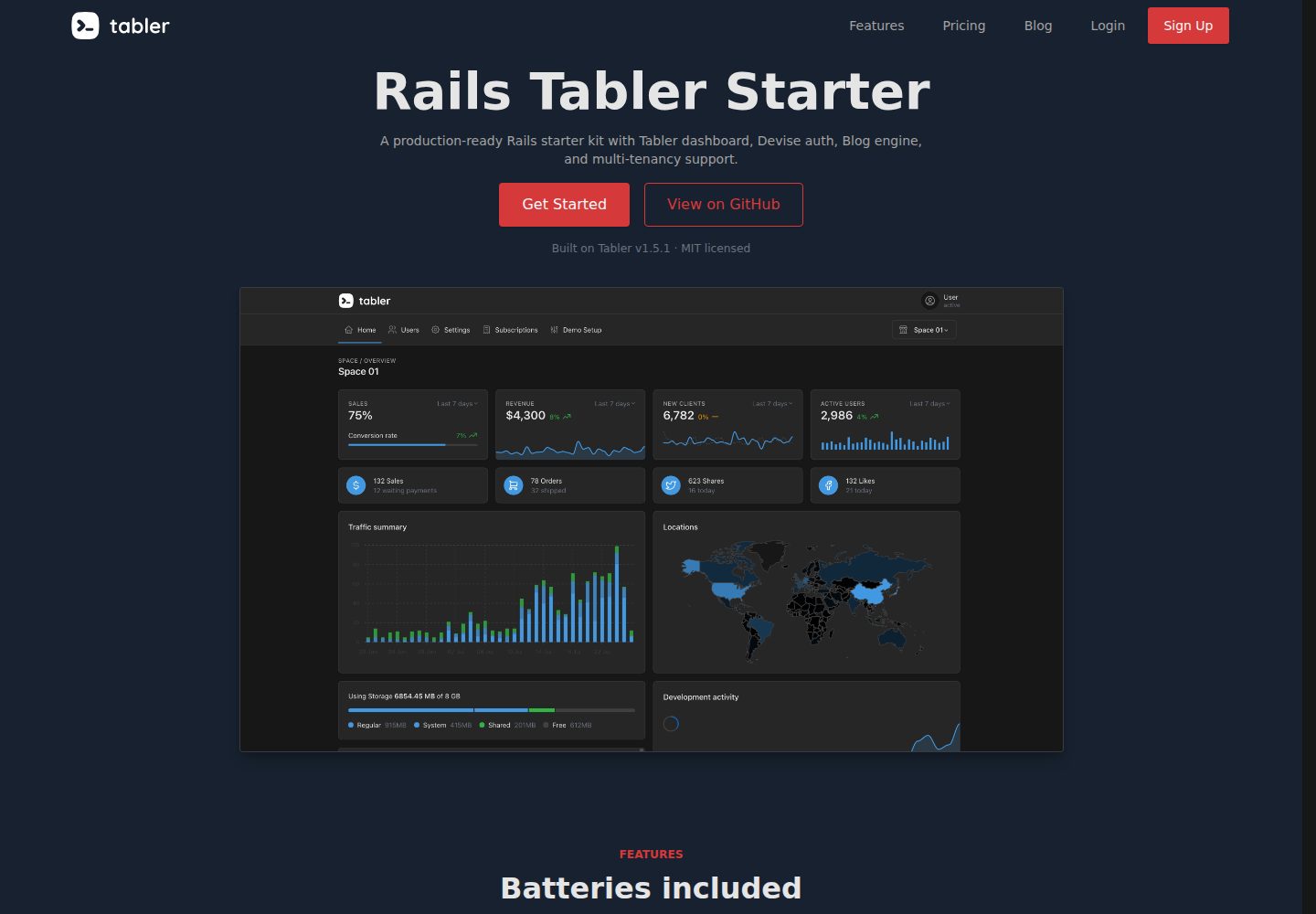
rails-tabler-starter
A free, open-source Ruby on Rails backend starter using Tabler (Bootstrap 5) with Hotwire/Turbo.
Rails · Admin dashboard
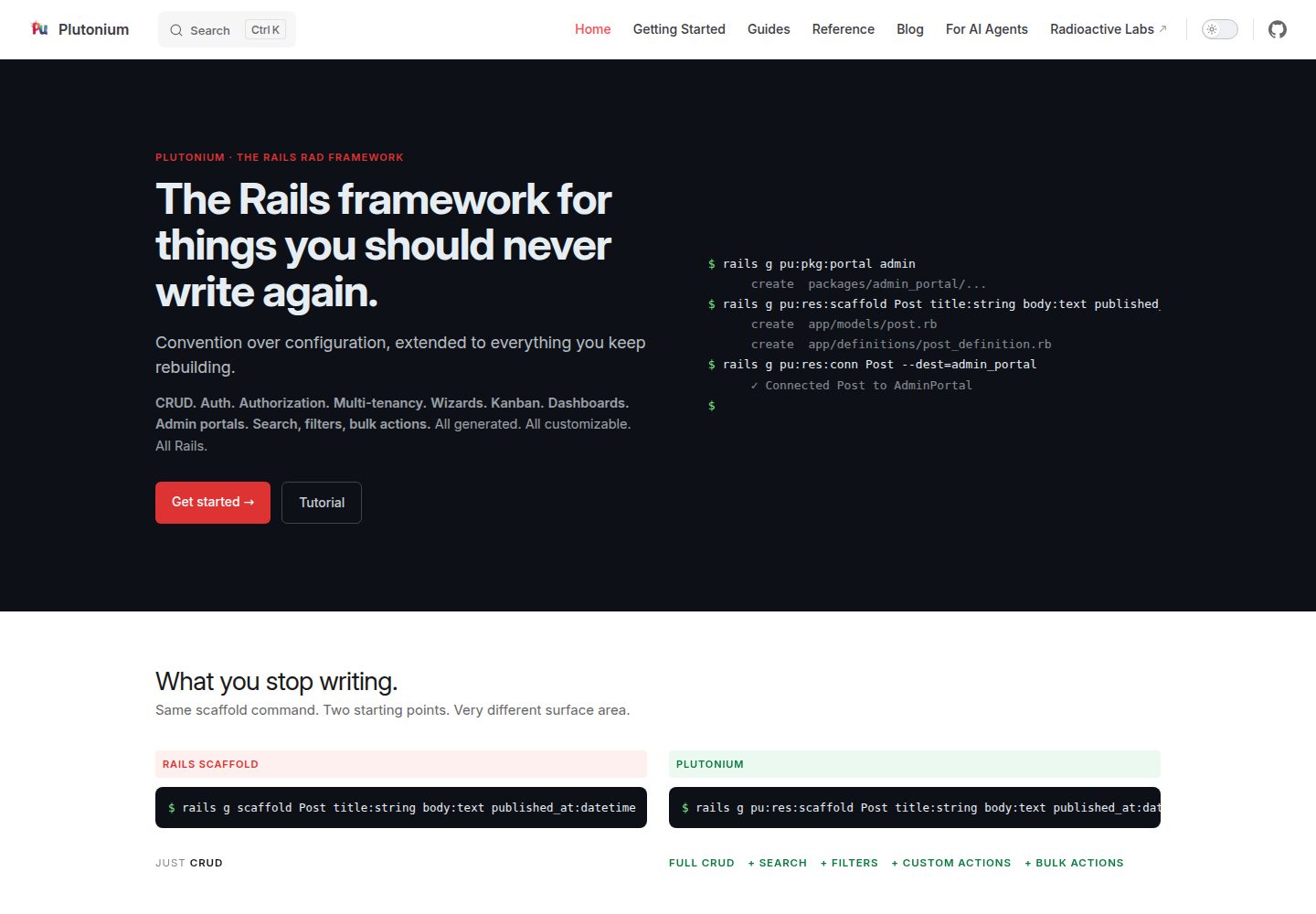
plutonium-core
Plutonium is a Rails-based admin and starter template that uses generators to write CRUD, authentication, authorization, multi-tenancy, portals, search and filtering, and bulk actions directly into project code.
Rails · Admin dashboard
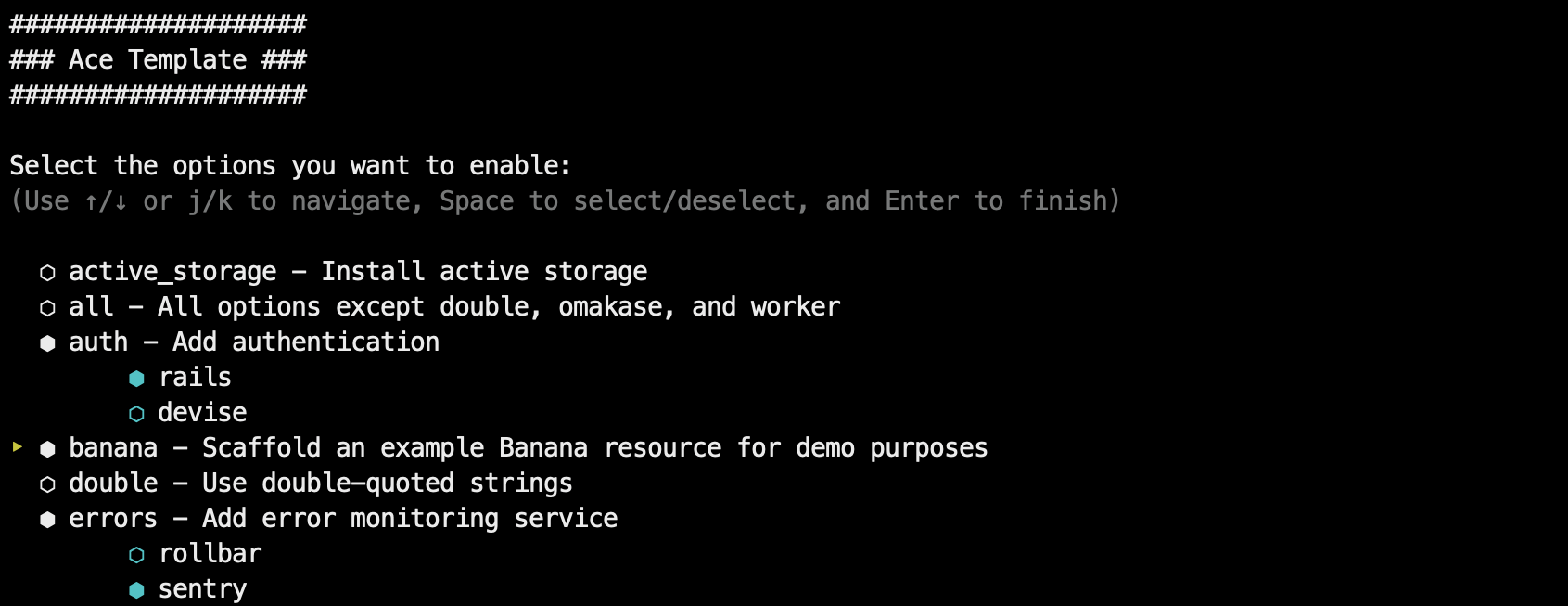
ace-template
Ace Template is a Rails application template applied via rails new, supporting interactive mode and command-line options, with SQLite, Postgres, and MySQL support, Tailwind or Bootstrap styling, and deployment instructions for Kamal, Fly.io, and Heroku.
Rails · Starter
kern
Kern is a Rails engine that provides foundational SaaS features: authentication and user settings based on Rails' authentication generator, multi-tenancy via Workspace and Member with multiple Roles, team invitations, Stripe subscription billing configured through plans.yml and credentials, plus a form builder, basic…
Rails · SaaS

rails-react-starter
Rails React Starter is an MIT-licensed starter that pairs a Rails JSON API backend with a React frontend, including TailwindCSS and Docker configuration.
Rails · Starter