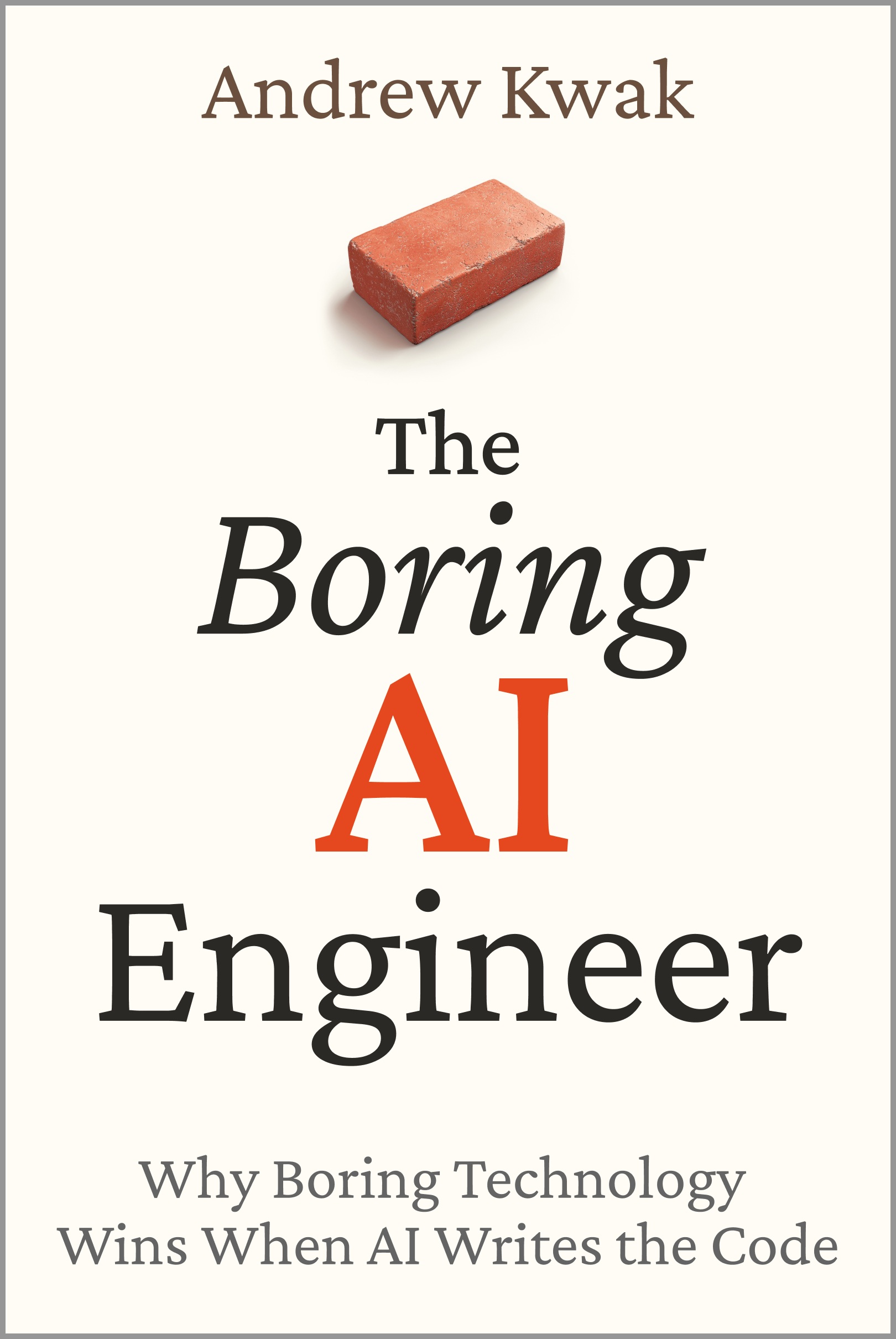
Companion code for the book, positioned by the author as a small set of reference files to copy into an existing Rails application, not a gem, framework, or generator
RailsStarter
boring-starter — Rails Starter Template
By andrew-kwak
The companion code repository for the book The Boring AI Engineer, providing several reference files that can be copied into a Rails application, covering convention documents, a model invocation entry point, agent run state, background jobs, and Stripe webhook handling.
Explore the design
Compare the page layouts and mobile experience. Open any screenshot for a closer look.
Author preview
Author-provided previewTop of page
Preview provided in the project README.
One original preview is available. Open the full image to inspect the design.
Screenshots show visual appearance; interactive behavior may differ.
Recorded 2026-10-13View source
What stands out
A quick read of the recorded project description.
CONVENTIONS.md provides standing conventions for humans and agents, recommended to be placed at the repository root and made the first commit
llm.rb serves as the single entry point for model calls, covering timeouts, usage, retries, and per-tenant isolated caching
agent_run.rb and agent_run_job.rb ground agent state and loops in database columns and budgeted jobs
stripe_webhooks_controller.rb demonstrates record-before-act and double idempotency for payment callbacks
The code is MIT licensed, and names such as client, MODELS, Usage, and Summary must be connected to your own provider and business domain
Template Details
This is the companion code for The Boring AI Engineer — Why Boring Technology Wins When AI Writes the Code by Andrew Kwak, built on Rails. The author explicitly states that it is not a gem, not a framework, and not a generator, but rather the small set of files the book argues every AI-driven Rails application needs, small enough to read from start to finish, and intended to be copied into your own application and then adjusted.
The repository contains the following files and their roles: CONVENTIONS.md is a standing set of conventions for both humans and agents, recommended to be placed at the repository root and made the first commit; app/models/llm.rb is the single entry point for model calls, covering timeouts, usage, retries, and per-tenant isolated caching; app/models/agent_run.rb stores agent state as a database row, with status, steps, and budget as columns; app/jobs/agent_run_job.rb is a budgeted agent loop that does not leave runs stuck on failure; app/jobs/summarize_job.rb is queue-shaped AI work that deduplicates with atomic claims and recovers by releasing; app/controllers/stripe_webhooks_controller.rb handles the payment path, recording before acting and applying double idempotency.
The README notes that names such as client, MODELS, Usage, and Summary are deliberately kept as reference shapes, and you need to connect them to your own provider and business domain. The code is MIT licensed and may be used, modified, commercialized, and distributed for free, but third-party assets such as demo images, fonts, and icons must be checked against their respective licenses, and external services such as domains, hosting, databases, payments, or AI may incur separate charges. The repository provides no installation steps, dependency list, or run instructions, and has no tests or deployment configuration, so it is closer to a readable, extractable collection of code snippets than an out-of-the-box project skeleton.
RailsStarter
Is it right for your project?
Use Cases
- Adding an AI invocation entry point, agent run records, and background job organization to an existing Rails application
- Introducing a conventions document for both people and coding agents to unify collaboration rules in a team
- Designing a Stripe webhook handling flow by referencing the idempotency and recording order of payment callbacks
- Using it as companion code while reading The Boring AI Engineer to understand the book's arguments file by file
Suitable For
- Developers using Rails who want to introduce AI capabilities into an existing project
- Teams that need to provide clear conventions for coding agents
- Engineers designing model invocation, background job, or payment callback structures
- Readers of the book who want to compare implementation details
Getting started & customization
Use these recorded setup notes alongside the repository instructions for your chosen version.
- 1
The repository provides no installation steps or dependency list; you need to copy the files into your target Rails application and adjust them to your project structure
- 2
Names such as client, MODELS, Usage, and Summary are reference shapes and must be connected to the model provider and business domain you use
- 3
The code is MIT licensed; when distributing copies or substantial portions, you must retain the original author's copyright notice and the full MIT license notice
- 4
Third-party assets such as demo images, fonts, and icons must be checked separately against their respective licenses
- 5
External services such as domains, hosting, databases, payments, or AI may incur separate charges
License & source material
Usage conditions & limitations
Free to use · keep license noticeThis entry covers the free version in the public repository under the MIT license; the free scope is the code in that version and does not mean external services or third-party assets are free.
Must comply with when using
- You may use, modify, commercialize, and distribute the code in this version for free.
- When distributing copies or substantial portions of the code, retain the original author's copyright notice and the full MIT license notice.
- The code is provided as is; warranties and limitations of liability are governed by the original license and applicable law.
Additional costs & items to verify
- Demo images, fonts, icons, and other third-party assets must be checked against their respective licenses and cannot be judged solely by the code's MIT license.
- External services such as domains, hosting, databases, payments, or AI may incur separate charges.
- Names such as client, MODELS, Usage, and Summary in the code are only reference shapes and are not bound to any specific provider; users must connect their own model provider and business domain before it can run.
- The project is not a gem, framework, or generator, but only a small set of reference files designed to be copied into an existing Rails application and adapted; it does not provide an out-of-the-box complete project skeleton.
- The MIT license covers only the code; the book's main text and the Boring Rules text are the author's copyrighted content, are not within the scope of the MIT grant, and may not be used freely under the code license.
View Original Text Basis
Permission is hereby granted, free of charge
Original License Text
Names like `client`, `MODELS`, `Usage`, and `Summary` are deliberately left as reference shapes — wire them to your provider and your domain.
Original README
This is not a gem, not a framework, not a generator. It's the handful of files the book argues every AI-powered Rails app needs — small enough to read top to bottom, meant to be copied into your app and adapted.
Original README
https://github.com/andrew-kwak/boring-starter/blob/master/LICENSEhttps://github.com/andrew-kwak/boring-starter/blob/master/README.mdCode: MIT. Book text and the Boring Rules: © 2026 Andrew Kwak, quoted here with the author's blessing (he insisted).
Original README
Compiled by DeepSeek based on repository license and README ·2026-10-13. Results only cover the materials read; dependencies, images, fonts, and subsequent term changes are subject to their respective original texts.
Project checks & description sources
Template Information
- Source platforms
- GitHub
- Documentation and maintenance reference score
- Partly documented · 68 / 100
- Technologies
- Rails
- Website type
- Starter
How this score is calculated
Our heuristic uses license records (up to 30), a demo link (12), a preview (10), stars (15), recorded maintenance (15), description completeness (8), feature records (5) and classification data (5). It is not a code, security or performance test, or a Google score. A link does not establish tested functionality.
What to verify for this project
- Repository update recorded
- 2026-07-05
- Screenshot last checked
- 2026-10-13
No demo link is recorded. Use the repository instructions to evaluate the project locally; the screenshot alone cannot establish interactive behavior.
The catalog identifies Rails as the primary stack. Check the actual dependency manifest and lockfile for versions and hosting requirements. These notes use recorded metadata, not a code audit or a deployment test.
Use a selection guide →How this description was prepared
AI-assisted description based on catalog records and repository material. Repository authors are not automatically the reviewers of this description.
Review declaration: [email protected] · 2026-10-13
Inspect the recorded source material
SHA-256: 597c913934dafa9b06322c737632aa7a30e230dd487507189518d9283dbbd75d
2026-10-13T05:06:24.417Z
Source file / repository# The Boring Starter <img src="cover.jpg" alt="The Boring AI Engineer — book cover" width="280" align="right" border="1"/> Companion code for **_The Boring AI Engineer — Why Boring Technology Wins When AI Writes the Code_** by Andrew Kwak. This is not a gem, not a framework, not a generator. It's the handful of files the book argues every AI-powered Rails app needs — small enough to read top to bottom, meant to be copied into your app and adapted. That's the philosophy: when you can read the code, you can check the agent's work. <br clear="right" /> ## The files | File | What it is | Book | |---|---|---| | `CONVENTIONS.md` | Standing orders for humans and agents. Drop in your repo root, first commit. | Appendix | | `app/models/llm.rb` | The single front door for every model call: timeout, usage, retries, tenant-scoped cache. | Ch. 15, 18 | | `app/models/agent_run.rb` | Agent state as a database row — status, steps, budget as columns. | Ch. 14 | | `app/jobs/agent_run_job.rb` | The agent loop: a loop with a budget, failure never strands a run. | Ch. 14 | | `app/jobs/summarize_job.rb` | Queue-shaped AI work: atomic claim to dedupe, release to recover. | Ch. 16 | | `app/controllers/stripe_webhooks_controller.rb` | The money path: record first, act second, idempotent twice over. | Ch. 20 | Names like `client`, `MODELS`, `Usage`, and `Summary` are deliberately left as reference shapes — wire them to your provider and your domain. The decisions are the product; the plumbing is yours. ## The Boring Rules 1. AI doesn't remove engineering decisions. It amplifies their consequences. 2. Churn is a business model. You are the customer, and the product is your migration. 3. Philosophy outlives syntax. Bet on the thing that hasn't changed its mind in two decades. 4. AI is a convention machine. Feed it conventions. 5. Every convention is a decision you don't have to make — and a prompt you don't have to write. 6. If it fits in one head, it fits in one context window. Keep it fitting. 7. Codebases rot from the data layer first. One idiom, no rot. 8. The fastest JavaScript is the JavaScript you didn't ship. 9. One server, one file, no ops team. That's not a toy — that's a business. 10. Perfect architecture is procrastination with diagrams. Perfect pixels are procrastination with Figma. 11. Start with three models. You can afford more when users demand them. 12. Don't predict the future. Make changing your mind cheap. 13. Complexity is bought with users, not anticipation. 14. An agent is a loop with a budget. Everything else is columns. 15. Treat the model like a database: call it through one door, cache it, time it out. 16. Slow AI belongs in a queue, not a request. Stream only for the blinking cursor. 17. If you can't eval it, you can't ship it. Test the plumbing, golden the shape, judge the judgment. 18. Rails.cache is the cheapest GPU. 19. The safest deploy is small, recent, and fully understood. Ship like it's saving a file. 20. Money is the swamp's deepest water. Cross it idempotent, logged, and twice-checked. 21. A backup you haven't restored is a wish. 22. Three alarms that mean it beat twenty you ignore. The intern gets a manager. 23. One framework, one database, one server, one person who understands it all. 24. Every yes is a ten-year contract. Make the no cheap, prepared, and polite — and adopt late, on purpose. 25. Tools change every year. Judgment compounds for decades. 26. Boring is not what's left when you fail to be exciting. It's what you choose when you intend to last. ## The book The full argument — why the boring stack wins precisely when code gets cheap, and the field map of the swamp between a great demo and a product that survives it — is in the book. **→ _The Boring AI Engineer_ — coming to Amazon (ebook + paperback).** Published by Dearnode Press · [dearnode.com](https://dearnode.com) ## License Code: MIT. Book text and the Boring Rules: © 2026 Andrew Kwak, quoted here with the author's blessing (he insisted).
Explore similar templates
Compare previews and descriptions within the same stack and category.
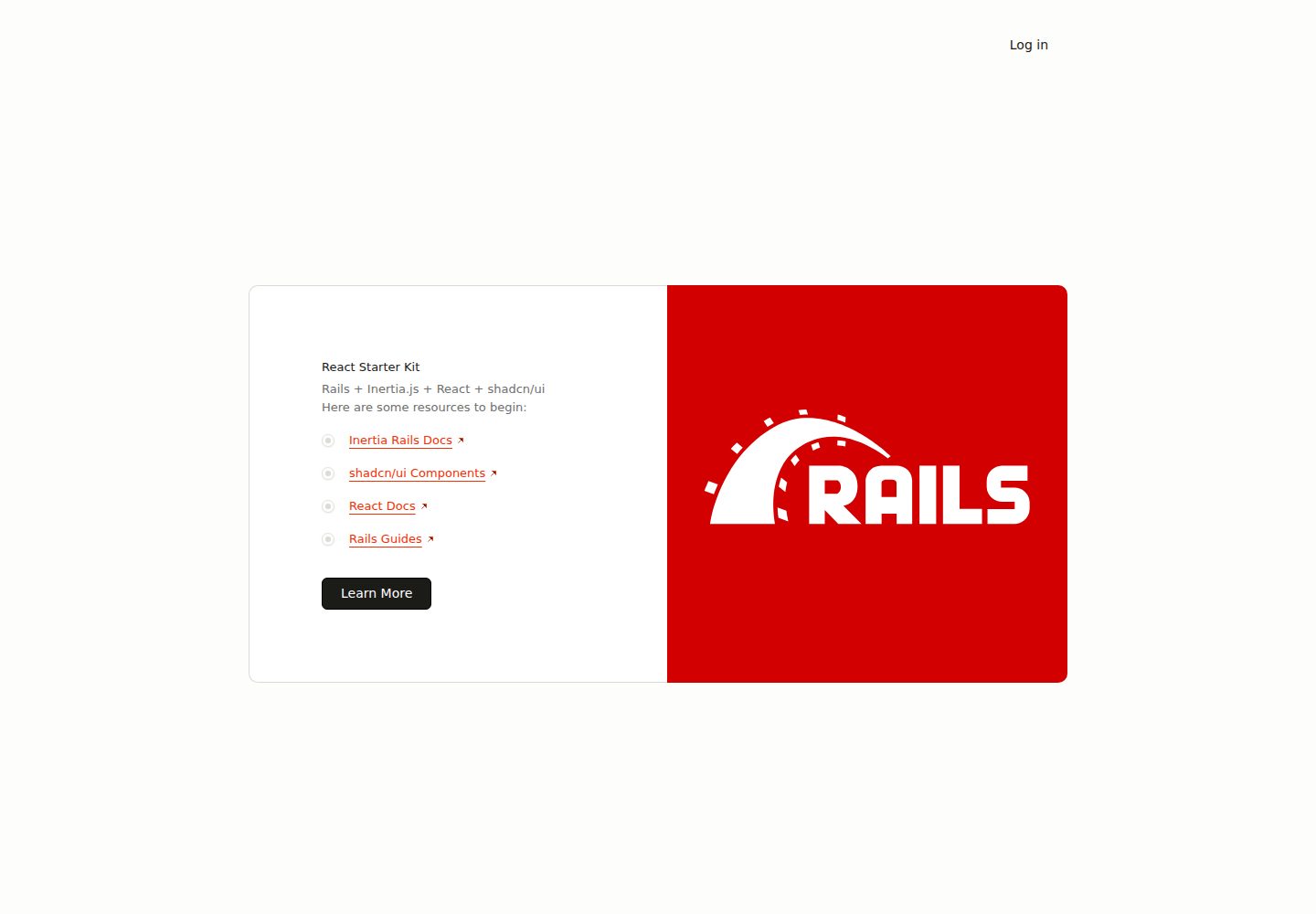
react-starter-kit
A full-stack Inertia.js starter with a Rails backend and React + TypeScript frontend, generated by inertia-rails/generator and automatically synced.
Rails · Starter
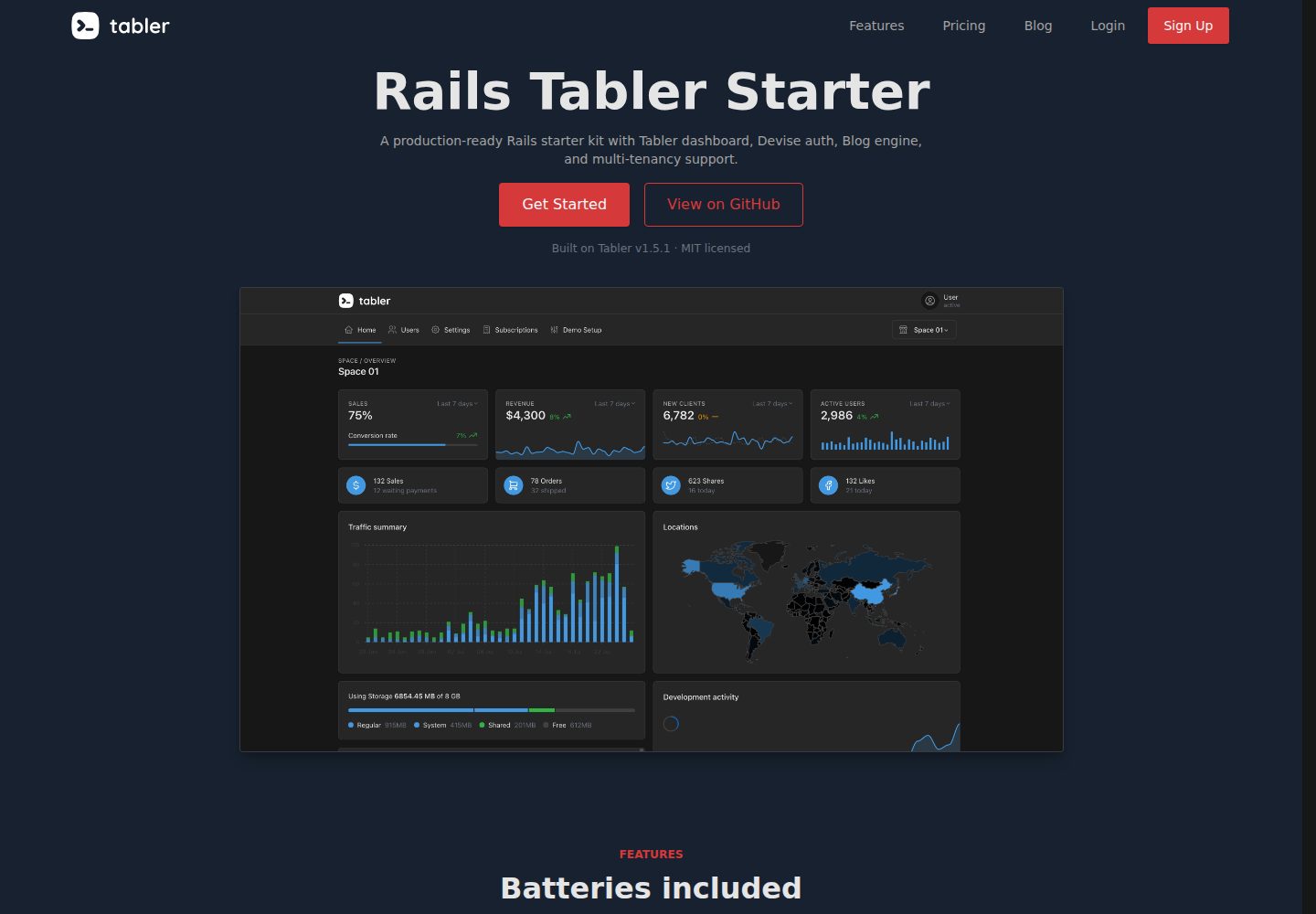
rails-tabler-starter
A free, open-source Ruby on Rails backend starter using Tabler (Bootstrap 5) with Hotwire/Turbo.
Rails · Admin dashboard
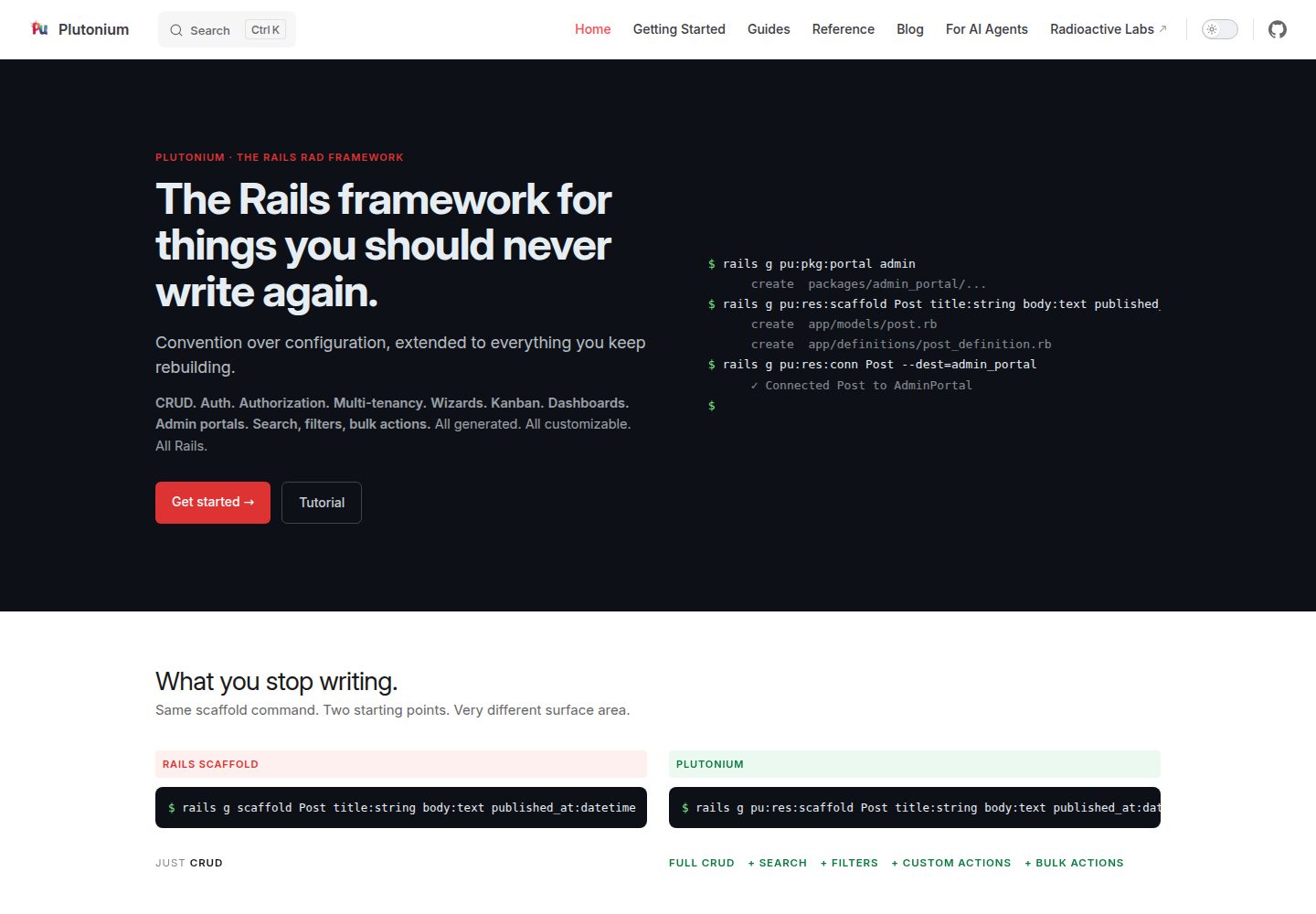
plutonium-core
Plutonium is a Rails-based admin and starter template that uses generators to write CRUD, authentication, authorization, multi-tenancy, portals, search and filtering, and bulk actions directly into project code.
Rails · Admin dashboard
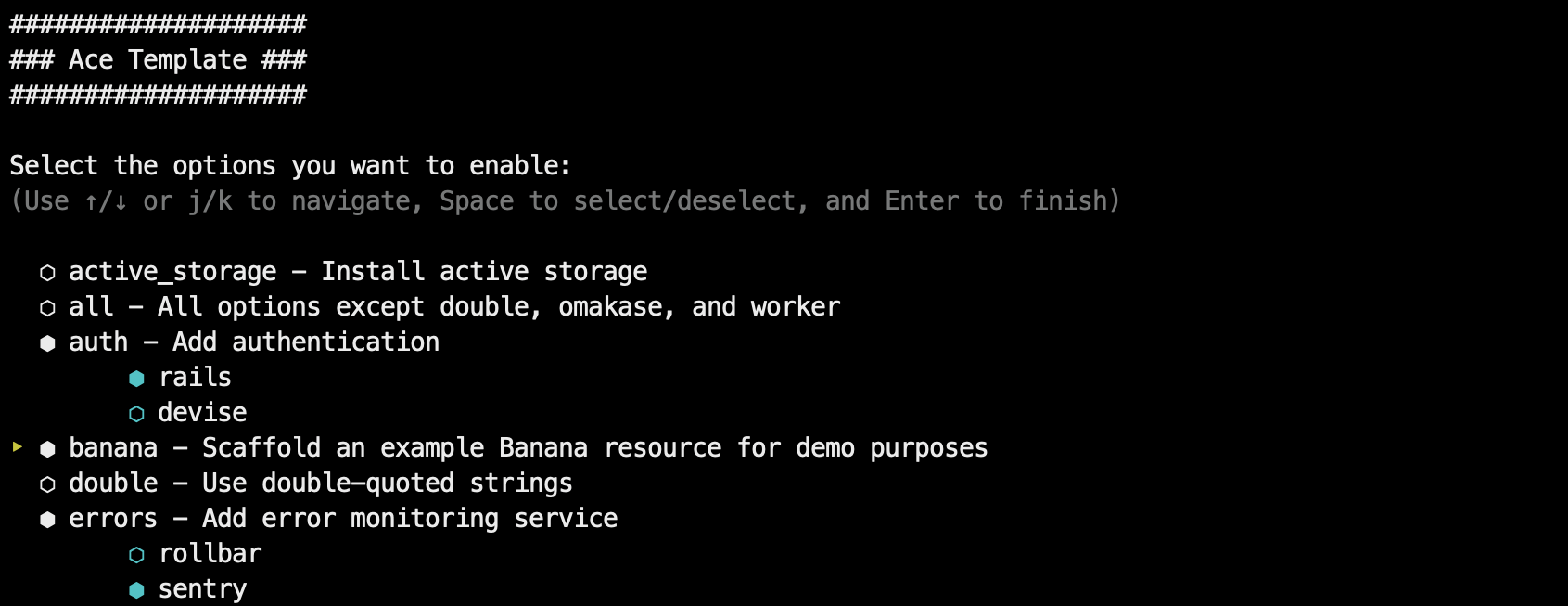
ace-template
Ace Template is a Rails application template applied via rails new, supporting interactive mode and command-line options, with SQLite, Postgres, and MySQL support, Tailwind or Bootstrap styling, and deployment instructions for Kamal, Fly.io, and Heroku.
Rails · Starter
kern
Kern is a Rails engine that provides foundational SaaS features: authentication and user settings based on Rails' authentication generator, multi-tenancy via Workspace and Member with multiple Roles, team invitations, Stripe subscription billing configured through plans.yml and credentials, plus a form builder, basic…
Rails · SaaS
rails-react-starter
Rails React Starter is an MIT-licensed starter that pairs a Rails JSON API backend with a React frontend, including TailwindCSS and Docker configuration.
Rails · Starter